
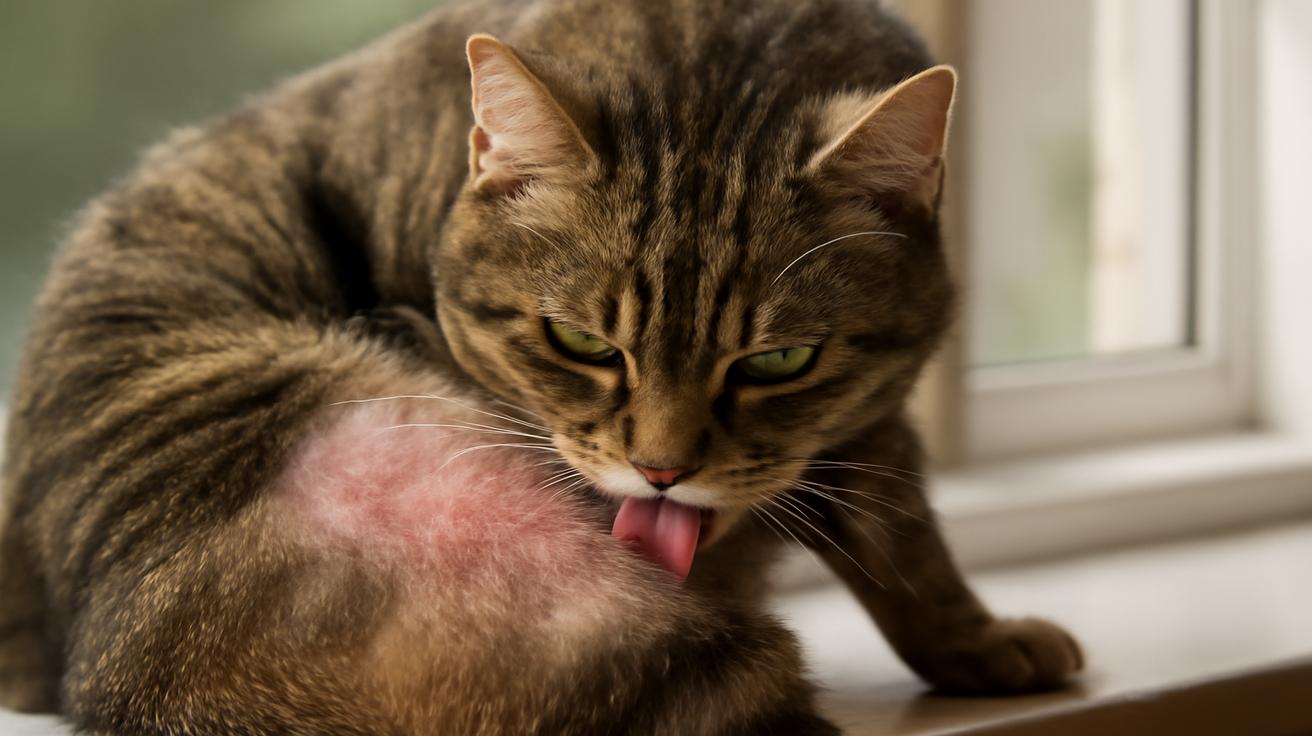
The sound comes first: a soft raspy schlick, schlick, schlick in the quiet of the evening. You glance over and there’s your cat again, twisted into some improbable shape, tongue busy, fur already sleek and spotless. It’s cute, at first. Comforting, even. Proof that your cat is healthy, thorough, in control of its tiny world. But as the minutes stretch on and the grooming doesn’t stop—later, it’s happening again, and again—you start to wonder: is this just normal cat behavior, or is your small, furry roommate silently telling you that something’s wrong?
The Ritual of the Tongue: Why Cats Groom So Much
Spend five minutes watching a relaxed cat, and you’re almost guaranteed to watch a grooming ritual unfold. It’s more than simple vanity; grooming is stitched into a cat’s biology, their culture, their survival story.
The tongue itself is an instrument of evolution. If you’ve ever let your cat lick your hand, you’ve felt those tiny hooks—stiff, backward-facing papillae made of keratin, like miniature fingernails. To a cat, this tongue is a multi-tool: comb, sponge, massager, even a social greeting card.
Routine grooming does a lot of heavy lifting in a cat’s life:
- Cleaning the coat: Dust, pollen, loose hair, and microscopic debris all get removed in regular sessions.
- Distributing skin oils: The more evenly those natural oils spread, the glossier and more water-resistant the fur.
- Regulating temperature: When a cat licks and then the saliva evaporates, it creates a tiny cooling effect, especially in hot weather.
- Camouflage and scent control: In the wild, smelling less like “prey that just ate” or “predator that just hunted” can be a matter of life or death. Grooming helps reduce scent signatures.
- Comfort and routine: Grooming is a built-in soothing ritual, a way to slip into a familiar, calming pattern.
Healthy cats usually devote a surprising chunk of their day to this ritual—somewhere around 30 to 50 percent of their waking hours. It’s not constant, but it’s frequent, sprinkled between naps, meals, window-bird-watching, and late-night hallway sprints. When you see your cat grooming after eating, after being petted, or after waking up, you’re watching something completely normal.
So if licking is such a key part of being a cat, how do you know when normal slips into “too much”?
When Licking Crosses the Line: The Subtle Signs
There’s no stopwatch that tells you, “That’s it, now it’s excessive.” Instead, the boundary between routine grooming and problematic licking is drawn in smaller, quieter signs—changes in rhythm, focus, and texture.
Start by watching patterns, not just moments. One long grooming session after a nap is likely fine. But if you realize you can’t remember the last time you saw your cat simply resting while awake, that grooming may have turned into a compulsion rather than a habit.
Here are some clues that licking may be going too far:
- Fur thinning or bald spots: You might notice a patch on the belly, inner thighs, back, or legs where the coat looks “moth-eaten” or bare.
- Red, irritated, or broken skin: Pink areas, scabs, or even raw skin where the licking is most intense.
- Focus on one or two areas only: Normal grooming is more evenly spread out; obsessive licking often zeroes in on a favorite spot.
- Interrupts daily life: Your cat stops playing, eating, or interacting just to lick. The moment you stop petting, they drop into grooming again.
- Change in personality: A cat that becomes jumpy, withdrawn, or overly clingy at the same time the licking increases may be trying to cope with stress or pain.
Some changes are more subtle. Maybe you start noticing extra hairballs, or tufts of fur on the couch where your cat has been lying. Maybe there’s a faint, damp smell on their coat from saliva that never seems to dry because they just won’t stop.
The tricky part? Excessive licking isn’t a diagnosis—it’s a symptom. And that symptom has two major roots: the body and the mind.
Skin Deep or Soul Deep? Body Problems vs. Emotional Stress
Imagine waking up with an invisible itch that never fully goes away. Or a dull, nagging pain in your hip that flares every time you move wrong. If you were a cat, with no words to explain it, what would you do? You’d lick.
Physical issues are one of the most common reasons for overgrooming. The skin is where the problem shows, but the cause might be buried much deeper.
Physical Triggers: When the Body Starts the Behavior
When licking is driven by the body, something is usually bothering the skin, the nerves, or the joints. Common culprits include:
- Allergies: Food sensitivities, dust, pollen, or even certain plastics or cleaning products can cause the skin to itch relentlessly.
- Fleas and parasites: Even a single flea bite in a sensitive cat can trigger a full-on itch cascade. Mites or other parasites can do the same.
- Skin infections: Bacterial or fungal infections, sometimes secondary to existing irritation, can make a cat lick to the point of damage.
- Pain beneath the fur: Arthritis, past injuries, or internal pain can make a cat lick the area above the discomfort—like an aging cat licking its hips or lower back.
When physical problems are the driver, you might notice:
- Licking concentrated in one region (base of tail for flea allergies, belly for food allergies, joints for pain).
- Odor, greasy patches, dandruff, or bumps under the fur.
- Discomfort when you touch certain spots.
But the body doesn’t hold all the blame. Cats live rich emotional lives, and their tongues double as coping mechanisms.
Emotional Triggers: When the Mind Won’t Settle
For a cat, the world is a delicate balance of scent, territory, routine, and safety. Tip that balance, and stress creeps in—quietly, like fog.
Stress for a cat doesn’t always look dramatic. Sometimes it looks like licking.
Common emotional and environmental triggers include:
- Changes at home: A move, a renovation, a new baby, a new partner, or a new roommate—all of these change sounds, smells, and energies.
- New pets or rivals: Another cat, a dog, even frequent outdoor strays visible through the window can feel like a constant territorial threat.
- Lack of control or stimulation: Boredom, long hours alone, no safe high spaces, no predictable routine.
- Unpredictable noise and chaos: Loud TVs, parties, frequent visitors, or rough handling from children.
For many cats, grooming is a self-soothing act. The repetitive motion, the familiar scent, the feeling of “putting myself back in order” can be deeply calming. But when stress continues, the brain can begin to treat licking itself like a relief button—press it once, you feel slightly better. Press it again, and again, and suddenly the habit feeds itself.
Some cats develop what veterinarians call psychogenic alopecia: overgrooming primarily driven by emotional distress or anxiety. These cats may have cleaner bloodwork and normal skin tests—but they’ve turned grooming into a coping ritual that’s gone too far.
That’s why ruling out physical problems is so important. You need to know what kind of story your cat’s tongue is trying to tell.
Reading the Signals: How to Tell What Your Cat’s Licking Means
It helps to step into the role of quiet detective. Instead of trying to stop the licking immediately, first gather clues. Your observations may be exactly what your veterinarian needs to solve the puzzle.
You can use a simple little “grooming diary” approach. Over a few days, jot down what you see and when. Notice patterns like time of day, what just happened beforehand, and which body areas get the most attention. Consider something like this:
| What to Observe | Questions to Ask Yourself |
|---|---|
| Timing of licking | Does it spike at certain times (night, after visitors, after meals)? |
| Location on the body | Is your cat focusing on one area (belly, legs, tail base, paws)? |
| Triggers before licking | Does it happen after stress, noise, conflict with another pet, or boredom? |
| Skin and coat changes | Are there bald patches, redness, scabs, dandruff, or changes in texture? |
| Behavior changes | Is your cat hiding more, clingier, irritable, or less playful than usual? |
These observations can gently guide you toward what might be going on:
- If licking is heavily focused on the base of the tail, belly, or legs and you see redness or tiny scabs, parasites or allergies could be at play.
- If your cat licks joints or the same limb over and over, especially if they’re older, pain or arthritis might be whispering beneath the fur.
- If licking ramps up after a noisy event, a visitor, a new pet interaction, or while you’re away, stress and anxiety step higher on the suspect list.
One more important signal: how easily can your cat be distracted? A cat compelled by an intense itch or pain may snap right back to licking the second you stop petting or distracting them. A stress-driven licker might pause more readily if you introduce play, a treat, or a quiet cuddle.
None of this replaces a proper veterinary exam. But it gives the story structure. When you arrive at the clinic and say, “My cat licks a lot,” that’s vague. When you say, “For the last three weeks, every night after the kids go to bed, he spends an hour licking his belly and inner thighs, and he’s starting to get bald spots,” that’s a road map.
Helping a Tongue at War: What You Can Do at Home
Once a vet has ruled out (or treated) medical causes, you step into the role of your cat’s environment designer. Your mission: make the world softer, safer, and more predictable so that the tongue can relax.
Think of it as reshaping the landscape of your cat’s daily life.
Create a Refuge of Predictability
Cats love knowing what happens next. Add gentle structure:
- Feed meals at roughly the same times each day.
- Keep a consistent rhythm for play, quiet time, and bedtime.
- Reduce sudden, loud noises where possible—shut doors during vacuuming, keep speakers away from the cat’s safe zones.
Predictability doesn’t sound magical, but to a cat, it’s a powerful anti-anxiety tool. When they can anticipate the flow of the day, they have fewer threats to scan for—and less need to self-soothe.
Offer Vertical Space and Safe Hiding Places
For many cats, height is safety. Being up on a shelf, a cat tree, or a windowsill lets them watch the world without being in the middle of it. Hidden beds, cardboard boxes, and covered hideouts allow them to disappear when they’ve had enough.
- Provide at least one quiet, elevated spot in each main room.
- Use blankets or soft bedding that hold your scent for comfort.
- Let your cat choose their retreats; never drag them out of a hiding spot unless health demands it.
A cat who feels they can retreat whenever they want is a cat who doesn’t have to use their tongue as an emotional shield quite so often.
Bring Their Hunter Brain Back to Life
Boredom isn’t just “nothing to do”—for a predator species, it’s unmet instinct. When play and exploration are missing, tension builds. Grooming can become the default outlet.
Channel that energy into motion with:
- Interactive toys that mimic prey—wand toys, feather teasers, and toys that dash unpredictably.
- Short, frequent play sessions: five to ten minutes, two to four times a day, can be better than one long push.
- Food puzzles and treat-dispensing toys to turn mealtime into a mini-hunt.
The goal isn’t to exhaust your cat into submission; it’s to offer a satisfying way to burn off alertness, frustration, and pent-up instinct. A mentally and physically engaged cat is less likely to pour that drive into their fur.
Respect Their Social Bandwidth
Some cats crave constant touch; others want companionship without hands. Overhandling—especially by well-meaning children—can tip a sensitive cat into using grooming as a way to “reset” after overstimulation.
Watch for overstimulation signs during petting: tail flicks, skin twitches, ears flattening slightly, a sudden turn of the head. End interactions while they’re still enjoying them. Let them come to you again, instead of pressing for “just one more” scratch.
If there are multiple pets, ensure each has their own resources: separate food bowls, litter boxes, and resting spaces. Quiet competition can drive quiet stress.
When to Call the Vet—and What to Expect
Excessive licking isn’t something to “wait and see” for too long, especially when the skin starts to show the cost. Licking can spiral: irritation leads to more licking, which leads to more irritation, infection, and beyond.
It’s time to call the vet if you notice:
- Bald patches, broken skin, or scabs.
- Licking focused in a new area that wasn’t targeted before.
- Changes in appetite, weight, litter box habits, or energy.
- Sudden behavioral shifts: hiding, aggression, clinginess, or vocalizing more.
Your vet might:
- Check for fleas or other parasites.
- Look closely at skin and coat, maybe using skin scrapings or cultures.
- Recommend bloodwork or allergy testing.
- Ask about your home life, other pets, and changes in environment.
Treatment may involve flea control, allergy management, pain medication, anti-itch therapies, or in some cases, anti-anxiety medications alongside environmental changes. Think of medication not as silencing your cat, but as lowering the volume of distress so they can relearn calmer patterns.
Most importantly, don’t feel guilty. The goal isn’t to blame yourself for missing early signs; it’s to become your cat’s ally now, while their story is still being written.
Living With a Licker: Patience, Gentleness, and Small Miracles
Curiously, once you start watching your cat’s grooming through this new lens, you may never see it as “just licking” again. Each session becomes a paragraph in a story: of habit, of comfort, or of a plea for help.
With time, medical care, and environmental tweaks, many cats find their way back to a healthier balance. The bald patches regrow. The sessions shorten. The tongue becomes what it was always meant to be again: a tool for everyday care, not a crutch.
You may still hear that familiar schlick, schlick, schlick at night. But now you’ll understand the layers beneath the sound—the wild ancestry, the emotional weather, the quiet requests. And when the licking seems a little too much, you’ll know how to listen, how to adjust, when to reach for the phone, and when to simply sit nearby, breathing softly while your cat works through their ritual.
Somewhere in that space between routine grooming and hidden stress is a conversation, happening without words. Your cat keeps licking itself. Your job is not to silence the tongue, but to answer the message.
FAQ: Your Cat’s Licking, Explained
Is it normal for my cat to lick itself a lot?
Yes—cats normally spend a large portion of their waking hours grooming. It becomes a concern when you see bald spots, skin irritation, or when licking seems to interrupt eating, playing, or resting.
How can I tell if my cat’s licking is from stress or a medical issue?
You can’t always tell at home. Focused licking with redness, scabs, or a bad smell often suggests a medical problem like allergies or parasites. Licking that increases after changes in the home or stressful events can be stress-linked. A veterinarian exam is essential to rule out physical causes first.
Can boredom really make my cat overgroom?
Yes. Cats are natural hunters and problem-solvers. When they lack stimulation, they may redirect that energy into repetitive behaviors like excessive grooming. Interactive play, puzzle feeders, and environmental enrichment can help.
Should I use a cone or clothing to stop my cat from licking?
Barriers like cones or soft recovery collars may be necessary temporarily to protect damaged skin, but they don’t fix the underlying cause. Always use them under veterinary guidance and in combination with medical or behavioral treatment.
When should I see a vet about my cat’s licking?
Schedule a vet visit if you notice hair loss, red or broken skin, sudden changes in grooming habits, other behavior changes, or if the licking seems to be getting worse over days or weeks. Early intervention can prevent more serious skin damage and help your cat feel better sooner.








Leave a Comment