
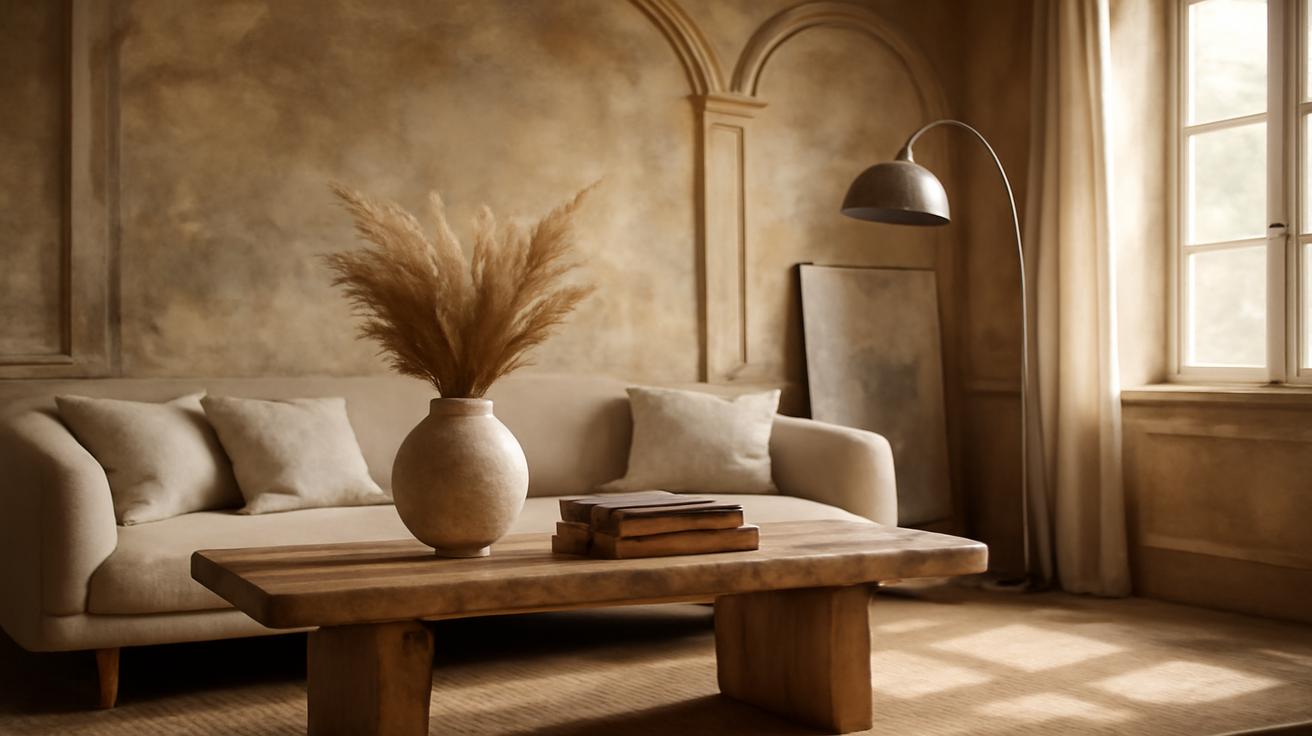
The first time you notice it, you almost miss it. A flash of warm shadow in the corner of a room, a soft curve catching the light, something that feels… older, but not in a dusty, forgotten way. Someone has turned a camera toward a living room remodel, and for once, it’s not those perfectly spaced, endlessly copied wood slat walls marching in vertical lines behind a TV. Instead, there’s a wall that feels like a memory—softly paneled, gently framed, maybe even a little imperfect. It looks more like a room from an old photograph than a Pinterest board from 2021. And it hits you with that strangely powerful realization: oh. We’re done with slat walls. This is what’s next.
How Wood Slat Walls Took Over—Then Wore Out Their Welcome
If you scroll back far enough in your mind—or your saved Instagram posts—you can probably trace the rise of the slat wall like the arc of a trend chart.
At first, it felt like a revelation. After years of matte gray paint and anonymous white boxes, wood slat walls arrived like a much-needed breath of warmth and texture. Architects loved their clean lines. DIYers loved how “expensive” they looked in photos. Influencers loved how they created neat backdrops for everything from latte shots to home office tours.
Those narrow vertical battens, lined up with military precision, promised instant architecture for rooms that had none. Even rentals started getting peel-and-stick slats. You could find them in nurseries, hallways, Airbnbs, and office Zoom backgrounds. For a while, the look felt fresh, modern, and impossibly put together.
But trends have a way of wearing grooves into our vision. The more you saw that same wall—same spacing, same honey oak tone, same moody gray paint beside it—the more it felt like looking at a filter instead of a home. By 2024, slat walls had shifted from “special” to “standard,” and from “designer detail” to “default setting.”
By 2026, the mood has changed. People are scrolling past perfect symmetry and polished minimalism and pausing instead on something looser, warmer, more storied. Wood slat walls haven’t disappeared overnight; they’ve just become the skinny jeans of interiors: still around, but no longer the thing.
The New Star of 2026: Vintage Wall Paneling Reimagined
In their place, a different kind of wood wall has quietly stepped into the spotlight—one we’ve technically seen before, but not quite like this.
Walk into the most forward-thinking homes of 2026 and you’ll see it: vintage-inspired paneling that doesn’t care about laser-straight repetition. It might be classic wainscoting climbing halfway up a dining room wall, painted a dense, inky blue that seems to swallow the afternoon light. It might be wide, softly aged boards running horizontally behind a bed, the grain rising and falling like topography. It might be a full-height paneled library wall with little ledges, ledgers, and protruding trim that catches dust… and also catches your heart.
This isn’t the orange, knotty faux “wood paneling” your grandparents stapled up in the basement. The 2026 version is calmer, more dignified, more textural than patterned. It feels like a love letter to older buildings: the kind of places where the walls weren’t just boundaries but built-in furniture, part of the architecture of daily life.
Designers talk about it in almost emotional terms. They use words like embracing, grounded, slow. They’re not trying to draw hard, vertical bars across a wall anymore. They’re trying to create backgrounds that feel like they’ve been there for decades, quietly soaking in conversations, dinners, Sunday naps, and winter evenings.
The Shift From Perfect Lines to Perfect Imperfection
There’s a small but meaningful psychological shift behind this change. Slat walls are fundamentally about control: equal spacing, uniform boards, perfectly aligned lines. Vintage-style paneling is about something else entirely: character.
A wall of narrow slats tells you, “Look how precise this is.” A wall of weathered boards, or traditional box paneling, says, “Sit down. Stay a while.” Tiny nicks, subtle dents, hairline gaps between boards—these are no longer flaws to be filled and sanded. They’re proof of life, of use, of time. In 2026, that feels more luxurious than a pristine sheet of MDF masquerading as calm.
Why We’re Craving Vintage Over Minimal in 2026
Trends never float in a vacuum; they crystallize what we’re collectively feeling. The move away from slat walls isn’t just a design preference—it’s a reflection of what home needs to be now.
We Want Comfort, Not Just Content
In the early 2020s, many people decorated for the camera. Walls were backdrops. Rooms were stages. Clean lines and dramatic slat walls photographed beautifully in small squares and short videos.
By 2026, we’ve spent a long, long time looking at ourselves on screens—and at other people’s perfect spaces. There’s a quiet rebellion underway: homes are being designed for the people who live inside them, not the people who swipe past them.
Vintage-inspired paneling delivers that feeling. It’s inherently tactile. You can run your hands over the beveled edges, feel the slight rise of a stile, trace the ridge of a board. It frames furniture, softens echoes, and makes a blank drywall box feel like a real room with boundaries, edges, and mood.
We’re Tired of “Copy and Paste” Design
Once a trend becomes template-level, it stops feeling special. Slat walls hit that tipping point fast. There were tutorials, kits, even apps to help you calculate spacing. Everyone’s wall started to look exactly the same.
The new vintage-inspired wall treatments are more personal because they almost force you to make choices: do you go three-quarter height or full height? Stain or paint? Simple shaker-style frames or ornate recessed panels? Mixed-width boards or perfectly matched?
No two paneled walls are identical. Even when the layout is similar, the finish, the proportions, and the room’s personality make it yours. That’s very 2026: people want something their neighbor doesn’t have, something that feels found or built, not ordered.
Old-School Craft Feels Surprisingly Modern
There’s also a deeper cultural pull: a return to craft. In an era of AI, automation, and frictionless everything, visible joinery and trim speak to the human hand. You can almost picture the carpenter who measured, cut, and nailed each piece. That hint of labor, of skill, reads as luxury now.
Ironically, the very thing that once made vintage paneling feel old-fashioned—its obvious construction—is now what makes it feel current. You can see how it was made. You can imagine how it could be repaired. It’s not an anonymous surface; it’s architecture you can read.
What This “Vintage Wall” Actually Looks Like in 2026
So what exactly is replacing those wood slat walls? The answer isn’t one single look, but a family of them, all with the same DNA: history, warmth, and depth.
The New Classic: Painted Wainscoting and Paneling
Half-height or three-quarter-height paneling—wainscoting—is everywhere. But the colors have gotten braver. Instead of default bright white, you’ll see:
- Moody sage and olive greens wrapping dining rooms
- Deep browns and bitter chocolate tones anchoring entryways
- Soft putty and greige in bedrooms, like a hug around the lower half of the room
The detailing ranges from simple rectangles defined by flat trim (very modern-English) to more traditional raised panels in older homes. Above the paneling, walls might be plastered, lightly limewashed, or simply painted—a soft contrast to the structured lower half.
Horizontal Boards Instead of Vertical Slats
Where slat walls stretched upward, the new paneling often runs horizontally. Wide boards stacked side by side, sometimes tongue-and-groove, sometimes just butted together, create a grounded, cabin-like calm without feeling rustic.
In living rooms, a single wall of horizontal boards—stained in a soft walnut or left natural—can turn a forgettable TV wall into something that feels like a feature without shouting for attention.
Quietly Ornate Library Walls
Another twist: full-height paneled walls that mimic old libraries or drawing rooms, often painted in rich, enveloping colors. Think:
- A small home office lined in paneled navy-blue walls, shelves carved into the recesses
- A bedroom where the headboard wall becomes a paneled statement, in a muted aubergine or charcoal
- A living room wrapped in paneled taupe, with art casually leaned against the rails
They photograph beautifully, yes—but more importantly, they make the air in the room feel still, calm, just heavy enough to feel safe.
Comparing 2021’s Slat Wall to 2026’s Vintage Paneling
To see how our taste has evolved, it helps to put these two looks side by side. Here’s a quick comparison of how they feel, behave, and age in a home setting.
| Feature | Wood Slat Walls (2021 Era) | Vintage-Inspired Paneling (2026 Era) |
|---|---|---|
| Visual Vibe | Crisp, linear, photo-ready, slightly formal | Warm, storied, cozy, lived-in elegance |
| Best For | Accent walls, modern spaces, offices | Living rooms, bedrooms, entries, dining rooms |
| Trend Longevity | Feels very “early-2020s” now | Leans timeless, rooted in historical styles |
| DIY Difficulty | Straightforward but fussy measuring | Moderate; planning proportions matters more than perfection |
| Aging Over Time | Can look dated as “that trend” fades | Ages gracefully; patina reads as character |
How to Bring This Look Home Without Rebuilding Your House
You don’t need high ceilings or a grand Victorian shell to lean into this new-old wall style. The magic of the 2026 vintage-paneling wave is how adaptable it is—even to small apartments, newer builds, or tight budgets.
Start Small: One Wall, One Room
Instead of redoing your whole house, pick a single spot where mood matters most:
- The wall behind your bed, to act as both headboard and hug
- The entryway, so your home feels intentional the moment you step inside
- A dining nook or banquette, creating a sense of enclosure and intimacy
A half-height painted wainscoting in a narrow hallway can instantly make it feel finished instead of forgotten. A simple grid of flat trim in your living room can give your sofa somewhere to “belong” instead of floating against a blank surface.
Play With Paint, Don’t Fear Dark Colors
One of the secrets to these walls feeling rich rather than stuffy is color. Muted, medium-to-dark tones work surprisingly well on paneling, even in smaller rooms, because the shadows created by the trim keep the surface visually active.
If you’re nervous, try this:
- Choose a mid-tone version of your favorite neutral—olive instead of mint, cocoa instead of beige.
- Paint just the paneling darker, leave the upper walls and ceiling lighter.
- Live with it for a week before deciding; paneling often feels better at night than in harsh midday light.
Don’t Erase Your Slat Wall—Evolve It
If you already have a slat wall and the thought of ripping it wastefully off the studs makes your stomach hurt, you’re not stuck. You can transition it toward the new look:
- Paint the slats and the wall behind them a single deep color to minimize the stripe effect.
- Add a ledge or cap at chair-rail height to visually “anchor” the wall like wainscoting.
- On part of the wall, cover the slats with boards or paneling, creating a hybrid look that nods to the new direction.
Trends may move, but materials can usually be coaxed along with them.
The Emotional Quiet of a Paneled Room
Here’s the part that doesn’t show up in photos but might matter most: how these walls feel from the inside.
On a rainy afternoon, a room wrapped in painted paneling feels almost like the interior of a wooden boat or a tiny historic inn. The walls stop being flat, blank planes and start to feel like the inside of a protective shell. Light moves differently—catching on edges, slipping into recesses, creating deep shadows in corners. Sound softens. Even clutter looks somehow less chaotic against a structured, textured wall.
Visitors don’t always know what’s changed. They just say, “It feels so cozy in here,” or “This room feels finished now.” No one compliments the spacing of the boards. Instead, they talk about the experience: the calm, the warmth, the way the room seems to hold them instead of pushing them out.
That, more than anything, is why wood slat walls are over. Not because they were ugly, or wrong, or doomed from the start. But because they were about looking good, and these walls are about feeling good.
In 2026, the most beautiful rooms are the ones that feel like they’ve always existed, even if the paint is still drying. Vintage-inspired paneling does that trick better than any perfect grid of slats ever could. It gives your walls a history, even if you’ve just moved in.
FAQs
Are wood slat walls completely out of style in 2026?
They’re not forbidden or “wrong,” but they’ve definitely shifted from trendsetting to trend-dated. In design-forward spaces, slat walls now read as very early-2020s. Vintage-inspired paneling and more character-rich wall treatments have taken over as the go-to choice.
What type of vintage paneling works best in a small room?
In smaller rooms, half-height wainscoting or a simple flat-panel grid works beautifully. Painted in a mid-tone rather than very dark color, it adds character without making the room feel cramped. Keeping the upper walls and ceiling lighter also helps preserve a sense of height.
Can I DIY this look if I’m not very handy?
Yes, especially if you start with straightforward styles: flat trim applied in a grid, or wide boards installed horizontally. The key is careful measuring and a good caulk and paint job. More ornate, traditional raised-panel designs may be better left to skilled carpenters.
Do I have to use real wood for vintage-style paneling?
Not necessarily. Many people use MDF or other engineered materials for the trim and panels, then rely on paint to bring the look together. Real wood adds natural grain and warmth if you plan to stain rather than paint, but for painted paneling, engineered products can be a practical choice.
What colors are most popular for vintage paneling in 2026?
Rich, grounded tones dominate: deep greens, smoky blues, warm browns, muted plums, and complex neutrals like greige and taupe. Pure bright white is less common for full-height paneling now, but still used occasionally for very airy, coastal-inspired spaces.
Will this vintage-inspired paneling look dated in a few years too?
Because it’s rooted in historical styles rather than invented as a brand-new trend, it has better longevity. Details and colors may evolve, but classic paneling and thoughtfully proportioned trim tend to age gracefully and adapt to whatever comes next in decor.
Can I mix existing slat walls with new vintage-style paneling?
Yes. You can keep a slat wall in a more modern area—like a home office—and introduce paneling in cozier spaces, such as a bedroom or living room. Just unify them with a complementary color palette so the house still feels cohesive, even as the wall treatments differ.








Leave a Comment