

The winter light over London has a particular kind of gentleness in January—thin as silk, a little shy, and yet full of quiet promise. It slips between the bare branches of plane trees and glances off palace windows, turning old stone to something that almost glows. Somewhere behind those windows, candles are being lit, photographs straightened, laughter echoing down long, polished corridors. Today, that soft winter light belongs, in some small way, to one woman in particular: the Princess of Wales, turning forty‑four, stepping into another year that the world will watch with unwavering fascination and, for many, genuine affection.
A Birthday Framed by Seasons and Stories
Birthdays for public figures are rarely private things. They are turned outward, reflected through lenses, interpreted by headlines, and replayed in the endless scroll of social media feeds. Yet if you strip all of that away—if you imagine the day the way a nature writer might—you find something simpler and far more human at the heart of it.
Imagine dawn breaking over Windsor or Kensington, the sky a wash of silver-blue. The lawns outside are slick with frost, each blade of grass tipped with a bead of light. In the distance, a rook calls; a fox threads itself through the shadows at the edge of the park, nose low, paws soundless. Inside, the day begins not with the formality of royal duty but with the sharp, familiar clatter of family life: a kettle beginning to murmur, the soft thud of small feet on carpeted stairs, the half-whispered excitement of children who know it is their mother’s birthday.
The Princess of Wales—Catherine, Kate, the woman so often filtered through headlines and formal portraits—steps into this day as both future Queen and present mother, as a symbol and as someone who still has to remind a child to find their missing sock and put it on the right foot. That duality, that constant weaving between the grand and the utterly ordinary, might be the truest thread in her story at forty‑four.
The Quiet Grace of a Modern Princess
For more than a decade, the world has watched her grow into her role the way you might watch a tree take shape on a familiar hillside. You see the changes more clearly when you look back: the shy young woman on the brink of a royal wedding, the new mother stepping out of a hospital in a dress that rippled in a light breeze, the poised Princess of Wales laying wreaths, greeting crowds, leaning close to speak with a nervous child at the front of a barrier.
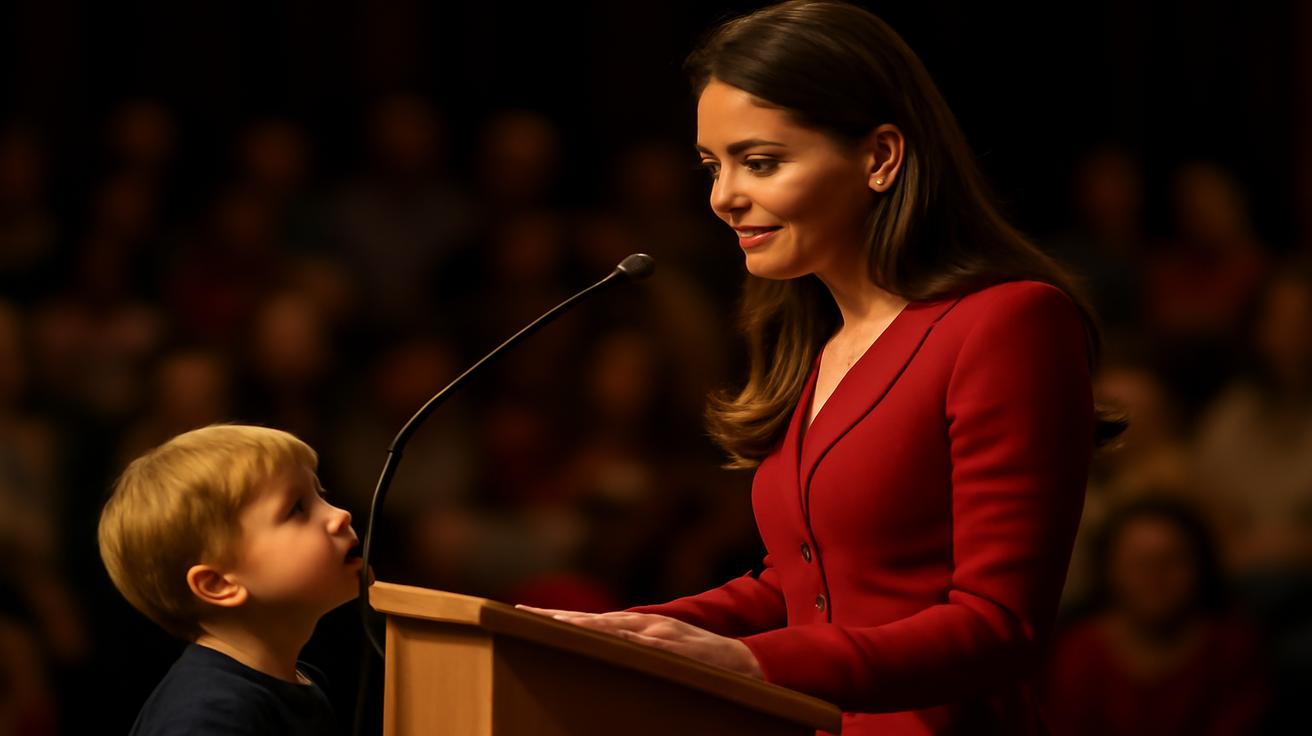
What stands out, especially on a birthday like this, is not the dresses or jewels, but the steadying humanness beneath the spectacle. There is a grounded quality to her presence, as though she walks with one foot on palace tiles and the other planted firmly in the everyday soil of school runs, kitchen tables, and windblown hair on family walks. When she bends down to speak to a child or laughs, unguarded, at a small mishap in a public engagement, it feels less like performance and more like habit.
That is perhaps her greatest achievement so far: not perfection, which is brittle and distant, but a kind of lived-in elegance, a grace that leaves room for imperfection, for learning, for growth. At forty‑four, she is no longer just “the new royal” but a figure threaded through the emotional tapestry of a generation—part of the background of lives who have grown up seeing her on front pages, at state occasions, and in the quiet, carefully released photographs of family life.
The Tapestry of a Royal Life at 44
Forty‑four is an age that sits right at the confluence of past, present, and future. There is enough distance from youth to look back with perspective, and enough road ahead to still be filled with imagination and work and purpose. For the Princess of Wales, that confluence is especially intense. She holds memories of a life before palaces and pageantry—a childhood in the English countryside, adolescence in school halls and on sports fields—alongside the vast responsibilities of her present and the sweeping weight of the future crown that glimmers on the horizon.
You can sense this layered life in the work she chooses to highlight. Her long-standing commitment to early childhood development is not a fashionable cause plucked from the air, but a quiet, steady focus that has grown deeper year by year, rooted in the simple truth that the earliest years shape the adults—and societies—we become. There is a kind of ecological thinking to it: nurture the roots, and the forest thrives.
This is where nature and nurture meet in her story. She often appears most at ease when outdoors—kneeling in a garden, sleeves rolled, hands burrowing into damp soil; standing in a field as a gust of wind catches at her hair; laughing with children as they plant saplings or explore woodland trails. There is an understated but unmistakable message: that our emotional and mental landscapes are tied, subtly but powerfully, to the living world around us.
The Small Moments Behind the Palace Gates
Beyond the public engagements, today almost certainly holds something quieter: the kind of personal rituals that never make it into official diaries. Perhaps it begins with breakfast at a long, sun-splashed table—porridge or eggs, toast cooling on a small stack of plates, a jug of orange juice catching the light. Maybe there is a hand-drawn card from a child, the letters ballooning and slightly wobbly, a scattering of stickers marching across the page like confetti frozen in midair.
Birthdays, even royal ones, are built from such tiny, ordinary moments. A cup of tea brought without asking. A half-hug around the waist in the middle of a hallway. The shared joke that has been running for years and needs only one word to set everyone laughing. None of this is visible from the outside, but all of it matters. In the same way that a forest is not defined only by its tallest trees, a life is not made only from its grandest scenes.
If you could step out into the gardens on such a day, you might find evidence of those quieter rhythms. Small footprints in the damp earth near a goalpost. A tennis ball abandoned in the corner of a gravel path. A single glove perched on a wall, forgotten in the rush back inside. These traces of everyday family life soften the edges of royal architecture, turning the idea of “palace” into something more like “home.”
| Birthday Element | How It Might Feel for the Princess of Wales |
|---|---|
| Morning Light | A brief pocket of stillness before official duties begin, filtered through frosted glass and tall windows. |
| Family Moments | Children’s laughter, handmade cards, the warmth of being celebrated not as a princess, but as “Mum.” |
| Public Messages | A rushing tide of good wishes from around the world, each one a tiny reminder of connection. |
| Reflection | Quiet thoughts about the year gone by, the work ahead, and the balance between duty and home. |
Nature as a Mirror of Royal Life
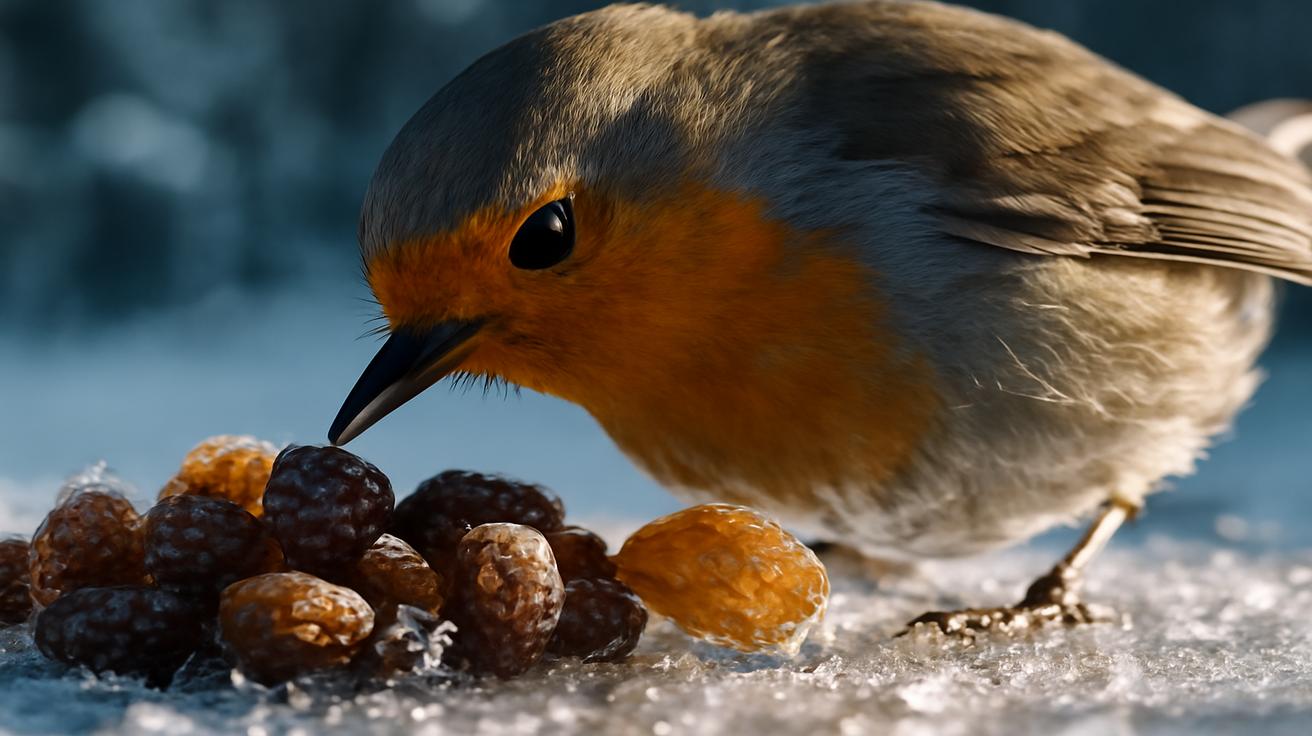
There is a particular poetry in the way the Princess of Wales seems repeatedly drawn to gardens, forests, and open skies. In a life bordered by ceremony, the natural world offers a rare space that is not scripted. A tree does not bow differently because a princess walks past. A robin does not sing more sweetly because cameras are watching. In nature, she is perhaps closest to anonymity, and also to herself.
The seasons mirror the cycles of royal life more closely than might first appear. There are the high springs and summers of celebration: weddings bathed in floral arches, jubilees streaming with bunting, balcony waves beneath cloud-dappled skies. And there are the winters of solemn remembrance and quiet resilience: wreath-laying in cold November air, black coats, bowed heads. Between them lie the quieter, transitional times—those late-September days when the first leaves turn, or the early March weeks when snowdrops have already pushed through the dark soil, stubborn and hopeful.
At forty‑four, the Princess stands, in some ways, in an early spring of her public life. The roots are well established now; the awkwardness of early growth has passed. What emerges in this season—her priorities, her initiatives, the way she chooses to use her voice—will shape the canopy of her future years in the public eye. Nature reminds us that growth is rarely linear. It is a pattern of surges and pauses, pruning and flourishing, storms weathered and sunlight absorbed.
A Global Chorus of Birthday Wishes
Beyond the palace walls and frosted lawns, beyond the carefully arranged bouquets and formal greetings, there is a digital chorus rising. Around the world, people press a small blue button and send their words out into the ether: “Happy 44th birthday to our beloved Princess of Wales.” It is an oddly intimate act, offering a personal wish to someone most will never meet, but whose milestones have nonetheless threaded through their own lives.
For some, she represents continuity—a line that runs from history books and black‑and‑white photographs straight into the present. For others, she is seen as a bridge between the weight of tradition and the informality of the modern world. She posts family photos taken on ordinary walks; she kneels on the floor with schoolchildren; she laughs openly when something goes wrong. The glass wall between “royal” and “real” has thinned in her generation, and she has been one of the most visible figures walking that line.
When people send birthday messages, they are not only celebrating her; they are affirming their own connection to a story larger than themselves. They remember where they were when she married, or when her children were born, or when she appeared at a hospital, a school, a charity, bringing a moment of light into a difficult place. They feel, in some quiet way, that they have travelled alongside her.
The Private Weight Behind a Public Smile
It is easy, in the soft-focus glow of birthdays and beautiful photographs, to forget the weight that comes with such a life. Every step, every expression, every choice of color or phrase is catalogued, commented on, and analysed. There are days—there must be—when the scrutiny chafes like a seam gone rough. Yet the Princess of Wales continues to show up, year after year, with a posture that suggests both composure and a willingness to keep learning in full view of the world.
At forty‑four, a different kind of courage is required than at twenty‑nine, when she first stepped into the full blaze of royal life as a newlywed. It is the courage to evolve without losing yourself, to adapt without becoming unrecognizable, to carry the expectations of millions while also listening to your own inner compass. The smile we see at balcony appearances or during walkabouts is not a fixed mask; it is a choice, renewed daily, to keep offering warmth.
In the quiet folds of this birthday, perhaps there is room for her to lay that weight down, even briefly—to simply be a woman celebrating a year older, laughing with family, eating cake, maybe even stealing a walk in the cold, clean air with no cameras in sight. The paradox of such a life is that the more public it becomes, the more fiercely precious these small pockets of privacy grow.
Forty‑Four Candles, Countless Futures
So what, exactly, are we celebrating when we wish a very happy 44th birthday to our beloved Princess of Wales? It is more than a single day circled on a calendar. It is the arc of a life lived under extraordinary conditions, and the way she has gradually, sometimes almost imperceptibly, shaped that life into something that feels both regal and recognizably human.
We celebrate the steadiness: the years of engagements carried out in sunshine and rain, the visits to hospitals and hospices, the hours spent listening to stories that never make the news. We celebrate the curiosity: the questions asked of scientists and early-years specialists, of parents and teachers and young people trying to find their way. We celebrate the vulnerability: the willingness to talk about mental health and early childhood, subjects that sit at the rawest edge of human experience.
And perhaps most of all, we celebrate the simple fact of her being here, now, at this point in her journey—no longer at the beginning, not yet at the destined pinnacle, but somewhere in the rich middle ground where character is refined and legacy quietly takes shape.
The candles on her cake—whether there are forty‑four of them or a symbolic few—will flare and then soften, wax pooling at their bases. In that brief blaze of light, surrounded by voices she loves and carries in her heart, there is a small, private universe in which titles fall away and only first names remain. It is there, in that human circle, that the meaning of the day truly lives.
Beyond that circle, across cities and villages, through forests standing bare against the winter sky and waves rolling against distant shores, people are pausing to send a few words into the air, spoken or typed: “Happy birthday.” In that worldwide murmur there is gratitude, curiosity, affection, and, above all, hope—for her, for the family she is raising, and for the role she will one day play in the story of a nation.
So, under this pale January light, with the trees standing patient and the year still young, the wish rises, clear and heartfelt: may the Princess of Wales’s forty‑fourth year be one of deep joy, steady health, meaningful work, and many, many unphotographed moments of simple, ordinary happiness. May she continue to walk that delicate line between crown and countryside, ceremony and soil, with the quiet grace that has already become her signature.
Happy 44th birthday, Your Royal Highness. The world is watching—but today, more than anything, it is simply wishing you well.
Frequently Asked Questions
Why is the 44th birthday of the Princess of Wales significant?
Turning forty‑four marks a moment where the Princess of Wales is firmly established in her royal role while still being in the active, evolving middle chapter of her life. It highlights the experience she has gained, the causes she has championed, and the growing influence she holds as a future Queen Consort.
How do royal birthdays differ from ordinary birthdays?
Royal birthdays blend private family celebrations with public recognition. While there may be quiet moments with loved ones, the day is also marked by official greetings, public messages, gun salutes on certain landmark years, and extensive media coverage, which most people never experience.
What kind of causes is the Princess of Wales known for?
She is especially known for her work on early childhood development, mental health, family wellbeing, and the importance of nature and the outdoors for young people. Her projects often focus on giving children the best possible start in life.
Why is nature so often associated with the Princess of Wales’s public image?
Many of her engagements, photo releases, and initiatives are set in gardens, parks, and natural spaces. She appears noticeably at ease outdoors, and her advocacy for children frequently includes encouraging play and learning in natural environments, creating a strong association between her public role and the natural world.
How do people around the world celebrate her birthday?
People typically share messages on social media, create artwork or tribute videos, write articles and reflections, and sometimes hold small gatherings or charity fundraisers in her honor. While most celebrations are informal and personal, together they form a global wave of good wishes.






Leave a Comment