
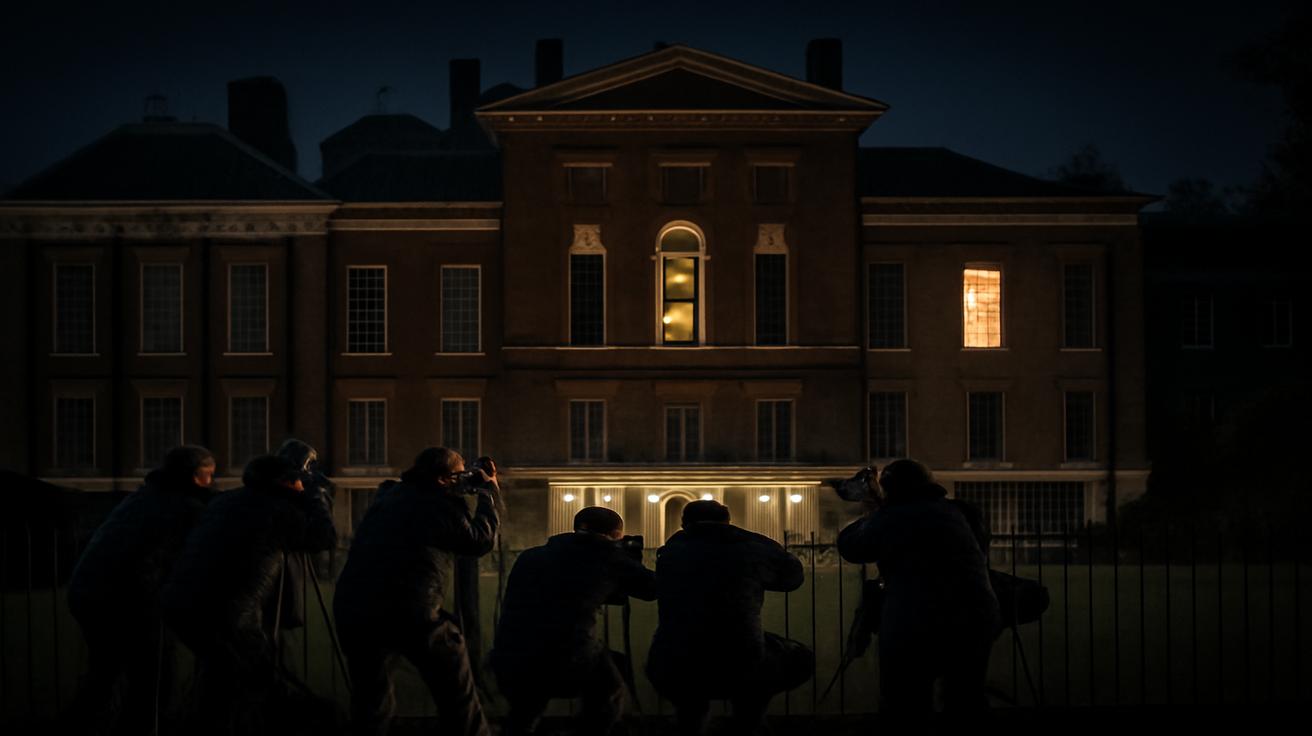
The winter light over London has a particular way of softening sharp edges. It slides over slate roofs and bare branches, turning even the most watchful lenses into small glints of silver. Somewhere behind one of those windows, the Princess of Wales turns another year older. On most days, the world knows her as an image on a screen, a headline, a symbol. But a birthday—especially one unfolding amid the hum and crackle of global scrutiny—has a way of reminding us there is a human heart at the center of all that noise.
A Quiet Candle in a Loud World
You can almost picture it: a modest cluster of candles, the swift whoosh of a single breath, the faint plume of smoke twisting into the ceiling light. Maybe there’s a homemade cake, lopsided in that charming way that only children and rushed parents can create. Maybe someone is laughing because the candles were stuck too close together. That small, ordinary moment exists in quiet defiance of the extraordinary weight placed on the woman everyone is watching.
To wish the Princess of Wales a happy birthday this year is to step into a complicated landscape. It is an act that, on the surface, feels simple and polite—four common words, shared each day across the world. But in her case those words get filtered through the harsh prisms of expectation, commentary, and constant observation. Every gesture, every appearance, every carefully worded statement arrives already wrapped in opinion.
And yet, the impulse to offer good wishes to a stranger we’ll never meet is not strange at all. It is deeply human. Birthdays are the small anniversaries of existence; they whisper, “You are still here. Your story is not finished.” For someone whose life has been largely constructed in public view, that whisper must feel both intimate and rare.
Life Lived in the Crosshairs of Curiosity
The global gaze does not blink. It follows motorcades and balcony waves, traces the outline of carefully tailored coats in the rain, zooms in on a fleeting expression at a public engagement and invites the world to decipher it. The Princess of Wales lives inside that unending spotlight—a place where every smile can be parsed for subtext, where a missed appearance can ignite a storm of speculation.
Imagine, for a moment, walking down your street knowing that each step might be photographed, debated, magnified. A turn of the head becomes a statement. A quiet day indoors becomes a mystery to be solved. Rumors travel faster than official words ever could. In this environment, even a birthday card delivered publicly becomes part of a larger narrative that others will rush to interpret.
For the Princess, this scrutiny is not a seasonal weather pattern that rolls in and then clears; it is the climate she has learned to breathe. Yet no one is born trained for that. Somewhere before the titles and tiaras, before the protocol and press calls, there was simply a young woman who went for walks in the countryside, laughed too loud at in-jokes with friends, and made plans without a global audience waiting to see how they turned out.
That earlier life does not vanish; it just becomes a quieter layer beneath the one the world insists on spotlighting. And it is on birthdays that those layers may press up against each other most strongly—the private person and the public figure sharing a single cake, a single calendar day.
The Human Rhythm Behind the Rituals
For all the ceremonial choreography around her—the formal portraits, the meticulously arranged bouquets, the perfectly timed appearances—there is still the unremarkable rhythm that underpins any family’s special day. Maybe somewhere, children are tugging at wrapping paper, desperate to show what they’ve made. Maybe a text message from an old school friend lights up a phone tucked discreetly away. Perhaps there is a moment of quiet before the day begins, a cup of tea turned warm between both hands, the house not yet fully awake.
These are not images we often see, but they are easy enough to imagine because at their core they belong to everyone. We all know what it feels like to mark another year—sometimes with joy, sometimes with ambivalence, sometimes with a twinge of unease at the speed of it all. To hold those sensations while the entire planet is invited to observe you is another matter entirely.
Grace Under Inspection
In a world increasingly fluent in hot takes, the Princess of Wales is often cast into roles she did not write for herself: perfect mother, reluctant star, modern royal, symbol of continuity, lightning rod for criticism. The scrutiny around her hasn’t simply intensified; it has become more intimate, more forensic, more relentless. Hair, posture, speech, family choices—everything is raw material for a public always hungry for the next angle.
Yet there is something undeniably steady in the way she moves through it all. When she steps into a children’s hospice, kneels down to a child’s eye level, and listens with that light, leaning-in concentration, the cameras catch more than a polished public figure. They catch a practiced calm layered over something more vulnerable: the awareness that every move is being recorded, yet the child in front of her deserves to feel as though they are the only person in the room.
Global scrutiny is not just a matter of headlines; it is a pressure that reshapes the atmosphere of daily life. The Princess of Wales has become, in many ways, a canvas onto which people project their feelings about tradition, privilege, gender, motherhood, and the modern age. She is praised as a symbol of stability one day and dissected as an emblem of outdated institutions the next. Beneath all that, a human being is simply trying to live a life that makes sense—to her children, to her husband, to herself.
The Weight of Symbolism
Public figures often become shorthand for ideas too complex to name. For some, the Princess represents continuity in a world that seems to be constantly fracturing; for others, she is a reminder of systems they feel ready to move beyond. Neither interpretation can fully encompass her reality, yet both hover around her like invisible captions.
This symbolic weight makes even a birthday greeting feel charged. A card, a social media post, a news article marking her day becomes less about a person turning a year older and more about what we expect that person to mean. But perhaps the most generous way to mark her birthday is to loosen our grip on those expectations for a moment and remember that symbolism is a garment she wears, not the body underneath.
| Aspect | Public Perception | Likely Private Reality |
|---|---|---|
| Birthday Itself | A national, even global, event | Family-focused day with small, ordinary moments |
| Media Coverage | Wall-to-wall commentary and analysis | A distant hum behind closed doors and drawn curtains |
| Public Role | Perfectly poised royal figure | Parent, partner, daughter, friend, navigating very human worries |
| Global Scrutiny | Entertainment, curiosity, debate | Invisible pressure felt in every decision, every outing, every silence |
The Many Rooms of a Single Life
Every life is made of rooms, some with doors flung open, others with locks turned quietly from the inside. The Princess of Wales happens to live in a house where many of those doors are made of glass. We see the state banquets, the charitable initiatives, the formal gowns under chandeliers. We rarely see the room where someone kicks off their shoes and leaves them in an untidy heap, or where a half-finished school project waits on a table, or where a private frustration is allowed to be spoken aloud without fear of a headline the next morning.
On her birthday, those invisible rooms take on sharper relief. Does she wake to the patter of small feet racing into the bedroom, holding hand-drawn cards stitched with wobbly hearts and stick-figure crowns? Does someone bring breakfast on a tray that wobbles a little, orange juice sloshing dangerously close to the edge? Does she sneak a second slice of cake later in the day, long after the official cameras have disappeared?
We cannot know the details, but we can know the shape because so many of us recognize it. Amid the grandeur of her surroundings, the rituals of birthdays are stubbornly simple: a song sung slightly off-key, a wish made in secret, a moment when time feels both suspended and painfully fast. The milestones are shared, but the interior experience belongs only to her.
Growing Older in the Public Eye
There is an added complexity in aging where the world can measure your years not by candles, but by comparing photographs side by side. The Princess’s younger self lives forever in those early images: the fresh uncertainty, the hesitant confidence, the weight of a borrowed tiara. Each year, the newer photographs add quieter nuances: lines forming at the edges of her eyes, a different set to the shoulders, a gaze that seems to contain both resolve and fatigue.
To grow older is to accumulate not just years, but selves—the person you were, the person you are, the one you are still becoming. For most of us, the past versions dissolve gently into memory. For her, they remain visibly archived, searchable at any moment. Each birthday under scrutiny is an invitation for strangers to decide whether time has been kind, whether expectations have been met, whether the story is unfolding according to their script.
Yet there is a quiet power in claiming your own narrative of aging, even under that glare. To let the world chatter about lines and roles and responsibilities, while you quietly measure your year in different terms: the conversations that mattered, the small victories, the way your children’s hands have grown, the causes that pulled at your heart a little more insistently than before.
Sending a Wish Through the Static
So how do you wish a happy birthday to someone living within that thicket of attention without adding to the noise? Perhaps by lowering the volume in our own minds first. By resisting the reflex to immediately frame her day as a storyline and instead imagining how it might feel to stand where she stands—aware of the cameras, yes, but also of the very normal hopes that cling to any new year of life.
A sincere wish does not ask for anything in return. It does not hinge on approval of an institution or on agreement with every decision made under its roof. It acknowledges the sheer fact of a person continuing to exist, to grow, to carry both privilege and pressure. It recognizes that even within palaces, there are sleepless nights and anxious mornings, laughter that leaves stomach muscles sore, and fleeting, ordinary graces.
So the wish travels—not as a proclamation shouted into the whirlwind of opinion, but as a small, steady thing. May this year be gentle when it can be, and fortifying when it cannot. May the scrutiny soften at its harshest edges. May the moments that matter most happen far from the flash of cameras. May the Princess of Wales find, within the grand choreography of duty, small corners of stillness that belong solely to her.
What Our Wishes Say About Us
When we pause to celebrate the birthday of a distant figure, we are also revealing something about ourselves: about how we think of power and vulnerability, about our hunger for stories, about the way we sometimes confuse access to information with access to a person’s soul. The decision to aim kindness toward someone we know only through screens is, in a way, a quiet act of self-definition.
It is easy to be cynical—to roll our eyes at royal rituals, at tabloid speculation, at the theater of it all. And maybe some days that cynicism feels justified. But there is also space for another response: to hold our skepticism in one hand and our empathy in the other, to see that a human being can be both privileged and pressured, fortunate and fragile. To wish her a happy birthday within that tension is to practice a form of nuanced attention that the online world rarely encourages.
Outside, the winter sun is already sliding toward the horizon. The city keeps humming: buses sigh at every stop, shop doors swing open and shut in little bursts of warmth, lives continue at their own messy pace. Somewhere behind those guarded walls, another year is beginning for one woman who carries an outsized share of the world’s curiosity on her shoulders. Somewhere, a line of cooling wax on a cake plate marks the precise spot where a wish was made—and, for a few seconds, held the whole of her year in its breath.
Frequently Asked Questions
Why is the Princess of Wales’s birthday such a global focus?
Her birthday attracts attention because she stands at the intersection of tradition, celebrity, and public service. As a future queen consort, her life symbolizes continuity for some and controversy for others, making even personal milestones a matter of widespread interest.
Is it appropriate to comment on her private life when wishing her a happy birthday?
It is more respectful to focus on goodwill rather than speculation. A simple, kind birthday wish that acknowledges her humanity—rather than dissecting her private life—helps keep the line between public role and personal dignity intact.
How does media scrutiny affect the way her birthday is covered?
Media scrutiny often turns her birthday into a narrative event, with analysis of her role, appearance, and future. This can overshadow the fact that, at its core, it is a personal day shared with family and close friends.
Can public support actually make a difference for someone under such intense scrutiny?
While it may not change institutional pressures, public support can soften the tone of the conversation around her. When more voices choose empathy over intrusion, it subtly shifts what is considered acceptable discourse.
How can people respectfully honor her birthday from afar?
By sending simple well-wishes through official channels if they choose, refraining from spreading unfounded rumors, and remembering that behind the role and the rituals is a person navigating the complex terrain of a very public life.






Leave a Comment