

The first time someone told you that your “work ethic was a trauma response,” you probably laughed. Or maybe you felt something go cold and tight in your chest. You’d stayed late at that job for years, juggled kids and aging parents, paid the mortgage, sucked it up, got on with it—and now some soft-voiced twenty‑something on the internet was telling you your greatest strengths were actually symptoms. Hyper‑independence? Trauma. Never asking for help? Trauma. Being the calm one in a crisis? Also trauma. You scrolled, half amused, half offended, wondering when exactly survival turned into pathology.
The Generation That Grew Up in the Rearview Mirror
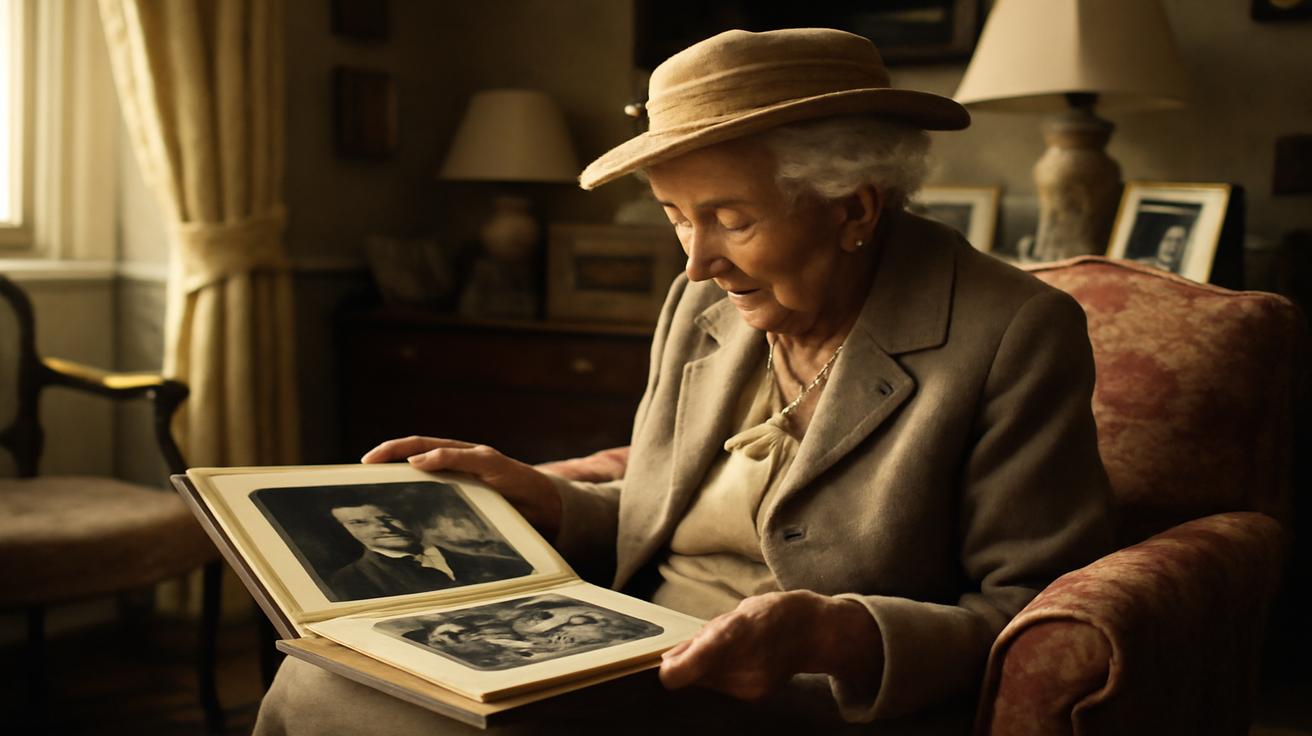
If you were born in the 1960s or 1970s, your childhood probably unfolded in the rearview mirror of a car. You remember the feel of cracked vinyl seats sticking to the backs of your legs, no seatbelt in sight, windows cranked down with that clunky metal handle. You were left in the car while your parents “ran in for just a minute” that lasted half an hour. No one tracked your location. You came home when the streetlights blinked on, or when somebody’s mom leaned out the door and yelled your name into the dusk.
Your generation grew up in the long shadow of parents who had their own unfinished business—mothers who were told to “make it work” no matter what, fathers who learned that feelings were something you buried under a second shift, a fifth beer, or both. Divorce rates climbed, layoffs came in waves, neighborhoods changed overnight. You saw adults crumble and then go to work the next morning like nothing happened.
You didn’t have the language for anxiety or depression; you had “nerves” and “bad days.” You weren’t misdiagnosed; you were undiagnosed. The quiet kid was “shy.” The angry kid was “a handful.” The sad kid was “too sensitive.” Therapy belonged to movie characters with money or breakdowns dramatic enough to stop the plot.
So you adapted. You became good at reading rooms, at knowing when not to ask questions, at walking yourself to school, at heating up your own dinner, at turning the TV up just enough to drown out the argument in the next room. You told yourself it was normal. Everyone you knew was some variation of the same story: make do, get by, keep going.
When Survival Skills Get Rebranded as Symptoms
Fast forward a few decades. You’re in a world where people openly talk about panic attacks in work meetings, where HR sends emails about mental health days, where teenagers use words like “boundaries” correctly in sentences. Social media is flooded with pastel slides explaining fight‑flight‑freeze‑fawn, complex PTSD, generational trauma. Algorithms notice your age and your interests and start serving you videos by earnest therapists saying things like, “If you find it easier to do things alone than to ask for help, that’s a trauma response.”
You stare at your phone. You think about every time you’ve pridefully said, “I don’t rely on anyone.” You think about paying your own way since you were 17. You think about working through a fever because you didn’t want anyone to think you were weak. Suddenly, what you had always thought of as your backbone is being relabeled as scar tissue.
It’s disorienting, this sudden shift in language around pain and strength. On one hand, there’s relief: so it wasn’t just you; there were reasons you worked so hard to become unbreakable. On the other hand, there’s anger: does everything have to be “trauma” now? Isn’t it possible that sometimes people are just tough because life required them to be?
Here’s where it gets complicated. The skills you developed were and are real strengths. Being reliable, hardworking, resourceful, composed under pressure—those are solid, admirable traits. They built lives, kept families afloat, created careers and communities. And yet, if you trace them far enough back, many of those strengths grew out of conditions where you didn’t get to choose. You became hyper‑competent because there was no one to catch you if you fell.
| Common Strength | How It Helped | When It Might Be Trauma‑Driven |
|---|---|---|
| Hyper‑independence | You can handle life, solve problems, and function on your own. | You feel anxious or ashamed asking for help, even when overwhelmed. |
| Work ethic | You’re dependable, productive, and often successful. | You only feel worthy when achieving or staying busy. |
| Emotional control | You stay calm in crises and think clearly. | You struggle to feel or express emotions at all, even in safe moments. |
| Caretaking | You’re supportive, responsible, and tuned in to others’ needs. | You ignore your own needs and feel guilty resting or receiving care. |
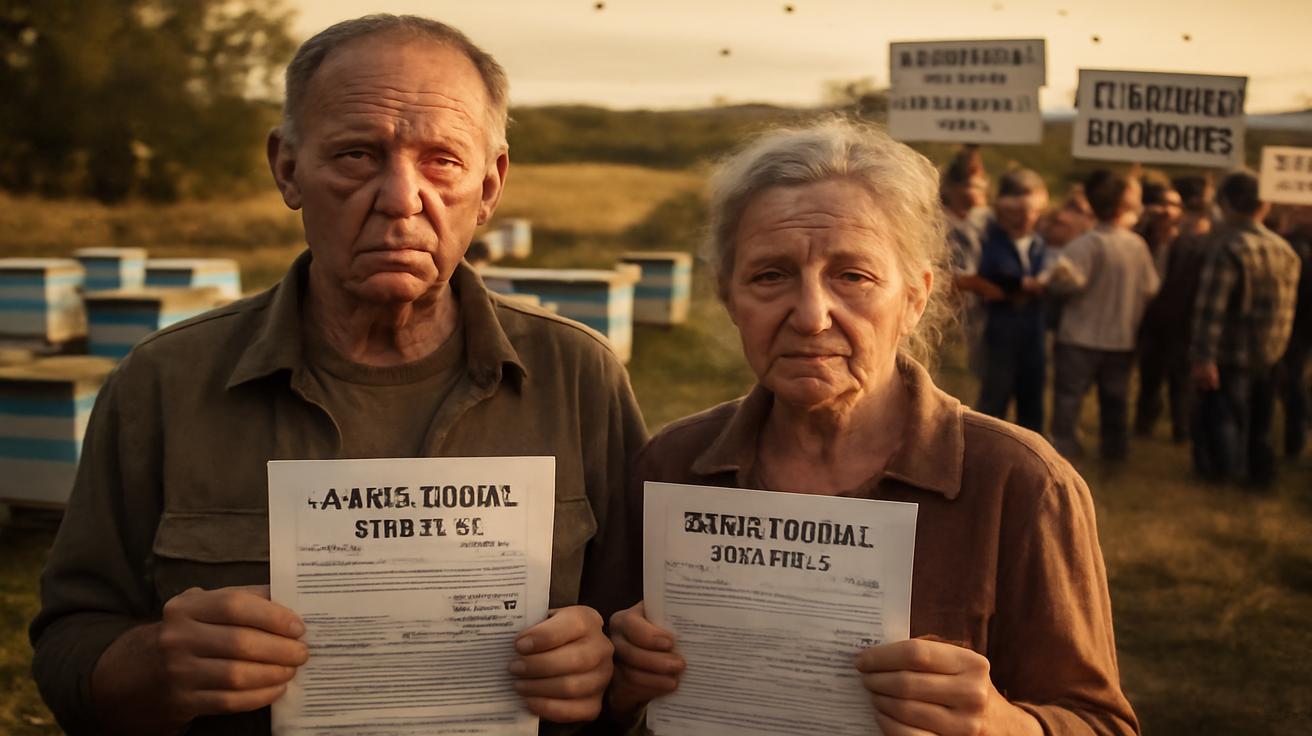
Calling everything “trauma” can flatten nuance. But refusing that word altogether can erase very real wounds. People born in the 60s and 70s are standing right in the middle of that tension, caught between two cultural stories: one says “be resilient and stop complaining,” the other says “name every hurt and own your victimhood.” Neither fits comfortably.
The Tightrope Between Resilience and Victimhood
You were raised on slogans like “no pain, no gain,” “what doesn’t kill you makes you stronger,” and “life isn’t fair.” These were not metaphors; they were operating systems. Pain was a tutor, not a diagnosis. Nobody apologized to kids for the economy, for wars on the news every night, for the sudden disappearances of neighbors who “moved away” overnight. You learned to swallow confusion and keep showing up.
Now, the cultural pendulum has swung. We talk—more than any previous era—about safety, triggers, boundaries, psychological harm. We recognize that some of what was called “tough love” was really just harm without the love. We’re more willing to say, “You went through too much” instead of “You turned out fine.”
In that swing, though, something else has crept in: the seduction of staying in the story of what happened to you as your whole identity. When every friction is micro‑trauma and every challenge is “toxic,” the word “victim” stretches to cover almost every human experience. For a generation whose whole childhood was defined by not being asked how they felt, the sudden pressure to narrate every feeling can feel like whiplash.
So where’s the tightrope? Somewhere between stoic denial and permanent self‑pity. On one side: “I’m fine, it made me stronger, end of story.” On the other: “Everything about me is broken by my past.” Both erase something true. You did adapt; you are strong. And yes, some of that strength formed around real wounds that still ache in quiet rooms.
The question isn’t “Was it trauma or was it strength?” The more honest question is, “Where did my strength come from, and is it still serving me the way I think it is?” That’s a far more unsettling question, because it invites you to admit that some of your proudest traits also cost you something: intimacy, rest, softness, the ability to let others show up for you.
What the 60s–70s Cohort Carries in Their Bones
To understand why this conversation cuts so deep for this particular age group, you have to look at what you lived through collectively. You’re the kids who watched the Cold War end and the space shuttle explode live on TV. You saw the Berlin Wall fall, the AIDS crisis ignored, recessions hit like slow‑motion earthquakes. You remember when news arrived at 6 p.m. and not in a continuous scream from the device in your pocket.
You entered adulthood just as the rules changed. College—if you went—came with rising tuition but promises of stability. Then came the layoffs, the dot‑com crash, 9/11, the financial crisis, entire industries reorganizing overnight. You watched your parents’ idea of “a job for life” dissolve while being told you were lucky to have “flexibility.”
At home, you straddled generations of parenting. Many of you raised your children with more emotional vocabulary than you ever got, negotiating with toddlers in car seats you never had, Googling developmental stages your parents handled with “Because I said so.” You tried to be present in ways your parents couldn’t or didn’t know how to be, even while working longer hours in a digital economy that never really turns off.
You are, in many ways, the original beta testers of modern adulthood. Pre‑internet childhood, post‑internet work life. Analog roots, digital branches. You understand what it’s like to be unreachable and what it’s like to be reachable too often. You remember when mental health was a secret and when it became a brand.
All of this lives in your nervous system. Of course you learned to adapt quickly, to hold it together, to keep going. Of course you’re suspicious when someone suggests that your legendary capacity to cope might not be wholly benign. Because if your coping is trauma, what does that say about the last 40 or 50 years of your existence? Who were you if not the person who could handle it?
Why “Trauma” Feels Like an Insult—and a Relief
There’s a particular sting when someone implies that your carefully earned competence is just a side effect. It can feel like being demoted from hero to case study. You worked terrifyingly hard to become reliable, to be the person others could lean on. You paid for that reliability with your own exhaustion and sometimes your own unspoken loneliness.
And yet, if you’re honest, there’s also a flicker of recognition. That quiet thought: “Maybe I did have to grow up too fast. Maybe I did learn to be strong because I never felt entirely safe.” It’s the moment in the movie when the unflappable character finally admits they’re tired. The word “trauma” doesn’t have to erase what you built. It can simply acknowledge the conditions under which you were forced to build it.
The danger is getting stuck in either reaction. Dismissing the whole concept as trendy victim talk means you might never examine the parts of your strength that are hurting you now—like the way you can’t relax on vacation, or how you clean the kitchen at midnight because sitting still with your thoughts feels unbearable. But also, collapsing entirely into the narrative of trauma—retrofitting every memory into a diagnostic label—can keep you circling the wound without ever walking forward.
Maybe the most radical thing for your generation is this: letting both be true. You are both resilient and impacted. You were both resourceful and under‑supported. You can honor the power of what you survived without denying that, at times, you were a kid or a young adult in over your head, improvising adulthood with very few safety nets.
Building a New Kind of Strength from Here
So what does it look like to stand in that in‑between space without falling into either extreme? It might start with small, deceptively simple acts that feel strangely rebellious for someone raised on “just deal with it.”
It’s noticing the moment your chest tightens when you think about asking a friend for help moving, and choosing to ask anyway, just to see what happens. It’s naming, out loud, to someone you trust: “I’m realizing I don’t know how to rest without feeling guilty.” It’s recognizing that your ability to power through a 12‑hour workday is impressive, but your inability to sleep more than five hours without waking up scanning for threats might not be something you want to keep defending as “just how I am.”
This isn’t about dismantling your strengths. It’s about expanding them. True resilience isn’t just muscle; it’s flexibility. It’s the capacity to bend, to delegate, to soften, to admit you’re not a machine and never were. The most quietly revolutionary thing you might ever do is allow yourself to experience safety—not as an accident or a fluke, but as something you’re allowed to want and build.
That might mean therapy, yes, in a form that doesn’t require a full‑scale breakdown to justify. It might mean reading about nervous systems and realizing yours has been running in a higher gear for decades. It might mean looking at your kids or younger coworkers and, instead of resenting their language of boundaries and burnout, letting their questions rub off on you just a bit.
You don’t have to swing all the way into a new identity where you are nothing but wounded. You also don’t have to keep pretending that the cost of being endlessly strong has been negligible. You can be the generation that does something profoundly grown‑up: hold complexity without choosing a side. You can say, “I am proud of my strength. And I’m also curious, now, about where it came from and what else is possible.”
What This Moment Says About All of Us
When people born in the 1960s and 1970s are told that their hard‑earned strengths are actually trauma, it reveals more than a generational clash. It exposes a culture trying, clumsily, to evolve its understanding of what it means to be okay. We are collectively renegotiating the line between healthy coping and quiet suffering, between admirable grit and unnecessary self‑erasure.
The younger generations, armed with language and access to mental health concepts that didn’t exist in your childhood, sometimes overshoot, labeling every discomfort as damage. Older generations, armed with a lifetime of “sucking it up,” sometimes undershoot, dismissing very real harm because “everyone went through something.” Somewhere in the middle is a conversation worth having: What if we respected resilience and also made it less necessary? What if the goal wasn’t to turn everyone into patients or martyrs, but to normalize being human in all its messy, contradictory forms?
For the in‑between generation—too old to have grown up with therapy TikToks, too young to fully belong to the stoic silence of their parents—this is the crossroads. You can choose to be the bridge. You can translate between “We didn’t talk about that stuff” and “We talk about nothing but that stuff.” You can hold the memory of nights you spent quietly coping and still encourage your kids, your colleagues, or even yourself to say, “I think this hurt me more than I realized.”
In the end, no one on a screen gets to decide whether your work ethic is noble or neurotic, whether your independence is empowerment or armor. Only you, living in your own body and history, can feel the difference between a strength that energizes you and one that silently drains you. The invitation of this moment—this new language, this awkward cultural experiment—is not to strip you of your dignity, but to offer you more tools than you were given the first time around.
You’ve already proven you know how to survive. The question this era poses to you is quieter, and maybe more unsettling: Do you want more than survival? And if you do, are you willing to let some of your old strengths loosen their grip so that something gentler, but no less powerful, can grow in their place?
Frequently Asked Questions
Is everything being called “trauma” now?
Not everything painful is trauma, and the word is sometimes overused. Trauma generally refers to experiences that overwhelm your ability to cope and leave a lasting imprint on your nervous system and sense of safety. The current trend is partly a course correction after decades of under‑recognizing harm, but it can feel exaggerated. It’s okay to use more precise language—stress, hardship, grief—when that fits better.
Can my strengths really come from trauma and still be strengths?
Yes. Many valuable traits—like resilience, independence, or calm under pressure—originate as adaptations to difficult environments. They can be both helpful and rooted in past hurt. The key is asking whether those traits still serve you now, and whether you can access them by choice rather than compulsion.
How do I know if my “work ethic” is healthy or a trauma response?
Notice what happens when you try to rest. If you can step back, recharge, and still feel worthy and safe, your work ethic may be balanced. If you feel intense guilt, anxiety, or fear of being “nothing” without constant productivity, that can signal a trauma‑driven pattern. The behavior might look the same from the outside; the difference is how it feels on the inside.
Is it too late to work on this if I’m in my 40s, 50s, or 60s?
No. The brain and nervous system remain capable of change throughout life. Many people begin deeper emotional work in midlife, when they finally have enough distance, perspective, or stability to examine old patterns. It’s never too late to add flexibility, self‑compassion, and new ways of relating to yourself and others.
How can I honor my resilience without denying my pain?
You can start by telling your story in full sentences instead of either/or statements. For example: “I’m proud of what I handled, and I also wish I’d had more support.” Or, “My independence has carried me far, and it’s sometimes lonely.” Holding both truths at once allows you to respect what you built while also acknowledging where it hurt—and from there, you can choose what you want to keep and what you’re ready to soften.






Leave a Comment