
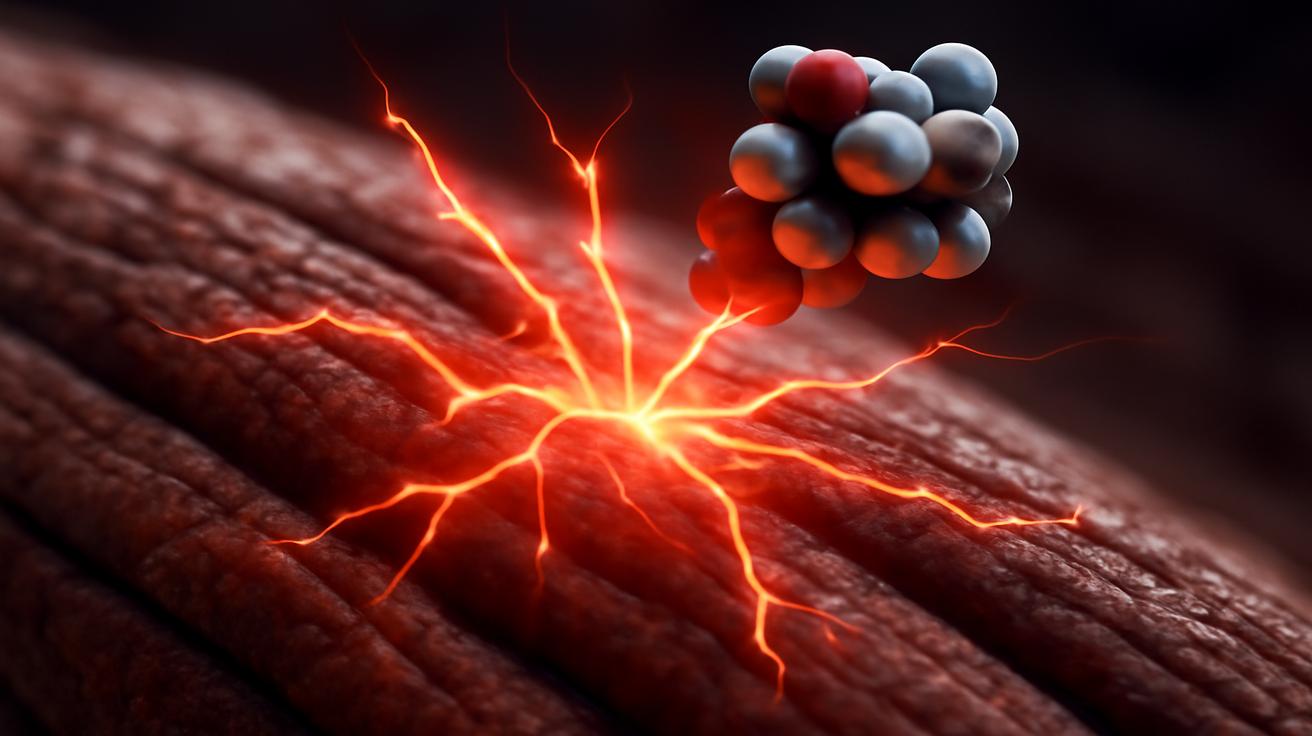
The man sits on the papered edge of the exam table, tugging absently at the hem of his T‑shirt. Outside, beyond the tinted clinic windows, the late‑afternoon light lays soft and golden over the parking lot oaks. Inside, his doctor is explaining graphs and percentages—heart attack risk, stroke risk, LDL levels like little villains in his bloodstream. Then comes the familiar prescription pad moment. A statin. “It’ll help protect your heart,” the doctor says. “You might get some muscle aches, but most people do just fine.”
Two weeks later, he is lying awake at 3 a.m., air from the bedroom fan brushing over his skin like silk, and yet his thighs feel as if he has run uphill through wet sand. His calves ache in a dull, insistent way, a bruise with no visible mark. He shifts, searching for a painless position. There it is again, that question you can almost hear echo through millions of bedrooms across the world:
Why do these pills that help my heart make my muscles hurt?
A Familiar Medicine with a Silent Riddle
By now, statins are as much a part of modern life as blood pressure cuffs and plastic pill organizers. They slip easily into the everyday: a small white tablet beside your morning coffee, a prescription bottle rattling faintly in a handbag, a reminder on a smartphone that pops up between emails. For decades, they’ve been the quiet guardians against clogged arteries, reducing heart attacks and strokes in ways that have reshaped entire populations’ health.
Yet in their wake, they’ve left a long shadow: the nagging muscle aches and cramps that some patients describe with a mixture of frustration and guilt. Frustration, because the pain is real. Guilt, because they’ve been told, more than once, that maybe it’s “just in their head,” or “part of getting older,” or “not actually from the statin.”
Doctors have struggled too. The evidence is complex. In clinical trials, severe muscle damage from statins—rhabdomyolysis—is rare. But milder forms of pain and weakness, the kind that make people stop their pills or whisper to friends about their side effects, are common enough to haunt every checkup conversation. Somewhere between statistics and lived experience lay a mystery that had endured for nearly 30 years: if statins are so well studied, why do some muscles hurt so much?
The answer, it turns out, was hiding in the microscopic machinery of our cells, in the quiet flicker of calcium currents and the misfiring of tiny power plants inside our muscle fibers. And only recently have scientists begun to put all the pieces together.
The Long Hunt Inside a Muscle Cell
The Calcium That Wouldn’t Sit Still
Imagine shrinking yourself down and walking along the landscape of a human muscle cell. Under a high‑resolution microscope, it looks almost architectural—rows of filaments in tight formation, tidy stacks of proteins ready to pull and release, making movement possible. In this near‑alien city of molecules, one element behaves like a messenger with a key to every door: calcium.
Calcium doesn’t just build bones; in muscle cells, it’s the on–off switch for contraction. At rest, calcium is stored away, held like water behind a dam. When your brain tells your legs to climb a hill or your hands to lift a box, a signal zips down the nerves into muscle fibers and those dams open. Calcium floods the cell interior, myosin grabs onto actin, and the muscle tightens and releases in seamless rhythm. When the work is done, pumps pull the calcium back into storage. Order is restored. The dams close.
For years, scientists suspected that something about statins was disturbing this rhythm. The clue came from a recurring pattern: when patients on certain statins developed muscle pain, their symptom profiles and bloodwork hinted at low‑grade, ongoing damage inside those fibers—nothing catastrophic, but enough to make muscles feel tired, sore, unreliable.
It was as if, inside those cells, the calcium dams were not staying closed. Instead, they were seeping, just a little, all the time.
A Leaky Gate with a Familiar Name
Hidden inside your muscle cells is a structure called the ryanodine receptor, commonly shortened to RyR. Think of it as a gate that controls calcium release from storage chambers inside the cell. When everything works perfectly, RyR opens cleanly when a nerve signal arrives, then closes when it’s time to rest.
In a breakthrough line of research, scientists studying statin‑related muscle problems discovered that these RyR gates were being destabilized. Certain statins, sometimes in combination with other factors like genetics or other medications, seemed to leave the gate in a slightly faulty position—not wide open, not firmly shut. Just…leaky.
This tiny leak sounds trivial. But on the time scale of hours, days, weeks, that faint trickle of calcium streaming out when it shouldn’t creates a slow, internal stress. Muscles never fully relax. They burn energy at rest. They begin to accumulate microscopic damage that the body must constantly repair. To the person living in that body, this isn’t a chemistry problem—it’s a sensation: heaviness, stiffness, tenderness after simple tasks, a feeling as if the muscles have quietly run a marathon you don’t remember signing up for.
Here, after decades of confusion and sometimes skepticism, was the first deep, cellular explanation that made intuitive sense: statins could turn healthy calcium switches into leaky faucets.
Statins, Power Plants, and Tired Muscles
The Mitochondria Story You Can Feel
Of course, a human muscle cell is not a one‑problem machine. Right beside those calcium gates stand hundreds of tiny, oval‑shaped structures: mitochondria, often called the power plants of the cell. Their job is to turn fats and sugars into ATP, the little packets of chemical energy that fuel every contraction.
Statins work by blocking an enzyme in the liver that produces cholesterol. But that same pathway affects other molecules too, including some that mitochondria love to use. One in particular, coenzyme Q10 (or CoQ10), acts like a helper inside those power plants, passing electrons along like a careful courier. Without enough of it, the system runs, but not smoothly.
Researchers began to notice a pattern: in some people, statins seemed to subtly interfere with mitochondrial efficiency. Combined with calcium leaks, this was like leaving your appliances running all night on a flickering power grid. Muscles were asked to sustain a low level of background stress, 24 hours a day, on slightly compromised energy supplies.
The result wasn’t dramatic failure. It was fatigue that arrived too early in the day. Legs that felt rubbery after an easy walk. A sense that the body’s “reserve tank” had quietly shrunk. This isn’t a side effect you can neatly capture on a lab chart; it’s something you notice when tying your shoes feels unexpectedly like work.
Not Everyone’s Muscles React the Same
In nature, even two trees grown from the same seed source can respond differently to wind, drought, and soil. Our bodies are no different. Not every muscle reacts to statins with the same vulnerability. Genetics matter. So do other medications, age, exercise habits, and even the health of our kidneys and liver.
Certain gene variants change the way statin drugs are transported into and out of muscle cells, or how they’re broken down in the liver. For some people, the concentration of active statin inside muscle tissue can become higher than intended, amplifying the stress on calcium channels and mitochondria. For others, the same dose of the same pill slips through their system like a whisper, doing its job in the liver with barely a ripple in the muscles.
This explains why one neighbor can take high‑dose statins for 20 years and jog happily every morning, while another struggles to climb stairs after two weeks on a low dose. The drug is the same; the terrain it crosses is wildly different.
How Scientists Finally Connected the Dots
From Petri Dishes to Patient Stories
Solving the 30‑year mystery of “why statins hurt” required scientists to move back and forth between two worlds: the controlled quiet of the lab bench and the messy realness of human life. In the lab, they bathed muscle cells in statin solutions and watched what happened with sensitive cameras and fluorescent dyes. Under magnification, the calcium leaks became visible as tiny, rhythmic sparks of light—a kind of cellular static that never turned off.
They measured mitochondrial function and saw subtle drops in efficiency, like engines that now needed a little more fuel to produce the same power. They checked for markers of muscle breakdown and repair, confirming that even without full‑blown damage, there was a constant churn, a low‑grade storm beneath the surface.
Then they turned to patients: volunteers who had stopped statins because of muscle pain, and those who had taken them for years without trouble. Biopsy samples, genetic tests, symptom diaries—all these threads were woven into a clearer tapestry. Over and over, the same picture emerged: in the people who hurt, calcium channels were more unstable, energy production was more strained, and specific genetic signatures suggested a heightened sensitivity.
The mystery was no longer a ghost story—vague tales of side effects passed between patients. It had become a solid narrative in molecular detail. Statins could, in susceptible muscles, create a perfect storm of leaky calcium, overworked mitochondria, and chronic, microscopic injury. The pain was not imaginary. It was the voice of cells under constant, invisible labor.
What This Means for the Person Holding the Pill Bottle
Risk, Reward, and Real Options
If this story were about a villain, the ending would be simple: you’d stop the statin, walk away, and never look back. But nature rarely gives us such clean lines. Statins, for all their flaws, save lives—thousands of them every day, in every country where they’re prescribed. They prevent strokes that would steal speech, heart attacks that would silence laughter, sudden deaths that would break families open.
Now that we know why they hurt some people, we also understand that the solution is not to abandon them altogether, but to use them more wisely, more personally.
Here is what that can look like in real life:
| Strategy | How It Helps |
|---|---|
| Trying a different statin | Some statins are more “muscle‑friendly” or are processed differently by the body, lowering the chance of calcium leaks and mitochondrial stress. |
| Lowering the dose | Even a partial dose can deliver substantial heart protection, with less strain on muscle cells. |
| Alternate‑day dosing | For some people, taking the medication every other day calms muscle symptoms while maintaining cholesterol control. |
| Adding a non‑statin drug | Other cholesterol‑lowering medicines let you use a smaller statin dose, reducing side effects. |
| Checking other causes | Thyroid issues, low vitamin D, dehydration, or over‑exercise can magnify muscle pain and are often treatable. |
The new science doesn’t just explain the aches; it arms doctors and patients with a vocabulary for problem‑solving. When a patient says, “My legs feel heavy and sore,” the response no longer has to be a shrug. It can be: “Let’s see if this is statin‑related and, if it is, let’s adjust with a clear purpose.”
More personalized approaches are emerging too. Genetic testing, still in early stages for most clinics, may eventually help identify people at higher risk of statin muscle side effects before they ever swallow a pill. Novel drugs that target cholesterol in different ways—without disturbing calcium channels—are already in use for some high‑risk patients, with more on the horizon.
A New Way to Listen to the Body’s Signals
From Blame to Curiosity
In the exam room, the conversation itself is changing. Instead of framing muscle pain as an unfortunate but mysterious trade‑off, more clinicians are learning to think in terms of cell biology, individual vulnerability, and flexible treatment design.
For the patient, this shift can feel subtle but profound. Pain, after all, is how the body speaks up when something is off. For years, patients who reported muscle aches on statins sometimes felt dismissed, as though they were being difficult or noncompliant. Now, with the 30‑year mystery largely unraveled, the tone can become more collaborative: “Your muscles might be telling us that this particular dose, or this specific statin, isn’t the right fit. Let’s adjust.”
The science does not excuse alarmism. Most people who take statins will never experience significant muscle pain, and the benefits, for many, are enormous. But it does invite a different kind of attention, one that respects both the internal language of cells and the lived experience of the person who inhabits them.
Outside the clinic window, the same late‑afternoon light slides over trees and power lines. Inside, across thousands of conversations, statins are no longer a black‑box prescription. They are medicines whose strengths and weaknesses we can finally see with clearer eyes: helpful, often lifesaving, yet capable of stressing the very fibers that let us move through the world.
And as we learn to listen better—to calcium sparks and mitochondrial fatigue, to genetics and to patient stories—we come closer to a future in which a pill that protects the heart doesn’t have to make the body feel like it is quietly, constantly, at war with itself.
Frequently Asked Questions
Do all statins cause muscle pain?
No. Most people who take statins never develop significant muscle symptoms. Muscle pain risk varies by the specific statin, the dose, your genetics, other medications, and your overall health. Some statins are less likely to affect muscle cells and may be better tolerated.
How can I tell if my muscle pain is really from my statin?
Muscle pain from statins often begins within weeks to a few months after starting or increasing the dose, and tends to affect both sides of the body—thighs, shoulders, calves—rather than a single joint. If pain improves after stopping the statin (under medical guidance) and returns when it is restarted, that’s a strong clue. Always talk with your clinician before making changes.
Is statin‑related muscle pain dangerous?
Most statin muscle symptoms are mild to moderate and not dangerous, though they can affect quality of life. Rarely, severe muscle breakdown (rhabdomyolysis) can occur, causing intense pain, weakness, and dark urine. That is a medical emergency. Any sudden, severe muscle pain or weakness with fever or urine color changes deserves urgent evaluation.
Can supplements like CoQ10 prevent statin muscle pain?
Because statins can affect pathways related to CoQ10, this supplement has attracted interest. Some people report improvement, but study results are mixed. CoQ10 is generally well tolerated, yet it is not a guaranteed fix. Always discuss supplements with your healthcare provider, as they can interact with other medicines or conditions.
What should I do if my statin makes my muscles hurt?
Do not stop on your own without talking to your clinician, especially if you are at high risk for heart disease or stroke. Instead, describe your symptoms clearly—where the pain is, when it started, how it affects daily life. Your doctor can check for other causes, adjust the dose, switch to a different statin, change how often you take it, or add non‑statin medications to keep your heart protected while easing the burden on your muscles.








Leave a Comment