
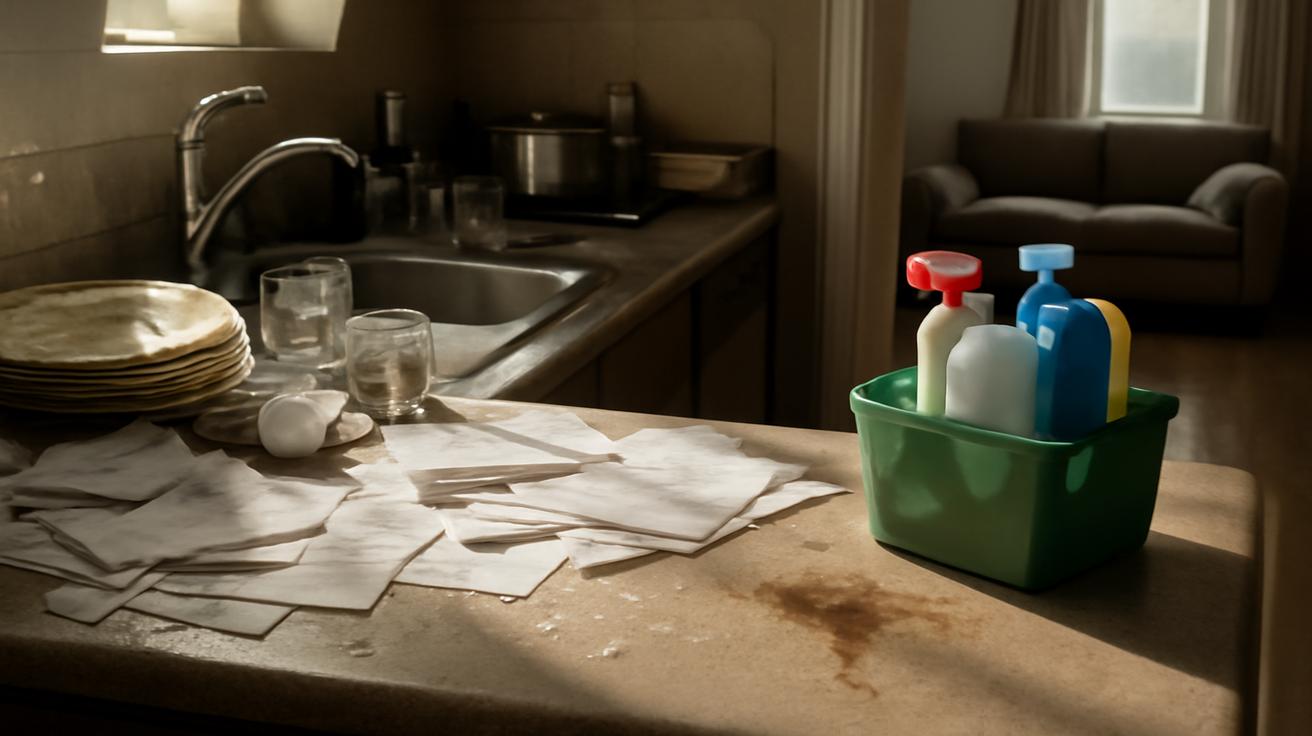
The drawer was perfect on paper. Labeled. Measured. Color-coded dividers, each section promising a new life built on clarity and order. You stood over it that Saturday afternoon, sun spilling across the kitchen counter, a trash bag at your feet and your favorite playlist humming in the background. This time, you said to yourself, this time it will stay clean. You slid the drawer shut with a small burst of satisfaction, like closing the cover on a completed chapter.
Three weeks later, the batteries are loose again, the rubber bands have migrated, there’s a rogue screwdriver under the birthday candles, and the drawer resists closing without a gentle shove of your hip. The system is still there. The labels are still there. But the order is gone. And you’re left wondering—was the system flawed, or was something else at work?
The Forest, the Path, and the Mess We Keep Walking Through
Imagine you’re walking through a forest that you love. You take the same trail every day, winding past ferns and old stones, over roots and under leaning branches. For years, people have wandered this route, boots tamping down the soil, turning it into a clear, familiar path. Now imagine that one morning, someone strings up signs saying, “New Trail!” They rake a fresh line through the underbrush, smooth and inviting, and tell everyone this is the better way—more scenic, more efficient, more logical.
On day one, the new trail is beautiful—no mud, no tangled roots, no confusion. But there’s a problem: your feet don’t know it yet. Your body, half-distracted and half on autopilot, follows the old path because that’s what it has practiced, step after step, for years. You don’t have a “willpower problem.” You have a well-worn trail problem.
Cleaning systems that ignore daily habits are like those bright, freshly raked trails that never quite replace the old route. We design them in a burst of clarity on a day when the house is quiet and the sun is generous. We pull everything out, we sort, we label, we stack. But our days don’t actually run on those rare, quiet, sunny-Saturday versions of ourselves. They run on muddy-boots, running-late, where-did-I-put-my-keys versions. The path we walk then, without thinking, will always win.
We like to believe that organization is about bins and baskets and clever folding methods, but it’s more about default behaviors in the blur of everyday life. If the system doesn’t match the way we naturally move, reach, drop, pile, and stash—it fails. Not loudly, not all at once, but in slow, silent erosion, one “I’ll just put this here for now” at a time.
The Quiet Gravity of Everyday Movements
Watch yourself come home. Not the idealized version of you, but the real one. The one walking through the door at 6:37 p.m., carrying two grocery bags, a bag that might be trash or might be returns, your phone buzzing with one last message, and a jacket that’s a little too warm now that you’re inside. Where do things land?
The keys might drop onto the first flat surface by the door—or in the second room, or on the kitchen table. Your shoes pause exactly where your feet stop feeling tired. The mail fans out on the nearest open patch of counter. These are not moral failures. They’re simply gravity at work—the gravity of convenience, energy, and habit.
Now imagine that your cleaning system demands something else: keys must be carried across the room into a lidded box inside a drawer; shoes must go in a closet at the end of the hallway; mail must be sorted instantly into six labeled folders. It all looked brilliant when you set it up, but now, in the middle of your actual life, it asks too much. Not in theory. In seconds, attention, and energy.
Systems fail not because people are lazy, but because the friction is in the wrong place. We make putting things away slower than dropping them. We pretend we’ll always be in the mood to take the scenic route when, most days, we just want to get inside and put everything down.
If you listen carefully, your house will tell you where your habits really live. That pile by the chair? That cluster on the counter? Those are not “bad spots.” They’re unofficial landing zones—habit trails. When systems ignore these, they don’t fix clutter; they just make it harder to put things where they “belong,” and eventually, we stop trying.
The Myth of the Weekend Reset
There’s a romance to the idea of the “big reset.” The dramatic before-and-after. One mighty weekend of effort in which you conquer chaos, reclaim your space, and begin anew. It feels like a movie montage: trash bags, slow pans over clear shelves, a ceremonial sweep of the broom, and then—peace.
But real homes are not movie sets; they’re ecosystems. And ecosystems aren’t transformed by one thunderstorm. They’re shaped by the daily weather: small, repeating patterns of sun, shade, rain, wind. The way we treat our homes day in and day out—the jacket here, the mug there, the shoes dropped always in that one corner—these are the weather systems that matter.
The “weekend reset” model often collapses because it treats cleaning like an event, when in truth it’s a rhythm. In nature, there is no “deep clean weekend.” There are only cycles: leaves fall, soil forms, moss grows, roots reach. Bit by bit, tiny organisms do what they always do, carrying out the quiet, continuous maintenance that makes the forest look effortlessly whole.
When a cleaning system ignores that rhythm and pins all its hopes on occasional dramatic efforts, it will always feel like starting over. You know this feeling: the closet that has been “reorganized” three times this year, the pantry that looked stunning for six days, the desk that briefly became a flat, clear landscape before paperwork began drifting back like snow.
Without small, habitual movements to protect it every day, order becomes a temporary performance. The forest path you raked on Saturday grows wild again because no one actually walks it during the week.
Where Most Systems Quietly Go Wrong
It can help to see this clearly. Many well-meant systems fail not because they were bad ideas, but because they forgot to ask: “What do we actually do all day?”
| Common System | What It Expects | What Actually Happens |
|---|---|---|
| Beautiful labeled bins in a high closet | You’ll grab a step stool every time you put something away | Stuff piles on the nearest reachable surface instead |
| Intricate mail sorting system with many categories | You’ll sort immediately when you walk in | Mail forms a single “I’ll deal with it later” stack |
| Folded, file-style clothing in deep drawers | You’ll fold every laundry load perfectly | Clothes are rummaged through and end up in loose piles |
| Complex cleaning schedule | You’ll remember and obey a calendar of tasks | You clean reactively when things feel urgent or overwhelming |
In each case, the system is logic-first, habit-later. It begins with “What would be ideal?” instead of “What do we already do, almost without thinking?” A system that fights your instincts will always feel like friction. A system that rides your instincts feels like relief.
The House That Learned to Watch Itself
There’s a kind of magic that happens when you stop designing your home from your aspirations and start designing it from your patterns. Not the polished patterns you wish you had, but the messy, honest ones that already exist.
Think of a family who kept losing their keys. They tried everything: hooks by the door, a ceramic bowl, an elegant tray, a small dish on the dresser. None of it stuck. The keys wandered. Arguments followed. “Why can’t we just put them in the same place?” they’d ask.
One evening, instead of lecturing themselves, they watched themselves. Really watched. For a week, they paid attention to the moment keys left their hands. The pattern was embarrassingly clear: the keys landed on the kitchen counter within a two-foot radius of the fridge. Every time. They did not walk past this point; the grocery bags, the mail, the weight of the day all ended here.
So they did something deceptively simple: they put a shallow, visible tray in that exact spot. Not by the door, not hidden, not aesthetic-first. Habit-first. The system didn’t demand a new behavior—it welcomed the existing one. The tray filled, emptied, filled again. But the keys stopped disappearing.
This small story is the backbone of every sustainable cleaning and organizing system: you watch, then respond. Instead of forcing your home into an imagined ideal, you let it show you where things want to live. Where do mugs pile up? Put a coaster or tray there and call it a mug zone. Where does laundry always end up on the floor? That’s the true hamper location, no matter what the catalog tells you.
Nature works this way, too. Water doesn’t lecture itself about where it should flow; it follows the path of least resistance and carves new shapes over time. When we respect the flow of our habits instead of fighting them, our homes stop feeling like uphill battles.
Small Habits, Not Grand Declarations
The most durable systems grow out of tiny, repeatable actions that can survive a bad mood, a long day, or a restless night. A coat peg placed exactly where your hand goes as you walk in. A basket on the stairs for “everything going up,” emptied whenever someone climbs. A rule that anything leaving the kitchen must come back the next time you return, no drama, no perfection required.
These are not glamorous. They don’t look like the “after” photos in decluttering shows. They look, instead, like a home that knows how to exhale after each day instead of gasping for breath every few weeks.
Why Ignoring Habits Feels Like Blaming the Weather
When a cleaning system fails, most people blame themselves. “I’m just not disciplined.” “I’m so disorganized.” “Nothing ever stays neat.” But this is like blaming a river for not flowing uphill. You can shout at it, shame it, build elaborate structures against it—but unless you respect the direction it naturally wants to go, your efforts will crack and crumble.
Habits are not moral verdicts; they’re practiced shortcuts. Your brain is constantly trying to spend less energy, not more. It builds automatic routines so that you don’t have to make a thousand tiny decisions each day. When your cleaning system demands extra choices, extra steps, or extra effort, your brain quietly votes against it, especially when you’re tired, stressed, or rushed.
Ignoring daily habits when designing systems is like planting a garden without asking where the sun actually falls. You can put the delicate herbs wherever looks prettiest, but if they don’t get light, they will wilt, no matter how much you “intend” to water them.
So many of us have tried to force systems that only work on perfect days. We vow to file every paper immediately, to fold every shirt the same way, to never again drop a bag on the floor. And then life happens, in all its muddy, hurried, wonderfully human ways. The system cracks, and we call it failure, when really it was just fragility.
Building Systems That Bend, Not Break
The cleaning systems that last are not the strictest ones. They’re the most forgiving. They assume that some days you will be tired, some days you will be rushed, some days you will simply not care. And instead of collapsing under that reality, they bend with it.
Forgiving systems are visible, accessible, and low-friction. Hooks instead of hangers when you know you won’t unbutton and rehang every shirt. Open bins instead of lidded boxes for toys, so that “close enough” counts. A “catch-all” basket in each busy room that you empty only when it’s full, instead of requiring yourself to put every single item back immediately.
They also spread the work into small, nearly invisible rituals: a two-minute “reset” before bed, a “clear the sink” habit after dinner, a quick sweep of visible surfaces when you transition between activities. These aren’t events; they’re just steps on a path you walk every day, until the path feels as natural as breathing.
Listening to the Wild Edges of Your Home
Every home has “wild edges”—those spots that keep erupting into clutter no matter how often you tame them. A basket that overflows, a table that gathers everything, a corner that breeds laundry. Instead of seeing these as personal failures, treat them like ecological clues. They’re telling you where the real traffic is.
When cleaning systems ignore these wild edges, they often try to erase them, forcing them into “tidier” shapes. But what if those edges are actually showing you where your life happens most intensely? The place where bags land might be the true heart of your arrival ritual. The table that gathers everything might be the thinking center for the whole household.
In nature, wild edges are where biodiversity thrives—where forest meets meadow, where river meets shore. In homes, those edges are where your habits collide with your aspirations. They’re worth studying, not scolding.
Turning Observation Into Gentle Change
Try this: for a few days, don’t organize. Don’t fix. Just notice. Where do things collect? What do you move again and again? Which tasks feel like wading through mud, and which feel almost effortless?
Then, instead of announcing a new system like a decree, make one tiny adjustment that supports what’s already happening. Move the laundry basket to where clothes actually drop. Add an extra hook where a jacket always ends up. Place a small trash can where wrappers regularly appear. These are not dramatic changes; they’re subtle realignments.
Bit by bit, your home begins to work with you instead of against you. The trails you walk every day become slightly clearer, slightly smoother. And over time, that’s what sticks—not the grand reorganization, but the daily ease.
The Real Reason Systems Fail—and What to Remember Instead
Cleaning systems fail when they are built for the person you are on your best day and ignore the person you are on all the other days. They fail when they ask you to walk a brand-new path every time you put something down, instead of gently widening the tracks you already travel.
The forest of your home doesn’t need a new map as much as it needs you to notice the paths under your feet. The way your hand reaches for that one spot. The way your shoes pause in that same patch of floorboards. The way the days spill across your surfaces in paper, cloth, crumbs, and keys.
Let those daily habits be the starting point, not the obstacle. Design around them. Honor them. Give them hooks, trays, baskets, shelves that match the way you truly live. When you do, cleaning stops feeling like a battle to be won and becomes something quieter—a set of small, almost invisible agreements between you and your space.
In the end, order that lasts doesn’t come from fighting your nature, but from listening to it.
Frequently Asked Questions
Why do my organizing projects never stay tidy for long?
Most organizing projects are designed around how you want to behave, not how you actually behave day to day. If the system adds extra steps or requires more effort than your natural habits, you’ll default back to what’s easiest—especially when you’re tired or busy. The key is to align your system with your existing routines instead of trying to replace them overnight.
How can I tell if a cleaning system is realistic for me?
Ask yourself two questions: “Will I still do this on my worst day?” and “Can a tired, rushed version of me follow this with almost no thought?” If the answer is no—if it requires many decisions, tools, or steps—it’s likely too fragile. A realistic system feels almost lazy-friendly: quick, visible, and low-friction.
What’s one small habit that makes a big difference?
A simple daily “reset” works wonders. Pick one anchor moment—after dinner, before bed, or right when you get home—and spend 5 minutes putting only visible items back into their general homes or catch-all baskets. Don’t aim for perfection; just aim to restore a little order. Done consistently, this prevents overwhelming buildup.
How do I involve other people in the house without nagging?
Make the easiest option the “right” one. Use open baskets, obvious hooks, and simple labels at everyone’s eye level. Then agree on a few shared, non-negotiable habits, like “dishes go to the sink” or “keys in the tray by the counter.” The less explanation a system needs, the more likely everyone will follow it without constant reminders.
Can I still have a big decluttering or cleaning day?
Yes, big resets can be useful to clear backlog—but they shouldn’t be your only strategy. Think of them as occasional storms that refresh the landscape, not the main climate that shapes it. Pair those big days with tiny, daily habits that keep your space from sliding back into chaos, and your efforts will finally start to stick.








Leave a Comment