
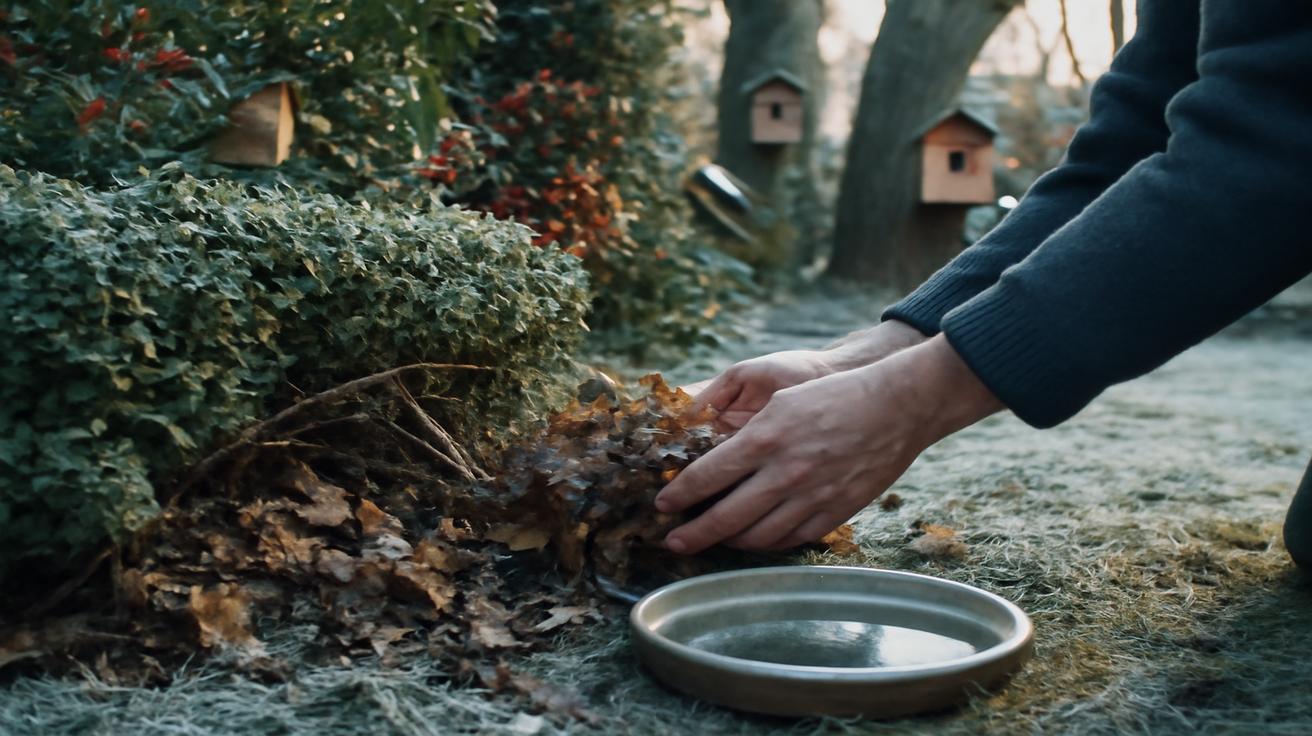
The robin arrived first, as he always does, materializing out of the pale January light like a small ember with wings. You had just stepped onto the frosty patio, breath clouding the air, a scoop of seed already rattling in the feeder. He watched you from the hawthorn, head tilted, the sharp black bead of his eye as familiar now as a neighbor’s glance. You tipped the feeder, heard the soft hiss of seed on plastic, and felt that tiny glow of satisfaction: the birds are taken care of. But as the robin dropped down to feed, he traced a quick arc over your bare flowerbeds, over the leafless hedge, over the ivy you trimmed back in autumn. And that is where the real story of winter help begins—far beyond the feeder.
The Hungry Silence Between Feedings
Put your ear to a winter garden and you’ll notice something subtle: the quiet is different. Summer hums and crackles with life. Winter is more careful, more deliberate. A blackbird turning over a leaf. A wren slipping mouse-like along the fence. A great tit checking every knot in the bark for a hidden spider egg. The feeder is a stage, but what your birds truly depend on is everything that happens in the shadows between refills.
It’s tempting to think “I’ve fed them—job done.” Yet for a garden bird, a seed mix is just one item on a long, invisible checklist of survival. They still need places to hide from sparrowhawks, corners where insects overwinter, safe watering spots that aren’t a block of ice by 10 a.m., and sheltered roosts where they can outlast a night that might dip below freezing.
Stand at your back door for a moment and look not at the feeder, but at the edges: the messy corner behind the shed, the tangles of climber on the fence, the old seed heads you’ve been meaning to cut back. In the cold months, that “untidiness” is the pantry, pharmacy, and emergency shelter of the birds you love watching.
Winter Shelter: Let Your Garden Breathe a Little Mess
Imagine being the size of a blue tit and meeting a January gale head-on. The wind slides fingers under every feather; the cold seems to come from inside your bones. For small birds, losing just a little body heat on a bitter night can mean they don’t make it to morning. Warmth is life, and warmth begins with shelter.
Dense shrubs and evergreen corners aren’t just decor. They are night shelters, storm bunkers, and hawk-avoidance zones. When you see a sparrow flock vanish into a hedge like water poured into a sponge, that’s not random. That’s years of instinct saying: in here, the wind lessens; in here, the predator’s talons are slower and clumsier.
Let the hedges keep their thickness
You don’t need to let your garden go wild, but winter is the time to be gentle with the pruning shears. Where you can, delay heavy trimming of hedges and big shrubs until late winter or very early spring, just before new growth. A leggy, thinned-out hedge looks neat to us, but to a robin or dunnock it’s like you’ve taken half the walls off their house during a storm.
Even a single dense evergreen—holly, yew, box, or laurel—can act as a crucial overnight roost. If you already have one, resist the itch to shape it perfectly in winter. If you don’t, consider where a compact evergreen might tuck into your planting. You’re not just adding green; you’re adding square footage to the bird hotel.
Keep some corners delightfully unkempt
One of the kindest things you can do is to give yourself permission not to tidy. That pile of twigs behind the compost bin? That’s a windbreak. The ivy climbing along the wall, left unshaved this year? That’s a layered blanket of roost sites, with insects tucked into every crease. A stack of logs, leaf litter under the shrubs, even a leaning pallet against a fence—all of these become winter bunkers for insects, and by extension, snack bars for hungry birds.
When a wren dives into a bramble tangle at dusk, she’s not just hiding; she’s choosing the best compromise between cover and microclimate. Those sheltered pockets can be a couple of degrees warmer than the open air. In winter, a couple of degrees is the difference between a puffed-up bird and an empty space on the morning fence.
| Winter Need | What You Can Do | Birds That Benefit Most |
|---|---|---|
| Shelter from wind & frost | Keep dense shrubs, leave ivy and climbers, delay heavy pruning | Wrens, robins, sparrows, finches |
| Hidden insect larder | Leave seed heads, log piles, leaf litter, and dead stems | Tits, blackbirds, starlings |
| Unfrozen drinking water | Provide birdbaths, break ice daily, use shallow dishes in sheltered spots | All garden birds, especially flocks |
| Safe feeding routine | Clean feeders, vary food types, protect from cats and window strikes | Finches, tits, robins, ground-feeders |
| Night roosts | Leave nest boxes up, add roost boxes, keep one corner of garden quiet | Blue tits, great tits, wrens, sparrows |
Leave the Buffet Standing: Seeds, Berries, and Hidden Meals
There’s a particular kind of silence in a winter flowerbed that has been “put to bed”: stems cut low, soil turned, leaves bagged. It looks immaculate. It’s also, to a bird, heartbreakingly empty. Winter feeding isn’t only about what you pour into a tube feeder; it’s about what you choose not to cut down or throw away.
Let the seed heads stand
Goldfinches clinging to the spent heads of teasels; sparrows fussing around towering sunflowers; finches doing small acrobatics on coneflower stalks—this is winter feeding in its wildest, most satisfying form. When you leave dried seed heads in place, you create a scatter of self-service feeders across the garden, open 24 hours and perfectly adapted to be used by small feet and agile beaks.
Even the humble grasses play a part. The frosted plumes of ornamental grasses aren’t just pretty; they hide seeds that finches and buntings will pick through when other food runs low. If you can bear it, let at least a portion of your perennials and grasses stand until early spring. They’ll collapse slowly, returning to the soil at exactly the pace your garden birds need.
Value every berry and shrivelled apple
Berry-laden shrubs are like neon signs in the grey months. Blackbirds methodically work a pyracantha or cotoneaster, thrushes drop into holly and hawthorn when the weather turns cruel. Those last clumps of berries in late winter are an emergency ration. Resist trimming them off for the sake of tidiness or wreath-making until birds have had their share.
Even windfall or left-behind fruit matters. A bruised apple spiked onto a twig or left in a sheltered corner can draw in blackbirds, redwings, and fieldfares. That half-forgotten crab apple tree, bejewelled with tiny sour fruits, can be a lifesaver when frosts have locked away insect food and stripped softer berries from the hedges.
Water: The Overlooked Lifeline in a Frozen World
Cold has a way of tricking us. We look at frost and feel dryness—crisp leaves, rigid grass, stiff fingers. But for birds, winter is often a season of thirst. A landscape full of ice and hoarfrost might look wet, yet clean, unfrozen water becomes rare exactly when it’s needed most.
Fat alone doesn’t keep a bird going; digestion, temperature regulation, even the act of swallowing dry seed all demand water. Without it, food becomes almost useless. A garden that offers both calories and a drink becomes a magnet in the hardest weeks.
Keep a simple, shallow bath in service
You don’t need an elaborate fountain. A shallow dish, a dustbin lid, a simple birdbath—all can become winter oases. Place it where you can reach it easily, and where birds can see approaching predators. A depth of 2–5 cm is enough for drinking and quick feather maintenance without inviting dangerous soaking in freezing weather.
When ice forms, resist the urge to smash it, which can crack the container. Instead, float a small ball on the surface, pour a kettle of lukewarm (not hot) water over the ice, or tip out the frozen disc and refill with fresh water. Doing this once or twice a day, especially in the morning, can make your garden a key stop for flocks on their winter circuit.
Let baths be for drinking first, bathing second
You may see fewer hearty splashing sessions in midwinter, and that’s fine. Many birds will take quick, careful dips or stick to drinking on the coldest days to avoid the risk of wet feathers freezing or reducing their insulation. What they cannot do without is the chance to swallow a few gulps of clean water between feeding bursts. By keeping things shallow, unfrozen, and relatively clean (a quick scrub every few days), you’re giving them exactly what their bodies are quietly begging for.
Beyond Seed: Safe, Thoughtful Feeding Habits
Feeders are where we most obviously intersect with the lives of garden birds, but even here, what they really need is a little more nuanced than “more seed.” Think of your feeding station as part café, part clinic, part safe room. It should nourish, not endanger; attract, not trap.
Offer variety, not just volume
Different species have different winter cravings. Fat-rich foods like suet, sunflower hearts, and peanuts help small birds get through long nights. Soft scraps like grated cheese, oatmeal, or chopped unsalted nuts can help ground-feeders such as robins and blackbirds—but always in moderation and never mouldy or salty.
Mixed seed will draw sparrows and finches, but adding nyjer seed can bring in goldfinches, while a few halved apples or pears in a quiet corner will appeal to thrushes. What birds truly need is a choice of energy sources, so they’re not all converging on the same single feeder, competing and stressing in the cold.
Protect them from the risks that come with your help
There is a shadow side to feeding: disease. Dirty feeders can become hubs for infection. Take a few minutes once a week to empty and scrub them with warm, soapy water (or a safe disinfectant), then rinse and dry. Clear away droppings and mouldy food underneath before topping up again.
Location matters just as much. Place feeders away from cover where cats can lurk in striking distance, yet within a short flight dash of a bush or tree where birds can retreat if a hawk passes overhead. If window strikes are a problem, move feeders either very close (within 1 meter) or further away (more than 5–6 meters), and break up the glass reflection with decals or hanging strings so birds recognize it as a barrier.
It’s not about feeding more; it’s about feeding wisely. The safest, cleanest café in town soon becomes the one everyone relies on.
Your Winter Garden as a Promise of Spring
In the depths of winter, it can feel like everything is paused, waiting. But the birds in your garden are not really waiting; they are preparing. Every fat deposit, every half-hour spent tucked in a sheltered roost instead of battling the wind, every insect larva gleaned from under a leaf is a small investment in the coming breeding season.
When you leave a dead stem standing, you are not just helping a wren find a spider this week; you are helping a pair of blue tits raise a brood in April. When you skip the winter pesticide spray, you’re not just avoiding killing a few aphids; you’re building the insect population that will feed hungry chicks when the hedges are suddenly alive with open mouths.
Maybe this winter, as you top up the feeder, you’ll look beyond the seed tube to the story unfolding across the whole garden. You might notice the fluffed-up blackbird carefully working through the leaf litter under the hedge you didn’t trim. The charm of goldfinches clinging to last summer’s teasel heads you couldn’t quite bring yourself to cut down. The trio of blue tits vanishing into the ivy as the light drains from the sky, tucking themselves in for the longest hours.
Feeding them is generous. But giving them cover, water, wild food, and safe routines is something deeper: a quiet agreement between you and the winter birds. You’ll keep a corner for mess, a bowl for water, a hedge for shelter. In return, they will thread their bright, quick lives through the grey days, reminding you with each flick of a wing that even in the coldest months, the garden is not sleeping. It is enduring—together with you.
Frequently Asked Questions
Do I really need to leave my garden messy all winter?
You don’t need to abandon all tidiness, but leaving some areas less managed is extremely helpful. A few uncut seed heads, a log or twig pile, patches of leaf litter, and undisturbed ivy or brambles can together provide food and shelter for many species. Think of it as zoning your garden: some areas neat, some left as “wild service zones” for nature.
Is feeding birds in winter enough to help them?
Feeding helps, especially in harsh weather, but it isn’t the whole answer. Birds also need safe shelter from wind and predators, access to unfrozen water, and natural food sources like insects and berries. Combining feeding with habitat and water provision is far more beneficial than feeding alone.
Should I stop feeding birds once spring arrives?
You can continue feeding into spring, especially as birds use feeders to top up energy for nesting. However, it’s important to keep everything extra clean in warmer weather to reduce disease spread. Over time, aim to support more natural food sources (insects, seeds, fruit) by improving habitat, so birds are less dependent on feeders.
How can I stop cats hunting birds in my garden?
Position feeders and birdbaths away from dense cover where cats can hide, ideally with a clear view around them so birds see danger coming. Avoid putting food directly on the ground in exposed cat-hunting zones. If you own a cat, keeping it indoors at dawn and dusk—the peak feeding times for birds—makes a meaningful difference.
Do birds really need water in winter if I’m feeding them?
Yes. Water is essential for digestion and general health. Dry seeds and fat foods increase the need for drinking water. When natural water sources freeze, a shallow, regularly refreshed dish in your garden can be a critical resource, even more so than extra food.





Leave a Comment