
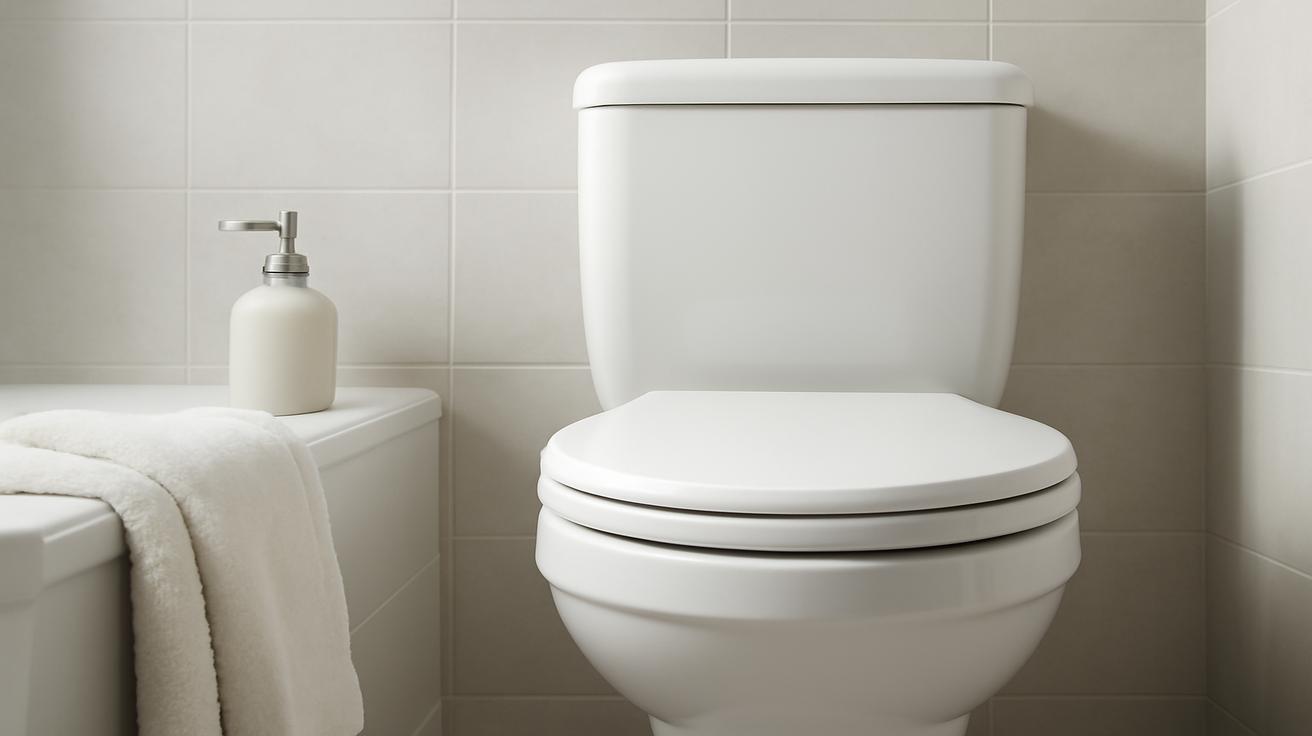
The argument began, as so many domestic legends do, with a splash. Not a poetic one, either. A real, cold, midnight splash—the kind that makes you fully question your life choices, your partner, and gravity itself. In that bleary moment, shivering on the edge of porcelain, the age‑old question rose again from the depths like a ghost of bathrooms past: should the toilet seat stay up or down?
The Night the Toilet Won
It’s amazing how quickly a peaceful home can turn into a courtroom drama, all because of one small plastic ring. Maybe you’ve been here: it’s late, the house is quiet, lights off to protect sleepy eyes, and you wander into the bathroom on autopilot. You trust, as you’ve trusted a thousand times, that the seat will be exactly where you left it.
Then—nothing where there should be something. Your body drops an extra few inches. Your skin meets icy water. Everything in you recoils. You fumble for the light, heart pounding, dignity gone. And there, glistening in the sudden brightness, is the culprit: a toilet bowl yawning open, seat hoisted proudly like it has done nothing wrong.
In the seconds that follow, the story writes itself. Angry muttering. A raised voice. Maybe a name is called from down the hallway: “Who left the seat up?” You can be 7 or 70, living with family, roommates, or a partner—this argument crosses age, gender, and geography. It’s the kind of domestic friction that becomes shorthand. Whole relationships have been summed up in a single line: “He never puts the seat down.”
We talk about it like it’s a matter of courtesy, of gendered expectations, of who cares more about consideration. But beneath the emotional streaks on this porcelain canvas, there’s a quieter, less opinionated voice we rarely consult: hygiene science. What does the toilet itself—more accurately, what lives in and around it—have to say?
Because once you start looking closely at what happens every time you flush, the debate over seat up or down stops being just about preferences. It becomes a question of invisible spray, microscopic travelers, and how far a single flush can reach.
Welcome to the Splash Zone: How a Toilet Actually Behaves
Hygiene experts have a name for what happens when you flush: toilet plume. It sounds almost lovely, like a fountain or a gentle mist. It is not. A flush is an explosion in miniature—a rush of water, air, and whatever’s in the bowl propelled upward and outward.
In controlled studies, researchers have watched with special lighting and high‑speed cameras as a geyser of tiny droplets bursts from the bowl each time a toilet is flushed, especially powerful modern ones. Some droplets are heavy enough to fall quickly to the floor or rim. Others are fine aerosols, light enough to hang in the air, drifting and settling slowly onto nearby surfaces.
Now picture your bathroom. Maybe the toilet sits close to the sink, the hand towel, the toothbrush holder, a shelf where you tuck your skincare or a razor. A few steps away might be your shower towel, your kid’s bath toys, or your cat’s favorite napping rug. Every flush sends out a little weather system of droplets that don’t particularly care what they land on.
So when hygiene specialists are asked about the eternal “up or down?” their answer isn’t about relationships. It’s about splash range—and what you can do to shrink it.
What the Experts Actually Say
Many infection-control experts, microbiologists, and public health researchers now lean toward the same simple recommendation: lid down before you flush, seat down when you’re done.
This isn’t just etiquette. Lowering the lid helps trap a large portion of those airborne droplets before they escape into the room. Is it perfect? No. Some particles can still slip out around the sides. But imagine shutting a door during a storm versus leaving it wide open—the difference is meaningful.
Then there’s the seat. When the seat is down, it’s simply more likely to be clean: fewer accidental splashes from standing users, fewer random droplets from repeated flushes. A closed seat and lid turn the toilet into more of a container and less of a sprinkler system.
In shared homes especially, this becomes a small but powerful act of mutual protection. You may never see the plume, but your toothbrush definitely “feels” it.
Seat Wars at Home: Courtesy, Comfort, and Microbes
For decades, the debate over toilet seats has been cast as a battle of inconvenience. One camp says: “Why should I have to put the seat down just because you prefer it that way?” The other responds: “Why should I fall in at 2 a.m.?” Round and round it goes, a rinse cycle of irritation.
But once you mix hygiene into the equation, the debate changes shape. It’s no longer only about who’s bothered more—it’s about what reduces germs on high‑touch surfaces everyone shares.
Consider the average day in a busy household. The bathroom is opened and closed dozens of times. A child races in after playing outside, flushes with enthusiasm. A partner returns from work, drops keys on the counter, washes up. Someone has an upset stomach. Someone shaves. Someone wipes down the mirror.
The toilet is quietly, persistently, a germ generator in the corner.
The Case for an “Everything Down” Rule
From a hygiene standpoint, a simple household standard tends to work best: lid down to flush, seat down afterward. Everyone uses the same default. No one has to guess what the last person did. No one stumbles half‑asleep into a surprise.
It’s also easier to clean consistently. When you put both seat and lid down after each use, they share the load of daily contact and plume exposure instead of the rim or bowl edge taking the hit alone. And when it’s time to wipe everything down, you already know where the hands have been.
Experts also often point out something less glamorous: hands are still the main vehicle for bathroom germs, far more than any seat position. A toilet that’s flushed with the lid up but followed by proper handwashing is usually less risky than a near‑perfect lid routine with poor hygiene afterward. Yet, combine both good habits—lid down, seat down, hands washed—and you’ve quietly raised the bar for everyone’s health.
What Actually Lives in There (And Should You Be Worried?)
Even if you’re not a germ‑phobe, it helps to know what organisms tend to show up in a typical bathroom and why experts seem so interested in how we treat a humble seat.
The Micro‑Cast of Characters
Researchers who swab home bathrooms often find an expected mix: bacteria that naturally live in our intestines, harmless skin microbes, along with occasional troublemakers that can cause infections, especially in people with reduced immunity. The vast majority won’t leap from toilet to person and cause instant illness. But the less they spread around, the better.
Most infection‑related concerns revolve around:
- Bacteria from stool that can spread by droplets or unwashed hands.
- Viruses that can persist on surfaces and be transferred via touch.
- Moist bathroom environments that can help some organisms survive a bit longer.
Closing the lid won’t magically bleach your bathroom, but it does one important thing: it helps keep bowl contents largely in the bowl. It turns a dynamic, splashing event into a more contained one. Combined with regular cleaning, that’s often enough to shift the bathroom from “microbial party” to “reasonably well‑managed.”
To put all this in perspective, here’s a simple snapshot of how habits stack up from a hygiene expert’s point of view:
| Habit | Hygiene Impact | Expert View |
|---|---|---|
| Lid open while flushing | More droplets released into the air and onto nearby surfaces | Not recommended, especially in shared bathrooms |
| Lid closed while flushing | Reduces spread of aerosolized droplets | Preferred practice |
| Seat left up after use | More exposed bowl; higher chance of splashes and contact with rim | Less ideal for comfort and cleanliness |
| Seat left down after use | More consistent surface for sitting and easier to keep visibly clean | Strongly encouraged |
| Thorough handwashing after toilet use | Drastically reduces germ spread in the home | Non‑negotiable hygiene essential |
The Seat, the Lid, and the People You Live With
There’s another layer to this story—one that has little to do with microbiology and everything to do with the emotional ecosystem of a shared bathroom.
A toilet is, oddly, a place where trust shows up. Whether you’re six years old climbing onto a giant porcelain cliff or sharing life with a partner, you step toward that fixture expecting it to be predictable. Stable. Ready to catch you, not surprise you.
Small acts in that shared space—like putting the seat and lid down—communicate something subtle: I know others use this after me, and I care enough to leave it ready for them. It’s the domestic equivalent of holding a door or lowering your voice while someone else sleeps.
When hygiene experts say, “Lid down, seat down,” they’re not just giving you a lab result. They’re unintentionally offering a relationship tool. The “everything down” rule gives everyone the same simple expectation, no matter who went in there last. No more counting “who moves it more,” no more tracking blame. Just: when you leave, you close it. Always.
But What About Public Bathrooms?
If shared home toilets are a lesson in mutual respect, public restrooms are their chaotic cousins—noisy, high‑traffic, and not always well‑maintained.
Many public toilets don’t even have lids, especially in older or heavily used buildings. Hygiene experts generally see this as a design flaw, not a sign that lids don’t matter. In fact, if anything, it highlights why closing a lid at home is a good idea: public toilets are living proof of how far droplets and dirt can spread when nothing stands in their way.
In public spaces, you don’t have a lid to help you. What you do have is time and distance. When possible, some experts recommend stepping back before flushing, avoiding setting personal items on bathroom surfaces, and leaning heavily on thorough handwashing afterward. At home, by contrast, you actually can build a gentler, more contained environment—and the lid becomes a key part of that.
Designing a Better Bathroom Ritual
If you decide to adopt the “everything down” guideline, it helps to tie it to a short, consistent ritual rather than treat it as a rule you must remember every time. Habits settle in best when they’re bundled with actions you already do naturally.
Try this sequence:
- Finish using the toilet.
- Check for anything that needs an immediate wipe (splash, drip, stray paper).
- Lower the seat and lid.
- Flush.
- Wash your hands with soap for at least 20 seconds.
That’s it: a tiny choreography that, repeated dozens of times a week, silently improves life for everyone walking into that room after you. Over time, it stops feeling like a favor and becomes as automatic as shutting off the light when you leave.
You might also discover that a closed lid changes how the whole space feels. There’s something tidier, more composed about a bathroom where the bowl isn’t always staring up at you. It turns the toilet from the visual center of the room into just another discreet fixture. Some people even report they clean more consistently once they start this habit, because they touch the seat and lid so often they want them to feel smooth and fresh.
Where Personal Comfort Still Matters
Hygiene experts can talk about droplets and infection risk, but there’s still your body to consider. Some people feel anxious sitting on a seat they don’t believe is clean. Others have mobility issues that make lifting and lowering lids awkward or painful.
That’s where communication matters. In homes with elderly residents, kids just learning to use the toilet, or people with disabilities, the “everything down” rule may need gentle adjustment. Some households choose soft‑close lids to make the motion easier and quieter. Others place wipes or spray cleaners within easy reach so that anyone can do a quick touch‑up before sitting.
The science is clear enough to give direction: lid down when flushing is better than lid up, and seat down between uses makes sense for comfort and cleanliness. But how you weave that into real daily life—the compromises, the adaptations—will always be part data, part humanity.
So, Is the Debate Finally Settled?
In a word: mostly. If you invite hygiene experts into your domestic drama, the verdict goes like this:
- For hygiene: put the lid down before you flush.
- For comfort and cleanliness: leave the seat down after use.
- For everyone’s health: wash your hands thoroughly every time.
That doesn’t mean you’ll never again hear a complaint shouted from the bathroom. People are people. Habits slip, and midnight splashes still happen now and then. But the argument no longer has to be about whose preference “wins.” Science has quietly chosen sides—and the side it picked is surprisingly simple: close things.
Maybe, the next time you reach for that handle, you’ll pause for half a second and picture that invisible plume, those tiny droplets just waiting for lift‑off. Then, with a tiny, decisive motion, you’ll drop the lid and cut off their runway. A small moment of control in a world that often feels like chaos.
And somewhere down the hall, a future, sleepy version of you will shuffle into the bathroom, sit without thinking, and never know how close they came to an icy surprise—or a microscopic storm.
FAQs: Toilet Seat, Lid, and Hygiene
Should the toilet seat be up or down when not in use?
Experts generally recommend keeping the seat down when the toilet is not in use. It’s more comfortable for the next person, reduces the chance of falls or slips, and helps contain splashes and residue inside the bowl.
Do I really need to close the lid before flushing?
Yes, if you want to reduce the spread of germs. Closing the lid before flushing helps limit the toilet plume—microscopic droplets that can otherwise land on surfaces like toothbrushes, handles, and counters.
Is it possible to get sick from toilet spray alone?
The risk is usually low in a healthy household, but it isn’t zero. Toilet plume can move bacteria and viruses onto surfaces that hands then touch. Keeping the lid down, cleaning regularly, and washing hands thoroughly after using the toilet significantly lowers this risk.
What’s more important: lid position or handwashing?
Handwashing is still the most important hygiene step. It’s the main barrier between bathroom germs and the rest of your home. However, combining good handwashing with closing the lid and leaving the seat down provides the best overall protection.
How often should I clean the toilet seat and lid?
For most homes, wiping the seat and lid with a bathroom cleaner or disinfectant at least once or twice a week is a good baseline. In busy or shared bathrooms, more frequent quick wipes—every day or every other day—can keep things fresher and more hygienic.
Does using a toilet seat cover (paper or plastic) make a big difference?
Seat covers may help some people feel more comfortable, but from a hygiene standpoint, the bigger factors are clean surfaces, closed lids when flushing, and clean hands. A visibly clean seat plus proper hygiene habits matters far more than a thin barrier.
What about homes with only adults—do these rules still matter?
Yes. Even if everyone is generally healthy, minimizing unnecessary spread of germs is still beneficial. The “lid down, seat down, wash hands” routine helps reduce minor illnesses and keeps the shared space more pleasant for everyone.








Leave a Comment