
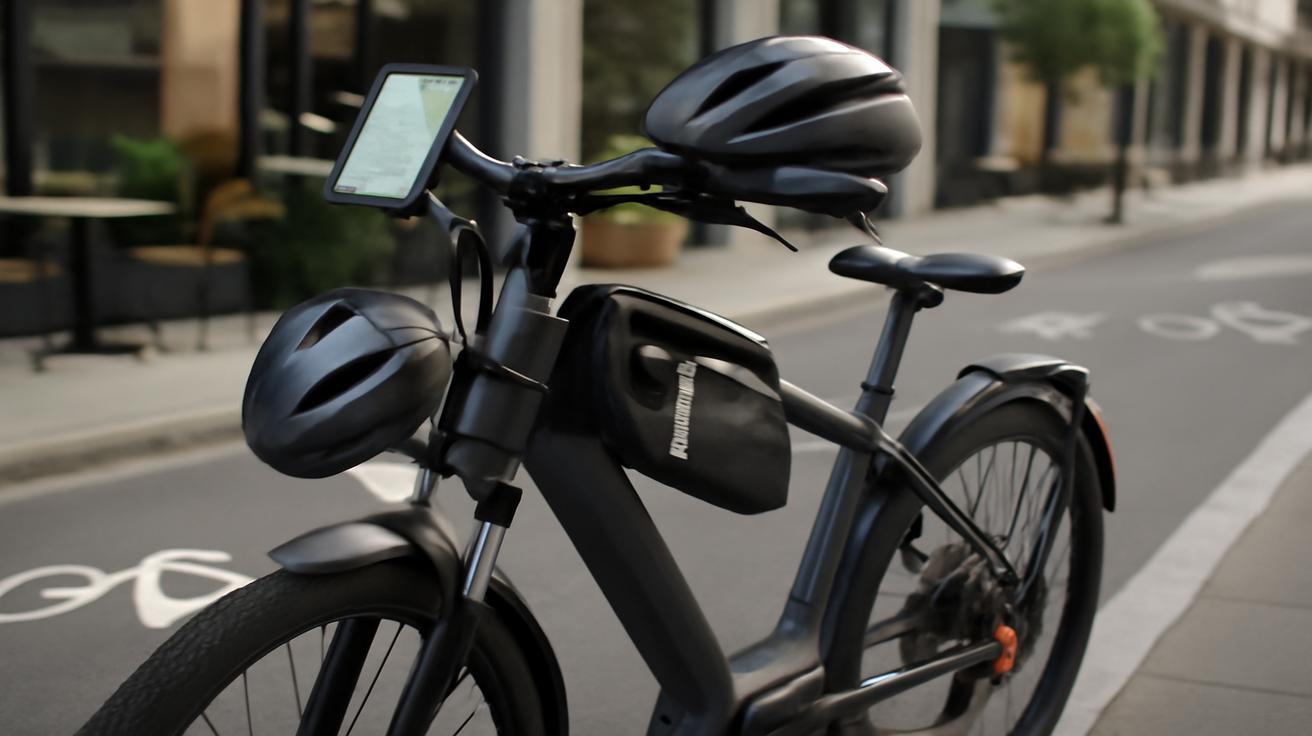
Three years ago, on a cold, bright Saturday that still feels close enough to touch, I rolled my brand-new electric bike out of the shop and onto the sidewalk. The battery was fully charged, the frame gleamed like wet ink, and I felt a little like I’d just adopted a dragon. It purred instead of roared, gliding forward with that silent, eager push that makes an e-bike feel faintly like cheating. I remember thinking: “This is it. This is freedom on wheels. I’m set.”
I was absolutely not set.
It turns out, buying an electric bike is a bit like buying a house and assuming the cardboard boxes you moved in with are permanent furniture. The bike is the start, not the finish. Over the next three years—and a small pile of mistakes, scares, and small revelations—I slowly assembled the cast of characters that make e-biking not just fun, but safe, practical, and deeply woven into everyday life.
If you just brought home an e-bike, or you’re hovering over the “buy” button, this is the article I wish someone had handed me that first day, when it was just me, my shiny bike, and my wildly naïve confidence.
The Helmet I Thought I Didn’t Need (But Absolutely Did)
The first few weeks with my e-bike, I rode in an old, half-forgotten helmet I dug out of a closet. The foam was probably older than some of the kids on the bike path, and the straps had the soft fuzziness of something that had absorbed years of sweat and summer sunscreen. I told myself, “It’s fine, it’s still a helmet.” But my bike, quietly and efficiently, could do 20+ mph with barely any effort from me. I was floating past acoustic cyclists who were huffing and puffing, and my brain hadn’t caught up to the reality that I wasn’t on a slow, clunky commuter bike anymore.
The wake-up call came one rainy evening. I was coming down a modest hill, not even going full speed, when a car door swung open in front of me. I swerved, skidded, and for a split second, gravity made a decision on my behalf. I somehow stayed upright, heart thudding so loud I could hear it over the wind, but when I got home my hands were shaking.
That night, I bought a new helmet designed for e-bike and higher-speed riding. Thicker foam, better coverage at the back of the head, and a fit system that made it feel snug without squeezing. When it arrived, I remember setting it on my head and feeling that subtle, reassuring weight—a quiet promise that if things went sideways, at least I’d given my brain a decent chance.
If you’re riding an e-bike, you’re riding something closer to a low-speed scooter than the rusted ten-speed of your childhood. The helmet is not an afterthought accessory; it’s part of the bike. Think of it as an upgrade to your skull that you wear every time you turn the key or press the power button.
Lights That Turn Night Into “I Can Actually See”
For the first few months, my e-bike’s default headlight seemed like enough. It glowed when the bike turned on, so I assumed that meant I was visible, and I left it at that. The beam was a thin, polite drizzle of light pointed mostly at my own front tire. It was better than nothing, and for some reason, my brain labeled that as “good enough.”
Then I did my first true night ride.
The path I usually took looked different in the dark, flattened and depthless. Shadows pooled like spilled ink. I realized quickly that the built-in light wasn’t so much “illuminating the road” as “gently suggesting my existence.” I couldn’t see potholes or gravel until I was practically on top of them. Shapes on the side of the trail resolved into dogs, joggers, and fellow cyclists a little too late for comfort.
A week later, I bought a bright, rechargeable headlight that could light up the road ahead like a small, personal sunrise. Then I added a second light—a subtle, blinking daytime-running light I use even in full sun. For the back, I upgraded to a strong taillight with a pulsing mode, the kind you can spot from blocks away. Suddenly, cars gave me a wider berth. Other riders could predict my presence sooner. I didn’t feel like a ghost moving through the dark; I felt like I belonged there.
There’s another piece I didn’t expect to matter: side visibility. I eventually added small, glowing spoke lights and reflective side stickers on the frame. Now, when I roll through an intersection at dusk, I’m not just a pinprick of light from the front or back; I’m a moving constellation.
On an e-bike, darkness arrives faster than you think. You can go farther, and that means more chances to be caught on the last stretch home as the sky shifts from blue to ink. If I could whisper one thing into the ears of brand-new e-bike owners rolling out of the shop, it would be: “Treat lights like brakes. Essential, not optional.”
The Lock That Stopped My Anxiety (Mostly)
The day I rolled my new e-bike to a rack outside a café, I looped a flimsy cable lock through the frame, twisted the dial, and walked inside. My coffee tasted like worry. Every three minutes, I checked through the window to make sure my bike was still there, feeling a low, constant buzz of unease humming under my ribs. I knew, even then, that the lock I was using wouldn’t slow down a determined thief for more than a few seconds.
The hard truth is that e-bikes are jackpots on wheels. Expensive, in demand, and easy to resell if they vanish. My casual, $20-lock attitude was out of step with the reality of what I’d parked on the sidewalk.
So I learned. I learned about hardened steel and bolt cutters, about U-locks and heavy chains; about locking not just the frame, but the back wheel and sometimes the front. I learned the phrase “secure frame to an immovable object” and repeated it to myself like a ritual. Eventually, I put real money into a serious lock setup: a stout U-lock for the frame and rear wheel, plus a secondary lock or cable for the front wheel when I’m in high-theft areas. I even picked up a small, incredibly loud alarm that shrieks if the bike is jostled too hard.
It changed the way I move through the world. I still glance out windows, but I don’t sit in restaurants bracing myself for the moment I walk outside and find a lonely, empty space where my bike used to be. The anxiety faded to a manageable level—more like “I hope it’s okay” and less like “I might be paying off a ghost for the next three years.”
There’s also the quiet mental shift of treating your e-bike like what it really is: a vehicle, not a toy. Cars get locked, insured, and alarmed. E-bikes should get the same respect. I wish someone had pulled me aside, three years ago, and said, “Don’t cheap out here. You’re not just protecting your bike; you’re protecting your future self from a gut-punch of regret.”
Storage, Fenders, and the Subtle Art of Actually Using Your Bike
For a while, I thought of my e-bike as a sporty thing. It was how I’d go on long rides, or how I’d choose to travel on “nice days.” But if it rained, if I needed to carry more than a backpack, or if I had groceries to haul, I defaulted to my car. Looking back, my e-bike was more like a recreational gadget than a true replacement for short car trips.
The shift began with a pair of panniers and a rear rack. They looked bulky and almost too practical at first, like I’d traded in my sleek black backpack for a pair of responsible canvas briefcases. Then I did my first full grocery run on the bike. The panniers swallowed bags of produce, a carton of eggs, some jars, a loaf of bread; everything tucked neatly into place. I rode home upright and unburdened, without straps digging into my shoulders or a backpack making my shirt cling to my spine. It felt…civilized. Effortless.
Fenders were the second revelation. There’s a particular stripe of muddy water that appears on your back when you ride on wet roads without them, a dark, damp exclamation mark that tells the world you misjudged the weather. It took exactly one ride through wet streets to convince me. I arrived home damp, speckled, and slightly miserable, and I ordered full-coverage fenders that night.
Once they were installed, rainy days lost their power over me. I could glide through shallow puddles, hear the hiss of tires on wet pavement, and arrive wherever I was going with dry clothes and a clean bag. Suddenly, my riding season didn’t end when the forecast called for light showers. The e-bike wasn’t a “nice weather only” option anymore; it was simply…transportation.
Then came the subtle items: a sturdy kickstand that could hold the heavier, loaded bike upright; a simple bungee net I could stretch over bulky things; a small frame bag for tools and a spare tube. These weren’t glamorous purchases. No one walks into a café, spots someone’s beautifully installed fenders, and says, “Wow, cool setup.” But these were the accessories that quietly, steadily turned my e-bike from a toy into a daily tool.
| Accessory | Why It Matters | How Often I Use It |
|---|---|---|
| High-quality helmet | Protects your most irreplaceable part: your brain. | Every single ride |
| Front & rear lights | Lets you see and be seen, day and night. | Every ride, even in daylight |
| Heavy-duty lock | Keeps your investment where you left it. | Any time I park away from home |
| Panniers & rack | Turns the bike into a true errand machine. | Several times a week |
| Fenders | Keeps road spray off you and your gear. | Whenever roads are wet |
Tools, Tires, and the Day I Met the Puncture Fairy
On a quiet Sunday morning, I was cruising along a riverside path when the rear of my bike started to feel…mushy. A little swimmy. The motor still pulled, but something was wrong, like the whole bike had suddenly gotten tipsy. I stopped, pressed my thumb into the tire, and felt that awful, yielding softness.
Flat. Completely, unapologetically flat.
In that moment, the sleek sophistication of an e-bike suddenly didn’t matter. I was just a person, in cycling shoes, three miles from home, holding a very heavy machine with a useless wheel. I walked the bike all the way back, pushing it along as joggers and dog walkers passed me, nodding with an understanding that felt half sympathetic and half amused.
That long, slow march home taught me more than any YouTube video. A few days later, I bought what I should have owned from day one: a compact pump, tire levers, a spare tube, and a tiny multi-tool. I tucked them into a frame bag that now lives permanently on the bike. I also upgraded to puncture-resistant tires—slightly heavier, sure, but much more forgiving when you roll over glass or the invisible thumbtacks of city riding.
Changing a flat on an e-bike isn’t always as simple as on a regular bike; the rear wheel may be heavier or wired to the motor. But even if I still prefer to let the local shop handle big repairs, the ability to at least patch, air up, or limp home under my own power is priceless. A basic repair kit feels like carrying a small first-aid kit for my rides: I hope I never need it, but I ride easier knowing it’s there.
Over time, I also added a simple floor pump at home with a gauge, so I could keep my tire pressure in the sweet spot. Properly inflated tires meant smoother rides, fewer flats, and better range—another one of those quietly transformative details that no one at the shop emphasized that first day.
Comfort Tweaks: Gloves, Mirrors, and the Tiny Details That Change Everything
It took months before I realized that my hands were going numb on longer rides. Not dramatically—just a slow, creeping tingle that showed up after half an hour of gripping the handlebars. It felt like a minor annoyance, something I could ignore. But small annoyances have a way of piling up until they quietly convince you to ride less.
Cycling gloves with a bit of padding made a bigger difference than I expected. They absorbed some of the high-frequency chatter from the road, gave me better grip in the rain, and made cold mornings much more bearable. Along with the gloves, I swapped my original, narrow grips for slightly wider, ergonomic ones that supported more of my palm. My hands stopped complaining, and my rides stretched naturally longer, almost without me noticing.
Another small accessory that changed the emotional tone of my rides: a simple bar-end mirror. On a regular bike, I’d gotten away with shoulder checks alone. On an e-bike, I was moving faster, sharing lanes with cars more often, and starting from intersections with the kind of instant acceleration drivers don’t always expect. The mirror gave me a constant, low-effort awareness of what was happening behind me.
It didn’t replace turning my head, but it gave my brain a calm, continuous picture of the flow of traffic. I felt less like prey and more like a full participant in the movement of the street. That confidence, that sense of belonging in the lane, is hard to quantify but easy to feel in your chest.
Then there were the clothes. I didn’t go full lycra superhero, but I did pick up a lightweight, wind-blocking jacket with reflective patches, and a pair of shoe covers for cold, wet days. Suddenly, chilly air on my commute became bracing instead of punishing. I wasn’t suffering through my rides; I was savoring them.
What I’d Tell My Past Self Standing Outside the Bike Shop
If I could step back into that moment three years ago—the bike shop door closing behind me, my new e-bike humming softly under my hands—I’d tap myself on the shoulder before I rode away.
I wouldn’t tell myself to buy a more expensive bike or a different model. I love the one I chose. I’d talk instead about the ecosystem, about how the machine I was straddling wasn’t truly complete yet. I’d tell myself that the fun part isn’t just the silent surge of the motor or the way hills flatten out into gentle ramps; it’s the way this strange, electric creature could knit itself into the fabric of my daily life—if I gave it the tools to do so.
I’d say: “You need a better helmet. You need real lights. You need a lock that lets you sit inside a café and finish your coffee. You need fenders, panniers, and a way to fix a flat. You need a few small pieces of comfort and safety that, together, will make this feel less like a daring experiment and more like second nature.”
Because the real magic of an e-bike doesn’t show up on that first shiny day. It arrives later, on some ordinary Tuesday, when you realize you haven’t started your car all week. When you ride home in light rain and don’t care. When you swing one leg over the frame with practiced ease, slide your hands into familiar gloves, click on your lights, tug on your helmet straps, and feel not like someone “trying to bike more,” but like someone who simply moves through their world on two quiet, electric-powered wheels.
If you’re at the beginning of that journey, standing in your own version of that sidewalk moment, know this: the right accessories don’t just protect your bike, or your body, or your time. They protect the possibility of what this machine can mean in your life. And that, more than any motor rating or battery size, is what makes the whole thing worth it.
Frequently Asked Questions
Do I really need a special helmet for an e-bike?
You don’t necessarily need an “e-bike only” helmet, but you do need a modern, well-fitting helmet designed for higher-speed cycling. Look for good coverage at the back of the head, strong impact ratings, and a secure fit system. If your helmet is old, damaged, or doesn’t sit snugly, it’s worth upgrading.
How bright should my bike lights be?
For city riding, a front light in the 300–600 lumen range is usually enough to see and be seen. If you ride on unlit paths or in rural areas, go brighter. For rear lights, focus on visibility and multiple modes (steady, pulsing, flashing). Use lights in the daytime as well—daytime running lights can make you much more visible to drivers.
What kind of lock is best for an e-bike?
A high-quality U-lock or heavy-duty chain from a reputable brand is a good starting point. Many riders use a combination: a strong U-lock for the frame and rear wheel, plus a secondary lock or cable for the front wheel. Lock to a solid, immovable object, and avoid leaving your e-bike outside overnight if you can.
Are fenders and racks really necessary?
They’re not required, but they dramatically increase how often and how comfortably you’ll use your bike. Fenders keep you dry and clean on wet roads, and racks with panniers turn your e-bike into a practical everyday vehicle for groceries, work bags, and errands. Most people who add them wonder why they waited so long.
What basic tools should I always carry with my e-bike?
At minimum, carry a compact pump, tire levers, a spare tube that fits your tire size, and a small multi-tool with the common hex keys your bike uses. If space allows, a patch kit and disposable gloves can be useful too. These basics can turn a ride-ending problem into a manageable delay.








Leave a Comment