
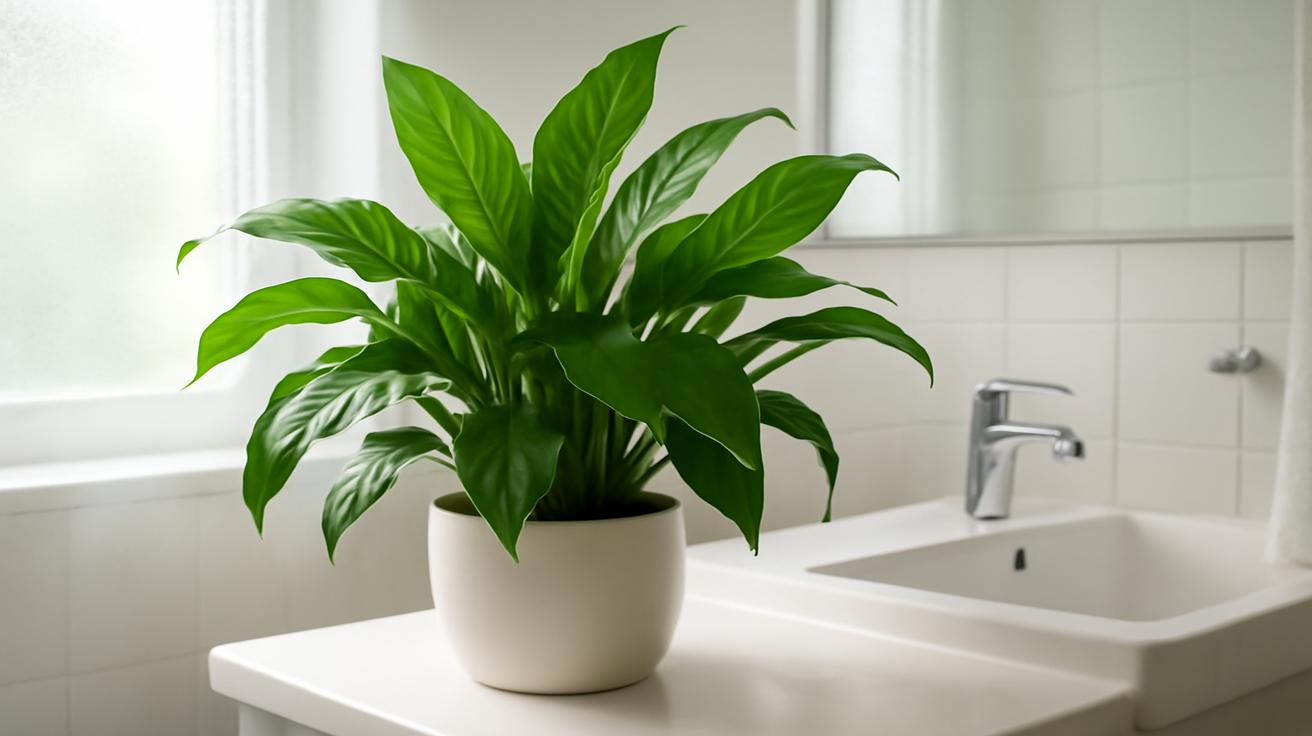
The first time I noticed it, the mold was so faint it could have passed for a shadow. A smudge in the corner of the bathroom ceiling, just above the showerhead, where the paint had started to dull from years of steam. I wiped it away with a cloth and a bit of cleaner, thinking that would be that. A week later, it was back—darker, bolder, less like a shadow and more like an announcement. Anyone with a damp bathroom, a basement that smells a little too earthy, or a laundry room that never quite dries has met this quiet invader. It creeps along tile grout, hides behind shampoo bottles, and settles inside window frames. You scrub, spray, and open the window a crack, but still it returns. That’s how a thousand quiet battles with mold begin.
The Day Someone Brought a Plant into the Bathroom
The idea didn’t come from a scientific journal or a home-renovation show; it came, as many good things do, from a friend who was tired of cleaning. She’d moved into a tiny, old apartment where the bathroom had no window, no fan, and a shower that filled the air with steam in seconds. Mold loved it there. She tried everything: bleach sprays, vinegar, fancy “eco” cleaners with citrus scents that promised miracles. They all worked—for a week.
One day she showed me a photo: her tiny bathroom shelf lined with two small pots of English ivy, trailing vines curling gently toward the light of a half-hearted ceiling bulb. “I read somewhere this helps,” she said. “If I can’t stop the moisture, maybe I can at least keep the air from becoming… gross.” She didn’t say “mold spore–saturated air,” but that’s what she meant.
At first, I treated it like a quirky experiment. A houseplant in a bathroom was nothing new, but using it as a mold-fighting ally? That sounded like one of those hopeful green-living tips that circulate online and then vanish. But as the weeks went by, she sent more photos. The same corner of the ceiling. The same tile grout. Something had changed: there was less to clean. The musty smell that used to bloom after every shower had faded into something more neutral, even fresh. She’d still wipe down the shower, still keep the place reasonably dry, but the constant battle had turned into more of an occasional skirmish.
The plant that quietly joined the fight? English ivy—Hedera helix—a trailing, evergreen vine long associated with shady garden walls, bookish windowsills, and old stone cottages. It was suddenly becoming the unlikely hero of damp rooms.
Meet the Plant That Doesn’t Mind Your Damp Corners
English ivy doesn’t look heroic. It’s gentle, almost polite, with its lobed leaves, trailing stems, and habit of draping wherever it’s allowed. But behind that softness is a tough survivor. It’s native to Europe and parts of western Asia, yet it has adapted to city balconies, studio apartments, and yes—bathroom shelves. It thrives in moderate light, tolerates shade, and can handle fluctuating temperatures far better than many delicate houseplants.
The reason English ivy keeps appearing in conversations about mold and air quality is rooted in a mixture of science and practical experience. Some well-known indoor air studies have included English ivy among plants that reduce certain airborne pollutants. Then came the observations—from homeowners, renters, and plant lovers—who noticed that in damp spaces where ivy was thriving, the telltale musty smell often softened, and visible mold growth seemed slower or easier to keep at bay.
It isn’t magic. Mold spores don’t look at a plant and flee. But English ivy interacts with its environment in quiet, layered ways. It absorbs moisture through its leaves and soil, transpires water back into the air, and constantly exchanges gases with its surroundings. Its leaves and roots harbor microscopic communities of bacteria and fungi—many of them harmless or even beneficial—that can subtly reshape the balance of the air around it. In a room that’s always on the edge of “too damp,” that subtle shift can make a visible difference.
Think of English ivy as a living filter and a gentle competitor in a space mold would otherwise dominate. It won’t replace good ventilation or cleaning, but it can become part of a system that leans in the direction of health rather than decay.
The Science Behind a Softer, Cleaner Smell
Stand quietly in a bathroom that has had a pot of English ivy in it for a few weeks, and you notice something first with your nose. The air feels less stale. That slightly sour undertone—part cleaning product, part old water, part “something growing where it shouldn’t”—starts to fade. Plants like English ivy contribute to this in several ways:
- Moisture balancing: In damp rooms, small pockets of condensation collect on cold surfaces and in hard-to-reach corners. Ivy’s leaves and soil absorb and release moisture, helping reduce those micro-climates where mold thrives, especially when paired with even minimal ventilation.
- Microbial competition: The surface of a leaf is bustling with microscopic life. The benign bacteria and fungi that naturally live on and around the plant can compete with mold species for space and resources, subtly shifting which organisms dominate a damp corner.
- Airborne particle interaction: Dust and spores can settle on leaves instead of on your grout lines and ceiling paint. You don’t see it happening, but you feel the difference; the air becomes a little less loaded with “stuff.”
Is English ivy a medical-grade air purifier? No. But in the small, lived-in scale of a home, where a shower runs twice a day and a towel hangs almost always damp, this humble plant can tilt the balance toward cleaner air and less visible mold growth, especially as part of a broader routine.
Turning a Damp Room into a Green Room
There’s something psychologically powerful about introducing life into spaces that feel a little stagnant. Bathrooms, basements, laundry rooms—these are often “functional” spaces, more associated with chores than comfort. Mold makes them feel worse: neglected, slightly unhealthy, a bit embarrassing when guests visit.
Now imagine that same room with a small jungle in one corner. Two or three vines of English ivy trail from a hanging basket, their leaves glossy from the humidity they secretly enjoy. The plant softens sharp edges and stark tiles; suddenly, your bathroom looks less like a sterile box and more like a spa in miniature. The visual cue of greenery tells your brain that this air, this space, is tended and alive.
In damp rooms, English ivy has two personalities. It’s both worker and decorator. While its roots and leaves quietly interact with the air, its cascading stems offer something else: a moment of slowing down, of noticing. You begin to see the pale new leaves unfurl, the way they deepen into a richer green over time. You notice that, yes, the corner of the bath where mold often started to speckle is now clean for longer stretches. The ritual changes—from a weekly harsh scrubdown to a softer, more occasional wipe paired with a glance toward your plant to see if it needs water.
You are, without quite realizing it, changing the story of that room: from a losing fight against something creeping in the corners to a living, evolving space you co-manage with a silent, leafy partner.
How to Invite English Ivy into Your Damp Spaces
You don’t need a green thumb to try this. English ivy is forgiving, especially in bathrooms and other damp rooms where moisture hangs in the air. A few basic steps set the stage:
- Choose the right spot: Place ivy where it receives bright, indirect light—near a frosted window, under a skylight, or within reach of ambient daylight from another room. In a windowless bathroom, consider leaving the door open when possible or using a daylight-spectrum bulb nearby.
- Use a hanging pot or high shelf: Mold loves tight, shady corners. Hang your ivy just below the ceiling, or on a shelf above the toilet or sink. This keeps leaves out of splash zones while letting them enjoy the warm, humid air that rises after a shower.
- Water lightly, but consistently: The humidity in bathrooms often means your ivy will need less frequent watering. Wait until the top layer of soil feels dry to the touch, then water thoroughly and allow any excess to drain away.
- Give it room to trail: English ivy looks happiest when it can climb or cascade. Let its vines drape over the side of a pot or gently guide them along a bare wall, mirror edge, or shelf.
Over the next few weeks, pay attention. Notice how often you need to clean mold-prone areas. Pay attention to the smell after a shower, or after a rainy day when the air inside feels heavy. In many homes, ivy doesn’t erase mold entirely, but it often softens its presence and stretches out the time between major cleanings.
Realistic Expectations: A Plant, Not a Miracle
Even the most enthusiastic plant lover will tell you: no leaf can replace basic maintenance. Mold feeds on moisture, dust, soap scum, and tiny bits of organic matter that collect in quiet corners. English ivy can tip the scales, but it can’t do the work alone.
Think of mold prevention as a simple, layered approach:
- Ventilation: Open a window when possible, switch on an exhaust fan, or at least leave the door ajar after showers so humid air can escape.
- Regular wipe-downs: Quickly drying tiles, shower doors, and window sills goes a long way toward keeping mold in check.
- Decluttering: Fewer bottles and objects in damp corners mean fewer hidden surfaces for mold to colonize.
- Green allies: One or more pots of English ivy to subtly help balance humidity and compete with mold.
This is where the plant shines: not as a single, dramatic solution, but as a steady, quiet assistant. Some people report a noticeable reduction in visible mold in just a few weeks; for others, the change is slower but still encouraging. Often, the biggest difference shows up in how the room feels—lighter, fresher, less like a place where something unwanted is slowly taking hold.
Safety and Sensitivity: What to Keep in Mind
English ivy is tough, but it carries one important caveat: it is toxic if ingested by pets or small children. The leaves contain compounds that can cause stomach upset and more serious reactions if eaten in quantity. In bathrooms and basements, it’s usually easy to place ivy out of reach—hung high, trailing over a shelf, or tucked into a corner where curious mouths can’t reach.
If you share your home with cats, dogs, or toddlers who love to explore, hang your ivy securely from the ceiling or high on the wall. Choose a sturdy hook and a light but stable pot. It’s also wise to wear gloves if you have sensitive skin, as some people react mildly to the plant’s sap when pruning or repotting.
As with any indoor plant, mold can grow on the soil surface if conditions are too wet. To avoid this, ensure your pot has good drainage, don’t let it sit in standing water, and occasionally let the top layer of soil dry out between waterings. Gentle air movement in the room helps here too.
A Tiny Forest on Your Wall
There’s an old comfort in surrounding damp stone with green things. For centuries, ivy has climbed the walls of cottages and castles, clinging to rough mortar, softening the hard lines of human-made structures. Bringing that instinct indoors—to the rooms where moisture lingers and mold prowls—is a quiet return to something we already know: life invites life.
Imagine a basement corner where the air used to feel heavy, now brightened by a cluster of pots, ivy spilling over the edge like a tiny forest waterfall. On a rainy day, when the air outside is saturated and the windows fog, that corner no longer feels forgotten or slightly sour. Instead, it’s a small green refuge—the place where the room breathes.
In bathrooms, the effect can be even more striking. The glossy leaves catch drops of steam and light, taking a hard, utilitarian space and turning it into something more human, more tender. The act of watering the ivy becomes a moment of care for the space itself, a reminder that your home is a living environment, not just a set of rooms to be endured between commutes and chores.
All the while, this unassuming plant is doing what it has always done: absorbing, exchanging, adjusting. Slowing down the quiet spread of mold. Helping you breathe a little easier. Asking for very little in return.
A Simple Comparison: Before and After English Ivy
If you’re wondering what difference English ivy can make in your own damp room, it helps to look at the small shifts that add up over time. Here’s a simple comparison of what many people notice when they invite this plant into their mold-prone spaces:
| Aspect | Before English Ivy | With English Ivy Present |
|---|---|---|
| Smell after showers or on humid days | Musty, slightly sour or “old water” scent | Fresher, softer scent; less lingering heaviness |
| Visible mold on grout and corners | Reappears quickly after cleaning | Returns more slowly; easier to keep under control |
| Cleaning frequency | Frequent scrubbing with strong cleaners | Less intense, more occasional touch-ups |
| Room atmosphere | Functional but stark; easy to neglect | Calmer, more inviting; feels actively cared for |
None of these changes happen overnight, and they won’t be identical in every home. But plant lovers who’ve tested ivy in basements, windowless bathrooms, and damp laundry rooms often describe a similar story: the combination of simple upkeep plus a few thriving vines nudges the space away from mold’s territory and toward something more balanced and alive.
FAQs About English Ivy and Mold in Damp Rooms
Can English ivy completely eliminate mold in my bathroom?
No. English ivy can help reduce the conditions mold loves—stagnant, overly damp air and surfaces—but it cannot replace cleaning and ventilation. Think of it as a helpful partner that works best alongside regular wipe-downs and air circulation.
Is English ivy safe to use in homes with pets or children?
English ivy is toxic if ingested, especially to pets and small children. If you have curious cats, dogs, or toddlers, hang the plant high out of reach or place it on a secure high shelf. Avoid leaving fallen leaves where they can be chewed or swallowed.
Will English ivy grow in a bathroom with no windows?
It can, but it will need some form of light. Without a window, keep the door open when possible so it gets ambient daylight from other rooms, or use a bright, full-spectrum artificial light nearby for several hours a day. Without enough light, the plant will weaken and lose its mold-fighting potential.
How many ivy plants do I need for a typical bathroom?
For a small to medium bathroom, one or two medium-sized pots of English ivy are usually enough to notice a difference over time. In larger, very damp spaces like basements, you may choose several plants spread around the room.
Can mold grow on the soil of my ivy plant?
Yes, if the soil is kept constantly wet and the air is very stagnant, mold can appear on the soil surface. To prevent this, use well-draining soil, water only when the top layer is dry, and ensure some airflow in the room. If you see a light layer of mold on the soil, gently scrape it off and let the pot dry slightly before watering again.
How long does it take to notice any improvement after adding ivy?
Most people begin to notice subtle changes in smell and cleaning frequency within a few weeks to a couple of months, depending on how damp the room is and how well they combine the plant with other mold-prevention steps.
Are there other plants that help in damp rooms?
Yes, some ferns, peace lilies, and certain hardy tropical plants do well in humid environments and can contribute to fresher air. However, English ivy is especially popular because of its toughness, trailing habit, and adaptability to cooler, dimmer corners where many other plants struggle.
In the quiet corners where mold once had the final say, a simple pot of ivy can change the script—slowly, steadily, leaf by leaf—until your damp rooms feel less like a problem and more like a place you’re glad to breathe in.








Leave a Comment