
The first frost arrived on a Tuesday. You noticed it not because of the temperature, but because the garden suddenly looked like a photograph of itself—still, edged in silver, somehow quieter than the day before. The dahlias had collapsed into sad, dark heaps. The basil was a blackened memory of pesto. Even the marigolds, which had seemed undefeatable in July, bowed their crisped heads. It felt, as it always does, like the end. Time to “clean up,” bag the mess, and tuck the garden in for winter. That’s what the books and neighbors say, right?
But what if that’s the moment everything could begin instead?
There is one autumn habit, simple and almost embarrassingly gentle, that will quietly transform your garden between now and spring. It starts in November, when instinct tells you to drag everything to the curb. This time, you don’t. Or at least, you don’t in the way you always have.
When “Messy” Is Just Another Word for Alive
Walk out into your November garden and really look at it. Not as a chore list, but as a living story that has simply turned to its next chapter.
Stems rattle in the breeze, hollow and tan. Seed heads sit like tiny bird feeders, some already half-pecked. A fallen leaf flips over in the wind and you catch a glimpse of a small spider skittering for cover. If you kneel and gently part the litter, you’ll find pillbugs, ants, millipedes, the glisten of a slug’s trail. It’s chaotic, yes—but not random. It’s busy.
This “mess” is the engine room of your garden’s future fertility.
Every spent stem, every dropped leaf, every seed capsule is a package of carbon, nutrients, and habitat. When we rake and bag and burn, we don’t just remove “yard waste”; we evict an entire community and send your hard-earned homegrown fertility away in plastic. Nature doesn’t do that. Forests don’t “clean up” in fall. Prairies don’t drag their own debris to the landfill. They recycle in place. That’s why they thrive.
The one habit that changes everything is this: instead of clearing the garden to bare soil, you deliberately build living soil and protect biodiversity with what’s already there.
The November Habit: Feed the Underground City
Your garden soil is not dirt. It’s a crowded, invisible city: fungi weaving white threads between particles, bacteria trading nutrients, springtails and mites flipping crumbs of decaying leaf like tiny bakers kneading dough. Earthworms dig tunnels that become mini highways for air and water. Plant roots exude sugars like tips to their microbial partners.
When you leave organic matter on the surface over winter—or, better yet, stack and layer it intentionally—you are putting the whole city to work on your behalf. Your habit for this November is simple:
Leave more. Disturb less. Layer deliberately.
Here’s what that looks like in practice, step by unhurried step, on a cold afternoon that smells faintly of woodsmoke.
Step 1: Rethink “Clean Up”
Instead of clearing everything, you walk the garden with two mental baskets: “leave” and “move.” Tall, hollow stems of echinacea, rudbeckia, monarda? You leave them. Their seed heads feed birds and their stalks shelter native bees, tiny wasps, and ladybugs. Skeletal grasses that still sway? Leave those too. They hold snow beautifully and break down slowly, feeding fungi all winter.
What goes in the “move” category? Plants that are truly diseased—blight-ridden tomato vines, mildewed peony leaves. Rip those out and dispose of them away from your compost. Heavy, wet, matted leaves that smother emerging bulbs or delicate groundcovers can be gently relocated, not removed: raked off pathways and piled onto bare beds as mulch.
It feels strange at first, this selective laziness. You’re doing less, but noticing more.
Step 2: Make a Quiet Pact with the Leaves
Leaves are the great misunderstood gift of autumn. We treat them like trash when they are, in truth, your garden’s native mulch and slow-release fertilizer.
In November, you stop seeing them as a problem to be exported. Instead, you decide that nearly every leaf that falls on your property will stay on your property, just rearranged:
- On lawns: Either mow them into tiny confetti that can decompose in place, or rake some off into planting beds. A light leaf layer on grass is fine; deep mats should be moved.
- On beds: You aim for a 5–10 cm (2–4 inch) blanket of mixed leaves. Oak, maple, fruit tree leaves—all are welcome. Thick, leathery leaves (like magnolia) can be broken up a bit to decompose more easily.
- Around trees and shrubs: You nest them in a soft donut of leaves, pulling the pile a little away from trunks to avoid rot.
The sound of raking shifts in your mind from “cleanup” to “construction.” You are building layers, the way a forest does, only with a garden’s geometry.
Building Living Soil: The Layered Bed Method
Here’s where the habit becomes a quiet transformation. The beds that look tired and spent in November can be turned into active composting systems that work all winter long, without you having to flip a single pile.
You’re going to build a series of simple, cozy “soil lasagnas.” No industrial bins, no turning forks—just layers.
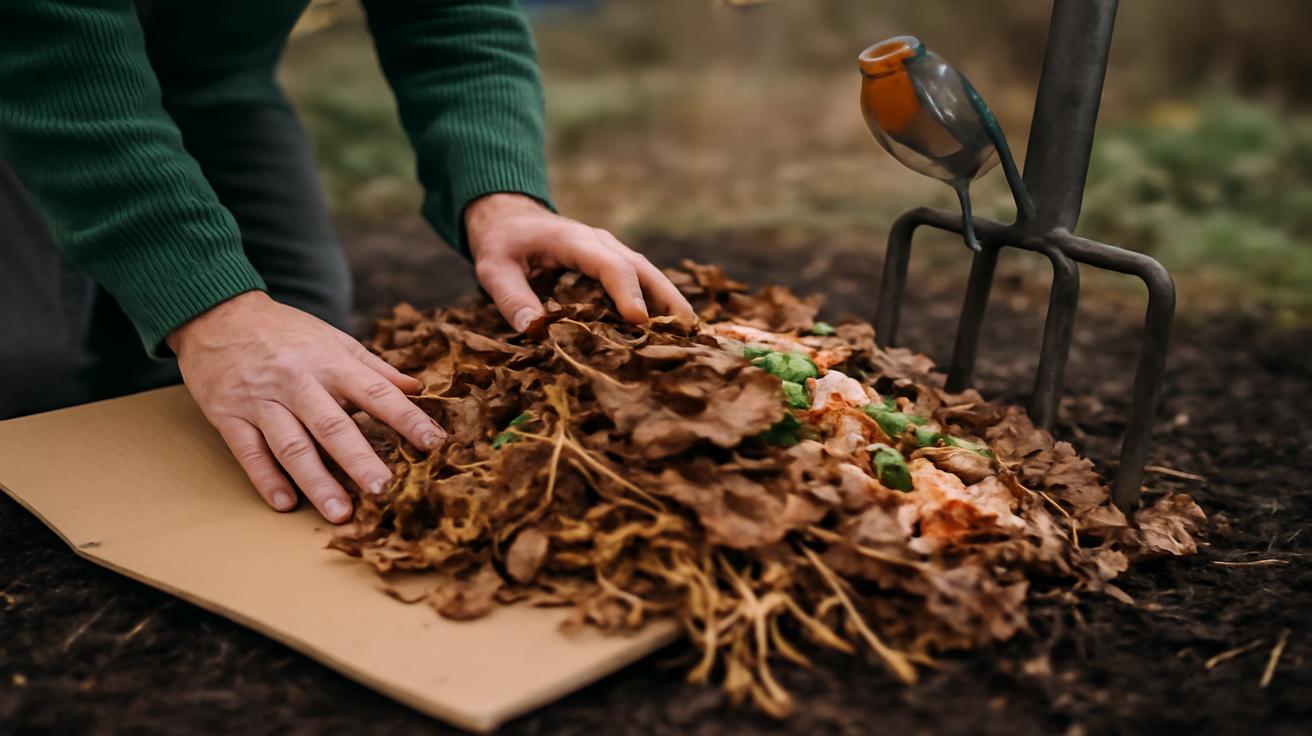
Step 3: Chop, Drop, and Tuck
You start with whatever is already growing. Instead of pulling out most annuals and perennials by the roots, you practice a technique used in regenerative agriculture: “chop and drop.”
- Take pruners and cut non-woody plants at soil level.
- Lay the stems and leaves right down on the bed, like you’re tucking the soil in with a faded, colorful quilt.
- Leave roots in the ground whenever possible. They will rot in place over winter, feeding microbes and leaving tiny channels that help with drainage and aeration.
The bed, once spiky and chaotic, begins to flatten into a patchwork of browns and greens. You can already feel the worms’ anticipation.
Step 4: Add Browns and Greens Without the Math
Traditional composting talks about carbon-to-nitrogen ratios like a chemistry class. In your November habit, you let your eyes guide you instead of a spreadsheet.
You want a mix of:
- Browns (carbon-rich): dry leaves, shredded cardboard without plastic or heavy inks, straw, chopped stems.
- Greens (nitrogen-rich): fresh plant trimmings, spent but still green annuals, grass clippings that haven’t been treated with herbicides.
Over your chopped plants, you sprinkle some greens if you have them, then an airy layer of browns. Repeat a bit if your bed feels sparse, aiming for a final layer that’s mostly brown on top—this helps avoid any smell and discourages critters.
The goal is not perfection; it’s diversity. Different textures feed different members of the underground community.
Step 5: Top It Off Like a Forest Floor
Now you bring in the main actors: the leaves you rescued from the driveway and lawn. You spread them in a soft, uneven blanket over the whole bed. You’re aiming for about as thick as a folded wool sweater. Enough to protect and feed, not so much that air can’t move through.
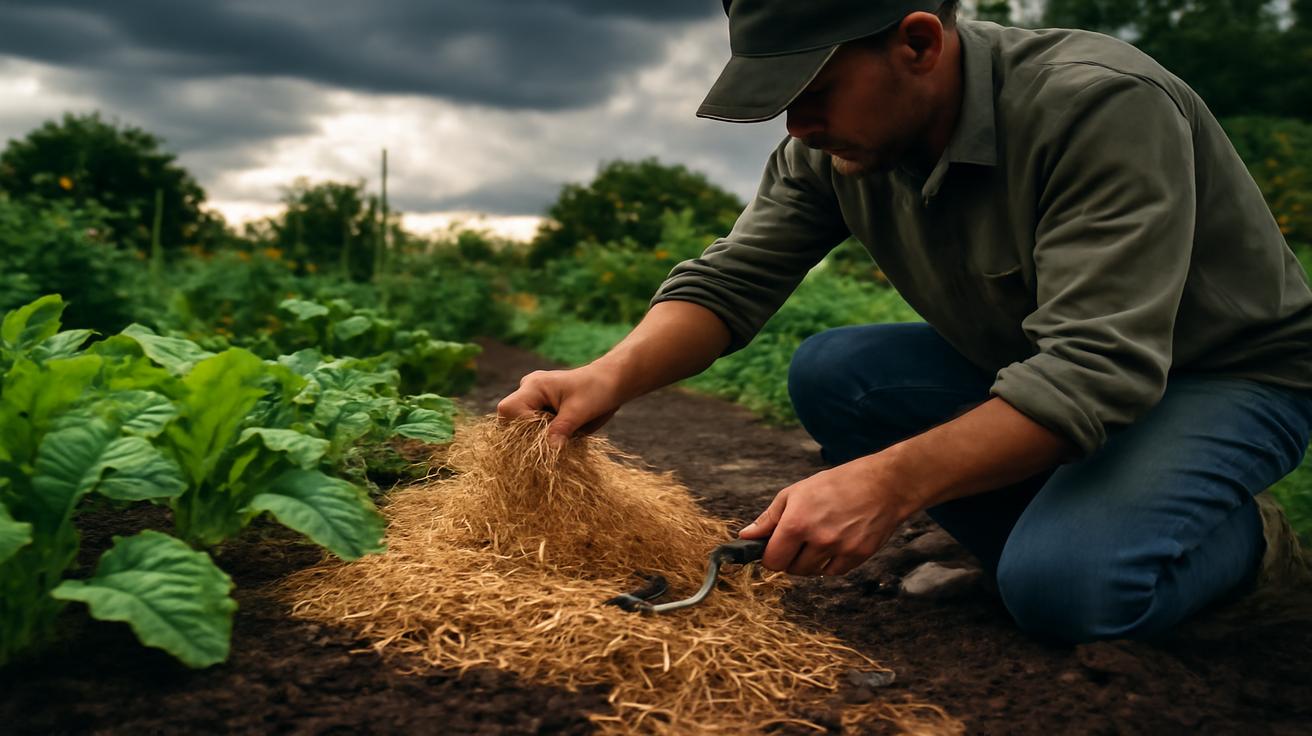
If you garden in a windy area, you can anchor this leaf blanket with a light scattering of small branches or a thin layer of wood chips on top. Not a thick bark mulch—just enough to keep things from flying away in the first big storm.
And that’s it. You don’t dig. You don’t fertilize. You don’t turn. You simply let gravity and time press your “lasagna” down while the soil life wakes up to a winter feast.
Biodiversity in the Margins: Who You’re Really Gardening For
While your eyes follow the leaves and stems, something else is happening at the edge of your vision. A sparrow hops through the seed heads. A ladybug tucks itself into a curled brown leaf. A tiny, almost invisible wasp, crucial for controlling certain pests, has already settled in the pithy center of a hollow stem you nearly cut down last year.
From November onward, your garden becomes less of a decorative object and more of a refuge. Here’s how this one habit protects biodiversity without any special equipment, certification, or Latin names.
- Overwintering insects: Many native bees nest in hollow stems or under loose leaf litter. Butterflies and moths overwinter as eggs, caterpillars, chrysalises, or adults hidden among fallen leaves. When we strip beds bare, we strip their shelter.
- Birds: Those “untidy” seed heads are crucial late-winter food. Juncos, finches, chickadees—they all work your garden buffet just when natural forage is most scarce.
- Predators and allies: Ground beetles and spiders, which snack on slugs and pests, spend winter in the top few centimeters of soil and under debris. A thick, living mulch layer keeps their micro-world from swinging wildly between freeze and thaw.
You don’t see most of this. It takes faith and a bit of imagination. The payoff comes in spring when, without having bought a single beneficial insect, you simply have fewer pests, more birdsong, and a garden that seems to “wake up” in a calmer, more balanced way.
How the Garden Quietly Changes by Spring
By February, your careful layers look less like a quilt and more like a suggestion—softened, slumped, blending into the earth. Underneath, the city is booming.
Fungal threads have laced through leaf veins. Worms have pulled shreds of cardboard and plant bits down into their tunnels. Microbes have traded sugars and minerals like a bustling marketplace. Nutrients that once sat locked in dry stems are now in forms roots can sip come spring.
When the soil thaws and you finally push your hand into it, it feels different: looser, darker, springier. A robin watches you, head tilted, as if to say, “Took you long enough.”
The transformation isn’t magic. It’s simply the result of letting natural processes do what they are exquisitely designed to do—while you get on with other winter tasks.
To make this quiet revolution more tangible, it helps to see how this one habit compares to the usual way of doing things:
| Approach | Traditional Fall Cleanup | Living Soil November Habit |
|---|---|---|
| Garden appearance | Bare, “tidy,” exposed soil | Softly mulched, “wild tidy” with seed heads and leaf cover |
| Soil health | Compacts, loses organic matter, needs external fertilizer | Gains organic matter, better structure, self-fertilizing over time |
| Wildlife support | Few overwintering insects, less bird food and habitat | Shelter for insects, birds, and beneficial predators |
| Labor | Intense raking, bagging, hauling | Selective trimming, gentle raking, no hauling away |
| Long-term impact | Ongoing inputs needed: fertilizer, compost, pest control | Increasing self-sufficiency, fewer inputs, more resilience |
Answering the Little Worries
As you stand in your late-autumn garden, hands in your pockets, you might feel a flicker of doubt. Is this really okay? Won’t this invite chaos?
There are a few common concerns that whisper in the back of gardeners’ minds when they first loosen their grip on tidiness. Let’s walk through them like you’d stroll the perimeter of the yard, checking the fence after a storm.
- “Will I get more slugs and pests?”
Leaf litter does offer hiding places for slugs. But it also shelters ground beetles, toads, birds, and other predators that eat slugs. Over a couple of seasons, the system tends to balance out, especially if your garden has a mix of plants and not just a single crop. - “Will my neighbors think I’ve given up?”
You can practice what some call “cues to care”: keep edges neat, paths clear, and perhaps add a small sign or a few intentional stones or logs. A tidy border around a wilder center signals that your garden is cared for—with purpose. - “What about fire risk?”
In fire-prone regions, you can still apply this habit by keeping deep debris away from structures, using more composted mulch near buildings, and concentrating looser layers in garden beds further from the house.
None of these require abandoning the November habit. They just shape how you apply it in your place, with your climate, your comfort level, your community.
Spring: Harvesting the Results of Doing Less
One morning in late March or early April, you step outside and something feels different. The air smells greener, even though the trees are still mostly bare. The leaf blanket on your beds has thinned, sagging into the contours of the soil.
Here’s where the transformation becomes tangible:
- You gently rake leaves back from the crowns of perennials just as they start to push new growth, leaving most of the decomposed matter in place.
- You notice how easily your shovel slides into the soil compared with last year’s stubborn clods.
- You spot more worms in a single trowel-full than you used to see in an entire bed.
- Your compost bin, which once had to work overtime, now feels like a bonus instead of a necessity.
Over a couple of seasons, plants respond. They seem a little fuller, a little less thirsty in dry spells. You find yourself watering less, fertilizing less, worrying less. The birds seem busier, the pollinators more varied.
And all of this started with one November decision: to stop treating your garden’s autumn abundance as garbage, and start treating it as the raw material of living soil.
Beginning This November, Exactly Where You Are
You don’t need acres. A porch bed, a narrow city strip, a postage-stamp lawn—living soil doesn’t care about size. You don’t need special tools. A basic rake, a pair of pruners, and maybe a tarp to help move leaves will do. You don’t even need perfect timing. If you’re reading this in mid-December with frost on the ground, it’s still worth doing. Soil life doesn’t run on our calendar.
Here’s a simple way to start this very season:
- Pick one bed or one corner of the garden, not the whole thing.
- Remove only what is clearly diseased, and keep or relocate the rest.
- Chop and drop a few tired plants; leave sturdy seed heads standing.
- Gather leaves from your paths or lawn and lay them over the chosen bed.
- Resist the urge to make it perfect. Let it be a little wild.
Then, pay attention. Check that spot a few times over winter. Gently peel back a small patch of leaves on a mild day and look for life—worms, threads of fungi, that rich, dark crumble that smells faintly of the forest floor after rain.
By spring, that single bed will likely behave differently than the rest. Plants may establish more easily. Weeds may be easier to pull from the looser soil. You will have run a quiet experiment on your own property, with your own eyes as the data.
From there, this habit has a way of spreading, bed by bed, like mycelium under the leaf litter you chose to keep.
FAQ: Your November Soil-Building Questions Answered
Can I still have a neat-looking garden if I don’t do a full fall cleanup?
Yes. Focus on keeping paths, edges, and front-facing areas more orderly while allowing deeper beds and back corners to be looser. Trim taller plants a bit, leave shorter seed heads, and use clean edges as a visual frame around the wilder center.
What if I already cleared my beds—am I too late?
No. You can still add a leaf mulch layer at any point in late fall or early winter. If the ground is frozen, simply spread leaves and other organic matter on top. Decomposition will pick up as temperatures fluctuate.
Won’t leaves make my soil too acidic?
Mixed leaf mulch does not significantly acidify garden soil. Even oak leaves, which are often blamed, have only a mild effect. As they decompose, leaves tend to bring soil closer to a healthy, slightly acidic-to-neutral range preferred by most plants.
Should I shred the leaves first?
Shredded leaves break down faster and are less likely to mat, but they’re not essential. Whole leaves work well, especially if you avoid very thick layers and mix species. You can always lightly fluff or break up compacted areas by hand in early spring.
How do I know if something is too diseased to leave or compost?
Remove plants with clear signs of serious disease: blackened, mushy stems; repeated powdery mildew; tomato or potato blights; rusts that come back every year. When in doubt, remove the most affected parts and leave healthy stems and roots.
Will this work in containers and raised beds?
Yes. In raised beds, chop plants at the base, leave roots in place, and mulch with leaves, straw, or spent plant material. In containers, you can top with a thin layer of leaf mold or compost and a little leaf litter, then refresh or replace some potting mix in spring if needed.
How long before I notice a difference in my soil?
You may notice improved texture and more worms by the very first spring. Bigger changes—richer color, better moisture retention, fewer inputs needed—typically become obvious over two to three seasons of repeating this habit each autumn.
Out in the garden, the last of the light catches on a single, stubborn seed head. A bird lands, plucks a seed, and flits away. Beneath your feet, the quiet work of transformation has already begun. All you had to do was let it.







Leave a Comment