
The board was scarred like an old trail through the woods—knife marks crossing and re-crossing, faint stains of beet juice and turmeric holding on like memories. You’d sliced peaches there in July, a Thanksgiving turkey in November, and more hurried weeknight onions than you could ever count. Tonight, after dinner, you stand at the sink with that same cutting board in your hands and a small, nagging question: Am I actually cleaning this the right way… or just slowly ruining it?
The Secret Life of Cutting Boards
Cutting boards look tough. They take the pounding of chef’s knives, the bright spray of tomato seeds, the sticky smear of garlic. But beneath that hard-working surface is something surprisingly delicate—especially if it’s wood or bamboo. Every rinse, scrub, and soak becomes part of the board’s quiet biography.
Most of us learn board care from wherever we first learned to cook: a parent who dunked every board into a sink full of soapy water, a roommate who attacked stains with whatever cleaner was nearby, a YouTube video that casually suggested bleach. And somewhere along the line, a few half-remembered rules float in: “Never soak wood.” “Plastic boards can go in the dishwasher.” “Lemon kills germs.”
Some of those rules are right. Some are incomplete. Others slowly warp your board, dry it to a splintered husk, or—worse—leave deep microscopic scratches full of bacteria you can’t see and can’t quite rinse away.
To find the best way to clean a cutting board without damaging it, it helps to start by noticing what’s under your hands: the way the grain of maple catches the light, the plasticky squeak of a synthetic board, the stone-cold weight of glass (spoiler: that one doesn’t belong in your kitchen). Once you understand how each material behaves, you can clean it so that it not only looks fresh, but actually lasts.
The Big Divide: Know Your Board, Save Your Board
Before soap, before scrubbing, before hot water, there’s one essential question: What is your cutting board made of?
Stand at your counter for a moment and take inventory. You might have:
- Wood boards – maple, walnut, cherry, acacia, beech. They feel warm to the touch, even in a cool kitchen.
- Bamboo boards – technically a grass, harder and less porous than many woods, with a pale striped look.
- Plastic boards – usually polyethylene or polypropylene, light and often color-coded.
- Glass or marble boards – heavy, glossy, and oddly noisy under a knife.
Each behaves differently under heat, water, and detergent. Treat them all the same, and you’ll inevitably sacrifice one kind to save another.
Why Wood and Bamboo Need Gentler Hands
Wood and bamboo are like living things paused in time. They still breathe a little—absorbing and releasing moisture, expanding and contracting. Long soaks, relentless dishwashers cycles, or harsh cleaners don’t just “tidy” these boards; they pull moisture from inside, crack fibers, and warp the shape. That’s when boards cup like tiny boats, or split along the grain.
But wood has a secret advantage: its natural structure can trap and slowly kill off many bacteria. When properly cleaned and dried, a wooden board is not only durable but surprisingly sanitary.
Why Plastic Seems Tough… Until It Isn’t
Plastic feels invincible. It doesn’t swell or warp in water like wood, and it can usually withstand the rumble of a dishwasher. The trade-off lives on the surface: every knife stroke carves microscopic grooves. Over time, those cuts widen into a maze where bacteria can linger, protected from your cursory rinse.
So plastic boards can handle stronger cleaning, even sanitizing, but once they’re heavily scored, the safest “cleaning” method is actually retirement.
The Everyday Ritual: How to Clean Right After You Chop
The best way to keep a cutting board in good shape is to think in terms of small rituals, not heroic rescues. The moment you finish cooking, while the cutting board still smells faintly of onion or basil, is when the magic happens.
For Wood and Bamboo Cutting Boards
After each use, especially if you’ve dealt with meat, fish, or dairy, follow this simple sequence:
- Scrape first: Use a bench scraper, the back of a knife, or a spatula to remove bits of food and clingy scraps. This prevents you from grinding them into the surface as you wash.
- Rinse quickly with warm water: Not scalding, not freezing—pleasantly warm. Avoid a long, running-water meditation; think quick rinse, both sides.
- Wash with mild dish soap and a soft sponge: Circular motions, a light but thorough touch. Do both sides even if you only used one; this helps prevent warping as the board dries.
- Rinse well: Soap residue can dry the wood and leave a faint taste, so rinse until the board feels “clean-slick,” not slippery.
- Dry immediately with a towel: Get as much water off as you can right away.
- Stand upright to finish drying: Prop it on its edge or in a rack so air reaches all sides. A board left flat on a damp counter will warp and may grow a subtle musty smell you never quite shake.
That’s your everyday ritual—gentle, consistent, and surprisingly fast once it’s part of your cooking rhythm.
For Plastic Cutting Boards
Plastic is more forgiving with temperature and moisture, but it needs more attention to disinfection.
- Scrape and rinse: Same as wood—remove food debris, then rinse.
- Wash with hot water and dish soap: A slightly rougher sponge or dish brush is fine here.
- Dishwasher (if allowed): If your board is dishwasher-safe, place it upright on the top rack so water and heat hit all surfaces. This helps sanitize and loosen grease.
- Air-dry completely: Let plastic boards dry fully before stacking them; trapped moisture between boards is a quiet invitation for bacteria.
For boards used with raw meat, poultry, or fish, that trip through the dishwasher—or an extra sanitizing step—is where the real safety lies.
Deep Cleaning Days: When Your Board Smells Like Last Week
There comes a moment when even the best-cared-for board pushes back: a faint onion ghost that won’t go away, a yellowish turmeric cloud, a sticky patch where garlic seems permanently embedded. That’s when it’s time for a deeper clean—but done in a way that doesn’t chew up the material.
Gentle but Powerful: Salt, Lemon, and Vinegar for Wood
Think of deep cleaning as a spa day for your wooden board, not a punishment.
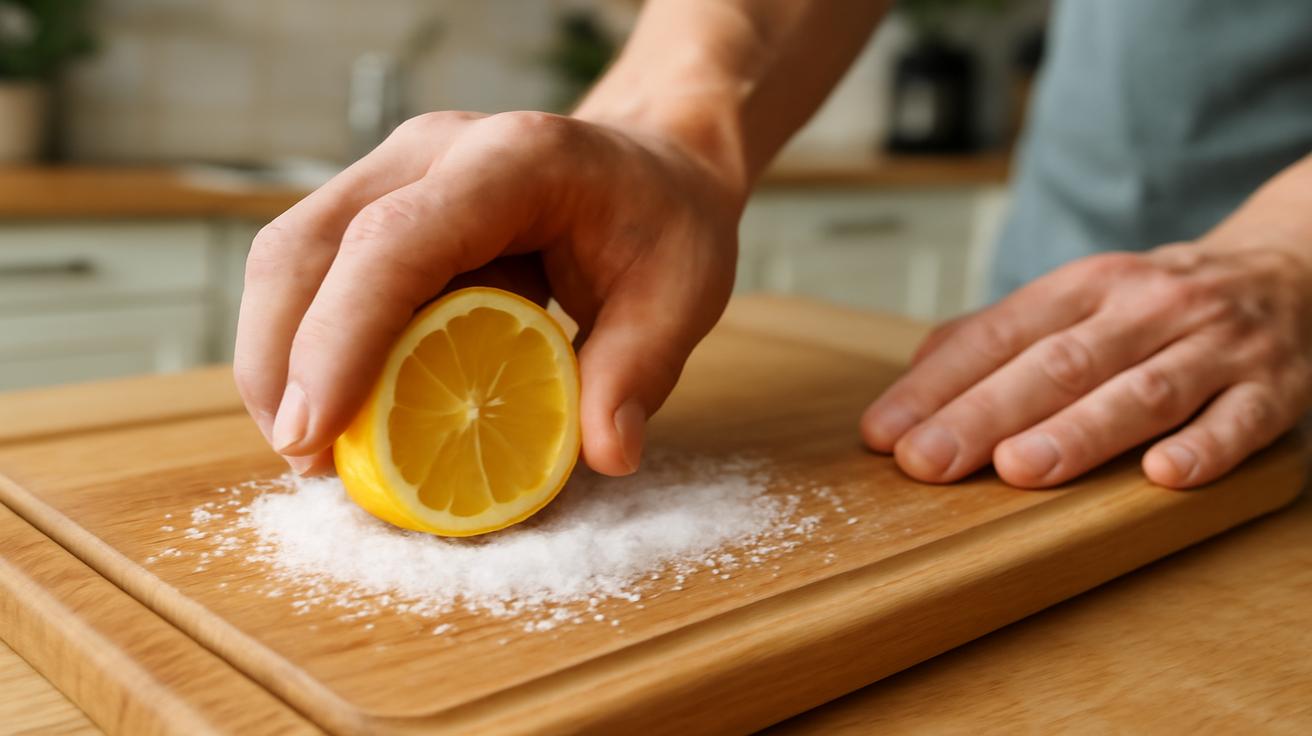
- For odors and light stains: Sprinkle a layer of coarse salt over the board. Slice a lemon in half and use the cut side as a scrubber, pressing the salt into the grain. Let it sit for a few minutes, then rinse quickly and dry thoroughly. The salt is a mild abrasive; the lemon offers a natural deodorizing effect.
- For disinfecting without harsh chemicals: After washing and rinsing, spray or wipe the board with white vinegar. Let it air-dry. Vinegar helps reduce bacterial load without stripping the wood the way bleach can.
Avoid soaking your board in vinegar or covering it in aggressive cleaners. Anything that smells like a harsh cleaning aisle usually isn’t a friend to natural wood fibers.
Stronger Measures for Plastic Boards
Plastic is where more assertive sanitizers can safely come in—cautiously used.
- Mild diluted bleach solution (if safe for your board): For stubborn contamination after raw meats, you can use a food-safe diluted bleach solution (very small amount of bleach in a large amount of water). Apply, let sit briefly, then rinse extremely well and air-dry. Use this sparingly; it’s a disinfectant, not a daily routine.
- Hydrogen peroxide for odors: Pour a thin layer of 3% hydrogen peroxide over the board after washing, spread it evenly, let it bubble for a minute or two, then rinse well and dry. This can help with odor and bacterial control.
Even with deep cleaning, once plastic boards are deeply scarred and stained, it’s often time to treat them as consumables—replace instead of rescue.
The Quiet Art of Oiling: How to Keep Wood and Bamboo Alive
At some point, your wooden or bamboo board will look tired. The surface feels dry and fuzzy instead of smooth, colors dull, and water no longer beads on top—it simply vanishes into the grain. That’s your cue for one of the most satisfying rituals in kitchen care: oiling.
Choosing the Right Oil
Not all oils are created equal here. Many common cooking oils (olive, canola, sunflower) eventually turn rancid, leaving a sticky, off-smelling film. Instead, you want something that stays stable and food-safe.
- Food-grade mineral oil: The classic choice—odorless, tasteless, stable, and easy to find.
- Conditioning blends: Mineral oil mixed with natural waxes like beeswax can offer extra protection and a gentle sheen.
- Specialized board oils: Sold for butcher blocks and boards, usually variations of the above.
How to Oil a Cutting Board
Make it an unhurried evening ritual, maybe after the kitchen is otherwise clean and quiet.
- Start with a clean, dry board: It must be completely dry—no cool dampness when you touch it, no dark patches.
- Pour a small amount of oil onto the surface: A teaspoon or two is plenty for a medium board to start.
- Massage the oil in: Use a soft cloth, paper towel, or your hands. Work with the grain, covering every surface: top, bottom, and sides.
- Let it soak: Leave the board to drink in the oil for a few hours or overnight, ideally standing on its edge.
- Wipe off excess: In the morning, buff it with a clean cloth. The board should feel satiny, not greasy.
How often? It depends on your climate and how much you use the board. In a dry home with daily cooking, once a month is a good rhythm. If you notice water no longer beading, that’s your sign it’s time again.
Simple Rules That Prevent Big Damage
If you remember nothing else, let it be a handful of small, almost whispered rules that quietly protect your boards from ruin.
| Board Type | Do | Avoid |
| Wood | Hand-wash, dry immediately, oil regularly, disinfect with vinegar. | Dishwasher, soaking, harsh chemicals, storing flat while damp. |
| Bamboo | Treat like wood, use light oiling, keep out of standing water. | Long soaks, very high heat, heavy scrubbing with steel wool. |
| Plastic | Dishwasher-safe cleaning, occasional sanitizing, replace when deeply scored. | Using once heavily scarred, relying only on rinsing after raw meat. |
| Glass/Stone | Use for serving, pastry, or cheese if you must. | Using as everyday cutting boards (they dull and damage knives). |
There’s no single magic product, no miracle spray. The “best way” is a cluster of habits: gentle washing, prompt drying, thoughtful sanitizing, and occasional oiling. Together, they give you a board that ages like a well-used wooden spoon—worn, but solid, clean, and trustworthy.
Balancing Clean and Safe: The Board and the Food
Underneath all this lies a quiet tension: you want your cutting board to last, but you also want it to be safe. There’s raw chicken to think about, and the memory of that one time you heard a horror story about cross-contamination.
The solution isn’t to over-sanitize everything until the wood cracks. It’s to divide the labor.
Give Each Board a Job
Instead of one board performing every task, consider a small cast of characters:
- Wood or bamboo board for bread, vegetables, fruits, cooked meats—things that don’t pose serious bacterial risks.
- Dedicated plastic board for raw meats, poultry, and fish, so you can hit it with stronger cleaning or run it through the dishwasher without guilt.
- Pretty boards (wood, stone) reserved for serving cheese or charcuterie, where they dodge the harshest knife work entirely.
This simple separation means you don’t have to wage chemical war on your favorite wooden board after every chicken breast. You can keep that board’s ritual gentle and long-term, while your plastic workhorse quietly takes on the higher-risk jobs and the deeper cleaning.
Cross-contamination isn’t defeated by one intense scrubbing session; it’s prevented by smart assignments and consistent, thoughtful cleaning after each use.
Letting Your Cutting Board Tell Its Story
One day, years from now, you’ll pull out your favorite cutting board and see its history written in quiet details: a faint scar where a heavy cleaver landed, a soft darkening where olive oil once pooled, the smoothing of edges from a thousand wash-and-dry cycles. It will feel less like a tool and more like an old friend who has always been there when dinner needed making.
The best way to clean a cutting board without damaging it isn’t just about avoiding disaster. It’s about building a small, recurring act of care into the rhythm of your kitchen. Scrape, wash, rinse, dry, put away properly. A deeper cleanse now and then. A slow, almost meditative oiling on a quiet evening.
In return, your board will reward you with years of loyal service, a safe stage for every knife stroke, and a quiet, sturdy presence beneath all the flavors you coax into being. Every time you set your knife down and run a hand over its smooth, clean surface, you’ll feel it: this thing lasts because you cared for it, not just because you bought it.
Frequently Asked Questions
How often should I oil my wooden cutting board?
For a frequently used board, oiling once a month is a good baseline. In very dry climates or busy kitchens, you may want to oil every two to three weeks. If water soaks in instead of beading on the surface, it’s time.
Can I use olive oil or other cooking oils on my board?
It’s best to avoid cooking oils like olive, canola, or sunflower. They can oxidize and turn rancid over time, leaving your board sticky and with an unpleasant smell. Use food-grade mineral oil or a board-specific oil instead.
Is it safe to cut raw meat on a wooden board?
Many professionals do use wooden boards for raw meat, but it demands meticulous cleaning and fast drying. For most home kitchens, dedicating a plastic board to raw meat and keeping wood for produce and cooked foods is a safer, simpler approach.
What’s the best way to remove strong odors like garlic or onion?
For wood and bamboo, sprinkle coarse salt on the board and scrub with half a lemon, then rinse and dry. For plastic, wash with hot soapy water, then wipe with vinegar or hydrogen peroxide, rinse, and air-dry completely.
How do I know when to replace a cutting board?
Replace any board—wood or plastic—if it has deep cracks, splits, or grooves that you can’t properly clean, or if it stays stained and smelly even after careful washing and sanitizing. For plastic, heavy knife scoring across the surface is a clear sign to retire it.
Can I sand an old wooden cutting board to refresh it?
Yes. Light sanding with fine-grit sandpaper can remove shallow stains, fuzziness, and shallow cuts. Wipe away the dust thoroughly, then re-oil the board. This can add years to a good-quality wooden board’s life.
Is putting a wooden cutting board in the dishwasher always a bad idea?
Yes. The combination of prolonged water exposure, high heat, and harsh detergents in a dishwasher can warp, crack, and dry out wooden and bamboo boards. Always hand-wash and dry them promptly for longest life.







Leave a Comment