
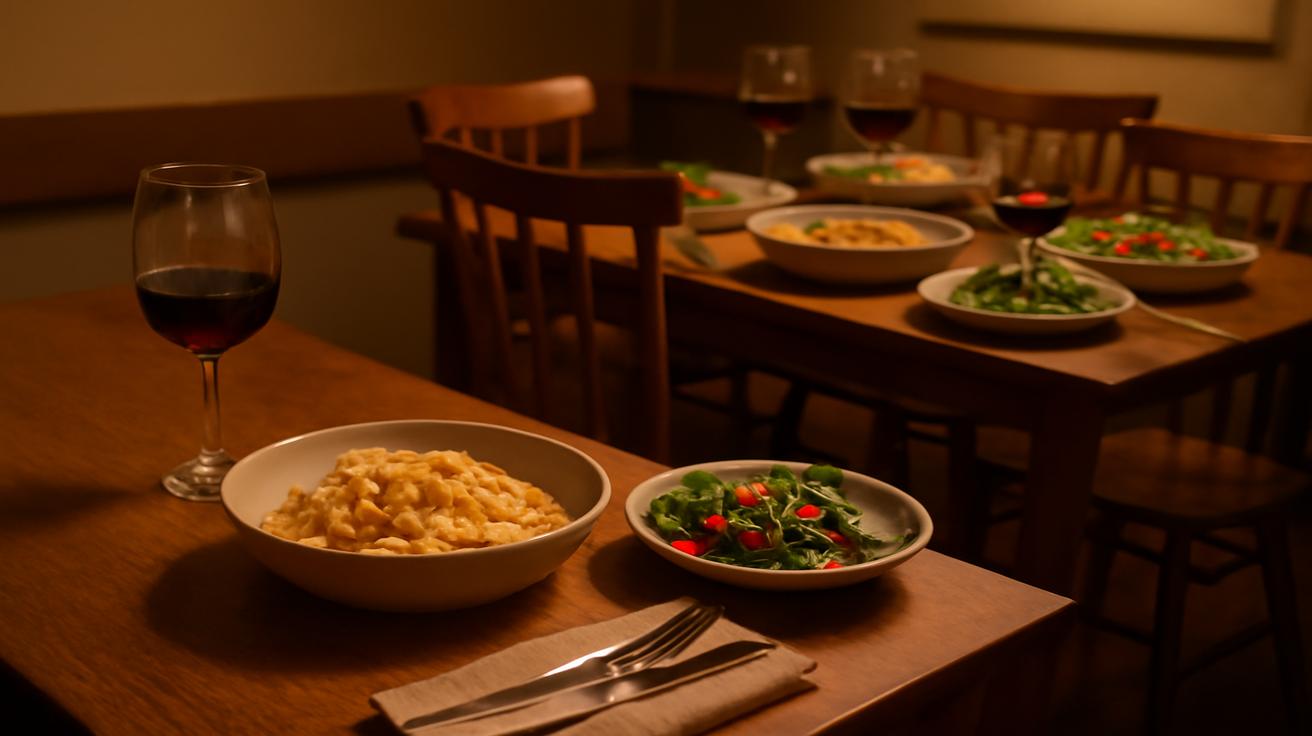
The first time I made this dinner, the sky outside my kitchen window was the color of over-steeped tea—dark, a little murky, and full of the promise of rain. The house was quiet in that deep, echoing way it only is when you’re alone. No music, no conversation, just the soft hum of the fridge and the whisper of the simmering pot on the stove. Somewhere between chopping an onion and pouring a glass of wine, I realized something: this meal was holding me, quietly, the way a good friend might. And it struck me that it would feel just as right if there were four more plates on the table. Some dinners are built for a crowd. This one—simple, fragrant, unhurried—works just as well eaten alone or together.
The Kind of Dinner That Waits for You
There are meals that demand a schedule: roasting times, resting periods, last-minute sauces that refuse to be rushed. Then there are meals that wait. This is one of those. Think of it as a soft landing at the end of any kind of day—a pot of gently spiced beans and vegetables, or maybe a silky, one-pan pasta, something that holds heat and flavor without insisting on attention. You can linger or move slowly, pour another drink or take a phone call, and it will still be there, ready when you are.
It starts with small, ordinary gestures: the click of the burner, the first glug of olive oil, the slow, patient slice of an onion. You stand at the counter and listen to your own breathing for a moment. Outside, a dog barks two streets over. You could be cooking for one. You could be cooking for six. The recipe doesn’t care. It stretches or shrinks like an elastic band, holding space for whatever the evening becomes.
In the pan, garlic softens and surrenders to the heat, releasing a scent that is part memory, part promise. You stir it with deliberate laziness. Maybe you add chopped carrots, celery, a bell pepper, or a handful of mushrooms that have been waiting in the crisper. You’re not chasing perfection; you’re building comfort. You deglaze the pan—perhaps with a splash of white wine, perhaps with vegetable stock or just water—and watch as the browned bits lift and swirl into something deeper, more interesting.
When you’re alone, this moment feels almost private, an intimate partnership between you and the pan. But you can easily imagine other voices behind you, the clink of extra glasses, someone reaching for a piece of bread before it’s even on the table. The structure of the meal remains the same. Only the soundtrack changes.
The Scent That Fills an Empty Room
Cooking for one can feel like an act of quiet rebellion in a world wired for sharing plates, posting photos, clinking glasses. Yet there is a subtle, grounding pleasure in making a “proper” dinner just for yourself, in saying: I am worth the time it takes to coax flavor from an onion and warmth from the oven.
As your base simmers—beans softening in their broth, or pasta soaking up its starchy, tomato-laced bath—the house changes. The air thickens with steam. You can smell the herbal notes of thyme or oregano, the sweetness of slowly collapsing tomatoes, the faint tang of lemon zest you grated in at the last minute. If you open the window, the scent drifts out into the night, an invisible invitation to no one in particular and everyone at once.
You notice little things when you eat alone. How the spoon sounds when it taps against the side of the pot. How the bubbles in your drink rise and fall in a steady rhythm. How the first taste, stolen standing up at the stove, is almost always the best—too hot, but so good it makes you close your eyes for a second.
You set the table even if it’s just for you. Not because you’re performing for an audience, but because the ritual matters. A real plate, not the pan. A cloth napkin if you have one. A candle, maybe, or simply the overhead light turned down low. You sit, not in front of a screen (or not right away, at least), and you let yourself arrive at the meal as if you’ve just walked in from far away.
This is where this kind of dinner shines. It doesn’t feel like leftovers or compromise. It feels complete, exactly enough, even when it’s just you and the quiet and the slow clink of your fork on the plate.
Scaling a Meal: One Plate or Many
The wonderful thing about a pot-based or one-pan dinner is how easily it bends. A single onion becomes the backbone of one portion or eight. A cup of dried beans becomes a small pot of food for the week or a generous bowl for a table full of friends. The math feels less like arithmetic and more like hospitality in motion.
You might start with something like this, a flexible, forgiving formula:
| People at the table | Dry pasta or grains | Beans / Lentils (cooked) | Veggies (chopped) |
|---|---|---|---|
| 1 | 70–90 g (about 1 cup cooked) | 1/2–3/4 cup | 1 to 1.5 cups |
| 2 | 140–180 g | 1–1.5 cups | 2–3 cups |
| 4 | 280–360 g | 2.5–3 cups | 4–6 cups |
The rest is seasoning and instinct. Taste, adjust, taste again. More salt if the flavors feel flat. A squeeze of lemon if it feels heavy. A drizzle of good olive oil at the end if it needs rounding out. You don’t have to measure every pinch; you only have to listen to what the dish is telling you.
Cooking for One Without Making It Feel Like Less
There’s a particular kind of silence that creeps in when you set down a single plate. It can feel like loneliness if you stare at it too long. But it can also feel like a moment of rare, honest luxury—no negotiations, no compromises, no “I don’t really like mushrooms” from across the table. Just you and the exact dinner you wanted.
You choose the texture of the vegetables. Maybe you let the onions go golden and caramel-sweet, slow and sticky, or you stop them just as they turn translucent and soft. You decide how much heat lives in the dish: a scatter of red pepper flakes or none at all. You control the herbs, the cheese, the final drizzle of something bright or rich.
When you eat alone, you can move at the speed of your own appetite. You can pause between bites, linger over the last spoonful, or go back for seconds straight from the pot. You can read at the table, write in a notebook, or simply look out the window and notice how the trees have changed shape since last week.
Yet even in that solitude, this kind of dinner hums with an undercurrent of togetherness. The recipe you’re using might be one your grandmother made. The beans in your bowl were grown by hands you’ll never meet. The salt was gathered from faraway coasts. In some quiet way, you are never entirely alone at the table.
And tomorrow, this same dish can be something you share. A reheated bowl for a friend who drops by unexpectedly. A portion tucked into a container and carried to a lunch with a colleague. The single-plate dinner is just the beginning of its story, not the whole book.
When the Table Fills Up
There’s a moment, right before people arrive, when the house holds its breath. The candles stand at attention. The table waits with its mismatched plates and slightly crooked cutlery. The pot on the stove, the same one that cradled your solo dinner last week, is now filled a little higher, bubbling with intent.
This is where the beauty of “alone or together” cooking really shows itself. You’re not frantically searing individual portions or tracking a dozen different cooking times. Instead, everything is gathered around a single center: one big pot of beans and greens, or a wide pan of pasta tangled with roasted vegetables, or a fragrant, brothy stew that smells like the inside of a good memory.
People come in carrying the day with them—traffic and deadlines, long walks and short tempers. Coats are draped over chairs. Someone brings a bottle of something; someone else brings a story. And all of it slowly melts into the smell from the stove. It doesn’t matter if the plates match or if the napkins are borrowed from a picnic set. It doesn’t matter if there’s a proper appetizer or if dessert is just fruit and whatever chocolate you could find in the cupboard.
You ladle dinner into bowls or onto plates and pass them around. The same spoon that fed you alone now serves everyone. The dish is endlessly adaptable: you can thin it out with a little extra broth if more people appear, or bulk it up with bread, rice, or a quick salad of whatever leaves and seeds you have on hand.
Conversation starts small and then opens. Someone asks what’s in the sauce. Someone else wants the recipe but you find yourself saying, “Oh, I just threw things in,” because in some ways, you did. But what you really mean is: I cooked something that could hold all of us at once.
The Food That Tastes Like Presence
Whether you’re eating alone or with others, there’s a kind of attention that turns any dinner into more than fuel. It’s there when you notice the way the beans have split slightly at the edges, soaking up flavor like sponges. It’s in the way the pasta curls around the spoon, clinging to the sauce. It’s in the way the herbs release their fragrance the instant they hit the heat and then again, softly, when they meet your tongue.
These details are small, almost invisible in the rush of a busy day. But at the table—especially when you let the meal be simple—those details become the whole point. You taste the smokiness of paprika, the earthiness of lentils, the sweetness of roasted garlic. You see the contrast of colors on the plate: reds and greens and golds that remind you that food is grown, not manufactured.
This is the kind of dinner that doesn’t mind being imperfect. Maybe the carrots are cut a little uneven. Maybe the beans are a touch softer than you meant them to be. Maybe the pasta clumped for a moment and you had to wrestle it apart with your tongs. None of it really matters. What matters is that it’s warm, and real, and yours.
Alone, you savor it in silence or with the soft background noise of a favorite playlist. Together, you taste it between bursts of laughter, between pauses of listening. The food doesn’t change, but its meaning does. Eaten alone, it says: You are enough company for yourself. Eaten together, it says: There is room here for everyone.
Leftovers as a Second Chance
One of the quiet gifts of a dish like this is how well it lives a second life. You portion what’s left into containers, letting it cool on the counter before tucking it into the fridge. Tomorrow, or the day after, you’ll open one up and be met with the familiar scent of yesterday’s comfort.
Leftovers become a solo lunch, reheated gently in a small pot with a splash of water or stock. You might add a fried egg on top, a handful of fresh greens, or a grating of cheese. Suddenly, it’s not just a repeat performance; it’s a small variation on a theme. You remember the evening you first made it, who was there—or how you were there for yourself.
If friends come by and you’re caught off guard, a leftover pot of beans or stew stretches easily. Serve it over toast, toss it with freshly cooked pasta, or ladle it into bowls alongside a quickly assembled salad. The food becomes a bridge between the solitude of the original meal and the shared warmth of this one.
And sometimes, of course, there are no leftovers at all. The pot is scraped clean, whether by a single spoon or several. That, too, is a kind of satisfaction.
Finding Home in the Act of Eating
In the end, this kind of dinner is less about the specific recipe and more about the permission it carries. Permission to cook properly for yourself, without apologizing or cutting corners as if no one important will see. Permission to invite people into your space without needing the perfect menu, the perfect table, the perfect anything. Permission to let food be what it has always been at its best: a small, steady act of care.
The rain that threatened at the start of that first dinner eventually arrived. It tapped against the glass while I ate, alone but not lonely, with a bowl of something warm cupped in my hands. Since then, I’ve made versions of that same meal for many different nights—crowded ones where the table was too small and quiet ones where I set down just a single fork.
Every time, it works. The same pot, the same gentle sizzle, the same scents curling through the air. It’s an anchor and an invitation, equally at ease with solitude or a full house. The food doesn’t demand an audience, but it welcomes one. It doesn’t need company to feel complete, but it makes space for company whenever it appears.
So the next time you stand in your kitchen at the end of a long day, wondering if it’s worth making real dinner just for you, or if you have enough energy to cook for friends, remember this: some meals are built for either. Let something simple and warming come together in one pot or one pan. Let the scent fill the room. Set one plate, or set five. This dinner doesn’t mind. It works beautifully eaten alone or together—and that, in its quiet way, is a kind of magic.
Frequently Asked Questions
How do I adapt a “shared” recipe when I’m cooking just for myself?
Start by halving or quartering the main ingredients—pasta, grains, beans, and vegetables—while keeping seasoning flexible. Cook, then taste and adjust salt, acid (like lemon or vinegar), and fat (like olive oil) to your liking. Leftovers are your friend, so it’s fine to make a little extra.
What kind of dishes work best both for solo dinners and groups?
One-pot or one-pan meals are ideal: soups, stews, bean dishes, skillet pastas, risottos, and simple grain bowls. They scale easily, keep well, and don’t require fiddly plating, so they feel relaxed whether you’re feeding one person or many.
How can I make eating alone feel special, not sad?
Create small rituals: set a real place at the table, use a plate you like, light a candle, play music, or read something you enjoy between bites. Treat the meal as time with yourself, not time you’re just trying to get through.
What if I’m not a confident cook?
Choose forgiving recipes with simple techniques: sauté, simmer, roast. Build flavor with onions, garlic, salt, a few herbs or spices, and something bright at the end like lemon or vinegar. The more often you make one flexible dish, the more naturally you’ll learn to adjust it.
How do I stretch a simple dinner if extra guests show up?
Add volume and texture: more broth or water to make things soupier, extra cooked grains or pasta, or a side of bread, rice, or a quick salad. Most pot-based meals can be thinned, bulked up, or surrounded with a few easy sides to feed more people comfortably.







Leave a Comment