
The days I feel most human are not the days I’m standing in front of a mountain, or crossing some distant border, or doing anything that might look like a story on a screen. They’re the days when the sky is the color of dishwater and my brain feels about the same. On those days, when inspiration has packed its bags and left without forwarding address, I turn on the oven.
The Day Inspiration Didn’t Show Up
It always seems to happen on a Tuesday. Not glamorous enough to be the start of something, not close enough to the weekend to pretend. The light is flat, my to-do list is long, and my mind is a blank room with a single, flickering bulb.
I’ll stand in the middle of the kitchen, hands on hips, pretending that staring at the counter long enough will summon an idea. Nothing. Not for work, not for dinner, not for life. The fridge hums in the background, the sink holds two abandoned coffee cups, and the air smells faintly of whatever I overcooked last night.
There are days when inspiration feels like an animal you can coax closer with the right words, the right music, the right view. Then there are days when it simply won’t come, and all you can do is lower your expectations and turn to something that doesn’t ask you to be bright or original. Something that’s muscle memory. Something you can trust.
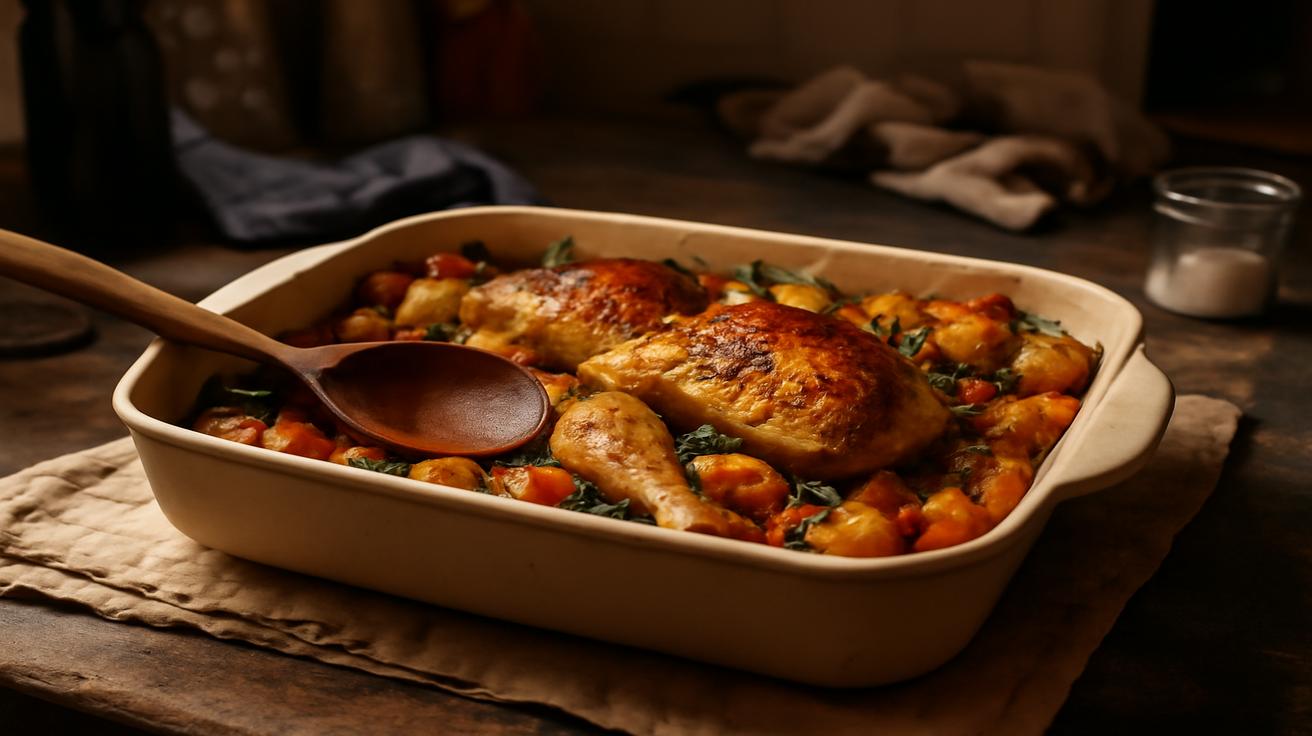
For me, that “something” is a baked pan of what I call my rainy-day roasted vegetable and feta bake. It’s messy and humble and infinitely forgiving—less a recipe than a ritual. It’s the dish I reach for when I don’t have the energy to be clever, when I just want the house to smell like hope again.
The Ritual of Washing, Chopping, Letting Go
The ritual begins at the sink, which feels important. There’s something about washing vegetables under cool water that slows down the frantic corners of the mind. Carrots, zucchini, bell peppers, a red onion, maybe a sweet potato if there’s one rolling around in the drawer—none of them complain about the lack of a grand plan. They only ask to be rinsed, peeled if needed, and chopped into bite-sized honesty.
I line them up on the cutting board. The knife makes a pleasing, predictable rhythm: thock, thock, thock. The bell pepper releases that green, slightly peppery scent. The red onion gives a sulfurous sting that brings tears for a simple, merciful reason. Carrots, when sliced, smell like earth and childhood, like gardens and scraped knees.
There’s no art here, no chef’s precision, and that’s the relief of it. Half-moons of zucchini, chunks of sweet potato, strips of peppers, wedges of onion. I’m not trying to impress anyone, least of all myself. Everything piles in a bowl, color against color—orange, red, green, purple—like someone spilled a box of crayons and decided to call it dinner.
Olive oil comes next, an unmeasured river. Just enough to gloss every surface when I toss the bowl. A storm of salt, a twist or three of black pepper, and whatever herbs I can find: dried oregano, thyme, rosemary, maybe a pinch of smoked paprika if I want the illusion of something fancier than it is. I toss with my hands, not a spoon, because feeling the food is half the point—the grit of salt, the slick oil, the weight of each piece.
By now, the world outside has quieted. I’ve forgotten, for a moment, that I sat down to a blank screen and a blank brain. The oven preheats, and the kitchen warms by a degree or two, like the house exhaling.
The Oven as a Small, Reliable Universe
A parchment-lined baking tray becomes my canvas, but not the intimidating kind that demands a masterpiece—more the kind you give a kid and say, “Go wild.” I tip the vegetables onto it and spread them into a single, colorful layer. No stacking, no crowding; I’ve learned that when vegetables are given a little room, they become their best selves—edges crisping, centers softening, flavors deepening.
As I slide the tray into the oven, a thought drifts through: this is the opposite of inspiration. Or maybe it’s a different kind of it. Nothing about this is new. I’ve made some version of this bake more times than I can count. But there is something deeply steadying in repetition, in trusting a process you know will work even when you don’t.
Inside, at 200°C (about 400°F), the tray becomes a small, reliable universe. Sugars caramelize, oils bubble, water steams off. The vegetables surrender their hard, raw edges and lean into something sweeter, softer, more generous. I can’t see any of that yet, but I can hear the faint hiss and crackle, like faraway campfire stories.
After about twenty minutes, the first smell escapes. It snakes around the kitchen, up the hallway, into the room where my half-finished thoughts sit waiting on a screen. Roasting bell pepper, rosemary, the toasty edges of sweet potato. It’s a smell that says, “Something is happening. You did at least one thing today.”
When I open the oven door to turn the tray, the air rushes out, hot and fragrant. My glasses fog; my face feels like I’ve leaned too close to a shrine. I take a spatula and flip, shuffle, turn—giving every piece a chance to tan, to blister, to catch the heat just right.
Back in they go. The timer ticks on. And with them in the oven, doing what they do best, I feel a quiet invitation to do what I can do—imperfectly, without brilliance, but with simple attention.
The Recipe I Trust: Simple, Loose, Forgiving
I never measure when I make this, but if I had to whisper the bones of it, they’d go a little like this:
| Ingredient | Approximate Amount | Notes |
|---|---|---|
| Mixed vegetables (carrot, bell pepper, zucchini, red onion, sweet potato) | 4–5 cups, chopped | Rough chunks, bite-sized pieces |
| Olive oil | 3–4 tbsp | Enough to lightly coat everything |
| Salt & black pepper | To taste | Be generous with the salt |
| Dried herbs (oregano, thyme, rosemary) | 1–2 tsp total | Any combination you like |
| Smoked paprika or chili flakes (optional) | ½–1 tsp | For warmth and depth |
| Feta cheese | ½–1 cup, crumbled | Added near the end of baking |
| Fresh herbs or greens (parsley, basil, spinach, arugula) | A handful | Stirred in just before serving |
The method is as forgiving as the ingredient list:
- Preheat the oven to around 200°C (400°F).
- Chop whatever sturdy vegetables you have into roughly equal sizes.
- Toss with olive oil, salt, pepper, and dried herbs.
- Spread in a single layer on a lined tray.
- Roast 20 minutes, then turn everything.
- Roast another 15–20 minutes, until edges are caramelized.
- In the last 5–10 minutes, scatter feta on top so it softens and browns in places.
- Remove from the oven, toss with fresh greens or herbs, and eat as is—or over grains, or with crusty bread, or beside a fried egg.
It’s less a strict recipe and more like a reassuring friend saying, “You decide. It’ll probably be fine.” And on a day when nothing feels fine, that trust is worth more than gold leaf or truffle oil.
Why This Recipe, Of All Things?
We all have that one dish that feels like muscle memory. The one you could make half-asleep, with the lights off, guided only by smell and habit. This baked vegetable and feta situation is mine because it does three quiet things that matter more than they seem.
First, it has rhythm. Wash, chop, toss, roast, turn, taste. It’s a simple sequence that pulls me out of my head and into my hands. When you’re not feeling inspired, sometimes the cure isn’t to think harder, but to give your thoughts somewhere soft to land while your body does something small and sure.
Second, it has color. On the grayest days, when outside looks like an old photograph left in the sun too long, this tray is a riot. Orange and green and crimson and ivory, turning deeper and richer as they roast. Color is its own kind of inspiration; you can’t watch a red pepper blister and blacken at the edges without feeling a tiny spark of interest in the world again.
And third, it has payoff. The timer goes off; you open the oven. There is proof that you did something. You transformed randomness—the lonely half-onion, the forgotten carrot, the last sweet potato—into a whole. That quiet alchemy is a reminder: even if you’re not brimming with ideas, you are still capable of making something real.
Inspiration, By Accident
Sometimes, by the time the tray comes out of the oven, I’ve solved whatever problem sent me into the kitchen in the first place. Not by obsessing over it, but by giving it space to breathe while my hands were busy with olive oil and oregano. Ideas can be shy; they like to arrive while you’re looking the other way.
I’ll take the pan out and set it on the stove. The vegetables are bronzed now, edges darkened and crisp. The feta has melted just enough to turn creamy at the corners, speckled with toasted bits where it has kissed the hot metal. The air smells like a Mediterranean hillside pretending to be my small, unremarkable kitchen.
I stir in a handful of spinach or peppery arugula, watching it wilt and gloss in the residual heat. The green flashes against the oranges and reds. I’ll sometimes squeeze half a lemon over the top, listening to the faint sizzle as it hits the hot tray. The brightness cuts through the richness, like a clear, high note above a drumbeat.
A forkful: soft sweet potato, a strip of pepper, a shard of onion that has collapsed into sweetness, a salty crumble of feta. It’s warm and grounding, the kind of thing you eat standing up at the counter first, just to “taste,” and then again in a bowl, maybe with a piece of bread to mop the olive oil pooling at the bottom.
Somewhere between bites, the stuck places in my mind loosen a little. Maybe not dramatically; there are no fireworks. But there is a subtle shift—the feeling that if I could coax sweetness out of a pan of odds and ends, maybe I can coax a paragraph out of a blank page, or a small decision out of a tangle of options.
And if not, at least I have dinner. There’s comfort in that too.
Making Peace With “Good Enough”
We live in a world obsessed with novelty—new flavors, new trends, new “must-try” recipes engineered to go viral. But there is a quiet joy in having a dish that never needs to impress anyone. It exists not for a photograph, not for a feed, but for the simple act of eating and being nourished when you’re too tired to be interesting.
This recipe doesn’t care if your carrots are uneven or your feta is the cheap kind from the grocery store. It doesn’t mind if you forgot to preheat the oven until halfway through chopping. It doesn’t ask you to garnish. It forgives over-browning and under-seasoning and the occasional substitution of whatever cheese was on sale.
It’s good enough.
In a culture that often screams for excellence, that phrase can sound like defeat. But there are days when “good enough” is a radical act of kindness towards yourself. When you’re uninspired, the last thing you need is pressure to produce brilliance—in the kitchen, at your desk, in your life. You need a reliable, low-stakes way to remind yourself that you’re still capable of tending to your needs.
So this is the bake I trust. Not because it’s the most exciting thing I’ve ever cooked, but because it doesn’t demand excitement. It just asks me to show up, chop a few vegetables, and trust the oven to do what it always does: transform.
Carrying the Warmth Back With You
When the last of the roasted vegetables have been scraped from the pan, when the tray sits in the sink soaking off its golden, stuck-on edges, I carry the lingering warmth back to my work. My hands smell faintly of garlic and thyme. The house holds onto the scent of the oven, like a memory it’s reluctant to let go.
The page on the screen is still there, still mostly empty. But I’m different now, in small, unshowy ways. My breathing is slower. My shoulders are not up around my ears. I have proof that I can start with raw ingredients and end with something that feeds me.
Maybe the first sentence I write won’t be good. Maybe it will feel as clumsy as that first clumsy chop of a carrot. But I’ve just spent an hour trusting a process I know works even when the outcome isn’t perfect. That’s something I can carry with me: the faith that not every effort has to be inspired to be worthwhile.
On another Tuesday, or a Wednesday that feels like a Tuesday, I’ll find myself once more staring into the fridge, uninspired and a little worn thin. I’ll see a carrot beginning to go soft at the tip, a half-used block of feta sulking in its brine, a zucchini, a pepper. And I’ll know what to do.
I will rinse and chop and toss and roast. I will let the oven be my co-conspirator. I will let the scent of caramelizing vegetables remind me: you don’t have to feel inspired to begin. You just have to begin, and trust that, like the vegetables on the tray, something inside you will soften and sweeten in the heat of the doing.
Frequently Asked Questions
Can I make this recipe vegan?
Yes. Simply leave out the feta or replace it with a plant-based cheese that can handle a bit of oven time. You can also add chickpeas or white beans for extra protein—they roast beautifully alongside the vegetables.
What other vegetables work well in this bake?
Almost any sturdy vegetable will do: broccoli, cauliflower, Brussels sprouts, parsnips, eggplant, cherry tomatoes, even wedges of cabbage. Just try to cut everything to similar sizes so they cook evenly, and add very delicate vegetables (like tomatoes) a little later if needed.
How do I keep the vegetables from going soggy?
Give them space—use a large tray so they roast instead of steam. Keep them in a single layer without piling. A hot oven (around 200°C / 400°F) and enough oil to lightly coat each piece are also key to caramelized, crisp-edged results.
Can I prepare this bake ahead of time?
Yes. You can chop the vegetables and toss them with oil and seasoning a few hours in advance, then keep them in the fridge until you’re ready to roast. Leftovers also reheat well in the oven or in a skillet, and are excellent mixed into grains or tucked into wraps.
What can I serve with this dish to make it a full meal?
It’s flexible: serve over cooked quinoa, rice, couscous, or farro; scoop alongside crusty bread; or top with a fried or poached egg. You can also add cooked lentils or beans after roasting for extra substance.
Do I have to use feta, or can I change the cheese?
You can absolutely change it. Goat cheese, halloumi (added in larger pieces), or even grated hard cheese like Parmesan can work. Feta is simply forgiving—salty, tangy, and happy to brown and soften without much fuss.
How long does this bake keep, and how should I store it?
Once cooled, store it in an airtight container in the fridge for up to 3–4 days. Reheat in the oven for the best texture, or in a skillet with a splash of oil. It’s also surprisingly good cold, folded into salads or grain bowls.







Leave a Comment