
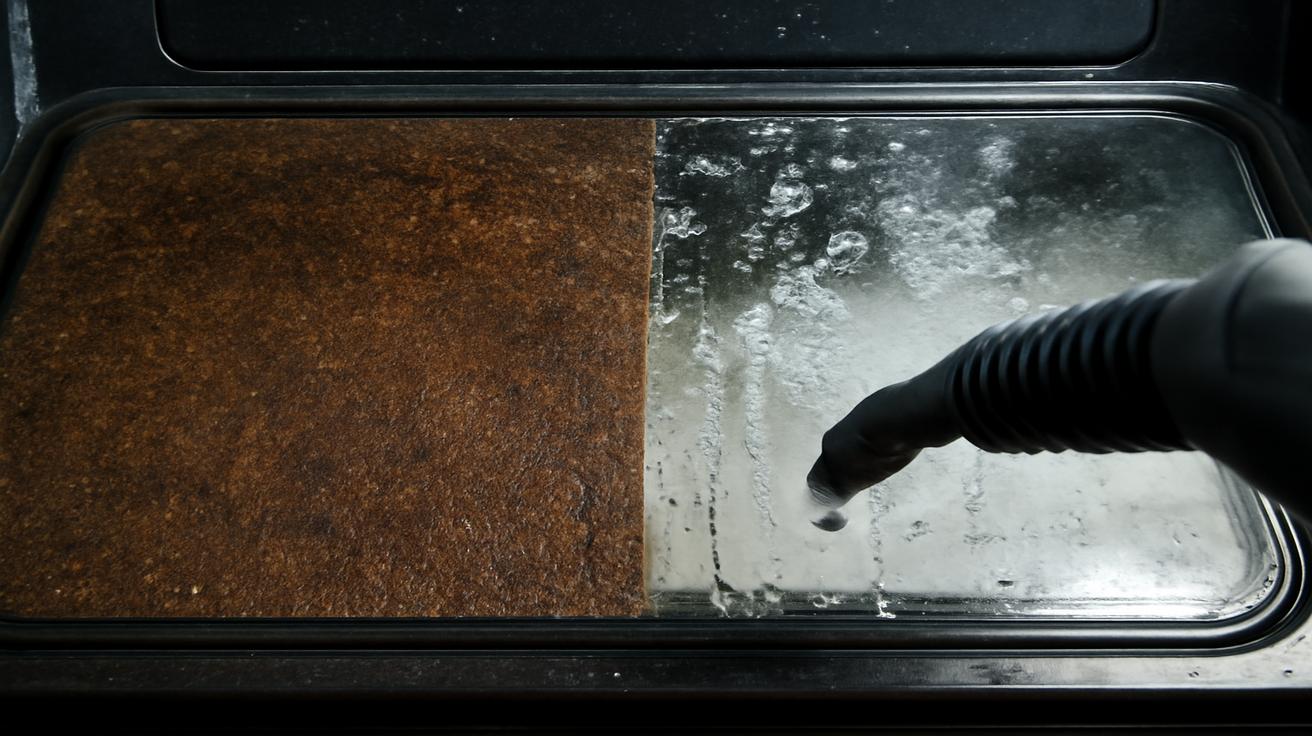
The first thing you notice is the smell. Not the sharp, sour tang of old burnt cheese or the bitter note of spilled lasagna that’s baked itself into a dark fossil on the oven floor. This time, the scent is clean and soft—warm water, a trace of citrus, a whisper of soap. The oven hums quietly, the kitchen light pools golden on the tiled floor, and somewhere between the kettle and the cutting board, you realize something oddly exciting: you’re cleaning your oven… without actually scrubbing.
The Quiet Magic Happening Behind the Glass Door
There’s something hypnotic about watching steam cloud up on oven glass. It’s like watching fog roll in over a field at dawn—slow, deliberate, and strangely peaceful. Inside that sealed little world, plain, everyday water is doing something almost alchemical.
If you’ve ever postponed cleaning your oven because it felt like a whole event—rubber gloves, harsh chemical fumes, hours of scrubbing as you contort your arms into impossible angles—you’re not alone. Most of us treat oven cleaning the way we treat tax paperwork or dental appointments: necessary, but best avoided as long as humanly possible.
But imagine this instead: a shallow pan of water, a warm oven, and time. No eye-watering cleaners, no toxic clouds hanging around your kitchen for hours. When you finally open that door, the once-armored grime is loose, softened, and ready to wipe away with the lazy flick of a cloth. It feels less like a chore and more like discovering a cheat code secretly built into your kitchen.
This is the quiet power of the steam-clean oven trick. It doesn’t shout; it doesn’t foam or hiss or smell like a science experiment gone wrong. It simply melts away built-up grime using the same basic thing you boil for pasta: water.
The Simple Science Behind Why Steam Wins
To really appreciate why this trick works so well, it helps to imagine what’s actually living on the inside surfaces of your oven. Every spill, splash, and overflow turns into a layered landscape of sugars, fats, proteins, and carbonized bits of last month’s roasted vegetables. Over time, these layers harden into something approaching kitchen armor.
Harsh chemical cleaners try to dissolve that armor by breaking down the grease and baked-on residue with powerful agents. Steam, however, takes a very different route—it plays the slow, gentle game. When water is heated in your oven and turns into steam, it does three key things:
- Softens baked-on food: Steam seeps into those hardened layers, loosening their grip on the metal and glass beneath.
- Warms and thins grease: The heat helps oils and fats loosen and smear instead of staying stubbornly stuck.
- Lifts residue: Once the grime is softened, even a simple wipe with a damp cloth can pick it up.
This process mirrors what happens when you hold your face over a bowl of steaming water to open your pores. The steam doesn’t scrape; it loosens. The real effort is done by heat and moisture, not by your muscles.
The best part? You’re using nothing harsher than tap water and maybe a little mild dish soap or baking soda afterward. In a world where so many cleaning products come with warnings in tiny print, there’s something deeply satisfying about returning to a method that your great-grandparents would immediately understand.
The Step-by-Step Steam Clean: How to Make It Work
Here’s where the quiet magic becomes a simple ritual. It doesn’t demand much of you—just a few minutes of setting up, and then you can walk away while the oven does the rest.
1. Clear the Stage
Open the oven door and take a moment to look. You might see baked-on spills, blackened cheese, tiny glittering flecks of grease on the glass. Instead of feeling defeated, think of it as a “before” picture.
Remove the racks first. This makes the whole process more effective, and it gives you space to put in your pan of water. If your racks are greasy or grimy, set them aside—you can give them a quick wash in the sink while the steam does its work.
2. Choose Your Pan and Fill It
Take a large, oven-safe dish or roasting pan—something with enough surface area to let a generous amount of water evaporate. A metal or glass baking dish works beautifully.
Now, fill it with water. Warm or hot tap water gives you a little head start, but cold water will work too. You’ll want enough water to create a good supply of steam—about 1–2 inches deep. If you like, you can add one of these simple boosters:
- A splash of white vinegar: Helps cut lingering odors and adds a mild degreasing effect.
- A slice of lemon or two: Adds a fresh, bright scent and very light cleaning help.
- A tiny drop of dish soap: Not essential, but can help emulsify some of the grease.
Nothing fancy, nothing complicated. Just water, maybe with a hint of something extra.
3. Set the Temperature
Place your water-filled pan on the middle rack position—if you’ve removed the racks entirely, set one back in just for this purpose. Close the oven door.
Turn the oven on to a moderate heat. Somewhere between 200°C and 230°C (about 400°F to 450°F) is typically enough to create a generous cloud of steam without pushing things into a full high-heat self-clean cycle. If your oven runs very hot, you can stay on the lower end of the range.
Let the oven run for about 20–30 minutes. During this time, the water will slowly transform into thick, swirling steam, pressing into every corner of the oven interior—walls, ceiling, floor, and glass.
4. Let It Sit and Soften
When your timer dings, turn the oven off but leave the door closed. This next part is where the real loosening happens: the oven cools slightly while the steam lingers inside, moist and warm, wrapping itself around all that stubborn grime.
Let it sit for another 15–20 minutes. Go do something else while you wait—make tea, water your plants, step outside for a breath of fresh air. The mess you’ve been ignoring for months is silently undoing itself behind the glass.
5. Wipe Away the Story of Old Dinners
Now, carefully open the oven door. A gentle wave of warm, damp air will roll out—nothing harsh, just that soft, steamy warmth like stepping into a bathroom after a hot shower.
With a damp microfiber cloth or a soft sponge, start wiping the interior surfaces. You’ll likely feel the difference immediately: what used to feel dry, crusted, and immovable now smears and lifts with minimal pressure.
For any spots that are still a little stubborn, you can make a quick paste of baking soda and water, dab it on the area, and let it sit for a few minutes before wiping again. Most of the time, you won’t need to scrub in the traditional sense—just a few firm circles should do it.
Wipe the glass door, the walls, the floor, and the edges. Rinse your cloth often, because it will collect a lot of softened residue surprisingly quickly.
Adding a Gentle Finishing Touch
By now, you’ll probably be standing in front of a very different-looking oven. The baked-on rings around old spills will be faded or gone. The glass will be clearer. The metallic surfaces will look less like a history of every roast you’ve ever made and more like a blank canvas again.
This is a great moment to give your oven a light finishing step if you want that extra clean feel:
- Baking soda polish: Sprinkle a tiny amount of baking soda on a damp cloth and wipe any lingering greasy patches, then go over with a clean, wet cloth.
- Lemon-water rinse: Add a splash of lemon juice to warm water, dampen a cloth, and give everything a last wipe for a fresh smell.
- Racks reset: While the oven was steaming, you can soak the racks in hot, soapy water in the tub or sink. A quick wipe afterward will usually clean them up easily.
When you put the racks back and close the door, there’s an almost ceremonial satisfaction—like resetting a space. The oven feels lighter, more inviting, somehow more optimistic about the next meal you’ll cook in it.
Making Steam Cleaning Part of Your Kitchen Rhythm
The real strength of the steam-clean trick isn’t just how well it works—it’s how easy it is to turn into a habit. Instead of waiting until the buildup is so dramatic you start Googling “nuclear options for oven grime,” you can quietly weave this method into your ordinary routines.
Picture this: the evening after you’ve roasted a chicken, or baked a bubbly pasta dish that dripped over the edge a little. The oven is already warm. You’re already in the kitchen. All it takes is a few extra minutes to set up your steam-clean session.
The more often you do it, the less dramatic the dirt situation becomes. Instead of crisis cleaning, you’re simply keeping up—a small act of kitchen care that never quite turns into a chore worthy of dread.
| Step | What You Do | Time Needed |
|---|---|---|
| 1. Clear | Remove racks and loose debris from the oven. | 3–5 minutes |
| 2. Prep | Fill an oven-safe pan with water (optional vinegar or lemon). | 2–3 minutes |
| 3. Steam | Heat the oven to moderate temperature with water inside. | 20–30 minutes |
| 4. Rest | Turn off the oven and let the steam sit inside. | 15–20 minutes |
| 5. Wipe | Open the door and wipe away loosened grime. | 10–15 minutes |
In about an hour—most of which you spend doing other things—you’ve completely shifted the story your oven tells when you open the door.
When Steam Meets Real-Life Mess: Honest Expectations
The steam-clean trick isn’t a spell; it’s more like a very kind, very patient friend. It won’t always erase every mark, especially if your oven has endured years of neglect or very heavy burnt sugar and syrup spills. Those might need a second round or a touch more elbow grease.
But even in the most battle-scarred ovens, steam changes the equation. That rock-hard, glassy spill from an overenthusiastic fruit pie? Steam will soften the edges and take it from impossible to manageable. The blackened shadows on the side walls? Steam may not erase them completely the first time, but it will fade them, layer by layer, without you having to scrub until your shoulders ache.
And unlike self-cleaning cycles that run at dangerously high temperatures and leave your kitchen smelling like burnt dust for hours, steam cleaning is gentler on both the oven and the air you breathe.
Step back for a moment and imagine the difference: no harsh fumes lingering in your lungs, no need to open every window in winter, no hesitation about cleaning the oven before you cook again. Instead, you’re working with warmth, water, and time—three things that feel almost comforting in a kitchen.
Letting Your Oven Return to Its Best Self
There is a particular kind of pleasure in small domestic victories. Not the flashy, dramatic ones with “before and after” photos that seem too perfect, but the quiet improvements you feel every day—the door that no longer sticks, the drawer that finally closes, the oven that no longer smokes every time you turn it on.
Each time you use the steam-clean trick, you’re not just removing grime; you’re renewing your relationship with the place where so many of your meals are born. You’re making space for bread that rises without picking up old smells, for vegetables that roast without the ghost of last month’s pizza fat curling up around them, for cakes that bake in clean, clear heat.
The next time you open your oven door and see that clouded window or those darkened walls, resist the urge to sigh and close it again. Instead, feel the small thrill of knowing that this isn’t a weekend-ruining task anymore. It’s a simple ritual: a pan, some water, a little heat, a little steam.
Then, one quiet evening, set the stage. Let the oven hum, let the water rise gently into steam, and let time do what it does best: change things slowly, mercifully, without demanding much in return. When you finally wipe away that softened history of spills and overflows, you’re not just cleaning—you’re clearing the way for whatever delicious thing comes next.
FAQ: Steam-Cleaning Your Oven
How often should I steam clean my oven?
If you cook often, steam cleaning once a month keeps buildup from becoming stubborn. If you roast or bake only occasionally, every 2–3 months is usually enough. You can also do a quick steam session any time you’ve had a big spill.
Can I use this method in any type of oven?
Most standard electric and gas ovens handle this method well. If you have a steam-assist or built-in steam-clean feature, follow the manufacturer’s instructions. For very small countertop or toaster ovens, use a smaller dish and lower heat, and always check the manual first.
Is it safe to add vinegar or lemon to the water?
Yes. A splash of vinegar or a few lemon slices are safe for most ovens and can help cut odors and grease. Avoid using large amounts of anything acidic regularly if your oven interior is damaged or heavily scratched.
Will steam cleaning remove heavy, burnt-on spills completely?
It often dramatically softens them, but extremely old or thick burns may need more than one round, or a follow-up with baking soda paste. Steam makes these areas much easier and quicker to clean, even if it doesn’t erase them in a single session.
Do I need to ventilate the kitchen while steam cleaning?
You generally don’t need strong ventilation the way you would with chemical cleaners. However, if your kitchen is very small or the oven door seal is older, you can crack a window or switch on the hood fan for comfort.
Can I steam clean right after cooking?
Yes, and it can actually be more efficient. If the oven is already warm, you’ll need less time to generate steam. Just be careful when placing your pan of water inside and always use oven mitts.
What kind of cloth or sponge works best afterward?
A soft microfiber cloth or a non-scratch sponge works well. Avoid steel wool or very abrasive scrubbers on the interior surfaces, especially the glass, as they can leave permanent scratches.
Will this method damage the oven’s finish?
Used reasonably—moderate temperatures, normal amounts of water—steam cleaning is gentle on most oven finishes. Always avoid flooding the oven with water or splashing into vents, and never pour water directly onto hot glass.
Can I steam clean an oven with a self-clean feature instead?
Yes. Steam cleaning is a gentler alternative you can use between or instead of intense self-clean cycles. It’s especially useful if you dislike the high heat, smell, or energy use of self-clean mode.
Is this method good enough on its own, or do I still need cleaners sometimes?
For light to moderate buildup, steam cleaning is often all you need. For extremely neglected ovens or specific tough spots, you might still choose to follow with baking soda paste or a mild cleaner—but steam will always make that job easier and faster.








Leave a Comment