
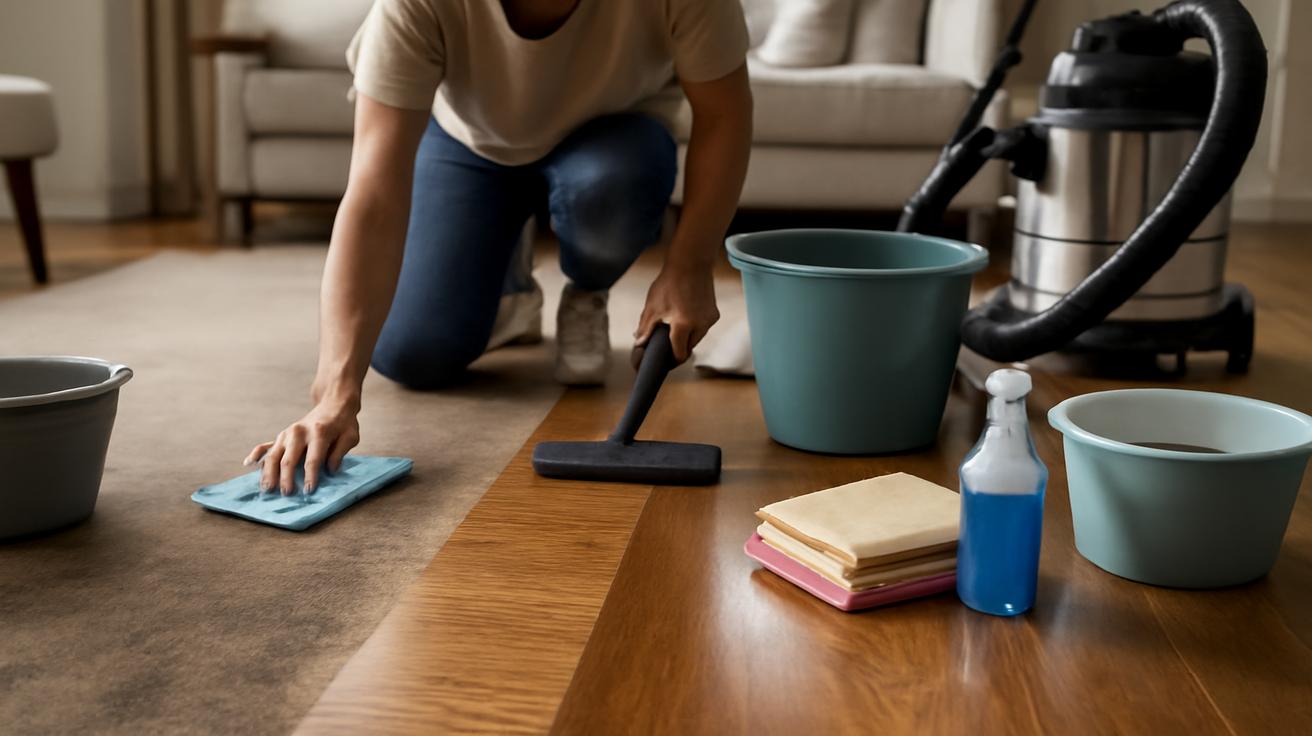
The first thing you notice is the light. Morning sliding across the floorboards, soft and sideways, revealing what last night’s lamp politely hid. A faint film of dust twirls in the beam as you walk by, settling behind chair legs, along the baseboards, clinging to the edges of rugs. You mopped yesterday. You vacuumed. You might even have felt a tiny surge of satisfaction as the water in your bucket turned gray. And yet, here it is again: the quiet, stubborn return of dust. It makes you wonder—are you cleaning wrong, or is dust simply winning?
The Hidden Life of Dust on Your Floors
To really clean a floor so dust doesn’t reappear overnight, you have to understand what you’re fighting. Dust is not just “dirt.” It’s a shifting, invisible ecosystem: tiny scraps of skin, fibers from clothes and blankets, hair, pollen, soot from cooking, particles from shoes, and the slow crumbling of your home’s own materials. It floats, clings, settles, and then lifts off again every time you walk through a room or open a window.
Stand quietly in your living room for a moment. Notice the paths you always take: from sofa to kitchen, bedroom to bathroom, door to hallway. Each route stirs up invisible currents of air that push particles into corners and under furniture. That’s why you can spend half an hour mopping the middle of the room, only to see dust lines along the edges the next day. The dust never really left; it just moved and waited.
There’s another quiet truth: our favorite “quick cleans” often just rearrange dust instead of removing it. Feather dusters flick it into the air. Dry sweeping spreads it from one patch of floor to another. Even fast vacuuming without a plan can blow fine dust out of the machine’s exhaust. The key is not working harder but changing the sequence and tools so that dust is lifted, captured, and removed from your home’s daily air cycle.
It Starts Above the Floor: Clean Top to Bottom
The secret to floors that stay clean longer starts nowhere near the floor. It starts at the top of the room. Think of your home as a vertical landscape. Dust lives on fan blades, window sills, picture frames, shelves, curtain rods—quietly falling, bit by bit, onto the surfaces below.
Imagine you’ve just spent an hour scrubbing your floors until they gleam. Then, the next day, you decide to dust the bookshelf. Every swipe shakes a slow, invisible snowfall of particles that lands right back on your “clean” floor. That’s the cycle you want to break.
The right order is simple and oddly satisfying:
- Start high: ceiling fans, light fixtures, the tops of cabinets.
- Work your way down: shelves, picture frames, window sills, baseboards.
- Finish on the floor: vacuuming, then mopping if needed.
Use a slightly damp microfiber cloth for higher surfaces instead of a dry duster. That gentle dampness is important—it’s what makes airborne dust stick instead of swirling back into the air. With each pass, you’re quietly training your home to shed less dust onto your floors in the days that follow.
Baseboards: The Dust Shelf You Keep Forgetting
Baseboards are like thin white ledges built for dust. Even if your floor looks clean, the slim line at the wall can hold enough debris to undo your work within hours. Each time someone walks by, air movement pulls particles from those ledges and scatters them back across the floor.
A quick ritual helps: run a slightly damp microfiber cloth along the baseboards before you touch the floor itself. Listen to the faint rasp as the cloth catches dirt you didn’t know was there. That thin, brownish line on the fabric is proof: your dust problem isn’t just on the ground, it’s along the edges where eyes rarely linger.
The Tools That Break the Dust Cycle
The right technique depends on the right tools, and not all of them are fancy. The magic comes from how they work together in a sequence that captures dust instead of chasing it around. Think of it less like “cleaning” and more like “harvesting” what’s floating through your home.
| Tool | Best Use | Why It Helps Dust Stay Gone |
| Microfiber cloths (damp) | Surfaces, baseboards, edges | Fibers grab and hold dust instead of sending it into the air. |
| Vacuum with HEPA filter | Hard floors, carpets, corners | Captures fine particles instead of blowing them back into the room. |
| Soft-bristle or rubber broom | Quick daily touch-ups | Gathers visible debris when you don’t have time to vacuum. |
| Flat microfiber mop | Final pass on hard floors | Picks up what the vacuum missed; leaves very little residue. |
| Neutral floor cleaner | Deep mopping sessions | Removes films that attract dust without leaving sticky buildup. |
Notice what’s missing: feather dusters, dry rags, and soggy string mops that slosh dirty water. Those older methods have their charm, but most of them are better at stirring than removing. If the goal is dust that doesn’t rebound the next day, every step should aim to trap particles, not relocate them.
The Floor-Cleaning Sequence That Actually Works
Here’s a simple pattern you can follow, whether your floors are wood, tile, laminate, or vinyl. Imagine it as a quiet choreography, each move designed to cut dust off at its sources:
- Ventilate, but briefly. Open a window or door for a few minutes if outdoor air is reasonably clean. This lets out stale air and some indoor particles. Close windows before you start stirring dust so you’re not drawing more in.
- Dust high to low. Ceiling fans, shelves, frames, window sills, then baseboards with a damp microfiber.
- Vacuum the floor slowly. Use the hard-floor setting or a soft brush. Move in overlapping lines like mowing a lawn, then cross the room again at a 90-degree angle for high-traffic spaces.
- Edge the room. Use a vacuum crevice tool along walls, under radiators, around table legs, and in doorway thresholds. This is where “tomorrow’s dust” hides.
- Damp mop last. Use a flat microfiber mop and lightly dampen the pad with a diluted neutral cleaner. Pass in smooth, straight lines, rinsing or changing the pad as it gets dirty.
When you do this in order, something subtle happens the next day: the light hits the floor and more of it stays clean. The air feels a little calmer. You notice less of that faint grit under bare feet. It’s not magic; it’s just that the dust didn’t have an easy way down from shelves or out of corners.
Different Floors, Different Quiet Rules
Every type of floor holds dust a little differently. You can feel it when you walk barefoot from room to room. The cool slickness of tile, the velvety drag of wood grain, the faint give of vinyl. Learning how each surface behaves with dust turns cleaning from a chore into a kind of gentle conversation with your home.
Wood Floors: Keep It Dry, Keep It Gentle
Wood likes to breathe. Too much water swells it, too much soap leaves a dull film that grabs dust like a sticky hand. For wood, your best allies are suction and restraint.
- Vacuum regularly with a soft brush head instead of sweeping. Vacuuming pulls fine particles from between boards that a broom can’t reach.
- Use a barely damp microfiber mop—think “mist,” not “puddle.” If you see glistening water, it’s too wet.
- Avoid heavy, oily polishes. They might shine for a day, but they become dust magnets and show footprints.
Done right, a clean wood floor feels almost silky underfoot, not squeaky or sticky, and it will stay like that longer than you expect.
Tile and Stone: Grout Is the Dust Trap
On tile, it’s the grout lines that keep sabotaging your hard work. They collect fine dust, pet hair, and tiny grains carried in from outside.
- Vacuum in two directions so that suction crosses each grout line twice.
- Use a slightly stiffer microfiber mop pad or a soft brush on grout from time to time.
- Avoid soapy or oily cleaners that leave a film in those little grooves.
When grout is clean and sealed, the whole floor resists dust longer. You’ll notice fewer little gray lines forming along pathways through the room.
Laminate and Vinyl: No Film, No Fuss
Laminate and vinyl are the quiet chameleons of flooring—always imitating something else. What they truly dislike is residue.
- Stick with gentle, manufacturer-recommended cleaners or very mild, well-diluted solutions.
- A flat microfiber mop and a vacuum are usually enough; steam and heavy water can seep into seams over time.
- If the floor feels slightly tacky after cleaning, you’ve used too much product. That tackiness is like Velcro for dust.
When these floors are cleaned lightly but regularly, you’ll often notice far less dust buildup than on older surfaces—simply because there’s nowhere for particles to grip.
Little Daily Habits That Keep Dust from Coming Back
The truth no one loves to hear is that dust never completely stops arriving. But you can slow it down until your floors feel consistently clean instead of clean-for-an-hour. The difference usually isn’t in big weekend scrubdowns; it’s in the tiny, nearly invisible routines threaded into your days.
The Entrance Ritual
Watch the front door for one week, and you’ll see the same small drama over and over: shoes crossing the threshold, carrying in sand, pollen, soil, fine grit from sidewalks and roads. That’s the dust that becomes tomorrow’s gray film on the kitchen floor.
- Use a sturdy doormat outside and a washable one inside.
- Make a no-shoes or “most shoes off” habit indoors, especially in rooms with hard floors.
- Give high-traffic doorways a quick vacuum or broom pass more often than the rest of the house.
Changing what walks in the door does more for dust than almost any special cleaning product you could buy.
Soft Things That Shed
Look around at your textiles: rugs, throws, curtains, pet beds, cushions. Each one is a slow-motion dust factory. Fibers break free, float, and settle on the floor.
- Wash or shake out smaller rugs and pet beds regularly, preferably outdoors.
- Vacuum upholstered furniture—the seat cushions, but also the backs and sides.
- Close closet doors to keep clothes fibers from constantly migrating out into living spaces.
The more you care for these soft surfaces, the less they crumble into the air and the longer your floors stay visually calm.
When Cleaning Becomes a Quiet Kind of Care
There’s something almost meditative about cleaning floors the right way. Not frantically before guests arrive, not angrily chasing drifting hair, but slowly, deliberately—like you’re resetting the environment that holds your days. The hum of the vacuum, the gentle swoosh of a microfiber mop, the small satisfaction of rinsing out gray water and watching it swirl away.
The reward is subtle but real. The next morning, as light slides across the room, there’s less to catch it. Fewer floating specks in the sunbeam. Less grit under your heel when you pad into the kitchen half-awake. Your home feels softer around the edges, quieter in a way that has nothing to do with sound.
Cleaning the floor so dust doesn’t come back by tomorrow isn’t an impossible standard; it’s a rhythm. Start high. Work down. Capture, don’t chase. Respect the materials under your feet. Change the tiny habits that keep feeding the dust cycle. What you get in return is not just a cleaner floor, but a living space that asks a little less from you every day.
FAQ
How often should I clean my floors to keep dust away?
For most homes, a quick vacuum or sweep of high-traffic areas 2–3 times a week and a thorough top-to-bottom session (including mopping) once a week is enough to keep dust from visibly returning the next day. Homes with pets, allergies, or lots of foot traffic may need slightly more frequent touch-ups.
Is vacuuming better than sweeping for dust?
Yes. Vacuuming—especially with a good filter—removes dust from the room, while sweeping tends to push fine particles into the air and into corners. Sweeping is fine for crumbs and visible debris in a hurry, but vacuuming should be your main method if you want long-lasting results.
Why does my floor feel dusty even after mopping?
This usually happens when dust isn’t removed before mopping, or when too much cleaner is used. Dry dust and hair mix with wet solution and spread into a thin film. Always vacuum first, then mop with a lightly damp microfiber and a small amount of cleaner. If the floor feels sticky or filmy, you may need a rinse with plain water.
Do I really need a special cleaner for my floor type?
Using a cleaner that’s suitable for your specific floor (wood, tile, laminate, vinyl) helps prevent residue and damage. Harsh or overly soapy products can leave films that attract dust, or harm finishes, especially on wood and laminate. Simple, neutral cleaners used sparingly are usually best.
What’s the easiest habit to start if I want less dust on my floors?
Begin with the entrance. Add good door mats and make a habit of removing or wiping shoes before walking through the house. Combine that with a quick, regular vacuum of the areas by your doors, and you’ll cut down a surprising amount of the dust that keeps reappearing on your floors.








Leave a Comment