
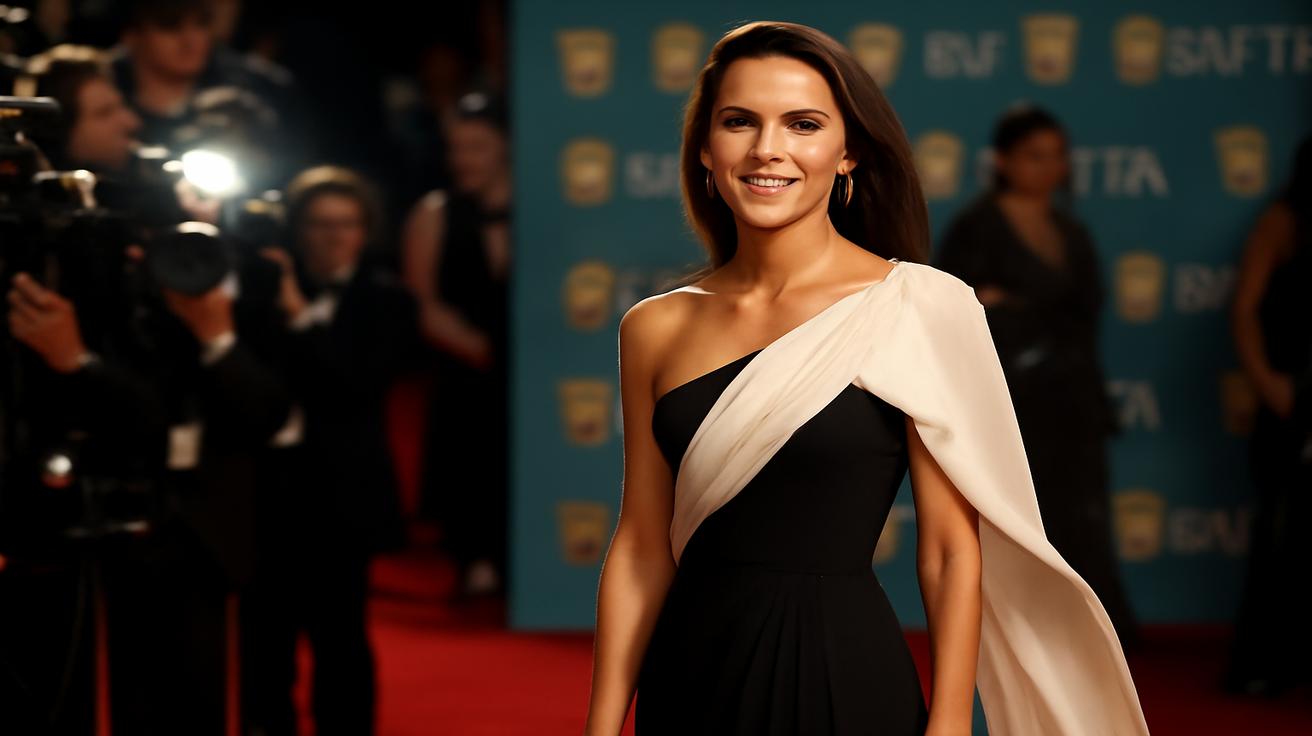
The cameras found her first in the reflection of a polished black Bentley door: a flash of dark velvet, the glint of diamonds catching London’s winter light, the unmistakable tilt of a woman who knows the weight of eyes on her and has made peace with it. Outside the Royal Festival Hall, the air was sharp enough to sting the lungs, breath turning to mist as fans on the barriers tightened their scarves and lifted their phones higher. For a heartbeat, all that existed was the soft thunder of the crowd, the low hum of television crews, and the collective question that had lingered for months, almost like a superstition: would the Princess of Wales return to the red carpet, and if she did, would it feel the same?
The hush before the velvet
It’s funny, the way sound behaves around a royal arrival. One moment it’s a crush of noise—names shouted, lenses snapping, producers barking into headsets—and then, suddenly, a shift. Not silence, exactly, but a kind of thinning in the air, a hush rising like steam from the pavements. That’s what happened as the Princess of Wales stepped out of the car and into the winter-blue evening of the BAFTAs, the British Academy’s crown jewel of a night.
She emerged in Gucci—deep, midnight, almost-black velvet that absorbed the light and sent it back in subtle waves. The gown moved as though it had its own quiet intentions. Long, clean lines. A neckline that framed her collarbones like sculpture. The fabric was rich enough that even the high-definition cameras, those unforgiving modern witnesses, seemed to soften around it.
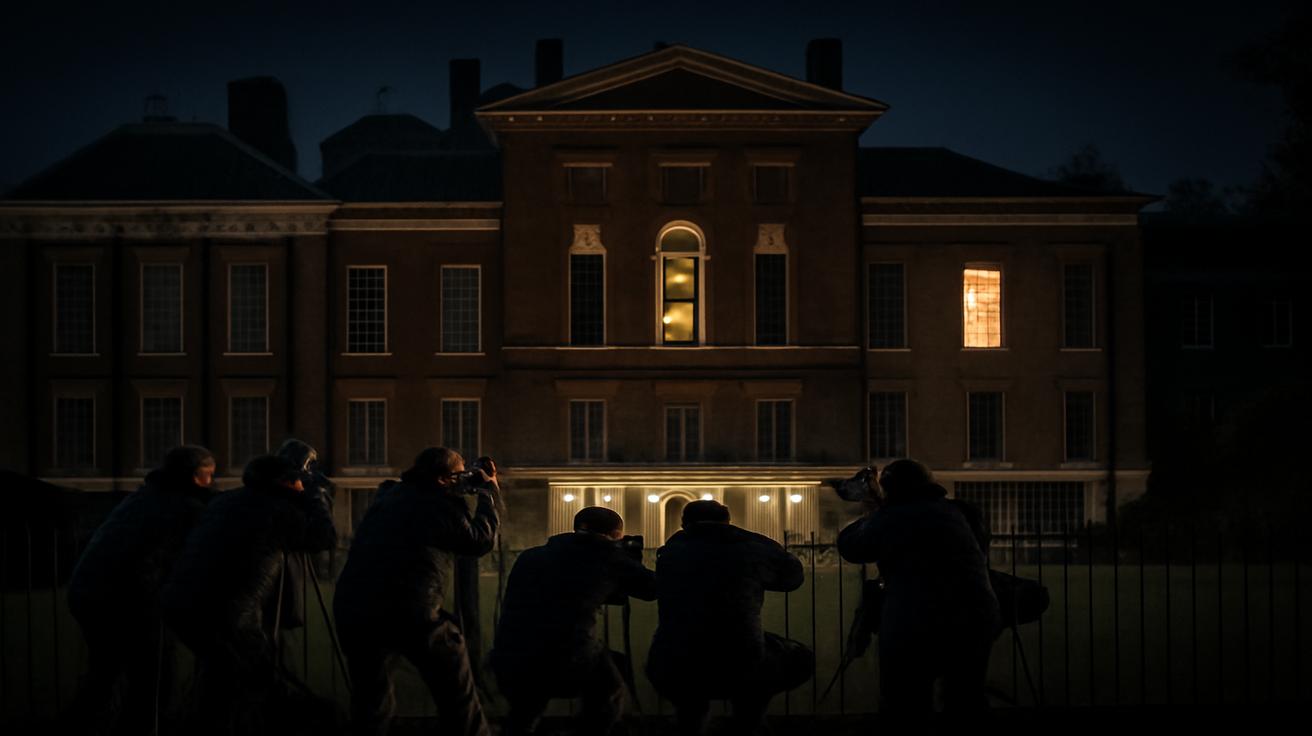
For months, her absence had been its own kind of story. A gap in the usual royal choreography. No red-carpet strolls, no hand-in-hand arrivals with the Prince, no quick, knowing glances at the cameras that had become a signature of her public life. In that absence, speculation had bloomed the way it always does around royalty: a tangle of concern and curiosity, tabloid frenzy and genuine, human worry. But if the BAFTA carpet is anything, it’s a place of spectacle and symbolism, and her return tonight—wrapped in Gucci velvet and the cool gleam of diamonds—felt like a carefully chosen answer.
The Gucci moment: more than a dress
Fashion can be frivolous, sure. It can also be language. The Princess has long mastered that unspoken vocabulary, and this Gucci gown was a sentence written in italics. Gucci, with its Italian swagger and taste for drama, isn’t always the most obvious match for a British royal. Yet here she was, stepping firmly into a creative partnership that felt less like costume and more like conversation.
The color—somewhere between ink and midnight—did what the best eveningwear does: it receded just enough to let her presence do the talking. The velvet caught the lights along the red carpet in soft gradients, almost like moonlight across water. As the cameras flashed, tiny storms of light skittered across the dress and then disappeared again, leaving only that impression of depth and warmth. You could almost feel the fabric through the screen: dense and plush, the kind of material that makes you instinctively slow your movements, as though the garment deserves it.
Where some gowns scream for attention, this one seemed to murmur. A bare shoulder, a slight sweep across the collarbone, the suggestion of structure without rigidity. Paired with it, diamonds—cool, clear, unapologetically regal—resting near her face like small, contained galaxies. They weren’t trying to outshine the dress; they were there to complete the sentence. Someone nearby commented, not quite under their breath, “That’s a queen-in-waiting look.” The phrase hung in the air like breath on the cold.
The look, in quiet detail
Every red carpet ensemble tells a small story in pieces—hair, makeup, jewelry, silhouette. The Princess’s choices tonight worked together the way good orchestras do: no one instrument fighting to be louder than the rest.
| Designer | Gucci |
| Dress Fabric | Midnight velvet, floor-length |
| Silhouette | Sleek, tailored bodice with soft, fluid skirt |
| Jewelry | Diamond earrings and bracelet, classic royal styling |
| Beauty Look | Glossed hair, softly defined eyes, luminous skin |
Her hair was glossy, parted in that familiar, deliberate line, with just enough movement to catch a breeze and fall back into place as though gravity were slightly kinder to her than to the rest of us. Her makeup stayed within the comfort of her known territory—soft, almost petal-like cheeks, that reliable sweep of liner. No reinvention, no shock factor, just refinement layered on familiarity.
But underneath all the aesthetic decisions was a more personal note. After an absence that had fed a thousand headlines, this look did not shout “comeback.” It whispered something closer to: I was always going to return on my own terms.
A royal return after a dramatic pause
The phrase “royal absence” sounds almost theatrical, as if she’d slipped behind a velvet curtain somewhere in Kensington Palace and left the audience waiting. The reality, of course, was more complicated and more human. Royals do not disappear without consequence. Every gap in their schedule sends ripples through the royal ecosystem—charities wonder, institutions speculate, cameras swivel toward other targets.
In the months she stepped back from high-visibility events, the Princess of Wales became more present as an idea than as a person. Columns tried to parse her silence. Social media filled the vacuum with theories, some tender, some wild. In the midst of it, official statements remained as measured as ever, politely firm: she was focusing on what mattered most; she was stepping away, not vanishing; she would be back.
And then, there she was: walking the BAFTA carpet alongside the Prince of Wales, who has, in recent years, taken on an increasingly central role at the ceremony. As the couple moved together down the line of flashing cameras, there was something almost cinematic about it—not in a Hollywood sense, but in the way long-running stories sometimes reach a pause, then turn a fresh page.
Their body language was familiar: the quiet, unshowy synchronicity of two people who have walked through years of protocol and scrutiny side by side. He leaned slightly closer when she spoke to a filmmaker. She adjusted the line of her dress just after he shifted to greet a nominee. A small, shared smile when a fan called out both their names at once. Nothing dramatic. Nothing choreographed. But in the context of absence and return, those small gestures felt amplified.
BAFTAs as a royal stage
The BAFTAs have, over the last decade, become something like a royal annex—less formal than a state banquet, more charged than a typical engagement. The red carpet offers something monarchy tends to avoid: glamour that doesn’t apologize for being glamorous. And yet, for the modern monarchy, this night has become a way to stand beside an industry that shapes the way Britain is seen, on screens and in stories, across the world.
The Prince, as BAFTA’s president, has leaned into that role: talking earnestly with rising directors, asking questions about budgets and representation, listening more than he speaks. The Princess has always seemed to complement that seriousness with a lighter kind of presence—more laughter with the actors, more easy connection with costume designers and makeup artists, the people who build illusions for a living.
Her return to this specific event, then, carried a symbolic edge. It wasn’t a palace balcony, not a charity visit, not a solemn commemoration. It was an evening where art, fame, and royalty all jostled shoulders under the same lights. To choose this as one of her first big steps back into the spotlight suggested a desire not just to resume duty, but to re-enter the cultural conversation—where storytelling, image-making, and identity meet.
The alchemy of image and expectation
There is something almost paradoxical about watching a royal on a red carpet. On one hand: the person, with a heartbeat and a nervous system, stepping carefully along a stretch of fabric in shoes that might or might not be comfortable. On the other: the symbol, carrying the weight of an institution older than film itself, older than electricity, older than nearly every modern art form being celebrated around her.
The Princess of Wales has long walked that line. Tonight, the Gucci gown became another tool for that balancing act. Gucci, after all, lives in a world of cinematic fantasy—its campaigns, its runway shows, its whole aesthetic orbit around heightened reality. Pair that with the steely minimalism of royal diamonds and the unflashy discipline of royal posture, and you get something else altogether: a merging of fantasy and responsibility.
People will talk, of course, about the velvet, the fit, the way the dress moved when she turned. They’ll compare it to her earlier BAFTA looks, to that white one-shouldered gown, to the more structured silhouettes of previous years. But beneath the comparisons is a quieter recognition: this appearance wasn’t only about what she wore. It was about proving that the machinery of monarchy could slow, recalibrate, and then start again without crumbling.
Behind the flashbulbs
If you zoom out from the carpet—the velvet rope, the shouting photographers, the arcs of car headlights sweeping across the pavement—you might imagine the quieter scenes that bracketed this moment. The fittings in a softly lit room where stylists pinned and repinned the Gucci gown until it sat just so. The advance teams walking the red carpet hours earlier, checking sightlines and timings. The communications staff weighing every word of the simple announcement that the Princess would attend.
In those background spaces, her “return” becomes less like a single dramatic gesture and more like the end result of a hundred small decisions. How visible should she be, and where? What message should her appearance send—if any? How does a woman who belongs simultaneously to her family, her role, and the public find a path forward that doesn’t break her in the attempt?
The answers are rarely perfect. But on nights like this, the monarchy’s strategy becomes visible in fabric and light. In choosing Gucci, in choosing BAFTA, in choosing to move through the evening with the ease of someone who knows exactly how closely she is being watched and chooses to walk slowly anyway, the Princess offered her own kind of thesis statement: I’m not untouched by the storm, but I’m still standing in it.
Why this night felt different
It would be easy to dismiss this as just another red-carpet appearance by a royal woman in a pretty dress. Yet when you listened to the reactions—from fans behind the barriers, from viewers online, from commentators who’ve spent years parsing royal appearances—there was a different note to the conversation. Relief, yes. Curiosity, always. But also something that felt closer to respect.
Perhaps it’s because absence forces a recalibration of expectations. When a familiar figure steps out of sight, we’re reminded, however briefly, that these are not characters in a series with guaranteed renewals. Health, family, private challenges—they all tug at the same sleeve, whether you wear a tiara or a beanie.
So when the Princess of Wales reappeared at the BAFTAs in that dark, almost liquid-looking Gucci gown, there was a sense, however faint, of shared humanity. She moved differently, some people said. A touch more grounded. A fraction more measured. Or maybe it’s just that we were watching her differently, newly aware that the people we turn into icons are, as ever, indivisibly human underneath the embroidery and velvet.
Fashion as a quiet kind of resilience
It’s tempting, when someone has walked through a troubled chapter, to look for grand declarations: speeches, manifestos, sweeping public gestures. But not everyone speaks that language. For some, resilience is quieter. It shows up in how you return to old spaces with a slightly altered posture, how you choose what to put on your body, knowing the photographs will travel further and faster than any carefully worded statement.
Tonight, resilience looked like a Gucci gown—elegant but not aggressive, dramatic but not loud. It looked like a woman who has been the subject of global fascination since her twenties, stepping back into the whirl of cameras without letting the noise swallow her. It looked like choosing to be present in a room dedicated to storytelling and illusion, while carrying the very real, very unglamorous weight of a life lived under perpetual examination.
And out on the pavement, once the cars had pulled away and the carpet had emptied, the night returned to itself: cold, a little damp, the Thames moving steadily in the near dark. Somewhere inside the building, trophies were being held up under bright lights. Somewhere else, the Princess of Wales was likely slipping out of Gucci velvet and back into something softer, the diamonds returned to their velvet cases, the show over—for now.
FAQ
Why is the Princess of Wales’s return to the BAFTAs such a big deal?
Her absence from high-profile public events had sparked intense speculation and concern. The BAFTAs, with their global audience and cultural weight, offered a highly visible stage for her to signal that she was ready to step back into the public eye. It wasn’t just about attending an awards show; it was about reassuring the public that she was returning to her role after a dramatic pause.
Why did she choose a Gucci gown for this appearance?
While the Palace never confirms the deeper reasoning behind fashion choices, Gucci carries an association with cinematic glamour and modern elegance—perfectly suited to a major film awards night. The gown’s rich velvet and understated design allowed her to look striking without appearing to seek attention purely for spectacle, aligning with her usual balance of glamour and restraint.
How does this look compare to her previous BAFTA outfits?
Past BAFTA appearances have seen the Princess in lighter, often more traditionally romantic gowns—think white, flowing fabrics and soft detailing. This Gucci look, in deep midnight velvet, felt more grounded and subtly dramatic, trading overt ornament for texture, richness, and clean lines. It read as slightly more mature and self-possessed, in tune with the more serious tone of her recent years.
Was there any special symbolism in her jewelry or styling?
The diamonds she wore—classic, clear, and unapologetically regal—reinforced her status within the institution while staying true to her established style. The overall effect suggested continuity rather than reinvention: she may have stepped away briefly, but she was not returning as a different person, just one a little more seasoned by experience.
What does this appearance suggest about her future public role?
Her calm, composed presence at such a high-profile event indicates a deliberate, steady re-entry into public life. By choosing the BAFTAs—an evening that intersects culture, storytelling, and global attention—she signaled that she intends to remain an active, visible figure in spaces where the monarchy meets modern public life, even after a period marked by uncertainty and absence.



Leave a Comment