
The rain over London had that soft, silvery look, as if the whole city had been placed under a glass dome. In the middle of it all, a black umbrella moved along the edge of a crowd, bobbing gently like a small boat on a choppy sea of cameras and chatter. Beneath it, the Prince and Princess of Wales walked shoulder to shoulder, their heads dipping close as they shared a private joke no one else would ever hear. Their smiles were not the rehearsed, polished kind that usually greet the world from palace balconies. These were the unguarded ones—quick, a bit crooked, the kind that belong in kitchens and on late-night walks. For a second, they didn’t look royal at all. They just looked like two people deeply, comfortably in love.
A Love Story Hidden in Plain Sight
It’s easy to forget, beneath the weight of titles and tiaras, that William and Catherine began much like any other couple: two students, young and unsure, crossing paths in an old stone university town where the North Sea winds press themselves against the windows. St Andrews in Scotland is where the fairy tale quietly sprouted roots—sometimes in lecture halls, sometimes in small, drafty kitchens, sometimes in the awkwardness of being just friends who maybe, almost, might be something more.
Imagine them then, not yet the Prince and Princess of Wales, but just William and Kate—both learning how to cook pasta without burning it, leaving stacks of books across couches, figuring out how to be themselves with each other in borrowed sweaters and messy hair. In those early years, there were no grand balconies, no official portraits. There were only shared cups of tea, shared worries about essays and exams, shared glances across noisy student flats. The world would later call it a royal love story, but at the time, it was something simpler and infinitely more fragile: two people deciding, over and over again, to come closer instead of pulling away.
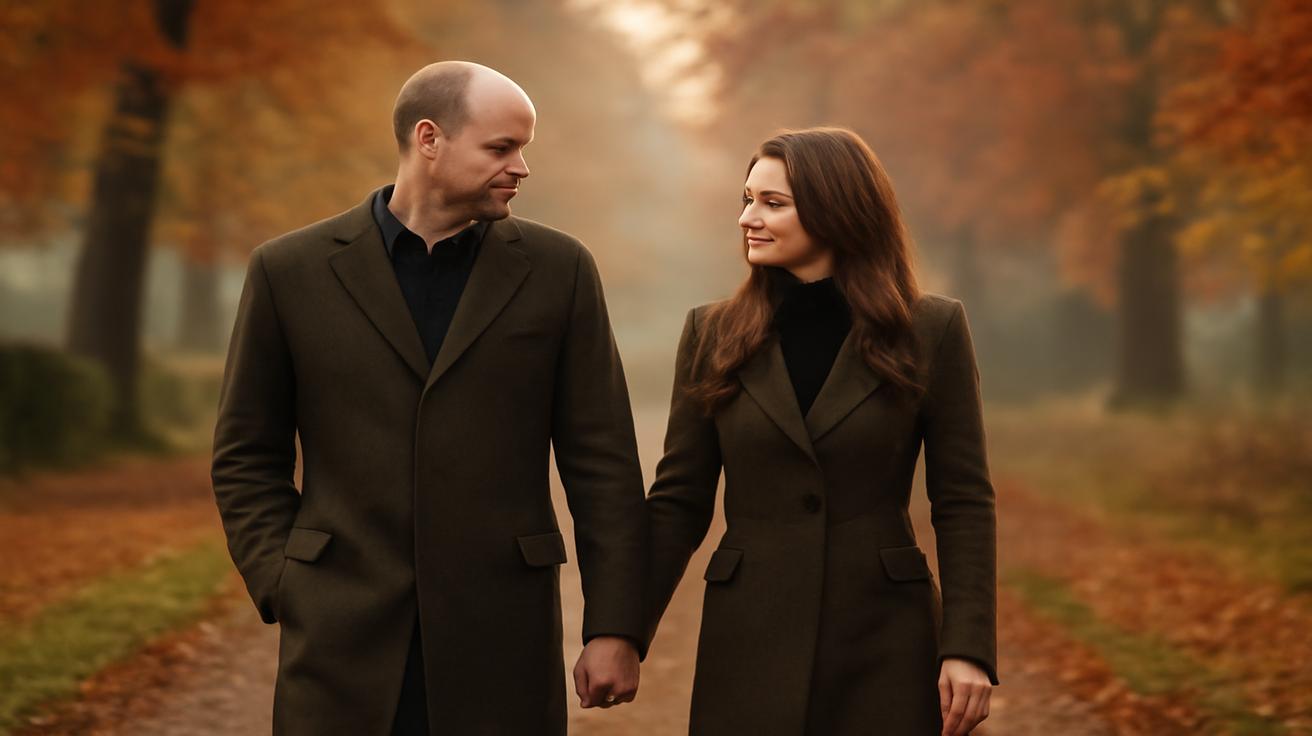
That might be why, even now, when the spotlight is brightest, there’s a quietness about them as a couple. They walk side by side, not staged but gently in sync, like people who have weathered storms together and learned not only to stand in the same place, but to lean the same way. Under the layers of history and expectation, that grounding is what makes them feel, somehow, like the world’s most watched normal couple.
The Soft Language of Small Gestures
With William and Catherine, the tenderness is rarely obvious in grand declarations. Instead, it lives in small, fleeting movements that could be easy to miss if you blink—yet those are the ones that say the most.
Watch the way William places his hand at the small of her back when they navigate a crowded event, guiding without fuss. Notice how Catherine, heels planted in some far-off field of tall grass, will tilt her body just slightly toward him, as if his presence is a familiar center of gravity. Their eyes meet often, a kind of ongoing conversation carried on in microexpressions: Are you okay? I’ve got you. We’re in this together.
These things are simple, human, and oddly disarming. In the echoing rooms of royal engagements, beneath carved ceilings and gilded frames, they carve out small pockets of intimacy—half smiles shared over the heads of photographers, the synchronized way they bend down to speak to a child, the soft laughter that slips out when one of them stumbles over a line in a speech. Even when they stand apart for protocol’s sake, there’s an invisible thread stretching between them, tugging gently, drawing them back into alignment.
There’s a moment people love to replay from appearances—when one of their children does something delightfully unscripted and Catherine’s first reaction is to glance at William. It’s just a fraction of a second, but in that glance lives an entire paragraph of understanding: You seeing this? This is our life. This is us. And he looks back with something that isn’t just amusement—it’s partnership, deep and steady.
In long days filled with handshakes and speeches, those glances, those tiny touches, become like small anchoring stones in a swiftly moving river. They are reminders that, before they are symbols, they are two people walking through all of it together.
The Echo of Shared Laughter
Every couple has its private language. For William and Catherine, a big part of that language seems to be laughter. Not the polite kind reserved for formal dinners, but open, unguarded laughter that scrunches their eyes and leaves them almost doubled over, momentarily forgetting the cameras, the crowd, the expectations.
There are photographs of them at events—rain blowing sideways, hair whipped by the wind—where one of them says something under their breath and the other bursts into that surprised, bright laughter that belongs only to people who truly like each other. There’s warmth in it, but also mischief, the sense that they can still see the absurdity in their extraordinary lives.
That laughter seems to be their pressure valve, a way of loosening the ties of formality and reminding each other that, behind the titles and the rituals, they are simply William and Catherine, who met in a university town, liked each other’s company, and never really stopped.
Home, Where the Titles Fall Away
When the royal cars roll out of the palace gates and the uniforms are hung back in carefully pressed rows, somewhere beyond the public gaze, there is a home where the day’s formality melts into something far softer. It’s easy to picture the soundscape: the thump of small feet racing down hallways, the clatter of toys, the bubbling laughter that rises from the floor where a future king might be sitting, cross-legged, building something out of blocks with his children.
In those unseen evenings, the Prince and Princess of Wales aren’t framed by flags or photographers. Instead, they’re framed by doorways and the glow of kitchen lights, by bedtime stories and half-finished art projects taped slightly crooked on the fridge. Their relationship, in those hours, feels like it belongs not to history or duty, but to the gentle, ordinary rhythm of family life.
It’s in the way Catherine crouches down to zip up a tiny coat, her voice soft and sing-song. It’s in the way William lifts a sleepy child into his arms, the kind of scoop-and-settle movement every parent knows. And above it all, in the quiet shared glances that pass between them over the tops of their children’s heads, there’s that same grounded, wordless promise: We are building this life together.
Unlike the grand, echoing rooms of the palaces, family spaces tend to be intimate, cluttered with the small artifacts of daily life—lost socks, school bags, dog leads, crayon marks that didn’t quite stay on the paper. When you picture the Prince and Princess of Wales there, it becomes easier to see them not as distant figures on a balcony, but as partners in the timeless, universal work of raising a family. It’s in that work that their bond seems to deepen—through shared worries about the future, shared delight in small milestones, and shared decisions about how to protect their children while still letting them grow.
The Gentle Art of Balance
The world sees the polished surface—the flawless tailoring, the poised speeches, the gentle smiles offered to strangers. But beneath the surface lies a constant balancing act, one they attempt together, step by carefully measured step.
They are parents and public figures at once, tasked with protecting their children while belonging, in some sense, to everyone. It’s not a balance that invites ease. Yet what makes them such an endearing couple in the public eye is how united they appear in navigating it. You can sense that their decisions—what to share, what to keep close—are not made in isolation but in duet.
In quieter interviews, there are hints of this partnership: Catherine speaking of the importance of childhood and mental health, William echoing the sentiment in his own words, both of them circling around the same core idea—that kindness, stability, and love at home matter, no matter how gilded the roof above might be. In that shared purpose, their relationship takes on the shape of something more than romance. It becomes a collaboration, a joint project, a life’s work they are both deeply committed to nurturing.
Weathering Storms, Side by Side
Every love story that lasts learns to coexist with storm clouds. For William and Catherine, those clouds gather not just from the skies of personal life, but from the harsh weather systems of public scrutiny, media storms, and the relentless pressure of expectation.
There are days when the headlines swell, when speculation and rumor rise like high winds around them. Yet, even from a distance, you can see how they instinctively turn inward, toward each other. The lines around their eyes might deepen, their expressions grow more guarded, but the way they move together does not fray. If anything, it seems to tighten, like two climbers bracing themselves against a sudden squall, checking each other’s ropes, making sure every knot is secure.
In difficult times, their coupledom becomes a quiet fortress. Not impenetrable, not invulnerable, but strong in the way that only shared experience can make it. They have grown up under radically different lights—Catherine from an ordinary background, William in the rarefied, exposed air of royal life—but it is in that difference that their strength lies. She brings a sense of grounded normalcy; he brings the deep understanding of what the role demands. Together, they seem to build not just a bridge between their worlds, but a bridge on which their children can safely walk.
It’s easy to romanticize resilience, to frame it as cinematic bravery. But most resilience is quiet. It looks like showing up anyway. It looks like standing next to each other on another cold morning, offering another speech, shaking another hand, and still finding, at the end of the day, enough softness left to lean into one another when the doors finally close.
Grace Under the Unblinking Eye
Their lives are lived under a gaze that never quite looks away. Cameras wait at gates; lenses follow their every movement, hoping to catch the unguarded, the imperfect, the unscripted. And yet, what shines through again and again is their ability to maintain grace without becoming hollow.
Grace, in their hands, is not a frozen smile. It’s the willingness to be present—to kneel down to greet a shy child, to listen properly to someone’s story, to show up for causes that matter. When they do this as a pair, one listening while the other speaks, one reaching out a hand while the other nods in quiet encouragement, that grace becomes a kind of choreography. It’s the dance of two people who have learned to make space for each other in every room they enter.
That’s what makes them feel so deeply, recognizably human. Behind the history, the protocol, the inherited weight of centuries, they are still a man and a woman learning, every day, how to be kind to each other in a world that does not always return the favor.
The Couple the World Has Grown Up With
For many, William and Catherine have become familiar figures not just as royals, but as a couple whose relationship has unfolded in real time alongside their own lives. People remember where they were when they saw the engagement photos—the way she shyly tucked her hair behind her ear, the almost boyish softness in his expression. The wedding, too: the slow walk down the aisle, the weight of history in every step, and yet, when their eyes met, an unmistakable sense that beneath the ceremonial layers were simply two people thrilled and nervously happy to be promising each other forever.
Over the years, that early, fairy-tale glow has gently weathered into something deeper and more textured. The honeymoon sheen has been replaced with something far more interesting: a visible companionship, a steadiness that feels earned. They tease each other lightly in public, smile with quiet pride when the other speaks, and stand shoulder to shoulder at moments of national importance.
Watching them, the world has not just observed a royal couple; it has watched a marriage grow. It has seen them move from youth to early middle age, from newlyweds to parents, from supporting roles to central figures on the public stage. Through it all, the one consistent thread has been how they seem to carry one another—sometimes gently, sometimes with great effort, but always together.
A Modern, Quiet Kind of Royal Romance
The romance of William and Catherine is not painted in extravagant displays or sweeping gestures. Instead, it lives in their choice to keep showing up for each other, every day, in great halls and muddy fields alike. It’s there in the matching glances at outdoor events, in the moments where one of them steps back slightly to let the other shine, and in the way they always, eventually, fall back into step.
It’s a modern kind of royal love story—gently feminist in the way space is shared, quietly traditional in its devotion, unmistakably contemporary in its awareness of the world beyond palace walls. Their affection doesn’t need to shout. It simply lingers, like the soft imprint left on a hand long after another has let go.
A Snapshot of Their Shared Journey
From the outside, their life can seem like a collage of public appearances and carefully staged photographs. But if you look closely, you can trace the story of their relationship in those images: the early shyness, the growing confidence, the lived-in comfort of a bond that has seen both triumph and trial.
| Moment | What It Reveals About Them |
|---|---|
| University days in St Andrews | A foundation of friendship and ordinary life before duty fully set in. |
| Engagement announcement | Nervous smiles, quiet certainty, and a shared readiness to step into the light together. |
| Wedding day balcony appearance | A fairy-tale image anchored by very real, visible affection and delight. |
| First outings as parents | A shift from couple to team of two, caring for something greater than themselves. |
| Joint charity work and causes | A partnership built not just on love, but on shared purpose and values. |
Each milestone carries its own texture, its own light. Early photos show the tentative edges of new love; recent ones glow with the ease of two people who no longer need to perform their affection for anyone. It simply radiates out, subtle but steady, in the way their bodies angle toward each other, in the quiet warmth of their eyes.
Perhaps that’s why the world finds them so irresistibly endearing. They are, undeniably, royalty. But they are also something much more accessible: a couple who, despite the strange altitude at which they live, seem to understand the simple, universal art of loving and being loved in return.
Why They Feel Like “Ours”
There’s a curious way in which William and Catherine belong to everyone and yet fiercely to each other alone. People who will never meet them feel a personal fondness for their story, as if they’ve watched a favorite pair of characters grow and change over seasons of a long-running series. Yet the heart of that story—those quiet kitchen-table talks, those whispered worries in the dark, that familiar weight of a head resting on a shoulder—belongs exclusively to them.
In a world that rushes and fractures, their relationship offers something reassuring: a sense of continuity, of two people choosing, again and again, to be on the same side. There is comfort in watching them grow older together, in seeing their love evolve from the sparkling dazzle of the early days into a deeper, steadier glow. They are, in so many ways, the most visible couple on the planet—and yet what makes them unforgettable is how often they seem to forget that, if only for a second, every time they turn toward each other with that unmistakable look of shared understanding.
In the end, the most adorable thing about the Prince and Princess of Wales isn’t their titles, their outfits, or even the fairy tale that swirls around them. It’s the quiet ordinariness tucked inside the extraordinary—the way they hold onto each other through the noise, the way their eyes soften when they share a laugh, the way their love story, though played out on a global stage, is built not from spectacle but from a thousand small, tender, everyday choices.
Frequently Asked Questions
Why are the Prince and Princess of Wales considered such an adorable couple?
People find them adorable because their affection feels genuine and unforced. Their small gestures—shared glances, subtle touches, easy laughter—resemble the natural intimacy of any close couple, despite the immense pressure and formality surrounding them.
How did William and Catherine meet?
They met as students at the University of St Andrews in Scotland. Long before they became global figures, they built a friendship and relationship in an environment of lectures, shared housing, and student life, which laid a strong foundation for their future together.
What makes their relationship feel relatable, despite their royal status?
Their relatability comes from how they navigate familiar roles—partners, parents, coworkers—within their marriage. Their visible teamwork, shared laughter, and concern for family life reflect experiences many people recognize in their own relationships.
How do they balance public duty with their private life as a couple?
While much of their life is public, they appear to protect pockets of privacy, especially around their children and home life. They often present a united front, dividing responsibilities and supporting each other’s roles, which helps maintain a sense of normalcy behind the scenes.
What can we learn from the Prince and Princess of Wales as a couple?
Their relationship highlights the importance of friendship, mutual respect, shared purpose, and small daily gestures over grand displays. It shows that even under intense scrutiny, a partnership grounded in kindness, humor, and loyalty can not only survive but quietly flourish.







Leave a Comment