
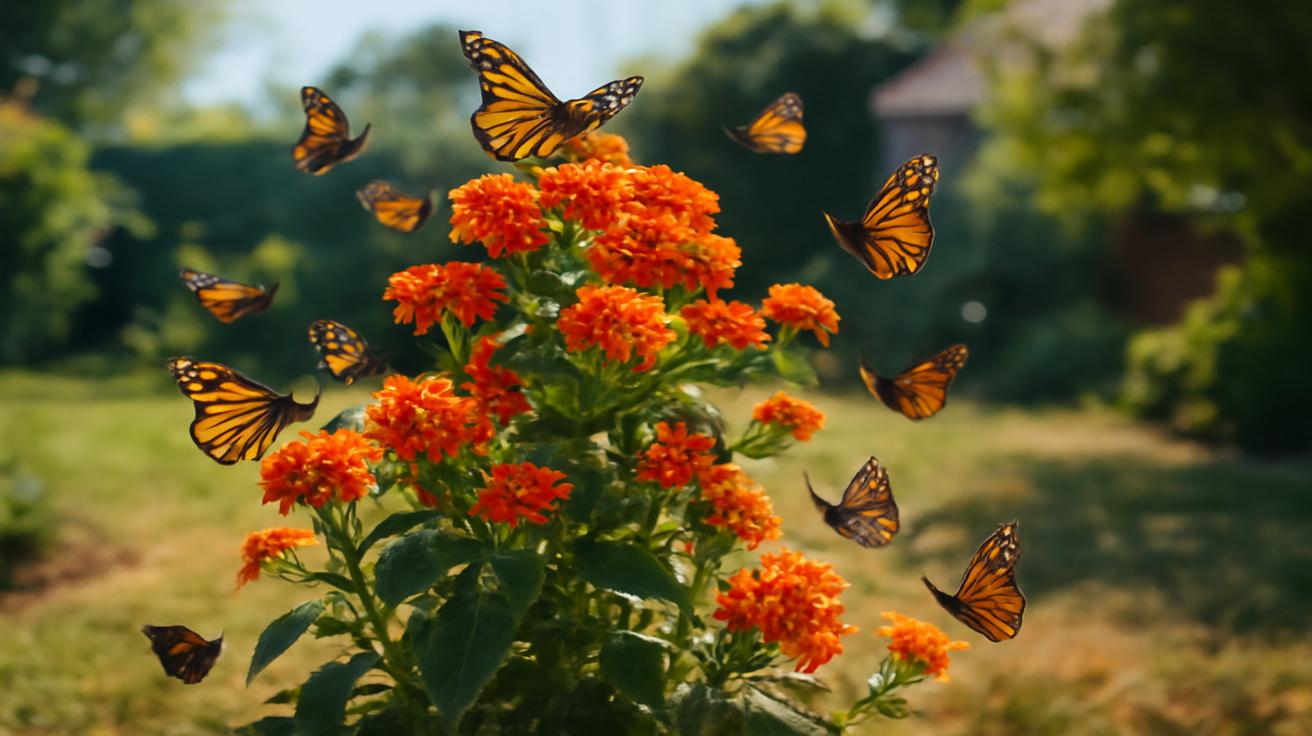
The first thing you notice is the heat. That thick, breathless kind of afternoon when the air feels like it’s leaning on your shoulders, when even the dog has surrendered to the tile floor and the birds have gone quiet. The lawn has turned to a crisp patchwork of straw, the tomatoes are sulking, and you can almost hear the hydrangeas whispering a plea for mercy. And then, in the middle of that tired, sunburned backyard, there’s this one plant that looks as if summer is its personal celebration.
Its stems stand upright and defiant, holding clusters of tiny, star-shaped flowers that seem to glow rather than wilt. Every few seconds, a wing flashes past—orange, black, yellow, electric blue. Butterflies are arriving like confetti tossed into the sun. The heat may be winning everywhere else, but here, in this small patch of color, something is quietly, insistently thriving.
The Plant That Laughs at Heat
Ask any gardener in a hot, drought-prone place what plant they trust most, and you’ll start hearing the same name over and over: milkweed. Specifically, the tough, perennial milkweed species that evolved in sunbaked prairies, dusty roadsides, and open fields where summer doesn’t politely knock—it kicks the door in.
If you’re picturing a fragile wildflower, think again. These milkweeds are more like botanical survivalists. Deep roots drill down into the soil, tapping moisture well below the surface. Their leaves stay remarkably sturdy and green when other plants look tired and fried. And those flowers—small, intricate, often overlooked up close—become fireworks of life when you step back and notice what’s happening around them.
Stand next to a mature milkweed patch on a hot afternoon and you’ll hear it before you see it: the faint humming, the zipping, the soft flutter of wings. Butterflies, bees, wasps, beetles, and even hummingbirds come in waves. Some stay a few seconds, some linger for hours. For them, scorching weather is not a disaster; it’s an invitation. The nectar is flowing, the sun is high, and the air smells faintly of warm leaves and sweet blossoms.
This is what makes milkweed such an extraordinary backyard plant. It doesn’t just “survive” summer—it turns it into a show.
The Butterfly Magnet in Your Backyard
People often talk about “pollinator gardens” as if they’re a luxury—something extra you do if you have more time than the average mortal. But a single stand of hardy, flowering milkweed can transform a plain yard into a living, moving, floating ecosystem without demanding much in return.
You don’t have to be a botanist, or have a catalog of Latin names memorized, to appreciate what happens when milkweed flowers open. One afternoon you look out the window and notice a few small butterflies nosing around. A week later, there’s a crowd. Swallowtails with their long, elegant tails. Skippers that bounce through the air like tiny sparks. And, if you’re in the right place at the right time, those iconic orange and black Monarchs, navigating thousands of miles of migration on wings thinner than paper.
There’s a quiet thrill in seeing the first Monarch of the season circle your yard, dip toward the milkweed, and land. It folds its wings together, leans forward, and drinks. Sometimes you can get close enough to see its curled proboscis uncoil like a secret straw. Later, if you search the undersides of the milkweed leaves, you might find something that looks unremarkable at first—tiny white eggs the size of a pinhead.
A few days pass. You check again. The eggs have turned into slivers of striped life, minuscule caterpillars in black, white, and yellow. They are impossibly small, yet already determined, chewing perfect half-moons out of the leaves. Weeks later, those same caterpillars—now bigger, bolder, and hungrier—will wander off and form chrysalises the color of pale jade, trimmed with dots of what looks like gold leaf. Watching this cycle unfold in your own backyard is less like “gardening” and more like witnessing a very slow, very beautiful miracle.
And all of it, every egg and wing and glimmering chrysalis, starts with one hardy, flowering plant that shrugs at the heat and keeps offering nectar when other blooms have given up.
Why This Plant Handles Scorching Summers So Well
On the surface, milkweed might look delicate: slender stems, narrow leaves, clusters of neat little flowers. But underneath, it’s engineered for extremes. In climates where summer is long, hot, and stingy with rain, survival requires more than luck—it requires strategy.
First, there are the roots. Many milkweed species grow deep taproots that can plunge down into the soil like an anchor, searching for moisture that shallow-rooted plants will never reach. Rather than spending energy on quick, lush growth that collapses at the first sign of stress, milkweed invests in these underground lifelines. That’s why it often doesn’t care if the top few inches of soil turn to dust.
Then there are the leaves. Some species have a slightly leathery texture or a waxy coating that helps them hold onto water. Others space their leaves in a way that reduces direct sun exposure or allows air to move freely through the plant, keeping it cooler. Milkweed seems to know how to move with the sun instead of fighting it.
Even the timing is strategic. Many milkweeds reach their full flowering power right as summer starts flexing its muscles. When other plants are thinking of giving up, they’re just getting started. That long blooming window is what turns them into such reliable food stations for butterflies and bees during the most punishing weeks of the year.
And then there’s the chemistry. Milkweeds produce a milky sap—where their name comes from—that contains compounds many animals find unpalatable or even toxic. For casual grazers, this is a warning sign: move along. But some species, like Monarch caterpillars, have adapted to not only tolerate these chemicals but actually store them in their bodies, becoming distasteful to predators. It’s a quiet pact between plant and insect: you feed on me, I’ll help make you harder to eat.
Planting for Butterflies: Turning a Yard into a Refuge
There’s something deeply grounding about stepping into a backyard that feels busy with life. Not busy with chores or noise, but busy in that soft, wild way—wings passing through, tiny legs landing on petals, bees weaving slow figure eights in the air. If you want that feeling, you don’t have to redesign your entire property. You can start with a corner.
Choose the hottest, sunniest patch of your yard—the one that seems almost too harsh for anything else. That’s exactly where milkweed feels at home. Clear the weeds, loosen the soil a bit, and plant a few young starts or sow seeds, depending on what’s available to you. Water them well in their first weeks while they’re settling in, then slowly step back and let them toughen up.
Milkweed doesn’t ask for lush irrigation schedules or expensive fertilizers. In fact, it’s usually happier without the fuss. Once established, it’s the quiet, independent neighbor who never needs anything but is always inviting guests over.
To keep the scene dynamic, you can mix in other drought-tolerant, nectar-rich plants—perhaps some coneflowers, lantana, or native salvias. Each species will attract its own crowd, layering your yard with visitors across the seasons. Yet the milkweed will remain the heart of the show, especially for butterflies who need more than just nectar—they need a nursery.
Imagine this small act: you plant a handful of milkweed. Months later, a butterfly that has flown hundreds or even thousands of miles drops into your yard, lays eggs on your plants, and continues its journey. That tiny decision, made with a trowel in your hand and soil on your knees, sends a quiet ripple outward into the larger story of migration, survival, and the persistence of wild things in a human-shaped world.
A Quick Guide to Getting Started
If you like having simple, clear steps, here’s a compact overview of how to welcome this hardy flowering plant into your life and turn it into a butterfly magnet.
| Step | What to Do | Tips for Hot, Dry Climates |
|---|---|---|
| 1. Choose a spot | Pick a full-sun area with at least 6–8 hours of direct light. | Don’t be afraid of reflective heat near walls or fences—milkweed can handle it. |
| 2. Prepare the soil | Loosen compacted soil and pull out aggressive weeds or grasses. | Add a little compost if your soil is pure sand or hard clay, but avoid heavy fertilizing. |
| 3. Plant seeds or starts | Set seedlings at the same depth they grew in the pot, or sow seed as directed on the packet. | Water deeply after planting to help roots reach down, not sideways. |
| 4. Establish, then ease up | Keep soil lightly moist for the first few weeks, then reduce watering. | Once established, water only during extreme drought to encourage deep roots. |
| 5. Let it live its life | Expect chew marks from caterpillars and pods forming later in the season. | Leave some pods to dry and scatter seeds; your patch will slowly expand. |
Living with Caterpillars, Chewed Leaves, and Wild Edges
The first time you see “your” plant almost stripped by caterpillars, there might be a stab of panic. You worked hard to plant it, water it, watch it grow—and now some boldly striped creatures are devouring it leaf by leaf, as if you’d opened a buffet just for them.
But that’s exactly what you did.
Milkweed isn’t just a pretty backdrop for butterflies. For many species, especially Monarchs, it’s the nursery and the pantry. The leaves are food; the plant itself is the lifeline. When you decide to grow milkweed, you are essentially hanging a sign in your yard that says, “Butterflies welcome. Caterpillars welcome too.” You are agreeing to a little wildness.
There’s a strange pleasure in embracing that. You might wander out with your morning coffee, spot a caterpillar that wasn’t there the day before, and find yourself unexpectedly rooting for it. You begin to measure time in stages: eggs, tiny caterpillars, big caterpillars, chrysalises, wings. The plant becomes less of an ornament and more of a character in your daily life, involved in many quiet dramas you never used to notice.
And here is the reassuring part: even when chewed down by hungry mouths, hardy milkweed usually comes back. New shoots, new leaves, new flowers. It’s built to bounce back from both heat and herbivores. The cycle of being eaten and returning is simply how it exists.
In a culture that often prizes immaculate lawns and carefully sheared shrubs, a plant with ragged edges and insects crawling all over it can look out of place. But those rough edges are where the magic lives. Once you start watching butterflies emerge from chrysalises your own milkweed supported, perfection stops looking like a trimmed hedge and starts looking like a slightly wild corner full of motion.
Summer Nights and the Quiet Satisfaction of Letting Nature In
There’s a particular kind of evening that comes after a blistering day—the light softens, the heat finally loosens its grip, and the sky shifts to that powdery blue that feels almost nostalgic. You step outside, maybe barefoot, maybe still carrying the day’s worries, and your eyes drift to the milkweed patch.
Flowers that looked bright and almost harsh at noon now glow softly in the fading light. A few late butterflies still linger, sipping a last bit of nectar before finding a place to rest. Moths begin to appear, quieter and more secretive than their daytime cousins. Somewhere nearby, a cricket starts its slow, steady song. The world feels different here, in this small, buzzing pocket of life.
This is what a hardy, heat-loving flowering plant can offer—not just color or resilience, but company. A sense that even on the hardest days—the ones where the news feels heavy, or the sky feels too big, or the to-do list is never-ending—there is a small wild system at work just outside your door, pulsing along on its own rhythm.
Milkweed will not cure all your problems, but it will bring you a kind of gentle, quiet companionship. The way a Monarch drifts in as if it has always known where your yard is. The way bees trace lazy paths from flower to flower as though they’ve been doing it since before you were born. The way those tough green stems hold on, even in heat that sends you scrambling back inside to the shade and the fan.
In the end, the plant that survives scorching weather and fills backyards with clouds of butterflies is more than just a garden choice. It’s an invitation: to notice more, to care more, and to let a little wilderness bloom where you live.
Frequently Asked Questions
Is milkweed really that drought-tolerant?
Yes. Once established, many milkweed species handle hot, dry conditions extremely well. Their deep roots allow them to find moisture far below the surface, which is why they often stay green and blooming when shallower-rooted plants start to struggle.
Will milkweed take over my yard?
Some species spread more than others. In most gardens, milkweed expands slowly by seed or underground roots. If you’re worried about it spreading too far, you can trim off some of the seed pods before they open and plant in defined beds or containers to keep it contained.
Is it normal for the leaves to get chewed up?
Absolutely. Caterpillars, especially Monarch caterpillars, rely on milkweed leaves as their primary food. Chewed leaves are usually a sign that your backyard is doing exactly what you hoped—supporting butterfly life. Healthy plants typically leaf out again.
Do I need to water milkweed regularly?
Newly planted seeds or seedlings need regular moisture until they settle in and develop strong roots. After that, most hardy milkweeds prefer deep, infrequent watering or can get by with natural rainfall in many regions, especially if planted in the ground rather than pots.
Is milkweed safe for pets and kids?
Milkweed contains a milky sap with compounds that can be toxic if eaten in large amounts. Most animals find it unappealing and avoid it. Still, it’s wise to teach children not to eat any part of garden plants and to wash hands after handling stems that ooze sap.
How long will it take to attract butterflies?
In many areas, butterflies will find milkweed surprisingly quickly—sometimes within weeks of planting. Timing depends on your local butterfly populations and their migration cycles, but once your plants start blooming, your chances of visitors increase dramatically.
Can I grow milkweed in containers?
Yes, though it will need more attention to watering than plants grown in the ground, especially during extreme heat. Choose a large container with good drainage, use a well-draining soil mix, and place it in a sunny spot. Even a container-grown plant can attract butterflies and provide nectar and leaves for caterpillars.








Leave a Comment