
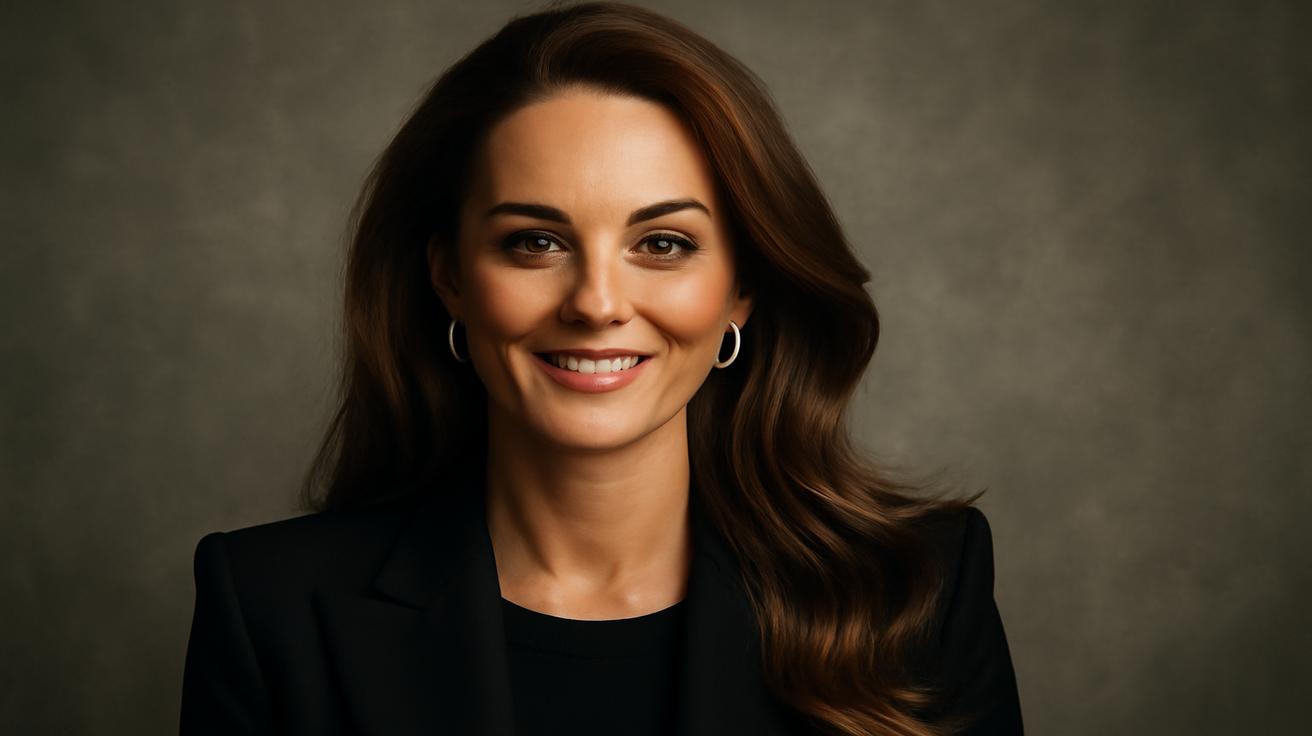
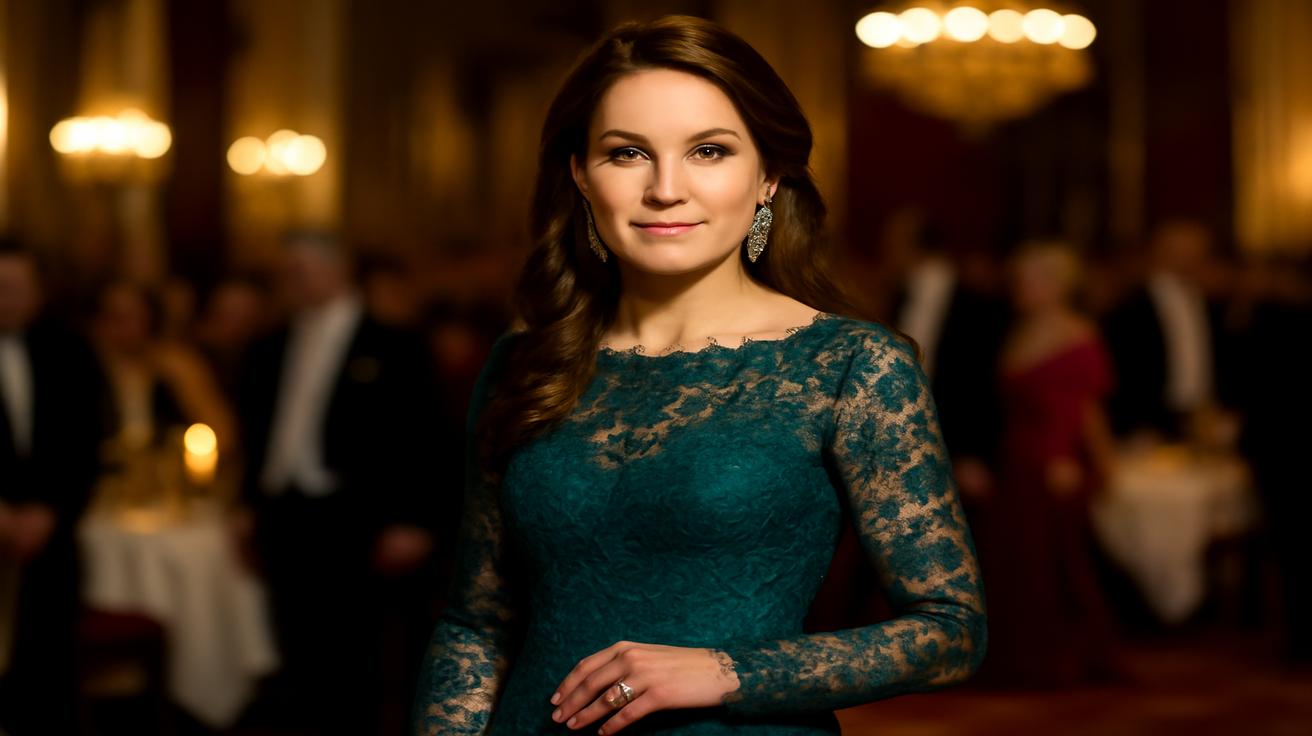
The camera finds her in the soft, pearled light of an English morning—coat just a little too perfect, smile warm but never careless, hair catching the breeze the way a field of barley takes the wind. She steps into view and there’s a quiet intake of breath, that shared, invisible ripple that moves through crowds and comment sections alike. You can practically feel it in your chest, even if you’re only watching through the thin glass of your phone screen: there she is. The Princess of Wales. And somehow, impossibly, she seems to look better, calmer, more luminous than the year before.
The Slow Magic of a Life Lived in Seasons
To talk about “aging like fine wine” is to talk about time itself—not as an enemy, but as a co‑author. We throw the phrase around, usually half‑joking, whenever someone looks unexpectedly radiant past the age when the world expects women, especially, to begin disappearing. But if you really want to understand what that phrase looks like in skin and bone and breath, you could do worse than to watch the Princess of Wales move through a year of public life.
She doesn’t get to age in private. Her birthdays arrive with front‑page spreads and zoomed‑in photos; her pregnancies, her illnesses, her recoveries, are parsed and debated with all the intensity of a national weather forecast. Yet within that scrutiny—within that relentless lens—something deeply human has unfolded over the years. Like a landscape you think you know becoming more beautiful each time the weather changes, she has shifted quietly from ingénue to mother, from royal fiancée to future queen, revealing new layers instead of frantically holding onto the first one.
It’s easy to forget how young she was when she entered the public gaze. We met her in that hazy, hopeful era of low‑rise jeans and flip phones, when her now‑signature poise was only just starting to take root. The world saw long hair, a shy smile, a student in a fashion‑show dress. What it couldn’t quite see yet was the steel running quietly beneath the surface, or the way years would sand down the edges of youthful self‑consciousness into that rare thing: presence. Not just polished, but grounded. Not just beautiful, but inhabited.
What “Fine Wine” Really Means
The metaphor of aging like fine wine is overused, but if you let yourself linger with it, there’s something almost wild and earthy at its core. Wine doesn’t become refined by accident. It begins in dirt. It starts as weather: a late frost, a hot June, a week of unexpected rain. It rises up through the soil into grapes that are bruised and thickened and sweetened by the elements. Then it is pressed, contained, held in darkness for longer than seems reasonable, transformed by stillness and time.
So what does that have to do with a princess in a tailored coat dress? Everything.
She has lived through her own seasons of weathering: tabloid storms and family upheavals, pregnancies carried under the fluorescent glare of flashbulbs, the physical trials of severe morning sickness, the pressures of expectation in a family that doubles as a national symbol. There have been the quieter, more ordinary experiences too—sleepless nights with infants, first school drop‑offs, the private negotiations of marriage, loss, and the subtle recalibrations that come as you move from your twenties into your thirties and beyond.
In photographs taken years apart, you can almost trace the vintner’s hand at work. The early sparkle of novelty gives way to something subtler: a deepening around the eyes, a more defined posture, the confidence to laugh wide open in public, even when the moment isn’t choreographed. The beauty is still there—arguably more so—but it has ripened. It no longer asks for your approval. It assumes its own worth.
The Glow of Experience
There’s a particular kind of radiance that doesn’t belong to youth or filters, and the Princess of Wales wears it like second nature. It’s in the way she bends fully, knees and back and attention, to talk with a child holding out a crumpled drawing. It’s in the kind of eye contact that says, for these fifteen seconds, you are the only person I see. It’s in the unhurried way she walks into a room—aware, yes, that a thousand lenses are waiting, but clearly more interested in where she is than in how she looks doing it.
Over time, we’ve watched her move from the tentative, almost rehearsed warmth of the early years to a comfort that feels lived‑in, like a favorite sweater that has finally learned the shape of your shoulders. She laughs more freely in public now. She’s more at ease in trousers one day, a tiara the next, as if she’s made peace with the two worlds she straddles: the woman and the symbol, the mother and the monarchy.
That comfort doesn’t arrive with age alone. It comes from having survived enough unflattering angles—literal and metaphorical—that they lose their power to define you. You discover that you can be photographed mid‑blink, mid‑grimace, mid‑misstep, and the sky doesn’t fall. You learn you are not a single captured image, but an unfolding story.
From Glossy Youth to Textured Grace
One of the quietest rebellions of her public life has been the steady, almost imperceptible loosening of perfection. Early on, everything was extremely controlled: the hair perfectly curled, the eyeliner precise, the outfits calculated to the hemline. It made sense—this was a young woman being introduced to a world that can be merciless when it comes to missteps.
But over the years, you start to notice the evolution. The makeup softens; the eyebrows look more like eyebrows and less like a stylist’s geometry project. The hairstyles, though still immaculate, sometimes give in to the weather—a smooth blowout subtly giving way to wind‑ruffled waves in a coastal gust, or a few strands slipping free as she runs on a field with schoolchildren. She seems less bothered by those tiny imperfections, maybe even amused by them.
There’s a moment at an outdoor engagement—one of many—when the sky is the color of pewter and the wind is especially relentless. Her hair whips across her face in a decidedly unroyal tangle. For a heartbeat, the old habit might have been to fight it, to smooth it down, to try to out‑pose the elements. Instead, she laughs, tucks a few strands behind her ear, and keeps talking. The photo circulates. The comments roll in. And yet there, in that candid flash, is a truth deeper than flawless grooming: the world will do what the world does. You can either contort yourself against it or let the weather be part of the story you’re telling.
Aging gracefully doesn’t mean pretending time leaves no trace. It means choosing what deepens and what calcifies. In her case, the lines that are beginning to whisper around her eyes only make sense: a decade of public smiles, private worries, and that very particular kind of fatigue known only to parents of young children. But alongside those subtle changes is a growing clarity—about purpose, about values, about the kind of presence she wants to cultivate.
A Royal Case Study in Aging Well
For all the fairy‑tale framing, the Princess of Wales offers something unexpectedly practical: a visible, decade‑long case study in holistic aging. We can’t all have couture gowns or historic tiaras, but the essentials of how she seems to be aging so well are surprisingly translatable. Zoom out from the gloss of royalty, and you see an intertwined web of habits, priorities, and choices that support the long game.
Look closely at her lifestyle, as far as the public can see it, and a pattern emerges: movement, outdoor time, connection, structure, purpose. You’re just as likely to see her in trainers at a sailing event or running along a track with schoolchildren as you are to see her in formal wear. She looks like a person who uses her body, not merely adorns it. There are glimpses of a diet that favors real food over fads, of time spent in fresh air, of a social role rooted in contribution rather than constant self‑promotion.
All of that doesn’t just keep the body strong; it keeps the mind spacious. The research is clear: regular physical activity, meaningful work, healthy relationships, and time in nature are some of the most reliable predictors of both longevity and life satisfaction. In other words, aging well is less about chasing youth and more about feeding the systems that allow maturity to bloom into wisdom, resilience, and yes, beauty.
| Aspect | Princess of Wales | Takeaway for Us |
|---|---|---|
| Physical Presence | Active, often outdoors, comfortable in sportswear and formalwear alike | Move regularly, use your body in varied ways, prioritize strength and stamina |
| Public Style | Classic silhouettes that evolve slowly, not trend‑chasing | Choose timeless over trendy; let your style mature with you |
| Emotional Tone | Calm, empathetic, often focused on others in conversation | Cultivate presence and deep listening; it shows on your face |
| Life Focus | Purpose‑driven charity work, especially around children and mental health | Anchor aging in contribution and meaning, not appearance alone |
| Response to Time | Allows visible evolution—style, role, and demeanor deepen over years | Let yourself change; resist the pressure to look eternally 25 |
The Quiet Power of Letting Yourself Evolve
If you scroll back through old photos of her, there’s almost a cinematic feeling to it: the university student, the young girlfriend at a rugby match, the fiancée on the balcony, the new mother on hospital steps, the working royal in a hard hat at a construction site, the polished princess at a state banquet. You can track the phases not by the dresses or hairstyles, but by the growing steadiness in her gaze.
This is where the metaphor of fine wine really earns its keep. A wine that hasn’t been allowed to age properly can be bright, sure, but also sharp, impatient, a little noisy on the palate. Give it time, and the flavors begin to integrate. The once‑separate notes of fruit, earth, spice, and oak start to speak in harmony instead of shouting over one another. In the same way, the Princess of Wales seems less like a compilation of roles now and more like a single, coherent human being inhabiting them.
There’s a particular kind of face you see in people who have made peace with their path. It isn’t a face without worry or grief lines; on the contrary, those stories are right there, etched softly into the skin. But there is a settledness beneath them, a quiet acceptance of the road already traveled and the road ahead. It’s the opposite of the frozen, desperately preserved veneer that so often passes for “ageless” in our culture. Instead of clinging, there’s curiosity. Instead of retreat, there’s engagement.
We sense that in her now. When she speaks about the early years of a child’s life or about mental health, there is a depth that doesn’t come from talking points alone. It comes from having lived enough years to know your own vulnerabilities, from having watched your own children grow, from having navigated your own invisible storms. Time, handled with honesty, becomes a resource rather than a threat.
Redefining What It Means to “Age Well”
So maybe the definition of “aging like fine wine” needs an update. It isn’t about emerging into your forties looking suspiciously unchanged from your twenties. It isn’t about chasing the illusion of “effortless” perfection, which almost always hides a frantic undercurrent of effort. It’s about becoming more fully yourself with each passing year, and allowing that self to be seen.
Watching the Princess of Wales, you get the sense that she’s less interested in erasing time and more interested in partnering with it. Her evolution suggests a different script for all of us who live under far smaller, but still potent, gazes—of colleagues, family, social media, even our own internal critics. The question shifts from “How do I look like I haven’t aged?” to “How do I grow into a version of myself that feels richer, kinder, more grounded than before?”
That might mean choosing habits that nourish your future self instead of only flattering your present one. It might mean accepting—and even cherishing—the small physical signs that you’ve laughed a lot, worried deeply, cared fiercely. It might mean cultivating a style that supports rather than disguises who you are now. It will almost certainly mean letting go of the fantasy that there was some golden, perfect moment in your twenties that you must forever measure yourself against.
Because the truth is, youth isn’t the peak of the story; it’s the prologue. The real richness comes later, when you’ve had enough time to see who you are under pressure, in love, at a loss, in recovery. The Princess of Wales, simply by becoming more fully herself in full view of the world, quietly pushes that truth into the collective imagination. She reminds us that there is beauty not only in arrival, but in endurance; not only in debut, but in staying.
What the Princess of Wales Teaches Us About Time
In the end, the cameras will always arrive. The headlines will always search for a flattering or unflattering angle. The internet will always have opinions. But beneath that noise is a woman in motion through time, moving from chapter to chapter with a kind of deliberate softness.
She shows us that aging like fine wine isn’t about being untouched by life; it’s about being touched by it in a way that refines instead of eroding you. It’s about letting the storms make you more complex, not more bitter; more empathetic, not more closed off. It’s about accepting that your face and body will change, and deciding, bravely, to let that be part of your beauty instead of an enemy to wage war against.
So if someone asks for the definition of aging like fine wine, point them not to a filtered image or a miracle product, but to a longer, unfolding story. Point them to a princess whose youth unfolded in a blaze of flashbulbs, who learned to stand still in that light until it felt almost like sunshine, and who now walks forward—slightly older, significantly deeper—with the quiet confidence of someone who understands that time, handled with humility, is not a thief but an alchemist.
Out in the soft English light, on some school playground or at a windswept memorial, she bends to speak to a child, or offers a hand to someone much older than herself. For a heartbeat, there is only that shared human moment—not the title, not the photographs, not the years between them. Just presence. Just attention. Just a woman in the middle chapters of her life, aging visibly, gracefully, finely. Like something carefully tended, rooted in real earth, and still opening, season after season.
FAQ
What does “aging like fine wine” really mean?
It describes a kind of aging where time adds depth, character, and appeal instead of diminishing them. Rather than trying to look perpetually young, it’s about becoming more confident, grounded, and authentically yourself as the years pass.
How does the Princess of Wales embody this idea?
She has visibly grown from shy young girlfriend to assured future queen, allowing her style, demeanor, and public role to evolve. Instead of freezing herself at one stage of life, she seems to lean into maturity—showing more presence, empathy, and purpose with each passing year.
Is aging gracefully only about looks?
No. Physical appearance is just one piece. Aging gracefully is also about emotional resilience, a sense of purpose, meaningful relationships, and how you show up in the world. The Princess of Wales illustrates this through her focus on family, mental health advocacy, and calm public presence.
What practical lessons can we take from her example?
Move your body regularly, spend time outdoors, favor timeless style over constant trends, cultivate empathy, and invest in meaningful work or causes. Most of all, allow yourself to evolve instead of chasing your younger self.
Can anyone “age like fine wine,” or is it just for the privileged?
While privilege can provide resources, the core qualities of aging well—kindness, curiosity, presence, purpose, and acceptance of change—are available to everyone. You don’t need a title to let time deepen you instead of harden you.


Leave a Comment