
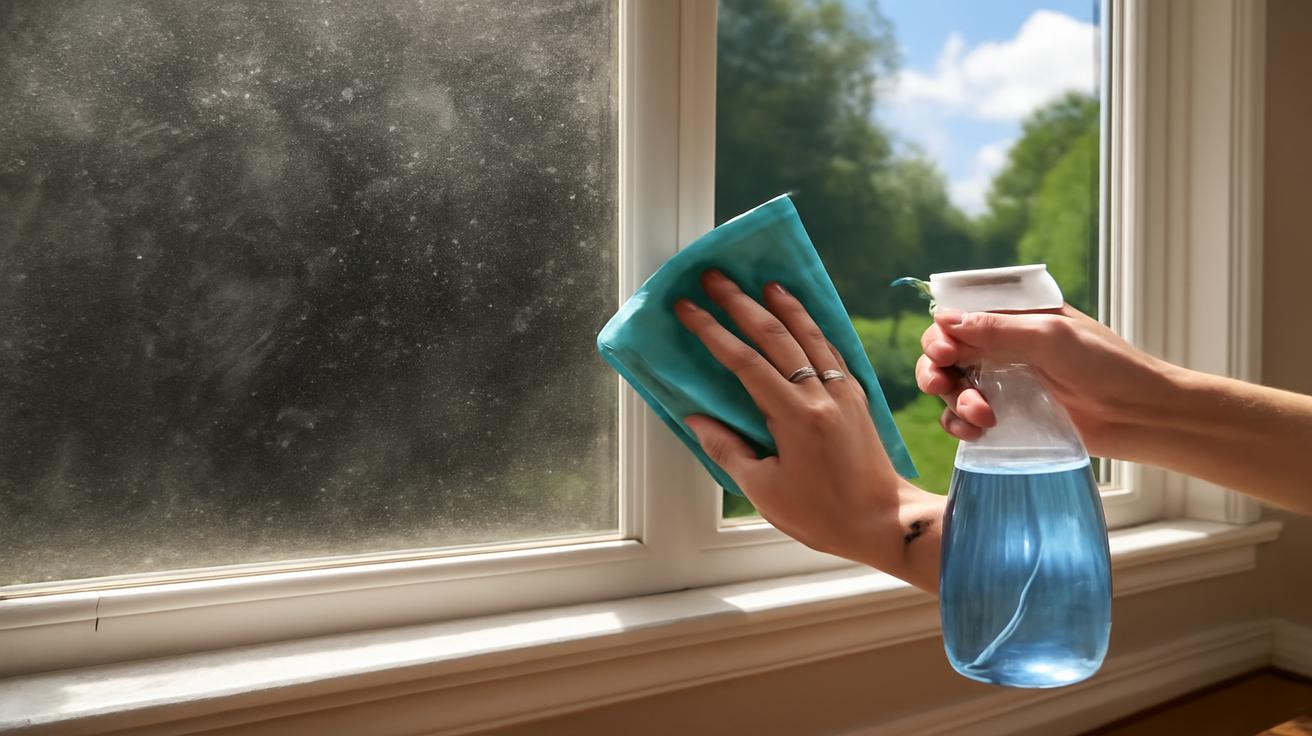
The late afternoon sun was doing me no favors. It slanted in through the living room window at just the right angle to expose every fingerprint, streak, and dusty halo on the glass. The rest of the room wasn’t exactly pristine, but it looked… fine. Acceptable. Then that light hit, and suddenly my supposedly tidy home felt hazy, like I was living inside a smudged photograph.
I wiped at one obvious mark with the side of my sleeve, the way we all swat at an annoyance rather than solve it, and a crisp little circle of clarity appeared. The world outside—bare trees, telegraph wires, the neighbor’s blue car—popped into startling focus, framed by the dull fog around it.
That was the moment it clicked. The fastest, most striking cleaning task in any space, the one that changes the way a room feels in minutes, isn’t deep-organizing a closet or scrubbing the baseboards. It’s cleaning whatever your eyes pass through or look straight at: the glass and shining surfaces that quietly dictate whether a space feels cloudy and tired or suddenly alive.
The Glass Moment: Why Some Mess Bothers Your Brain More
Walk through your home and pay attention—not to what’s technically dirty, but to what your eyes actually land on. You might step over a pile of shoes in the hallway, ignore the dust along the TV stand, and fully intend to deal with that mysterious Something in the back of the fridge tomorrow. But a streaked mirror in the bathroom? A cloudy shower door? Fingerprints on a glass table? Somehow they feel louder.
There’s a reason for that. Our brains crave clear lines and uninterrupted views. Smudged glass, mirrors, screens, and glossy surfaces interrupt those lines; they scatter light, catching your eye again and again, a visual itch you never quite scratch. You may not think, “Wow, these streaks are stressing me out,” but you feel it as a low-level fuzziness, a sense that your space is never fully “done.”
That’s why, if you want maximum visual impact in minimum time, you don’t start with the floor. You start with what the light hits: windows, mirrors, screens, and those shiny, reflective, or see-through surfaces that frame your daily life. Clear those, and a room can feel instantly bigger, brighter, and cleaner—even if the laundry basket is still whispering your name from the corner.
The Shortcut to “My Whole House Feels Cleaner”
There’s something sneaky about shiny surfaces: they behave like amplifiers. Tiny marks, printy fingerprints, a film of kitchen grease—they all read larger than their physical size because they’re placed right where light bounces.
Think about a bathroom mirror. If it’s grimy, the whole bathroom somehow feels dingier: the tile seems older, the grout seems grayer, the lighting feels harsher. But wipe that mirror to a bright, streak-free shine and suddenly the same sink, same toothbrush cup, same cluttered drawer all feel more acceptable. It’s like putting on clean glasses after a long day—the world hasn’t changed, but your perception has.
The magic, then, lies in focusing on what your eyes “touch” first, not what is technically dirtiest. This is why, when time is short or motivation is low, the cleaning task that makes the biggest visual difference is always some version of: make the glass and glossy things gleam.
Not deep-cleaning the oven. Not alphabetizing the pantry. Just a simple, sensory reset: removing the film between you and your own space.
Windows, Mirrors, Screens: The Three-Minute Transformations
You could easily turn this into a whole philosophy of housekeeping—clean what changes how it feels, not what just changes how it scores on a checklist. But philosophy is easier to stay loyal to when it comes with quick wins. So let’s walk through three specific zones where a few swipes can change the whole mood of a room.
1. The “Suddenly Bigger” Window Trick
If you only have ten minutes and want it to look like you’ve done so much more, go straight for the windows. Not all of them, necessarily. Just the ones that matter most: the window you face while you work from home, the big one in the living room that frames the street, the balcony door that catches the sunset.
There’s a particular pleasure in watching a dirty window clear. First swipe: the cloth squeaks a little, leaves behind a transparent path in the haze. Second swipe: the outside world sharpens; individual leaves, blinds in the building across the way, a bird hitting the brakes mid-flight. As the glass clears, so does the room. Light looks different—less flat, more dimensional. Colors in the room deepen and brighten, as if someone quietly upped the saturation setting on the world.
You might have left the throw blankets in a loose heap on the sofa; there may be a collection of unmatched mugs on the coffee table. Doesn’t matter. If your eyes move to that wide, clean pane of glass and the light pours through, the room feels intentionally lived in rather than haphazardly neglected.
2. The Mirror That Changes Your Mood
Bathroom mirrors are ruthless historians. Every drop of tap water that dried there, every fleck of toothpaste, every ghostly ring from yesterday’s steamy shower is preserved as a record of days gone by. Over time it all blends into a soft, cloudy film, one that you only really notice when you wipe your hand across a small section and realize how foggy the rest had become.
Clean that mirror—really clean it, edge to edge—and you affect much more than the way the bathroom looks. You change the way you see yourself, literally. Your face appears sharper, more alive against a clear background. The light bounces back more generously. The whole space becomes a small morning stage, instead of a dim corner where you just pass through.
And this might be the easiest high-impact clean in the entire house. One cloth, one minute, even less if you’ve got a good habit going. Yet the after-feeling is absurdly disproportionate to the effort: you catch your reflection while rushing out the door and think, even subconsciously, “Ah. This feels better.”
3. Screens: The Invisible Grit You Stare At All Day
Your laptop, tablet, and phone screens are like portable windows you carry from room to room, and they might be the surfaces you look at more than any window or mirror. Grease smears from fingers, speckles of dust, a faint spray of coffee that dried days ago—all of that turns into a constant, low-level blur that your brain has to look through.
Clean those screens and it’s like a mental exhale. Text looks crisper. Images look richer. The soft glare drops away. It doesn’t just look better; it feels like someone turned down the noise in your head.
There’s a small, almost meditative satisfaction to this task. You power down the device, pass a soft cloth slowly across the glass, watch fingerprints vanish in a smooth sweep. It’s a tiny ritual, but when you flip the screen back on, the effect is immediate and strangely refreshing. This is visual quiet, as tangible as a freshly made bed.
The Feel of Clean: Sensory Details That Matter More Than You Think
Media loves dramatic before-and-after photos: chaotic pantry transformed into a rainbow-coded marvel, grimy ovens reborn to showroom shine. Those are impressive, but most of everyday life doesn’t look like a television reveal. Instead, it’s small, repeatable shifts. It’s the soft shush of a cloth over glass, the way a room suddenly smells less stale when you crack open a just-cleaned window, the way the warm light spills in unhindered.
This is the heart of why focusing on glass and glossy surfaces works so well: it doesn’t just change how things look; it changes how they feel to your senses.
- Light: Clear surfaces shape how light moves. A clean window softens shadows, a polished table reflects the glow of a lamp, a shiny faucet catches the morning sun.
- Touch: Your hand slipping along a smooth bannister or cool, clean countertop triggers a tiny sense of order and care.
- Sound: The faint squeak of a cloth against glass, the click of a bottle sprayer, the gentle tap-tap as you polish around the edges—these sounds quietly signal “reset” to your brain.
We think of cleaning as a purely visual job, but your nervous system experiences it like a micro-seasonal shift inside your own walls. Polished surfaces feel like clear weather. Fuzzy, streaked ones feel like a low, unseen overcast.
The Tiny Toolkit That Changes a Room
You don’t need to build an arsenal of specialty products to make this work. In fact, the beauty of this high-impact task is how simple the tools can be. Here’s a compact, mobile-friendly look at what you actually need to transform your space in minutes:
| Item | Why It Helps |
|---|---|
| Microfiber cloth | Grabs dust and oils without scratching; works on glass, mirrors, and screens. |
| Glass cleaner or vinegar mix | Cuts through film and streaks quickly for windows and mirrors. |
| Screen-safe wipe or spray | Gentle on electronics; removes smudges without leaving residue. |
| Small squeegee (optional) | Great for large windows or shower glass; gives that satisfying, streak-free finish. |
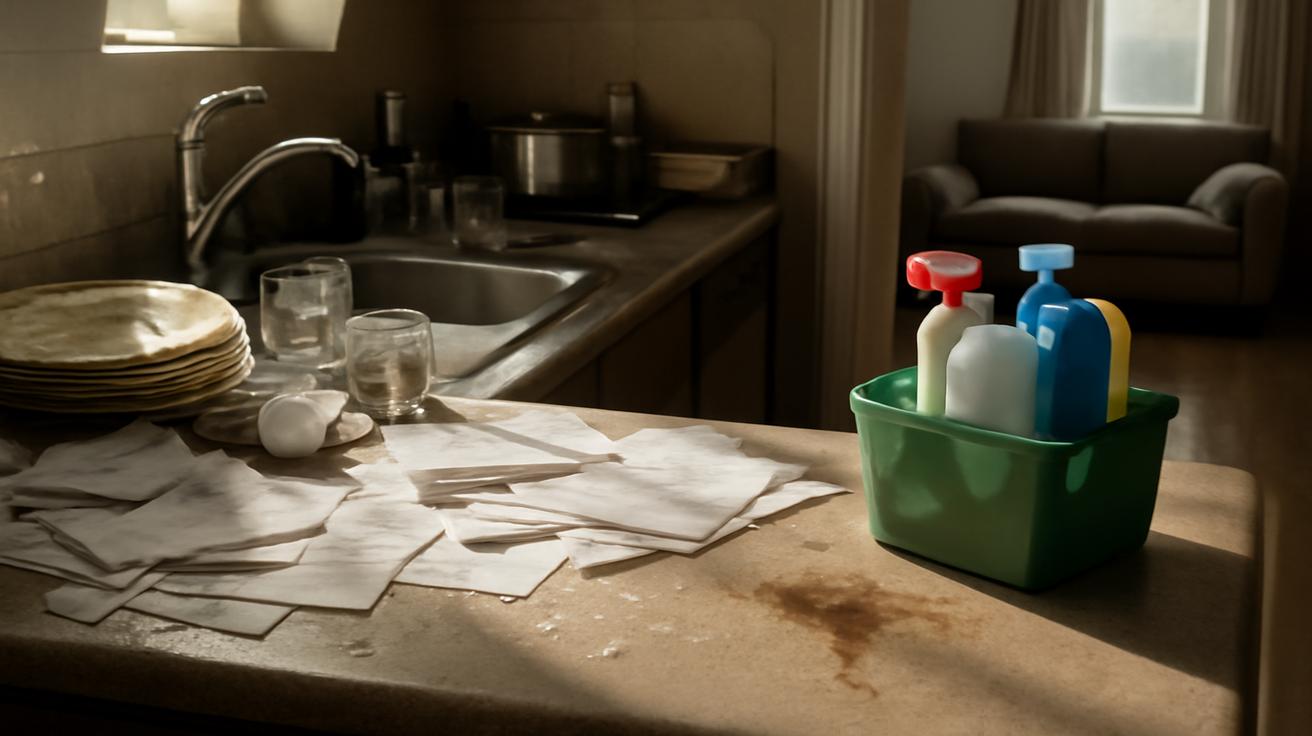
That’s it. Four tools, one small basket or caddy, and you’ve got everything you need to change the way your space looks and feels, over and over again, in ten minutes or less.
Micro-Cleaning Sessions: Five Minutes That Change the Whole Day
One of the main reasons people avoid cleaning is the dread of the never-ending job. There’s always more to do, more corners to scrub, one more drawer to sort. If you treat cleaning as an all-or-nothing event, you’ll almost always choose “nothing.”
But the kind of task we’re talking about here—the quick, high-impact shine-up—belongs to a different category entirely. It fits into small spaces in your day: while coffee brews, while the pasta water boils, between video calls. These are not “project days.” They’re resets.
The 10-Minute Shine Ritual
Try this experiment once this week:
- Pick one main room—the living room, the kitchen, or the room where you work the most.
- Set a timer for ten minutes. Not twenty. Not an afternoon. Ten.
- Spend the entire time only on glass and glossy or reflective surfaces:
- Clean the main window or glass door.
- Wipe the TV screen (if safe for your model) and its frame.
- Polish any glass-topped table or shiny side table.
- Quick once-over for switches or glossy handles within reach.
- Stop when the timer stops. No “just one more thing.”
Then step out of the room. Walk down the hallway. Come back in as if you’re visiting someone else’s home. The shift is often a little startling. The room seems newly awake, as if it’s letting in more air—even if you never touched a vacuum.
Repeat this once or twice a week, rotating through spaces (bathroom one day, living room another), and you’ll notice something quietly reassuring: your home begins to maintain an underlying level of brightness, even when life gets chaotic. You’re not striving for perfection. You’re curating clarity.
Seeing Your Own Space with Fresh Eyes
We get used to the places we live, the good and the bad. After a while, our brains blur the toothpaste flecks on the mirror, the fingerprints on the fridge door, the faint film on the sliding glass to the balcony. They become part of the background noise of our days.
And then something small breaks the spell: a late sunbeam revealing streaks on glass; a visiting friend glancing out a window; a photo you take of your pet with the light behind them, and later you notice it—how hazy the glass looked, how dull the room felt compared with how it felt in your mind.
When you focus your limited energy on the surfaces that most affect the light and the view, you’re not just cleaning; you’re adjusting how you inhabit your own space. You’re saying, in a quiet, practical way: I want to see this place clearly.
And there’s a quiet grace in that. The world outside may be messy and unpredictable. Deadlines slip, plans fall through, the news cycles endlessly. But here, in this small room where a once-cloudy window now shines, you’ve carved out a pocket of order. You’ve cleared the lenses.
You still might have a pile of laundry waiting or a junk drawer that could swallow a small galaxy. Those will have their day, or maybe they won’t. But in minutes, with a cloth and a bit of focus, you’ve done the task that changes everything your eyes touch: you’ve cleaned the view.
And that, more than any perfectly labeled storage bin, is often what makes a home feel—immediately, viscerally—like a place you actually want to be.
FAQs
Which cleaning task makes the biggest visual difference in the least time?
Cleaning glass and shiny, light-catching surfaces—windows, mirrors, screens, glass tables, and glossy fixtures—usually makes the most dramatic visual difference in just a few minutes. These are the surfaces your eyes notice first because they frame light and reflections.
How often should I clean my windows and mirrors?
For most homes, a light clean of key mirrors and the most-used windows every 1–2 weeks is enough to keep rooms looking bright. High-splash areas, like bathroom mirrors or shower glass, may benefit from a quick wipe every few days.
What’s the best way to avoid streaks on glass?
Use a clean microfiber cloth, a small amount of glass cleaner (or diluted vinegar solution), and work in overlapping passes. Wipe in one direction on one side of the glass and another direction on the other side; if you see streaks, you’ll know which side they’re on.
Can I use the same cleaner on windows, mirrors, and screens?
Not always. Standard glass cleaners can be too harsh for electronic screens. Use a screen-safe spray or wipe (or a lightly damp microfiber cloth) for phones, tablets, and laptops, and reserve glass cleaner or vinegar solutions for windows and mirrors.
What should I clean first if I only have five minutes?
Start with the surfaces your eyes hit most often: the bathroom mirror, the main living room window, or the screen you work on all day. Even one or two of these done well can make the entire space feel noticeably fresher.
Why do clean windows make a room feel bigger?
Clear glass lets in more natural light and sharpens the view outside, visually extending the boundaries of the room. Your brain reads this extra depth and brightness as “more space,” even though the square footage hasn’t changed.
Is it worth doing quick glass cleaning if the rest of the room is messy?
Yes. Clean, clear surfaces change how you perceive the whole room. Even with some clutter, polished windows and mirrors make a space feel lighter, more intentional, and less overwhelming, which can actually motivate you to tackle other tasks later.






Leave a Comment