
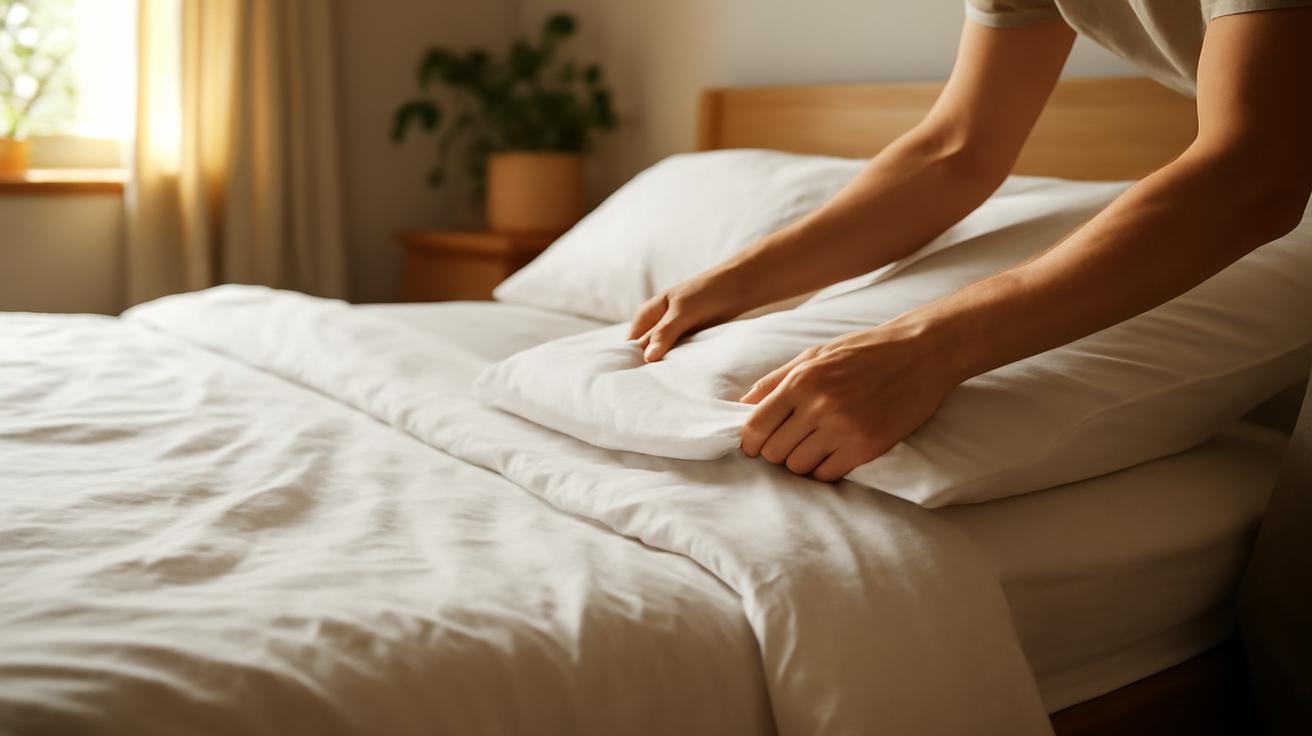
By the time most people finally strip their bed, the sheets are a faint scrapbook of invisible stories: a hint of last week’s lotion, a dusting of skin cells, the ghost of a midnight snack you swore you didn’t eat. We like to pretend our beds are the cleanest, safest corners of our homes, but the truth is more intimate—and a little unsettling. You slide between those same sheets every night, but how often do you really think about what you’re sleeping in, not just on?
The Myth of the “One-Size-Fits-All” Sheet Schedule
There’s a kind of quiet judgment lurking in conversations about laundry. “I wash my sheets every Sunday,” someone says with a confident shrug, as if it’s a moral achievement. Others mumble, “Um… every couple weeks?” and quickly change the subject. And then there are the bravely honest few: “Monthly. Maybe.”
We cling to these rhythms—weekly, biweekly, monthly—as if there’s a single correct answer carved into the linen tablets of adulthood. But your sheets are not a moral test. They’re a reflection of your habits, your body, your climate, your sleep rituals. And one detail changes the whole story: whether you shower in the morning or at night.
Imagine this: two people, same mattress, same city, same sheets. One showers right before bed, the other after breakfast. They both crawl under the covers for roughly eight hours a night. On paper, they look identical. But microbiologically? Their sheets live very different lives. And that difference should change how often the bed gets stripped and spun.
That Sunday-wash rhythm your clean-sheet friend swears by might be perfect for them—and totally unnecessary (or not enough) for you. Because what you bring into bed every night is the real schedule-maker.
What Actually Ends Up in Your Sheets?
Let’s stay in your bedroom for a moment and turn the lights down—way down. Not romantic low, but microscope low. Every night, when you pull those covers up, you bring a quiet flurry of life and debris with you.
Your body constantly sheds. Skin cells flake off and sink into the fibers of your pillowcase and fitted sheet. Natural body oils seep into fabric. If you wear makeup and don’t fully remove it, traces end up on your pillow. Sweat, even if you don’t feel hot, wicks off your skin and evaporates, leaving salt and residue behind. If you share your bed—partner, child, or pet—multiply all of that.
Now add in the invisible world: bacteria from your skin, environmental allergens, microscopic bits of dust, lint, maybe some pollen if you sleep with the window open. If you go to bed without showering, you’re bringing the whole day with you: city smog, office air, gym sweat, sunscreen, street dust, the faint smell of public transit, the dog you petted on your way home.
None of this is inherently horrifying. Human life is messy. But understanding this constant quiet accumulation is what makes the timing of your showers—and the rhythm of your sheet changes—suddenly feel less random and more personal. Because the question isn’t, “How often should people wash their sheets?” It’s, “How much of your day are you sleeping in?”
Night Showers vs. Morning Showers: Two Completely Different Beds
Showering at night is like a reset button for your bed. You step into the shower carrying the day on your skin; you step out rinsed, warm, and a little lighter. When you slip into bed afterwards, you’re bringing mostly clean skin, fresher hair, and much less environmental residue to your sheets.
If you shower in the morning, you’re walking through the day with that clean slate and then tucking yourself into bed with everything you’ve collected since: sweat, odor molecules, surface dirt, hair products, city air, spilled coffee, gym sessions, long commutes, cooking smells. Your sheets quietly absorb it, night after night.
Neither habit is wrong, but they are different. The person who showers before bed is leaving their sheets with less work to do, night after night. The one who showers in the morning is asking their sheets to carry more of the load. That’s why forcing both into the same washing rhythm doesn’t really make sense.
| Lifestyle Factor | Typical Impact on Sheets | Suggested Wash Frequency |
|---|---|---|
| Night-time shower, sleep alone, no pets | Lower buildup of sweat, dirt, and oils | Every 10–14 days |
| Morning shower, sleep alone | More daily residue on sheets | Every 7–10 days |
| Night shower, share bed with partner | Double body contact, more sweat and oils | Every 7–10 days |
| Morning shower, pets in bed | Hair, dander, outside dirt from pets | Every 5–7 days |
| Heavy night sweats or hot climate | More moisture and bacteria buildup | Every 3–7 days |
Notice how the “right” answer moves. Showering at night gives your sheets a little extra life. Morning showers mean your pillowcase and fitted sheet are carrying more of the day—and need a bit more help from you.
The Sensory Difference: How Clean Sheets Actually Feel
There’s a quiet, unmistakable moment when you slide into freshly washed sheets. The cotton or linen feels a little crisper, cooler. The faint smell of detergent or sun-drying wraps around you. Your skin notices the difference even if your mind is fixed on tomorrow’s to-do list.
Now think of the opposite feeling—that subtle awareness that things aren’t quite as fresh as they once were. Maybe the pillowcase doesn’t feel as smooth against your cheek. Maybe there’s a slight heaviness to the fabric, especially near the center of the bed where you always sleep. You might catch a faint, stale scent if you bury your face in your pillow. It’s not dramatic. It’s just… tired.
Here’s where nighttime showers become interesting. If you’re rinsing off the day before bed, that “fresh-sheet feeling” actually lasts longer. The fabric stays smoother against your skin. The pillow smells cleaner for more nights in a row. You don’t wake up with that subtle, slightly gritty feeling on your legs when you move under the covers.
But if you shower in the morning, your sheets get broken in much faster. The crispness softens into a kind of lived-in film: not outright dirty, but not purely clean either. That’s not your imagination—that’s your skin’s front-row experience of accumulated oils, sweat, and microscopic debris.
So when people argue that sheets must be washed weekly, or that every two weeks is plenty, they’re skipping over this very personal, sensory reality: your own body, your own habits, and your own nose are quietly telling you what your laundry schedule should be.
Skin, Allergies, and That Mysterious Pillow Breakout
If you’ve ever had a stubborn patch of breakouts along one side of your face, your pillowcase might be part of the story. Makeup residue, hair products, natural oils, and everyday grime collect where your cheek spends hours each night. When you shower at night, fully cleanse your face, and go to bed with clean skin and hair, your pillowcase gets a break. If you go to bed with the day still on you, your pillow becomes an overnight sponge.
Allergies tell a similar tale. Dust mites love the combination of warmth, moisture, and skin flakes. The longer sheets go unwashed, the more appealing your bed becomes to these tiny creatures. If your nose is stuffy every morning or your eyes itch when you wake, your bedding may be part of the problem. Nightly showers reduce the amount of pollen, outdoor particles, and dust you bring to bed—and can stretch your wash cycle a bit without making your allergies miserable.
Morning showerers, on the other hand, often end up sleeping in more of the day’s allergens. If you’re in that camp and prone to allergies or skin irritation, more frequent washing—especially of pillowcases—isn’t fussy. It’s practical.
Designing Your Own Sheet Rhythm
The temptation is to look for a rule: “Wash every 7 days” or “Every 10 days” or “Never go beyond two weeks.” Those guidelines can be helpful starting points, but the real answer is more personal and more flexible. It begins with noticing your life and your body instead of defaulting to what you think “responsible adults” are supposed to do.
Start here: close your eyes and picture your usual path to bed. Do you step out of the shower, skin warm and clean, brush your teeth, and slip under the covers within an hour? Or do you get home, eat, sit, scroll, maybe snack, maybe sweat, maybe lie on the couch, then eventually wander into bed without washing the day off? Does your dog or cat hop up beside you? Do you go to bed with a full face of makeup or hair products? How hot does your bedroom get at night?
If your nights look more like the first version, you’ve earned the right to stretch your sheet changes a bit. If your nights look like the second, your bed is doing heavy lifting—and it deserves more frequent washes.
A Practical Guideline You Can Adjust
Use this as a flexible baseline and then fine-tune:
- If you shower at night, sleep alone, no pets, and don’t sweat heavily: Every 10–14 days for full sheet sets is usually reasonable.
- If you shower at night but share a bed or live in a warmer climate: Every 7–10 days helps keep things feeling and smelling fresh.
- If you shower in the morning and sleep alone: Aim for every 7–10 days; closer to 7 if you sweat or wear lots of products.
- If you shower in the morning and share your bed or sleep with pets: Every 5–7 days is kinder to your skin and allergies.
- If you have night sweats, allergies, asthma, or skin issues: Consider every 3–7 days for pillowcases, and 7 days for sheets, regardless of when you shower.
None of these numbers is moral. They’re just starting points. If day 8 feels fine to you as a night showerer, keep going. If day 5 already feels slightly “off” as a morning shower person with a dog who sleeps on your feet, take the hint.
Small Tweaks That Stretch the Freshness
Changing your sheet rhythm doesn’t always mean doing mountains more laundry. Some small, almost invisible adjustments can make a clean bed last longer or feel fresher between full washes—especially if you’re in that in-between place, trying not to overwash but also wanting to feel genuinely clean when you slip between the covers.
Rotate the Workhorses: Pillowcases and Top Layers
Pillowcases are the front line. Your face, hair, and breath meet that fabric for hours every night. Instead of washing the whole sheet set more often, try swapping out just the pillowcases midweek. Two or three extra pillowcases in your rotation can make a world of difference for skin and comfort without filling an entire laundry basket.
Likewise, consider a lightweight top sheet or a duvet cover. If you sleep directly under a comforter with no cover, you’re making your most cumbersome bedding piece carry a lot of the load. With a top sheet or removable cover, laundering feels less daunting and more doable.
Also, think about what you wear to bed. Pajamas that you change regularly create a small but meaningful barrier between your skin and the sheets. Going to bed in the same T-shirt you wore all day is essentially inviting the outside world under the covers.
Let Your Bed Breathe
When you wake up, resist the urge to immediately tuck and smooth everything into a perfect, hotel-like rectangle. Pull the covers back for a bit instead. Allowing air to move through your sheets and mattress lets trapped moisture evaporate. It’s a tiny ritual, but one that can subtly slow the buildup of that stuffy, “used” feeling.
Opening a window briefly, using a fan, or simply giving your bed an hour to breathe can help your sheets feel fresher for longer—especially if you sweat at night. Night showerers might find this extends their comfortable stretch of use by a few extra days.
When Your Body Quietly Asks for Cleaner Sheets
You don’t need a calendar reminder to know your sheets are done. Your body and senses whisper it to you, if you’re paying attention. You notice you’re tossing a little more at night, shifting to cooler parts of the bed. You might find yourself flipping the pillow more often, searching for the “fresh side.” There’s a tiny, stale edge to the smell when you pull the covers up near your face.
Sometimes it’s even subtler: your skin feels a bit more irritated, or your allergies seem louder in the mornings. You wake up with more congestion, or that familiar crease on your cheek now comes with a faint redness that lingers longer than it used to.
That’s your data. Not a lab report, not a public health advisory—your personal, sensory data, unique to your home, your climate, your body, your habits.
If you shower at night and start noticing those signs around day 12, that’s your rhythm. If you shower in the morning and by day 7 you’re already avoiding burying your face in the pillow, that’s your rhythm. You’re not failing if your sheets need more frequent washing than someone else’s. It just means your bed has a different life.
Showering at night isn’t a magic pass that allows you to ignore your laundry for a month, but it does change the math. It buys you some breathable grace. Morning showers, on the other hand, often mean you’re sleeping in the day you’ve just lived—and that asks a little more of your washing machine.
In the end, your bed is less about rules and more about relationship. You live a third of your life there. The fabric that touches your skin every night deserves a little bit of curiosity—and a schedule built not on guilt or guesswork, but on how you actually live.
FAQ: Your Sheet-Washing Questions, Answered
How often should I wash my sheets if I shower every night?
If you shower right before bed, sleep alone, don’t sweat heavily, and don’t have pets in the bed, washing every 10–14 days is usually reasonable. If you share your bed or live in a warm climate, closer to every 7–10 days will likely feel better.
Is washing sheets once a month too rare if I shower at night?
For most people, yes, once a month is pushing it, even with nightly showers. Skin cells, oils, sweat, and dust still build up. You might not notice a strong smell, but your skin and allergies can still react. Aim for at least every 10–14 days as a more balanced approach.
What if I shower in the morning—how often should I change my sheets?
If you shower in the morning, you’re bringing more of the day into bed. Most people do best washing sheets every 7–10 days in that case. If you sweat a lot, share the bed, or sleep with pets, every 5–7 days is usually more comfortable.
Can I just change my pillowcase more often instead of the whole sheet set?
Yes, swapping pillowcases more frequently is a smart, low-effort strategy, especially for skin health. You might change your pillowcase every 3–4 days while washing the full sheet set every 7–14 days, depending on your shower habits and lifestyle.
Do night showers really make that big a difference to sheet cleanliness?
They do. Showering at night rinses off sweat, dirt, allergens, and oils you’ve picked up during the day before you get into bed. That means less buildup on your sheets each night and a longer stretch before they feel or smell used. It doesn’t eliminate the need to wash, but it shifts the rhythm in your favor.
What if I don’t notice my sheets feeling dirty—does that mean I can wait longer?
Not necessarily. Our noses adapt quickly to familiar smells, and we don’t always feel gradual buildup on our skin. Even if you don’t detect it, dust mites, skin flakes, and oils accumulate. Use a rough guide based on your habits and then fine-tune using both how things feel and any skin or allergy issues you notice.
Is there such a thing as washing sheets too often?
You’re unlikely to overdo it from a cleanliness standpoint, but very frequent hot washes can wear fabrics faster. If you feel compelled to wash more often than your lifestyle really requires, focus on pillowcases and top layers (like duvet covers) rather than running the entire set through the wash every few days.








Leave a Comment