

The wind had picked up over Windsor that afternoon, carrying the metallic scent of rain and the faint sweetness of cut grass. Inside, a woman who had spent more than a decade moving at the relentless tempo of royal duty sat still for once, listening to nothing but the shuffle of her own breathing. For years, her days had been timed to the minute—smiles scheduled, handshakes counted, outfits analysed in unforgiving detail. Now, with her health no longer a quiet footnote but a headline, the Princess of Wales was learning something that no royal handbook had prepared her for: the art of doing less, on purpose.
The Old Pace That Looked Effortless—But Wasn’t
From the outside, it had always looked seamless. Catherine gliding out of cars, children balanced on her hip, brushing a raindrop from a coat sleeve while still smiling at the crowd. School runs in the morning, glittering receptions at night, charity visits squeezed neatly in between. The “old pace” of her working life became a story we all thought we understood: a modern royal woman “having it all,” wrapped in immaculate tailoring and steady composure.
But hidden behind those curated photographs was a rhythm that almost no one could sustain without cost. Early alarms for hair and makeup before school drop-off. Briefing folders balanced on her lap as the car traced familiar routes through London traffic. The mental arithmetic of motherhood and monarchy—Who has PE today? What’s the briefing for this early-years meeting? Did I sign that birthday card for the hospice fundraiser?—running on a constant loop.
The palace diary, that quiet dictator of royal life, rarely rested. Weeks would unspool in coloured blocks: charity visit, reception, military event, engagement abroad, early-years conference, mental health campaign, school performance, state banquet. And somewhere, in the narrow corridors of unscheduled time, she was meant to be simply “Kate” to her children, “Catherine” to her husband, and herself to… well, that was the question. When was there ever room for that?
The truth is, the old pace always carried an invisible cost. We just didn’t see it. Royals are trained not to show the frayed edges, the tired eyes, the quiet alarm bells ringing in the background. The machine has to keep moving. Until something bigger than the machine says: stop.
When the Body Says ‘Enough’
Illness has a way of stripping life down to its truest proportions. It doesn’t care about duty rotas or media expectations. It doesn’t bend to protocol or tradition. One day, the Princess of Wales was the unflappable public figure we knew from balcony appearances and school-gate snapshots. The next, she was facing personal sentences that land with the heavy finality of a closing door: treatment, rest, uncertainty, recovery.
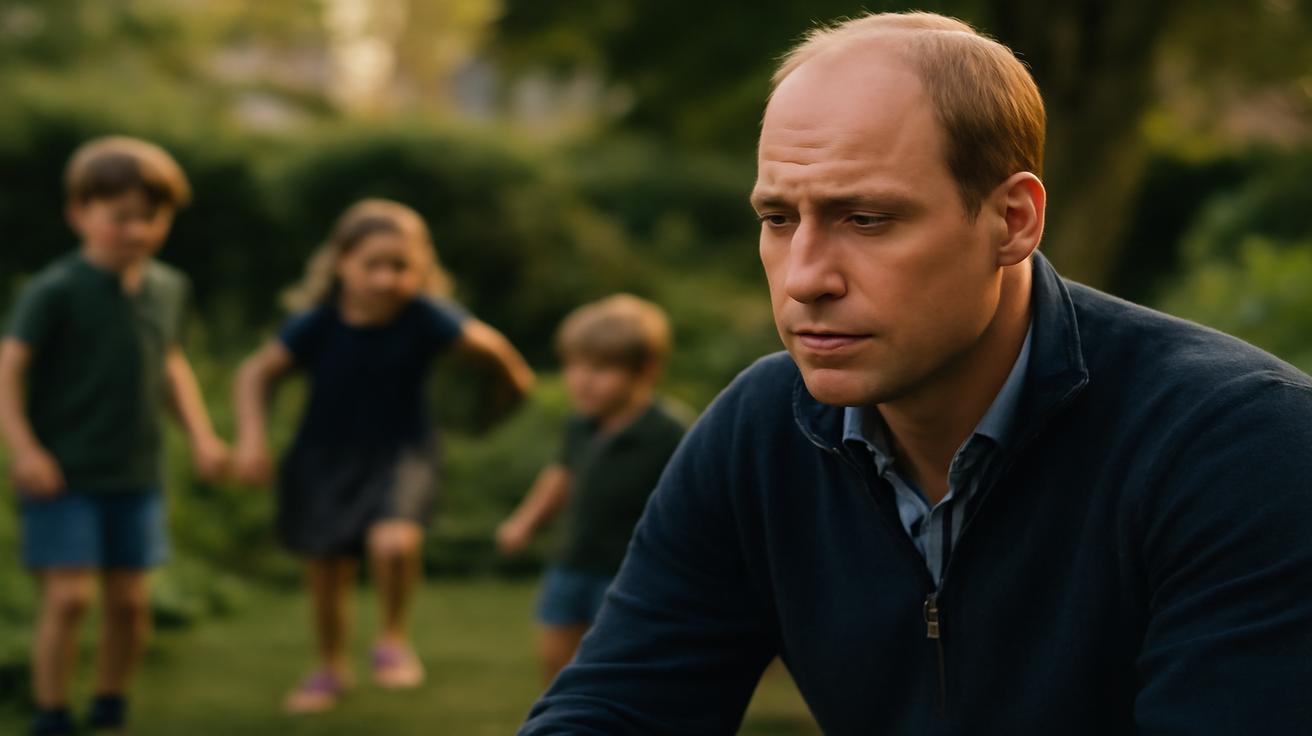
This wasn’t the sort of turning point you schedule. It was a rupture. The kind that forces a woman whose life has been devoted to showing up for others to suddenly learn how to show up for herself. And more than that—for her three small children, whose lives still unfurl in Lego pieces and school bags, who need a mother, not a symbol.
In the quiet, away from the cameras, that lesson began to take shape. The public saw a statement, a short video, a handful of carefully chosen words. Behind those words were countless private moments: the sting of fatigue that doesn’t care what’s in the diary tomorrow; the heaviness of telling your children that Mummy needs to be careful now; the humbling experience of asking, “What can I let go of?” instead of “What can I squeeze in?”
Because that’s the heart of it. She has learnt her lesson—not as a sound bite, but in the slow, uncomfortable work of listening to a body that won’t be hurried, and an inner voice that has finally been given permission to say: no more at that old pace.
The Old Pace vs. The New Reality
It’s tempting to imagine that “slowing down” is as simple as crossing out a few lines in the royal diary. In reality, what the Princess of Wales is doing is much more radical: rewriting what work, motherhood, and duty look like when you’re no longer willing to be carried along by the current.
To see the shift clearly, you have to lay the old rhythm against the new one. It’s not about numbers on a page—it’s about what those numbers feel like in a body that now has different limits, and a mind that has stared down vulnerability in a way public figures rarely admit.
| Aspect | The ‘Old Pace’ | The ‘New Approach’ |
|---|---|---|
| Public engagements | Dense clusters, back-to-back days, frequent travel. | Fewer, more spaced-out events, with deliberate recovery time. |
| Work-home balance | Public duty often set the tempo; home adapted around it. | Family life and health are the metronome; duty fits in the gaps. |
| Energy use | Assumed resilience, pushed through fatigue. | Careful pacing, saying no when energy is low. |
| Public visibility | Frequent, predictable appearances. | More selective, sometimes last-minute decisions based on wellbeing. |
| Self-expectation | “Keep up, don’t disappoint, always be present.” | “Be well enough to be truly present, even if that means being present less often.” |
This isn’t just a shift in scheduling; it’s a shift in philosophy. Modern life trains us to believe that our worth is tethered to productivity, that a full calendar is proof of value. The Princess of Wales spent years being praised for the number of engagements, the range of causes, the polished reliability. Now, by necessity, she’s walking away from that old metric of success.
And that, perhaps, is why she will never return to the old pace. Not because she no longer cares. But because she has understood, in the hardest possible way, that caring has to begin at home—in her own body, her own living room, her own children’s questions at bedtime.
Why “Never Again” Actually Means “More Wisely, Not More Quietly”
When someone says, “She’s learnt her lesson,” it can sound like a reprimand. In this case, it’s something gentler and braver: an acknowledgment that experience has shifted her priorities permanently.
The old Catherine—if you can call her that—leaned into visibility. She built long-term projects, launched bold campaigns on early-years development and mental health, and treated royal life as something you filled to the brim with usefulness. Those passions haven’t vanished. They’ve deepened. But they will surface differently now, less as a constant public drumbeat and more as considered, targeted notes.
Learning the lesson has likely meant recognising a few hard truths:
- That even deeply meaningful work can become damaging when it ignores physical limits.
- That saying “not this month” or “not yet” is not a betrayal of duty, but an affirmation of long-term commitment.
- That three growing children will remember the evenings she was truly there far more vividly than the number of engagements calendar-watchers tallied each year.
So, “never returning to the old pace” doesn’t make her less of a working royal. It may, in time, make her a more effective one. Doing fewer things, but doing them with full health, clear focus, and emotional presence is different from stretching herself over every available surface of the public stage.
Picture future months not as relentless streams of engagements, but as carefully drawn constellations. A key early-years summit here. A small, untelevised visit to a family crisis centre there. A school run uninterrupted by flashes and lenses. A medical appointment given sacred space in the middle of a weekday. This is what a recalibrated life looks like—quieter on the outside, but no less rich in impact.
The Weight of Expectation—and the Courage to Disappoint It
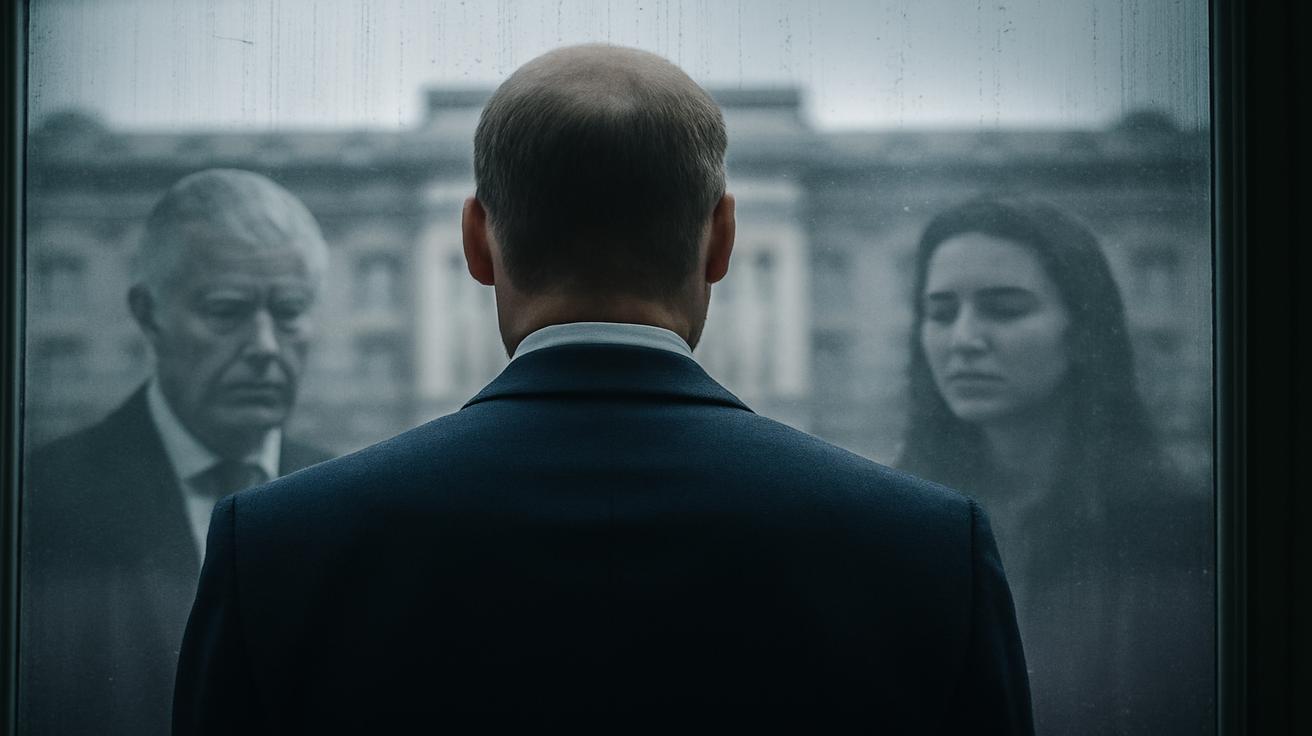
There’s another layer to this, one often overlooked: the courage it takes, especially for a woman in public life, to disappoint expectation on purpose. For years, Catherine’s value was measured by how much she could be to how many people. The nation’s future queen. The children’s champion. The polished constant beside a future king. A reassuring presence in times of turbulence.
To honour her new boundaries, she has to allow some people to feel let down. Some commentators will mutter that she’s doing “less.” Some corners of the press will read absence as weakness or retreat. That’s the price of choosing health over performance. Every woman who has stepped back from an overloaded life recognises this pattern: you cannot protect yourself without, at some point, failing to be what someone else hoped you’d be.
To keep choosing that, week after week, is its own kind of quiet rebellion.
A Lesson Many Women Know Too Well
This is not just a royal story. It’s a very human one. Behind closed doors across the country, women in far less gilded circumstances have learnt similar lessons the hard way. The teacher who soldiered through term after term until burnout forced medical leave. The nurse who never took her annual leave “because the ward needed her” until her body broke under the strain. The mother who balanced paid work and unpaid care until something inside her finally whispered, or screamed: stop.
What makes Catherine’s experience so resonant is that she is living this modern parable of overextension and enforced slowdown on the most public of stages. She isn’t just the Princess of Wales; she has become an unwitting mirror. In her pause, many recognise their own.
There is something profoundly contemporary—and quietly radical—about a future queen modelling limits. The old royal ideal was one of almost superhuman stamina. Appear, smile, wave, repeat. Illness was hidden, frailty disguised. Now we are seeing something new: the acceptance that a woman’s body, even a royal one, is not a machine.
This shift, embodied by Catherine, may ripple far beyond palace gates. It gives tacit permission for conversations in living rooms and workplaces: If she can slow down without losing her sense of purpose, perhaps I can, too. If she can say no to an old pace that once defined her success, maybe my own worth doesn’t live or die by how much I do in a day.
Her lesson is personal, but its echo is public.
The Nature of Recovery: Seasons, Not Schedules
Nature offers a language for what’s happening to her life now. Years ago, it might have looked like perpetual summer—everything in full bloom, engagements stacked like long daylight hours. Now, her world follows a different pattern, one closer to the forest edge or the tide. Activity, then retreat. Bloom, then rest. Not failure. Just seasonality.
Recovery—whether from serious illness or from years of accumulated strain—doesn’t move in straight lines. Some days, energy rises unexpectedly, enough to step out, visit a charity, stand among people whose challenges dwarf her own and still feel that old spark of purpose. Other days, the same body says, firmly: not today. The work now is learning to listen.
The royal diary, once a wall of commitments, is becoming more like a set of pencil notes, easily erased if her health demands it. For a woman trained in constancy, this is a profound psychological shift. To wake up and ask, “Can I?” instead of automatically saying, “I must.” To let her body, not only her sense of duty, write the terms of engagement.
There’s humility in that. But there’s also wisdom. You don’t plant out a winter-battered garden in a single afternoon just because the calendar says it’s spring. You test the soil. You feel the air. You work in smaller bursts. The Princess of Wales is doing the same with her life.
The Royal Future, Reimagined
What does this all mean for the long arc of the monarchy? For years, royal life has been sold as a kind of endurance performance: a family that never really clocks off, only shifts poses. But Catherine’s recalibration points to a different model—one where longevity matters more than hyper-visibility, and where a future queen can be measured not only by how often she appears, but by how well she preserves the self that appears.
In practical terms, this likely means we’ll see her less frequently, but with more intention. Major national moments. Key milestones in her core causes. Quiet visits that may never make the headlines but change the atmosphere in a children’s hospice playroom or a women’s shelter common room. She will not be the most ubiquitous royal. She may, quietly, become one of the most grounded.
Crucially, this new pace also shapes the childhoods of three young royals. George, Charlotte, and Louis are growing up with a mother who has had to say, out loud, that she cannot do everything. That sometimes Mummy needs to rest. That health is not a footnote but a foundation. Those are lessons they will carry into their own futures, long after the headlines have moved on.
Someday, when historians write about this period, they may tally the speeches and the visits and the policy initiatives. But they may also note this quieter shift: the moment when a princess, faced with her own finite body, refused to go back to the old tempo, and in doing so nudged an ancient institution a little closer to human truth.
A Different Kind of Strength
There’s a small, almost invisible image that stays with you if you think of the Princess of Wales now. Not the balcony, not the tiara, not the state carriage. Instead: a woman in soft clothes, sitting on the edge of a bed, listening to the night-sounds of a house at rest—central heating ticking, a fox crying in the dark, a child turning over in sleep. The day’s diary is lighter than it once was, but the weight of what matters feels heavier, clearer, more defined.
She has learnt her lesson, yes. But framed differently, she has gained her truth. That strength is no longer about how much she can carry, but how wisely she chooses what to carry at all.
And that is why, whatever lies ahead—more treatments, steadier months, new projects—the old pace is gone for good. In its place is something less dramatic, more sustainable, and deeply, resolutely human.
Frequently Asked Questions
Why is the Princess of Wales reducing her workload?
She is reducing her workload because of serious health considerations and the need to prioritise recovery and long-term wellbeing. Her experience has underlined that the old intensity of engagements is no longer compatible with what her body and family life require.
Does this mean she is stepping back from royal life permanently?
No. It means she is stepping back from the old pace, not from her role. She is expected to continue working on her key causes and taking part in major royal duties, but in a more measured, carefully paced way.
Will we see fewer public appearances from her in the future?
Yes, most likely. Appearances may be fewer and more selectively chosen, with more emphasis on impact rather than quantity. There may also be more variability—some months busier, others deliberately quieter for recovery.
How does this affect her work on early-years and mental health initiatives?
Her core passions are unlikely to change. Instead, her approach may become more strategic—fewer but more focused events, deeper engagement behind the scenes, and work that allows her to balance public commitment with health needs.
What broader message does her new pace send to the public?
It sends a powerful message that health and limits matter, even at the highest levels of visibility and responsibility. By openly slowing down, she is challenging the idea that constant productivity defines worth and modelling a more sustainable, human approach to work and duty.





Leave a Comment