
The first time you notice it, winter has already taken hold. The lawn has stiffened into a thin crust of frost, breath comes out in smoky curls, and the garden—once buzzing and blooming—is suddenly still. Then, a flash of russet. A small, round bird with a fierce black eye and a jaunty red chest hops onto a bare branch, puffing out its feathers against the cold. The robin. Somehow, despite its delicate frame, it has become a symbol of winter resilience, a little ember of life in a season that can feel all grey and silence.
If you’ve ever watched a robin for more than a few seconds, you’ll know how magnetic they are. They tilt their heads as if they’re listening to your thoughts, follow your spade as you dig, and seem almost close enough to talk to. And in the depths of winter, when food is scarce and daylight is short, that small bird in your garden is fighting a very real battle: the race to take in enough energy to survive another freezing night.
That’s where one of the RSPCA’s simplest winter tips comes gliding in—straight from your kitchen cupboard.
The Kitchen Staple Your Robin Is Quietly Hoping You’ll Find
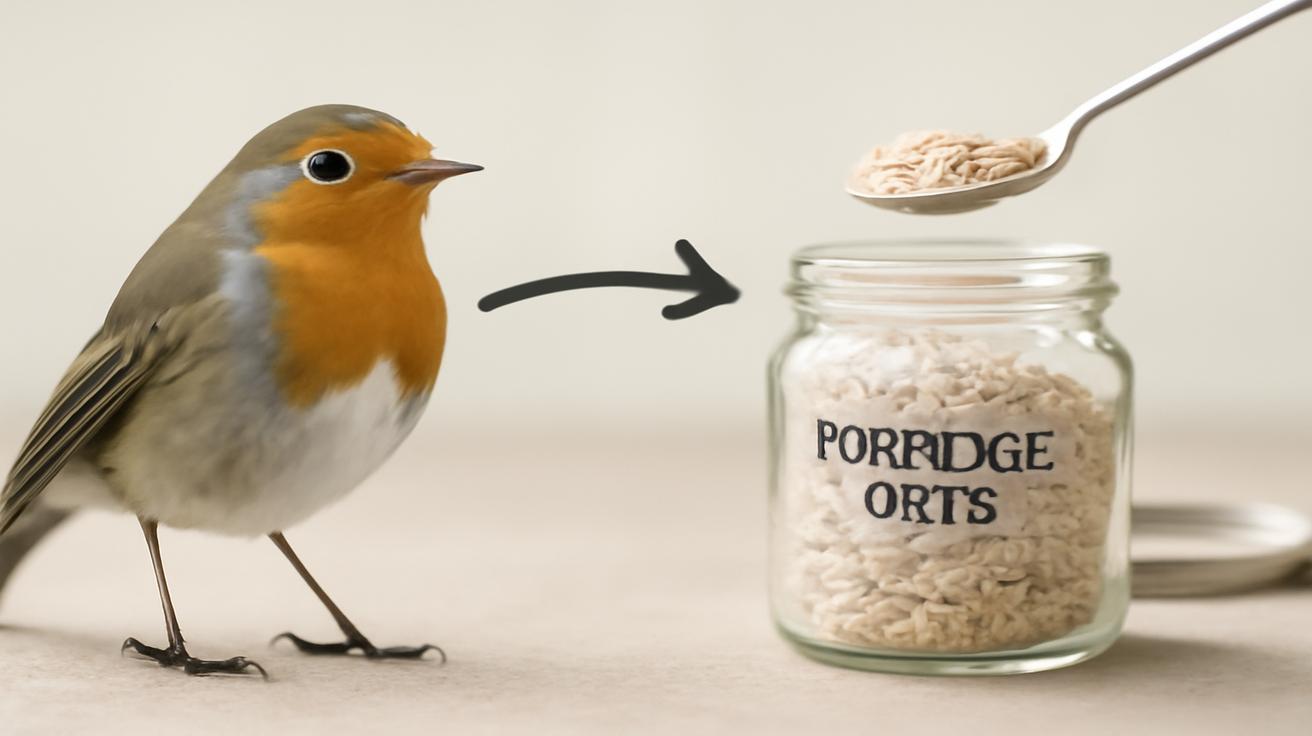
Walk into almost any kitchen and open a cupboard, and you’ll probably find it: a plain, unassuming bag of porridge oats. To you, it’s a quick breakfast. To your local robin, on the coldest days, it can be the difference between shivering through the night and not making it to dawn.
The RSPCA highlights plain, uncooked porridge oats as one of the best emergency winter foods you can offer garden birds like robins. They’re energy-dense, gentle on a small bird’s digestive system, and wonderfully convenient for you—no special products, no complicated recipes, no fancy feeders required. Just a scoop from the bag and a little care in how you offer it.
But why oats? Because winter, for a robin, is a brutal numbers game. A bird barely heavier than a couple of pound coins can lose a significant proportion of its body weight during a single freezing night. Its heart races, metabolism spikes, and all that fluffing up of feathers—the cute round silhouette we love—is actually serious insulation engineering. The bird is burning through energy at a frightening pace simply to stay alive.
High-energy foods are critical. Insects are scarce, worms burrow deeper into the soil, berries get stripped quickly. Oats step into this winter gap like a quiet hero: small, easy to eat, and rich in carbohydrates that convert quickly to warmth and movement.
The Right Way to Feed Oats to Your Garden Birds
It’s tempting, once you know this, to dash into the kitchen and empty half a bag of oats onto the lawn. But a little care goes a long way. Done thoughtfully, your impromptu robin café can support more than just robins—tits, dunnocks, blackbirds, and finches may all stop by for a nibble.
Plain, Uncooked, and Simple
First rule: keep it plain. The RSPCA and other wildlife organisations are clear—birds should only be offered plain, dry, uncooked porridge oats. No sugar, no honey, no flavourings, no instant “just add milk” packets, and definitely no salty porridge mixes.
- Avoid sugar: Birds aren’t built for sweeteners; sugar can upset their internal balance and offer the wrong kind of energy.
- No salt: Even small amounts can be dangerous for birds, affecting their kidneys and overall health.
- No added flavours: Chocolate, fruit flavours, or artificial additives are for humans, not wildlife.
If the ingredient list on the packet is longer than one word—“oats”—put it back. The humblest bag, the one that looks almost boring, is exactly the one your robin needs.
How Much, How Often?
Oats should be part of a varied winter menu, not the only thing you put out. Think of them as a helpful extra serving of energy, especially on cold mornings and before dusk.
A good starting point:
- Scatter one to two tablespoons of oats on a tray, bird table, or flat stone.
- Offer them once or twice a day when the weather is particularly harsh—early morning and late afternoon are ideal times.
- Adjust the amount based on how quickly they’re eaten; uneaten food can go rancid or attract unwanted visitors.
Robins are ground feeders by nature, often hopping and flicking about among leaf litter. They’ll usually feel comfortable feeding on a low platform or bird table, but will also gratefully take oats scattered on a sheltered patch of ground where they can keep an eye out for danger.
Create a Winter Feeding Ritual Your Robin Can Rely On
Birds are great readers of patterns. Put out food at roughly the same time each day, and your garden will quickly become part of their internal map of where to find help when temperatures plummet.
Morning: Fuel for the Day’s Foraging
Picture your garden just after sunrise on a frosty morning. The light is soft, the air sharp, and the grass glitters. This is when birds are at their hungriest. They’ve burned through much of their stored energy surviving the night and urgently need to refuel.
Putting out fresh oats in the early morning offers:
- A quick energy boost after a long, cold night.
- An easy-to-spot food source when frost or snow has covered natural supplies.
- A chance for smaller, shyer birds to feed early, before busier daytime traffic arrives.
Stand quietly by a window with a mug warming your hands. Watch the first robin of the day arrive—a blur of chestnut and red, landing lightly on the edge of your bird table, head tilting as it assesses the offering. A few quick pecks, a flutter to a nearby branch, and it’s off again, the energy from those tiny oat flakes already fuelling its next flight.
Dusk: Stoking the Night-Time Furnace
As the day closes in and the light drains from the sky, your garden slips into shadow. This is your cue for a second small serving of oats. Evening feeding helps robins and other small birds build up a last reserve of calories to see them through another cold stretch of darkness.
Even in the half-light, you’ll often see a robin slipping back to your feeding spot—quicker, more purposeful now, keenly aware that time is running out. There’s a simple satisfaction in knowing that by spending a few seconds scattering oats, you’ve stacked the odds a little more in its favour.
Oats, Safety, and the Little Details That Matter
Feeding birds is never just about the food. The way you offer it, the cleanliness of the area, and the other ingredients you do—or don’t—add all shape whether your kindness truly helps.
What Not to Mix With Oats
It’s easy to think, “If oats are good, surely a bit of this and that will be even better.” But some common kitchen staples are surprisingly risky for birds. To keep your robin safe, avoid mixing oats with:
- Margarine or low-fat spreads: These often contain added salt and oils that are unsuitable for birds.
- Butter in big quantities: Tiny smears in a suet mix can be okay, but blobs of butter or heavily buttered oats can turn greasy, coat feathers, and cause health issues.
- Milk: Birds can’t digest milk properly; it can upset their digestive systems.
- Leftover sugary porridge: Cooked, milky, or sweetened porridge is made for us, not for them.
If in doubt, keep it pure. Plain oats, offered dry, are simple, safe, and exactly what’s needed.
Clean Feeding, Healthy Birds
Winter can tempt us to put out bigger piles of food “just in case,” but moderation and cleanliness are kinder in the long run. To protect your robin and its neighbours:
- Use a dedicated area—a bird table, low tray, or a flat stone that’s easy to clean.
- Clear away old food every day or two, especially in damp weather, to prevent mould and bacteria.
- Rinse surfaces with warm water (and, if you like, a mild, bird-safe disinfectant) once a week, letting them dry fully before refilling.
- Keep food portions small enough that your visitors can finish them within a day.
Healthy food, offered on a clean “table,” helps reduce the spread of disease and ensures that your garden stays a safe refuelling station, not a risky crossroads.
Beyond Oats: Building a Winter Buffet for Robins
While oats are a brilliant winter lifeline, your robin will do best with a small variety of options. Think of yourself as the keeper of a tiny, seasonal café. The RSPCA encourages a mixture of high-energy foods that mirror what birds would naturally seek, especially when their usual supplies are locked away under ice or snow.
Here’s a simple comparison of robin-friendly foods you can combine with oats to create a richer winter menu:
| Food Type | How It Helps in Winter | How to Offer Safely |
|---|---|---|
| Plain porridge oats | Quick energy, easy to eat, ideal in frost and snow. | Scatter a tablespoon or two on a clean tray or table, dry and unflavoured. |
| Suet or fat balls (unsalted) | High-fat fuel for long, cold nights. | Use proper bird suet; avoid nets which can tangle feet—use a feeder or crumble on a tray. |
| Sunflower hearts | Rich in oils and energy; easy for small birds to handle. | Offer in a feeder or mixed sparingly with oats on a table. |
| Chopped, unsalted peanuts | Dense calories for particularly cold spells. | Only use bird-safe, unsalted nuts; offer crushed or in a mesh feeder. |
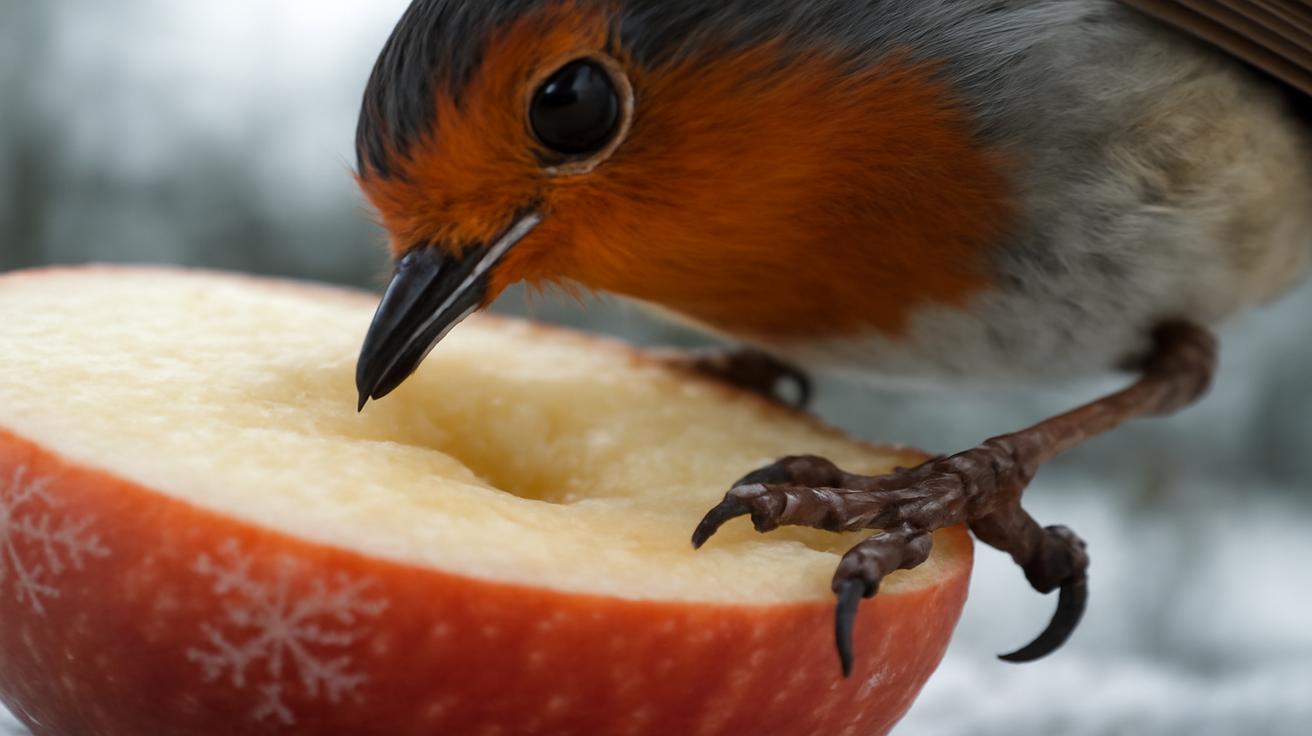
| Soft fruit (e.g., apple pieces, berries) | Natural sugars, hydration, and vitamins. | Offer small pieces on the table; clear away before they rot or freeze solid. |
By mixing and matching these foods through the week, you give your robin a more natural, rounded diet—still centred on that trusty bag of oats when the cold bites hardest.
Water, Shelter, and a Sense of Place
Food alone doesn’t guarantee survival. In winter, water and shelter are just as vital, and they’re often the two elements we overlook when we’re busy filling feeders.
Unfrozen Water: The Invisible Lifeline
On icy mornings, stand by your bird table and listen. Bird song is quieter; wings seem heavier. One reason is simple: water is harder to find when every puddle has turned into a little plate of glass.
Help your robin by:
- Putting out a shallow dish of fresh water near your feeding area.
- Breaking and removing ice each morning; refill with cool (not hot) water.
- Placing the dish somewhere safe, where birds have a clear view of any approaching predators.
That small mirror of water becomes more than a drink. It’s a bath, a preening spot, a moment of normality in a season that pushes birds hard.
Shelter: A Place to Wait Out the Storm
Watch your robin between visits to the table, and you’ll notice something interesting. It rarely lingers fully in the open unless it has to. Instead, it retreats to hedges, dense shrubs, ivy-covered corners—anywhere it can tuck itself away and still keep watch.
You can support this instinctive behaviour by:
- Letting parts of the garden stay a little wild—untidy corners can be life-saving.
- Planting dense shrubs or leaving evergreen cover where birds can roost.
- Avoiding heavy pruning in late autumn; those tangled branches are precious winter shelter.
Food, water, and shelter together transform your garden into a proper winter sanctuary, a small but significant refuge stitched into the wider landscape of fields, parks, and hedgerows.
The Quiet Joy of Becoming Part of the Robin’s Winter Story
There’s a special kind of stillness that only exists in winter gardens. The rustle of old leaves, the soft thud of a falling clump of snow from a branch, the faint tapping of a blackbird turning over debris. And somewhere in that quiet scene, a robin arrives, bold and bright against the washed-out sky, trusting your presence just enough to hop a little closer each day.
By answering that trust with something as modest as a handful of oats, you weave yourself into the small, unseen dramas of winter survival. You become, in a gentle, everyday way, part of the RSPCA’s wider message: that caring for animals doesn’t always mean grand gestures or complex interventions. Sometimes it’s as simple as checking the cupboard, reading the label on a bag of oats, and stepping into the garden twice a day with open hands.
Some winter morning soon, when the world is particularly sharp and cold, pause by the window. See that tiny red chest puffed proudly above a fluffed white belly, the small beak tapping quickly at the food you’ve laid out. Know that, in this hard season, your kitchen staple has become its lifeline.
In the deepest weeks of winter, that is no small thing.
FAQs: Winter Feeding, Robins, and Porridge Oats
Can I feed cooked porridge to robins and other garden birds?
No. Cooked porridge is usually made with milk, salt, or sugar, all of which can be harmful to birds. Always offer plain, uncooked porridge oats, dry and unflavoured.
Are instant porridge sachets safe for birds?
Generally, no. Most instant sachets contain added sugar, salt, flavours, or powdered milk. Birds should only be given simple, one-ingredient oats without extras.
How often should I feed oats to my garden birds in winter?
Once or twice a day in cold weather is ideal—especially early morning and late afternoon. Keep the amounts modest, around a tablespoon or two at a time, and adjust based on how much is eaten.
Can I mix oats with other bird foods?
Yes, as long as everything in the mix is bird-safe. Oats can be combined with seeds, suet crumbs, or chopped, unsalted peanuts. Avoid mixing them with salty, sugary, or greasy kitchen leftovers.
Will feeding oats make robins dependent on me?
No. Robins and other garden birds will always continue to forage naturally. Your food acts as a helpful supplement, especially during harsh weather, but it doesn’t replace their wild instincts or natural diet.
Is it okay to feed oats all year round, not just in winter?
Small amounts of plain oats are generally safe year-round, but winter is when they’re most valuable. In spring and summer, birds especially need insect protein for raising chicks, so keep oats as an occasional extra rather than the main focus.
What else can I do, besides feeding oats, to help robins in winter?
Provide unfrozen water daily, offer a variety of high-energy foods, keep feeders and tables clean, and maintain areas of dense shelter like hedges or shrubs. Together, these small actions create a safer, richer winter habitat for robins and many other birds that share your garden.







Leave a Comment