
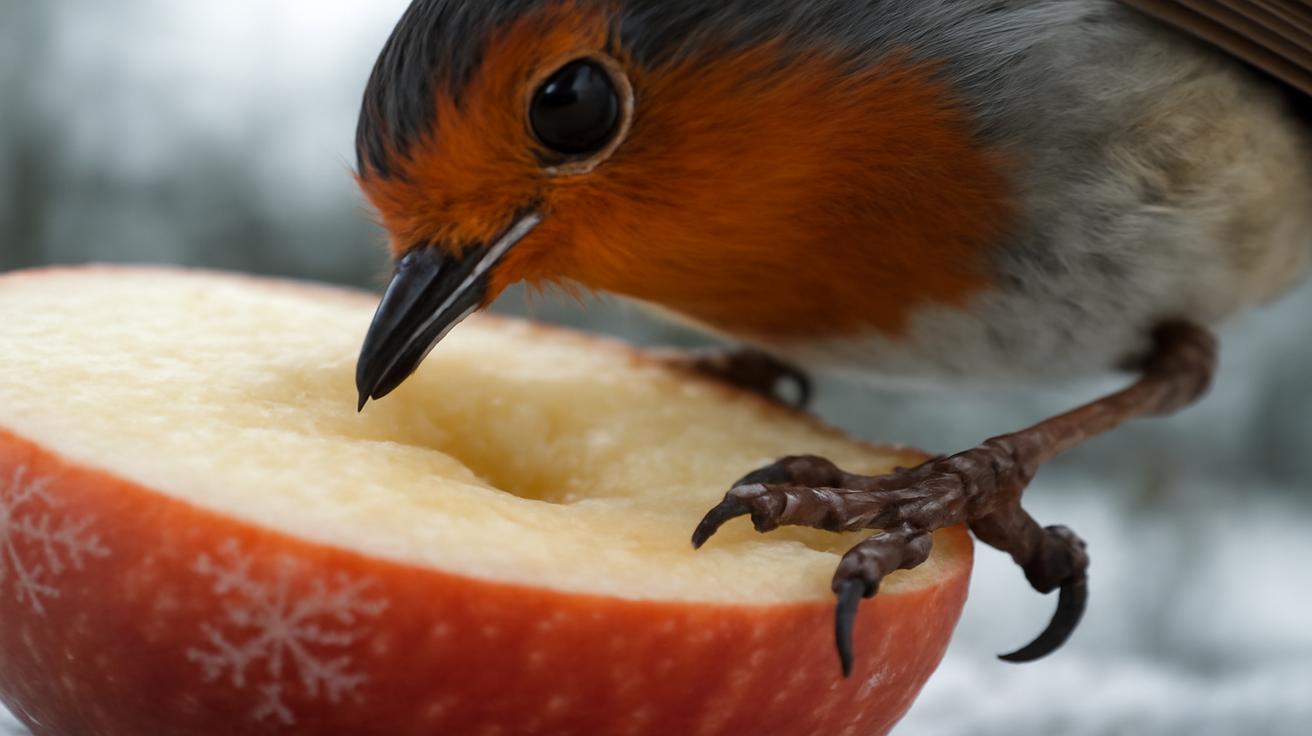
The robin doesn’t look like a bird that should know anything about hardship. With that neat russet waistcoat, that bright eye like a polished bead, it seems made of stories and Christmas cards, not of cold and hunger. Yet on a hard January morning, when frost clings to the garden gate and the birdbath is a flat, unmoving disc of ice, the robin is fighting a quiet, dangerous battle. It weighs about the same as a £1 coin, and in winter it lives, quite literally, from one day’s calories to the next night’s survival. Miss one meal, catch one bitter spell unprepared, and that cheerful little songster might not see the dawn.
The Winter Secret Sitting in Your Cupboard
So what if the lifeline that could tip the balance for your local robin isn’t some exotic specialist bird food, but something almost embarrassingly ordinary? A plain, familiar kitchen staple you probably have in your cupboard right now.
The RSPCA has long championed a simple message: in winter, small birds need energy, fast. What many people don’t realise is that one of the easiest ways to provide that energy is with plain, unsalted, unbuttered porridge oats. No frills, no fancy packaging, no colourful “garden bird blend” label—just those pale little flakes you’d usually turn into breakfast.
If that surprises you, you’re not alone. We tend to assume wild creatures need wild foods: berries from hedgerows, insects under bark, seeds shaken loose in the wind. But a bird’s body doesn’t care whether its calories came from a woodland glade or a supermarket shelf—only that they’re safe, digestible, and available at the exact moment they’re needed. And in winter, that moment comes every single day, as the sun slides down far too early and the temperature follows.
So yes, the RSPCA really is saying: you can help your neighbourly robin survive the harshest months of the year with a scoop of plain porridge oats. Nothing fancy. Nothing expensive. Just a small act of kindness served in a saucer.
Why Robins Struggle When the Temperature Falls
On a mild spring afternoon, a robin’s life looks leisurely. It hops, it sings, it flicks its tail, it pauses dramatically on the corner of a fence post. But in winter, every one of those gentle movements hides an urgent calculation. How much energy do I have left? Where is the next meal coming from? Will tonight be cold enough to kill me?
Robins, like many small songbirds, have a high metabolic rate. Their tiny bodies burn through energy quickly just to keep warm, especially when the mercury drops below freezing. A long, icy night can strip a bird of up to 10% of its body weight. That means every daylight hour becomes a race to refuel in time, to go to roost with a full “tank”.
The trouble is, winter doesn’t just bring cold; it snatches away food. The soil hardens, earthworms retreat deeper underground, insects are scarce, and berries vanish rapidly from hedges. You might notice your garden robin growing bolder at your feet as you dig or turn compost. That’s not just friendliness—it’s hunger wearing a brave face.
When snow falls, the problem worsens. Food that might have been scraped from soil or leaf litter is suddenly sealed under a white, impenetrable crust. For a bird that must eat several times its own body weight every week, even one or two bad days can become lethal. This is where we, as accidental stewards of these little territories called gardens, can quietly tip the balance in their favour.
The Simple Science of Warmth and Calories
Think of your own winter routines. You add an extra jumper, stand closer to the fire, reach for heartier meals. A hot bowl of porridge on a freezing morning does more than comfort you—it fuels your body, giving it the energy to keep shivering, moving, thinking. Birds can’t pull on a woolly hat or turn up the central heating. They have only two tools: their feathers, and the food they find.
When a robin puffs up into a round ball, it isn’t trying to look cute; it’s trapping insulating air among its feathers. Inside that feather duvet, its body is furiously burning calories to keep its tiny engine running. The higher the energy content of its food, the better its chances of seeing the night through.
This is exactly why the RSPCA and other welfare groups recommend high-energy offerings in winter: suet, fat balls, sunflower hearts—and those humble porridge oats. Each flake is like a tiny fuel log, easy for a small beak to pick up, easy for a hard-working body to convert into life-saving warmth.
The Humble Hero: Plain Porridge Oats
Not all kitchen staples are equal when it comes to helping wild birds. Some are risky, some are outright dangerous, and some are quietly perfect. Porridge oats, used correctly, sit firmly in that last category.
Here’s what makes them so valuable:
- They’re calorie-dense: Oats provide slow-release energy, helping birds stay fuelled between feeds.
- They’re easy to eat: Small flakes are ideal for tiny beaks, especially for robins that like to peck delicately at the ground or feeder.
- They’re cheap and accessible: Most households have some in a cupboard. No extra shopping needed.
- They’re simple: No salt, no sugar, no strange additives—just plain grain.
That word “plain” is important. Many human-friendly oat products are terrible for birds. The RSPCA’s message is clear: stick to plain, dry porridge oats, and only plain, dry porridge oats. Not microwaved sachets, not flavoured, not soaked overnight in milk, not shaped into flapjacks.
How to Offer Oats Safely (Without Accidentally Doing Harm)
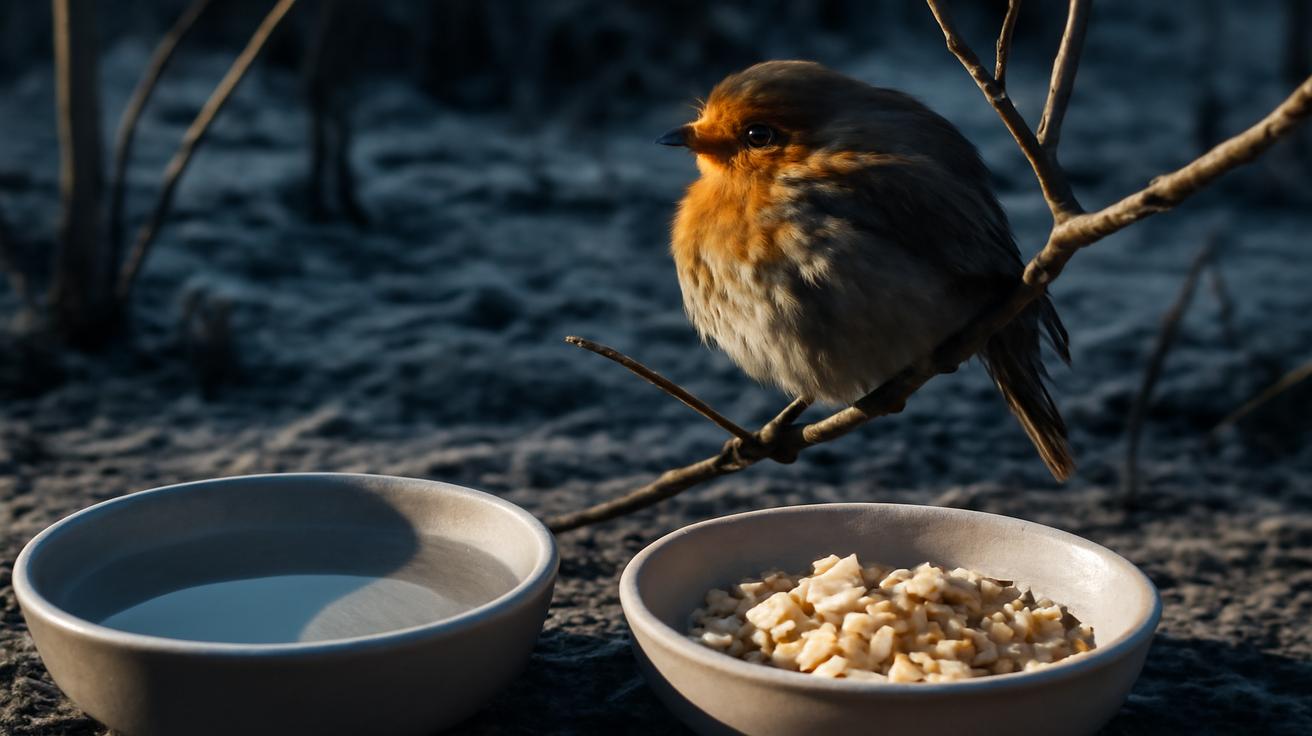
Picture a small saucer on a frosty patio table, a shallow scattering of oats like pale confetti. A robin drops down from the ivy, head tilted, then hops closer. This is the moment you’ve quietly prepared for. To make it as safe and inviting as possible, keep to a few simple rules:
- Dry, not cooked: Cooked oats can become sticky and cling to a bird’s beak or feathers, making feeding and preening difficult.
- Plain, not flavoured: Avoid sachets with added sugar, fruit, sweeteners, honey, or flavourings.
- No milk, no butter: Birds can’t digest dairy well, and added fats from butter or cream are not suitable.
- Small handful at a time: Offer modest amounts and top up as needed to avoid waste and mould.
- Use a clean surface: A ground feeder tray, low table, or wide dish works well and reduces contamination.
If you’re a visual person, imagine preparing a snack for a child with the strictest dietary requirements: no salt, no sugar, no extras. Just those neat, dry flakes. The same care applies here, only your guest is feathered, weighs a few grams, and sings for his supper.
Kitchen Staples: What’s Safe and What to Avoid
When we realise birds will gladly take human food, it’s tempting to offer all sorts of scraps. But some foods are unsafe or unhelpful, especially for small birds like robins. Here’s a quick snapshot to guide your choices:
| Kitchen Item | Safe for Robins? | Notes |
|---|---|---|
| Plain, dry porridge oats | Yes | Offer in small amounts; do not cook or soak in milk. |
| Cooked oats / porridge | No | Can become sticky and cause problems for beaks and feathers. |
| Leftover bread | Best avoided | Fills them up but low in nutrients; may encourage mould. |
| Cheese (hard, mild, grated) | In moderation | Only very small amounts; avoid soft and salty cheeses. |
| Salted nuts or salted food | No | Salt is harmful to birds even in small quantities. |
The beauty of oats is that they sit on the right side of this table: simple, safe, and efficient. When winter bites, that combination matters more than we think.
Creating a Robin-Friendly Winter Corner
Imagine your garden from a robin’s perspective. You are low to the ground, exposed, light-boned. Every movement draws the eye of something that might eat you. At the same time, you must cover enough territory each day to find sufficient food. It’s a delicate, endless compromise.
Your role, if you choose to accept it, is to make one small corner of that territory a little kinder: a place that offers food, water, and a measure of safety. Porridge oats are one part of that, but they work best in a thoughtful setting.
The Perfect Winter Feeding Spot
You don’t need an expensive bird table to help. A simple, sheltered spot works wonders:
- Choose a near-cover location: Place your oats near shrubs, hedges, or a low tree where the robin can dart for cover if startled.
- Keep the area open enough to see predators: Avoid tight corners where a cat could lurk unseen.
- Use a shallow dish or tray: Robins are natural ground feeders and will happily hop onto a tray placed on the patio or low wall.
- Clear away old food: Remove any damp or mouldy leftovers before adding fresh oats.
Robins are famously territorial. You may find that once one discovers your little feeding station, it becomes a regular client. You’ll see it arrive at first light, pause as if to take in the scene, then drop quickly to its familiar spot. In winter, that familiarity is more than charming—it’s lifesaving. A bird that knows exactly where to find safe food doesn’t waste precious energy searching elsewhere.
Don’t Forget Water
We often think of water as a summer issue, but in winter, when puddles freeze and birdbaths become ice blocks, it can be just as critical. Birds need to drink and to bathe, even on freezing days, to keep their feathers clean and insulating.
Alongside your saucer of oats, consider:
- A shallow dish of fresh water, changed daily.
- Gently breaking the ice on existing birdbaths (never pour boiling water in; lukewarm is fine).
- Placing the water near cover, but not under overhanging branches where droppings can quickly foul it.
A robin fluffing its feathers in a cold, clear pool on a sunny winter midday is a small miracle—the kind we only notice if we remember to look out of the window a little more often.
A Tiny Daily Ritual with Big Consequences
There’s something quietly satisfying about the act itself: opening the cupboard, hearing the soft rush of oats tipping into your palm, scattering them in a light arc over the dish. It takes seconds. You might do it with the kettle boiling, coat half-on, mind already on emails or errands. Yet that fraction of a minute may feed a bird through an entire afternoon.
For the robin, this small ritual becomes a reliable part of its winter map. Gardeners often speak of “their” robin, the one that watches from the handle of a spade or appears the moment soil is turned. In truth, as the RSPCA would remind us, it’s not “ours” at all. But relationships do form, in a loose, interspecies kind of way. We come to expect the soft flash of orange-breast at the edge of vision; the robin comes to expect that after the human appears, food often follows.
One of the quiet joys of offering oats is that it makes these interactions almost certain. You’ll start to notice patterns: the time of day your robin prefers to visit, the subtle scuffles with a sparrow or a dunnock, the gentle, vertical flick of its body as it claims the best spot on the tray. In a winter that can make humans feel cooped up and disconnected, those small, regular moments of contact with wildness are as nourishing for us as the oats are for them.
The Wider Ripple: More Than One Bird
While this story has focused on the robin—the unofficial mascot of British winters—your small dish of oats may help other species too. Dunnocks, blackbirds, even the occasional tit or finch might join the quiet feast. Each carries its own private struggle with the cold, its own precarious balance of calories and chill.
The RSPCA’s essential winter tip is less about one bird and more about a principle: simple, accessible help, offered consistently, can save lives. Oats are an easy on-ramp into that kind of caring. Once you’ve seen the difference a few flakes can make, you might find yourself doing more: adding a fat ball feeder, growing berry-rich shrubs, leaving a little wild corner where insects can overwinter safely.
But you don’t have to do everything. You don’t have to redesign your garden or turn yourself into a full-time bird steward. You can start, and continue, with something as modest as a handful of porridge oats each morning.
FAQ: Helping Winter Robins with Kitchen Staples
Can I use any kind of oats for robins?
Stick to plain, dry porridge oats with no added flavourings, sugar, salt, or fruit. Avoid instant flavoured sachets and granola-style mixes, as these often contain ingredients that are unsuitable or harmful for birds.
Is it okay to give cooked porridge to birds?
No. Cooked porridge can become sticky and cling to birds’ beaks and feathers, making it harder for them to feed and preen. Offer oats dry, in small amounts, and refresh them regularly.
How often should I put out oats for my garden robin?
Daily is ideal during the coldest months, especially in the early morning and mid-afternoon. These are crucial feeding times before and after the long, cold nights. Offer a small handful, then top up if it’s quickly eaten.
Are oats enough on their own as winter bird food?
Oats are a valuable energy source, but variety is best. If you can, also offer high-energy foods such as suet pellets, fat balls (in mesh-free holders), and quality seed mixes. However, if oats are all you have, they’re still a very helpful addition to a robin’s winter diet.
Can I put oats directly on the ground?
You can, but using a shallow dish, tray, or low bird table is better. It keeps the oats cleaner, makes it easier to remove leftovers, and can help reduce the risk of contamination from droppings or damp soil.
Will feeding oats attract rats or other pests?
Any food source can attract unwanted visitors if large amounts are left out. Offer small portions of oats that birds can finish in a day, and clear away any damp or uneaten food. Position feeders away from dense cover where rodents might hide.
Is it really necessary to feed robins if they are wild birds?
Robins and other garden birds can and do survive without us, but during harsh winters their natural food sources can become dangerously scarce. Feeding doesn’t “tame” them or make them dependent; it simply increases their chances of surviving extreme conditions. A modest offering of plain porridge oats can genuinely help them make it through the coldest days and nights.
So tomorrow morning, when the garden breathes out tiny ghosts of frost and your breath fogs in the air, open the cupboard. Reach for that familiar bag of oats. And as you scatter a small, pale constellation onto a waiting dish, know that you’re sending a quiet message into the cold: You are noticed. You are welcome here. You are not facing winter entirely alone.






Leave a Comment