
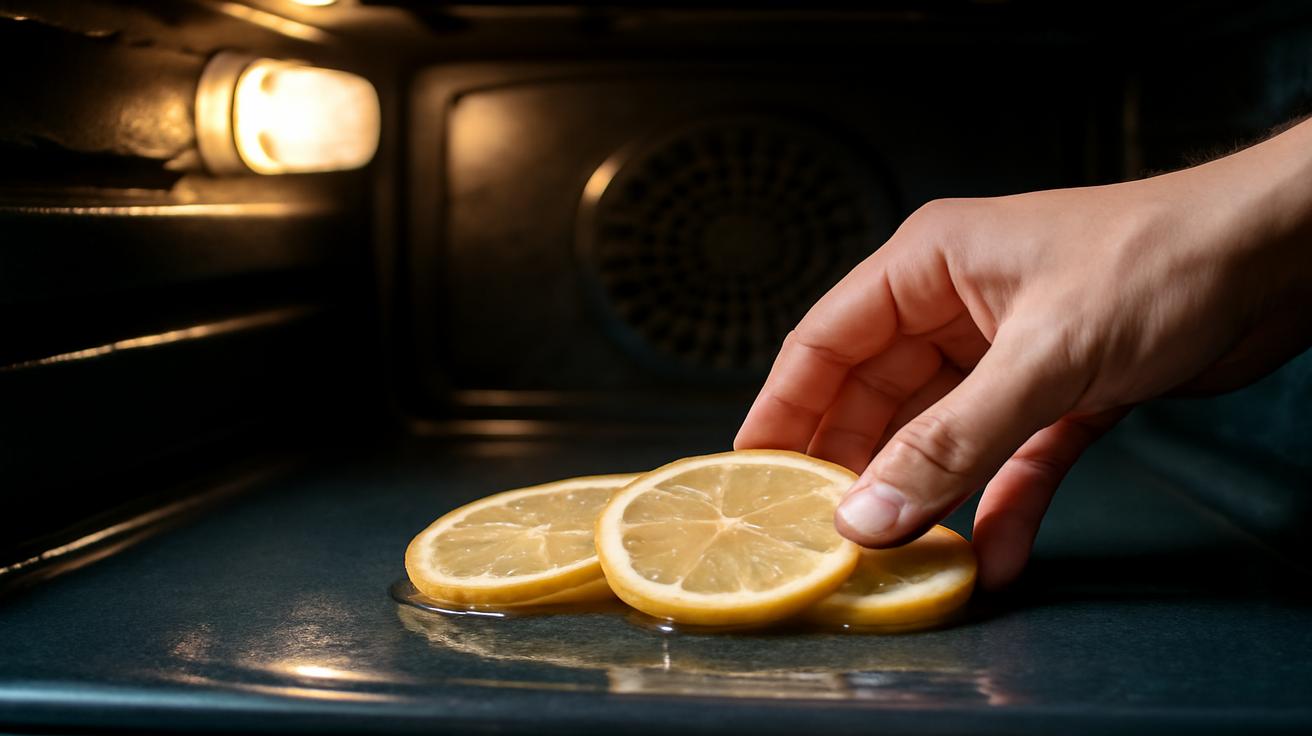
The first time you saw someone slide a lonely slice of lemon into a cold oven, you probably paused. It looks almost like a misstep in a recipe—someone forgot the cake batter, the chicken, the baking tray. Just a pale yellow crescent on a metal rack in an oven that isn’t even turned on yet. But then you stumble across it again in a video, or a neighbor mentions it in passing: “Oh, I always pop a lemon in my oven before I clean it. Total game changer.” And suddenly, this odd little ritual starts to feel like a secret you haven’t learned yet.
Why There’s a Lemon Sitting in So Many Ovens
Step into enough kitchens, scroll through enough cleaning reels, and a quiet pattern appears: lemons in ovens, lemons in microwaves, lemons in bowls of water on countertops. We are, it seems, in the age of the citrus cure-all. In a world crowded with neon-colored sprays and aggressive chemical cleaners, a plain lemon—ordinary, inexpensive, almost humble—feels disarmingly wholesome.
The oven, in particular, has become the stage for this transformation. People aren’t just using lemons to flavor roasted vegetables or brighten a baked fish anymore. They’re placing lemon slices, halves, or even whole lemon trays into a cold oven and walking away with a sense that they’ve done something quietly clever. Some do it for scent, some for cleaning, and some because a friend swore it “detoxes” the oven—which, to be fair, is not really how ovens work.
But behind every strange household habit, there’s usually a story. And behind this one, there’s a surprising mix of chemistry, culture, and a collective craving for homes that smell like we imagine “clean” should smell: fresh, bright, vaguely reminiscent of a Mediterranean kitchen by the sea.
What People Think the Lemon-in-the-Oven Trick Does
Ask around, and you’ll hear a dozen versions of the same belief about putting a slice of lemon in a cold oven. The explanations range from reasonable to whimsical, and they all say something about what we want our homes to feel like.
Some of the most common expectations look like this:
| What People Expect | How It’s Supposed to Work | Reality Check |
|---|---|---|
| Deodorize a smelly oven | Lemon scent covers or absorbs bad odors | Can gently freshen and loosen light odors, but doesn’t erase burned-on smells alone |
| Loosen grime and grease | Citric acid “melts” baked-on residue | Helps soften light grease when heated with water; not magic on thick, old buildup |
| Purify or “detox” the oven | Steam plus lemon somehow makes the oven healthier | No real detox effect; it’s just scent plus gentle cleaning help |
| Keep the oven always smelling “fresh” | Lemon slice left inside constantly refreshes the air | A slice left sitting will dry out, even mold—best used briefly, not stored |
Some people swear the lemon slice works because “my grandmother did it,” and that’s not a trivial detail. Traditional housekeeping is full of sensory rituals—boiling cloves on the stove, simmering cinnamon sticks, leaving orange peels in corners—that don’t always have a powerful technical effect, yet they powerfully change the feeling of a home.
In that sense, the lemon-slice-in-the-oven habit is also emotional. It’s a tiny gesture of care, a prelude to deep cleaning or to hosting guests: the kitchen equivalent of straightening the cushions on the couch. But under that layer of symbolism, the lemon is doing a little more than you might think—as long as it’s used in a very particular way.
The Quiet Chemistry Behind That Little Slice
Hold a lemon slice up to the light and it doesn’t look like much: translucent flesh, a scattering of seeds, a bright yellow rind. Yet inside that fragile wedge is a subtle trio of effects that explain why it keeps showing up in cleaning tips, including the ones that involve your oven.
First, there’s citric acid. Lemons are naturally acidic, and citric acid can help break down light mineral deposits and soften grease films. It’s mildly corrosive in a way that’s often helpful—enough to disturb grime, not so strong that it becomes dangerous in normal kitchen use.
Second, there are the essential oils locked in the rind. When heated, these oils release that unmistakable lemon fragrance. It doesn’t “eat” smells, but it does override and transform them, a bit like strolling into a room of musty coats and opening a window to a citrus grove.
Third, when that lemon sits in or above a small amount of water, and then gets warmed, the water becomes a carrier. It turns into steam that diffuses the acid and the scent around the oven’s interior. That’s when the magic (or at least, the most useful science) kicks in.
This is where many people’s version of the ritual diverges from what actually works. A single lemon slice on a dry rack in a stone-cold oven is mostly symbolic—a placeholder for the more effective version. To get any real benefit, you need warmth, moisture, and surface contact. The lemon slice is not a passive room freshener; it’s an ingredient in a tiny, makeshift steam cleaning session.
How People Actually Use Lemons in Ovens
In real homes, the lemon-in-the-oven habit splits into a few distinct practices. Some are practical, others purely atmospheric.
One person might cut a lemon into thick slices, lay a few on the rack of a cold oven, turn the dial just slightly warm, and let the door stay closed for half an hour. When they open it, the oven smells faintly brighter, though not dramatically cleaner. Another might go a step further: a shallow oven-safe dish of water with slices bobbing on the surface, placed on the middle rack of a cool oven, then heated until the window clouds slightly with steam.
Sometimes the lemon isn’t alone. A home cook might add rosemary sprigs, vanilla pod scraps, or a handful of cloves, turning the oven into a slow-motion potpourri machine. In these cases, the goal isn’t cleaning at all—it’s mood. They’re dressing the air for company, softening last night’s roast chicken echoes with the gentle perfume of citrus and herbs.
Others tuck a lemon wedge into a dishcloth after the steaming step and physically scrub the glass door or metal rack while it’s still just warm enough to be pliable. That extra step—contact—is where the lemon’s mild abrasiveness and acidity finally get to show off a little.
When the Lemon Trick Actually Works (and When It Doesn’t)
To figure out what this habit is really for, you have to follow the lemon from the moment it enters the oven to the moment it leaves your kitchen.
The Best-Case Scenario: Gentle Pre-Cleaning
Used well, lemon in the oven is less a miracle hack and more a helpful pre-treatment. If your oven is lightly greasy, smudged, and a bit stale-smelling—but not caked with years of baked-on carbon—this method can soften the edges of the mess.
Here’s the version that tends to work:
- Place a shallow, oven-safe dish of water on the middle rack of a cold oven, and drop in several lemon slices or two squeezed halves.
- Turn the oven on low—warm, not scorching—and let it heat just until the water steams gently (usually 15–30 minutes).
- Turn the oven off and let it sit closed for another 10–15 minutes so the moist, lemon-scented air can settle into corners and onto the glass.
- When the oven is warm but safe to touch, wipe the interior with a damp cloth or sponge, using the spent lemon halves to rub stubborn spots.
In this version, the lemon is doing three things for you:
- The steam lightly loosens fresh grease and splashes.
- The citric acid gently helps lift thin films and light stains.
- The scent covers lingering cooking odors, making the whole process feel more rewarding.
What it does not do, no matter how much you want to believe it, is erase years of neglect. If your oven door looks like smoked glass and the bottom is dotted with old pizza overflow fused into a black landscape, no amount of lemon slices in a cold oven will “melt” that away. You’ll need elbow grease, a proper cleaner, or a self-cleaning cycle for that.
When It’s Mostly Just for the Vibe
There’s another category of lemon-in-the-oven use that’s less about function and more about atmosphere. Maybe you’re hosting friends for dinner, and you want the kitchen to smell welcoming instead of like yesterday’s garlic bread. You slip a lemon slice into a dish of water, warm it briefly, and then let the residual warmth carry that bright fragrance through the room.
In those moments, the lemon is working like a scented candle without the flame. Technically, yes, it will help a little with odors. Emotionally, it’s doing more than that: it’s telling everyone who steps into your kitchen, “Someone cared enough to make this feel fresh.”
So does it “work”? Yes—if by “work” you mean softening mild messes, gently freshening, and inviting a bit of ritual into the weekly rhythm of cleaning. No—if by “work” you mean transforming a grimy oven into a sparkling showroom appliance with zero effort.
How to Make the Most of the Lemon Habit (Without Fooling Yourself)
If you’re going to join the quietly growing number of people sliding lemon slices into their cold ovens, it helps to be honest about what you’re doing.
Use It as a Routine, Not a Rescue Mission
The lemon trick shines when your oven is already reasonably cared for. Think of it as a weekly or bi-weekly refresh, not a once-a-year hail Mary. After a big roast, a bubbling lasagna, or a weekend of baking, a gentle lemon-steam session can keep things from ever crossing into disaster territory.
Used regularly:
- Light splatters stay soft and easy to wipe.
- The oven smells more neutral, without heavy lingering odors.
- You avoid the dread that builds up when you leave cleaning “for later” indefinitely.
Skipping months and then expecting a quiet lemon wedge to conquer the aftermath is a bit like flossing once on New Year’s Eve and hoping your dentist won’t notice.
Pair Citrus with Common Sense
There are a few things a lemon slice simply can’t do safely or effectively. It can’t replace proper degreasing when oil is thick and sticky. It can’t sanitize your oven in the way heat alone can during real cooking. And it definitely can’t neutralize heavy chemical residues if you’ve just used a strong commercial cleaner—those need to be rinsed or wiped as directed.
It’s also not a good idea to leave fresh lemon slices sitting indefinitely in a completely cold, closed oven. That’s how forgotten wedges dry up, mold, and trade their sunny scent for a slightly sour one. If the ritual appeals to you, treat it like brewing a pot of tea: something you do, enjoy, and then clear away.
The trick, really, is integration. Use the lemon steam to soften things. Use a cloth or sponge to finish the job. Use the light scent as a small reward that makes the whole process feel less like a chore and more like a quiet, sensory reset of your kitchen.
Why This Tiny Ritual Has Become So Popular
Beneath the chemistry and the practicality, there’s another layer to this habit: it’s completely ordinary, and that’s exactly why it’s spreading. A single lemon is affordable, available almost everywhere, and doesn’t demand instructions printed in four languages. You don’t have to measure, mix, or wear gloves. You simply cut, place, warm, and wipe.
In a time when so many “solutions” arrive overcomplicated—subscription cleaning products, multi-step kits, ten-ingredient DIY concoctions—the lemon is refreshingly simple. It also feels safer and more natural than bottles filled with words no one can pronounce. Whether or not those fears are scientifically justified, the emotional comfort of using something that once grew on a tree is hard to overstate.
There’s also the softness of the ritual itself. The quiet slide of the oven rack. The faint hiss of warming water. The moment, halfway through dinner prep, when you open the door to retrieve the dish and a warm, lemon-scented breath meets your face. It can feel less like cleaning and more like tending to a living space that’s central to your life.
That, in the end, might be the real secret behind the growing habit of putting a slice of lemon in a cold oven: it’s a tiny act of stewardship. It doesn’t conquer all grime. It doesn’t rewrite the rules of chemistry. But it asks very little and gives back something noticeable—a softer mess, a gentler smell, a sense that you’ve nudged your home a bit closer to the version of it you imagine on your best days.
So if you pass by a kitchen someday and catch a strange sight—a solitary slice of citrus awaiting its turn in a silent oven—you’ll know. It’s not a mistake. It’s a small, fragrant promise of care, sitting there, ready to steam.
Frequently Asked Questions
Does putting a lemon slice in a cold oven actually clean it?
Not by itself. A lemon slice alone, in a cold and dry oven, has almost no cleaning power. When combined with a dish of water and gentle heat, the steam and citric acid can help loosen light grease and fresh stains, making wiping easier—but it won’t deep-clean heavy buildup.
Is it safe to heat lemons in the oven for cleaning?
Yes, as long as you use a low to moderate temperature and an oven-safe dish. You’re essentially creating a mild steam bath. Just avoid leaving the oven unattended on high heat with very little water, so the dish doesn’t dry out and scorch.
How long should I leave the lemon and water in the oven?
Typically 15–30 minutes of gentle heating is enough to create steam, followed by 10–15 minutes of resting time with the oven off. After that, wipe the interior while it’s still warm for best results.
Can I leave a lemon slice in the oven all the time for freshness?
It’s not recommended. A lemon slice left for days in a closed, cool oven will dry out or mold and eventually smell unpleasant. Use lemons as a short-term freshener and cleaner, then remove them once you’re done.
Will lemon damage the interior of my oven?
In normal use, no. The acidity of lemon is mild compared to many cleaning products. Just don’t leave very concentrated lemon juice sitting on metal for long periods, and always wipe surfaces dry afterward to prevent any potential discoloration of sensitive finishes.
Can I use bottled lemon juice instead of fresh slices?
You can. Adding a few tablespoons of bottled lemon juice to a dish of water will create similar steam and scent. Fresh lemons add essential oils from the peel, which smell brighter, but the basic effect of citric acid and moisture is similar.
Does this trick work in other appliances, like microwaves?
Yes, and often even better. A bowl of water with lemon heated briefly in a microwave produces steam that softens splatters on the walls and ceiling, making them easier to wipe away. Because the space is smaller, the effect is usually more noticeable than in a full-size oven.








Leave a Comment