

The first thing that hits you is the smell. Warm dust on a TV set, the faint tang of cigarette smoke woven into the curtains, a casserole cooling on the counter. Somewhere, a radio is playing Motown, and down the street a screen door slams as kids spill outside, feral and sunburnt, for one more game before the streetlights flicker on. If you were raised in the 1960s or 1970s, this isn’t nostalgia so much as muscle memory; your body remembers before your mind does. And yet, the more we talk today about mental health, the more that childhood—its chaos, its freedoms, its silences—is being re-read not as a training ground for resilience, but as a long, unspoken lesson in surviving trauma.
The Generation That Learned to “Be Fine”
Ask someone who grew up then how they’re doing and you may hear a familiar refrain: “I’m fine. We all turned out fine.” But watch their hands. Often, their fingers find a seam, a coffee cup rim, a sleeve edge, something to grip. Psychology has a name for this reflex: emotional suppression. The 60s and 70s were decades of upheaval—Vietnam, civil rights struggles, economic uncertainty, second-wave feminism reshaping family roles, divorce rates climbing. Yet inside many homes, the unspoken rule was simple: keep it together; don’t make a scene.
Children of that era became experts in what therapists now call emotional self-containment. They learned:
- How to read a room in seconds
- When to stay invisible and when to perform “normal”
- How to function at school no matter what erupted at home the night before
Back then, these were praised as strengths: maturity, stoicism, “not being a crybaby.” Today, we understand that a nervous system on constant alert isn’t just “tough”—it’s wired for survival. It’s the child who said “I’m fine” because there was no space for “I’m scared,” “I’m sad,” or “I’m confused.”
Instead of talking, many people from that generation built what we might call emotional bunkers. Safe, quiet inner rooms where feelings went to hide. They got good grades, kept jobs, raised their own families. From the outside, it looked like resilience. Internally, it was closer to a beautifully organized emergency kit: everything necessary to endure, nothing designed to be fully alive.
1. Hyper-Independence: When “I Can Do It Myself” Becomes a Reflex
Picture a latchkey kid in 1974. The house key hangs on a shoelace around their neck. They walk home alone, let themselves in, make a snack, maybe start dinner. If something goes wrong—a smashed glass, a strange noise, a forgotten homework assignment—there’s no one to text, no parent tracker pinging their location. There is only the child, their quick-thinking mind, and the empty house.
From the outside, this looks like competence. And it is. These kids learned to:
- Make decisions without adult input
- Manage crisis with a calm face
- Reassure younger siblings, even when they themselves were afraid
Psychologists today call the adult version of this hyper-independence. It’s a core belief that “relying on anyone is dangerous” and “if I don’t handle it, no one will.” Many adults raised in the 60s and 70s wear this as a badge of honor. They don’t want to “burden” others. They struggle to ask for help, even when they are drowning. They are sometimes respected at work—and lonely at home.
This “strength” was forged in households where parents were absent, emotionally overwhelmed, dealing with addiction, or simply following the cultural script that children were supposed to figure things out. Psychology now recognizes that while independence is healthy, hyper-independence often roots in attachment wounds: moments when a child’s needs went unmet, not once, but chronically. The child adapts. The nervous system concludes, “I am safest when I need no one.”
2. Emotional Numbing Disguised as Stoicism
“You don’t know how good you have it,” many Gen Xers heard, even though they technically weren’t named yet. Their parents remembered the Great Depression, World War II, ration cards, polio scares. Against that backdrop, a broken heart, a bullying teacher, or a terrifying news broadcast about nuclear war seemed trivial. Tears were often met with, “I’ll give you something to cry about,” or “Stop being dramatic.”
So these children learned another so-called strength: emotional numbing. They shrugged things off. They clenched their jaws. They cracked jokes when they wanted to cry. As adults, they may be admired for being “unflappable,” “a rock,” “the strong one.” But inside, there can be an eerie flatness where joy and sorrow both feel dulled.
Psychology now understands that numbing is a trauma response—specifically, part of the freeze pathway of the nervous system. When fight or flight isn’t safe or allowed, the system goes still. Feelings get wrapped in cotton. The child survives the moment by not fully feeling it.
Back then, this stoicism helped children get through war footage on the evening news, school drills about hiding under desks, and the silent cold wars playing out between adults at the dinner table. Now, those same people may sit in therapy, decades later, stating facts about their past with eerie calm, while their bodies—shaky hands, tight throats, racing hearts—tell a very different story.
The Invisible Cost of Being “So Strong”
Being the strong one often meant being the one no one comforted. Psychology calls this parentification when children take on emotional or practical roles usually reserved for adults. A ten-year-old listening to a parent’s relationship problems was seen as “mature.” A teenager cooking every meal for younger siblings was “responsible.” Underneath, these were coping strategies for families under strain.
Those children grew into adults who excel at caretaking others but feel blank when asked, “What do you need?” The line between love and duty got blurred early. Their strength is real; so is the longing that can surface when they finally realize no one ever carried them.
3. Master-Level People-Pleasing as Social Survival
In the 60s and 70s, challenging adults carried real risk. Corporal punishment at home and in schools was still normalized. Questioning a teacher, disagreeing with a father, refusing a hug from a relative—it could all be read as disrespect. So many children optimized for safety the only way they could: they became experts at pleasing.
They learned to scan adult moods like weather systems. Who was stormy? Who might erupt? Who needed to be made to laugh quickly? Compliments, good grades, politeness, doing chores without being asked—these were not merely nice behaviors. They were strategies.
Psychologists call this fawning: a trauma response where appeasement and agreement are used to avoid conflict or danger. As adults, fawn types may:
- Say yes when they mean no
- Over-apologize, even when not at fault
- Feel intense anxiety if someone is displeased with them
For decades, this was misread as simply being “nice,” “easygoing,” or “a team player.” But under the surface is a nervous system trained to prevent explosions at all costs. In relationships, it can become a trap. They may struggle to leave unhealthy dynamics because conflict feels more terrifying than self-betrayal.
A Quiet Skill with a Double Edge
To be fair, this generation’s people skills can be extraordinary. They can defuse tensions, mediate arguments, host gatherings where everyone feels comfortable. But the cost appears in private: resentment, burnout, the strange feeling of never being fully known because you are always shapeshifting into what others need.
Modern psychology re-frames this as a survival adaptation born from inconsistent or harsh caregiving. The skill is real; it just wasn’t meant to be a permanent personality cage.
4. The Art of Distraction: Work, Hobbies, and the Flight Response
Remember how parents used to say, “Go outside and play” and then… that was it? For hours? Many children from the 60s and 70s became virtuosos of self-distraction long before “screen time” was a concept. They wandered fields, built forts, read stacks of books, rode bikes until dark. They also, often, disappeared into their own minds to escape what hurt.
Flight, in trauma terms, is the urge to outrun discomfort: physically, mentally, or emotionally. Adults raised then often carry this as a strength called productivity. They stay busy, always. They pile on responsibilities, projects, and hobbies. Their calendars prove their worth.
Psychological flight can look like:
- Overworking to avoid sitting with feelings
- Constant home improvement or “self-improvement” projects
- Moving cities, changing jobs, or reinventing oneself whenever emotions close in
From the outside, they seem driven and passionate. Underneath, stillness can feel like danger, because that’s when old memories creep in.
When Coping Becomes an Identity
One of the complexities of this era is that distraction had a beautiful side too. Unguarded play, long afternoons of unstructured time, early creative risks—these all seeded imagination and resourcefulness. Yet many people from that generation now struggle to distinguish between genuine passion and trauma-fueled busyness. They ask, “Who am I if I’m not doing?” And beneath that: “What feelings show up when the doing stops?”
5. Black Humor, Detachment, and the Freeze Response
The 60s and 70s were rich with dark jokes. Kids traded nuclear war punchlines on playgrounds. Teenagers watched assassination coverage sandwiched between sitcoms. Adults muttered about “the end of the world” while lighting another cigarette. For many, humor became a kind of armor—especially the dry, cutting kind.
When stress overwhelms the body’s ability to fight or flee, it often goes into freeze: shutdown, detachment, numbness. One way freeze expresses socially is through dark humor or cynicism. It allows you to touch what’s terrifying—but sideways, at a safe distance.
Children who used this defense grew into adults who can discuss tragedy with eerie calm, make jokes at funerals, or minimize their own suffering with a laugh and a wave of the hand. “It wasn’t that bad,” they say, recounting stories that would make others wince.
In psychology, this combination of intellectualizing and joking is recognized as a sophisticated defense mechanism. It protected children from being overwhelmed by realities they had no power to change—violence in the home, racism in their communities, societal unrest broadcast live into their living rooms. As adults, though, it can block intimacy. Partners sense there’s something deeper behind the joke—but every time they lean in, the conversation slips into irony and wit.
Reinterpreting “Resilience” Through a Modern Lens
None of this is to say that people raised in the 60s and 70s are secretly broken. Quite the opposite: their adaptability is astonishing. What has changed is our language for it. We now understand that what looked like a natural personality trait—“Oh, she’s just stoic,” “He’s naturally independent”—may have been sculpted by nervous systems doing their best with too little safety.
The table below summarizes how several of these perceived strengths map onto modern concepts of trauma response:
| Perceived Strength (Then) | Modern Psychological View | Underlying Trauma Response |
|---|---|---|
| “Very independent” | Hyper-independence, difficulty trusting | Attachment wounds, chronic unmet needs |
| “So strong, never cries” | Emotional numbing, limited access to feelings | Freeze response, suppression for safety |
| “Such a people person” | People-pleasing, fear of conflict | Fawn response, appeasement to avoid harm |
| “Hard worker, always busy” | Workaholism, avoidance of inner life | Flight response via constant activity |
| “Tough sense of humor” | Emotional distance, difficulty being vulnerable | Freeze/intellectualizing as shield |
6. The Seventh Strength: Adaptive Imagination
There’s one more psychological strength, often overlooked, that grew in the cracks of 60s and 70s childhoods: a fierce, adaptive imagination. When adults were unreliable, the inner world became a refuge. Children narrated their lives like movies, escaped into music, wrote stories in spiral notebooks, invented whole universes under kitchen tables and in treehouses.
Today, psychologists see how fantasy and creativity can serve as a sophisticated dissociation strategy. Dissociation gets a bad name, but at its core it is simply the mind’s ability to step back from the unbearable. A child hearing parents argue might, without realizing it, float into a daydream. A teenager in a turbulent household might pour everything into drawing, guitar, or science fiction novels. Their bodies stayed; their minds slipped to safer ground.
As adults, many from this generation have an uncanny ability to “go elsewhere” when life gets hard. They binge-watch, hyper-focus on hobbies, or disappear into elaborate internal monologues. Some turn that into art, leadership, or innovation. Others use it to not feel.
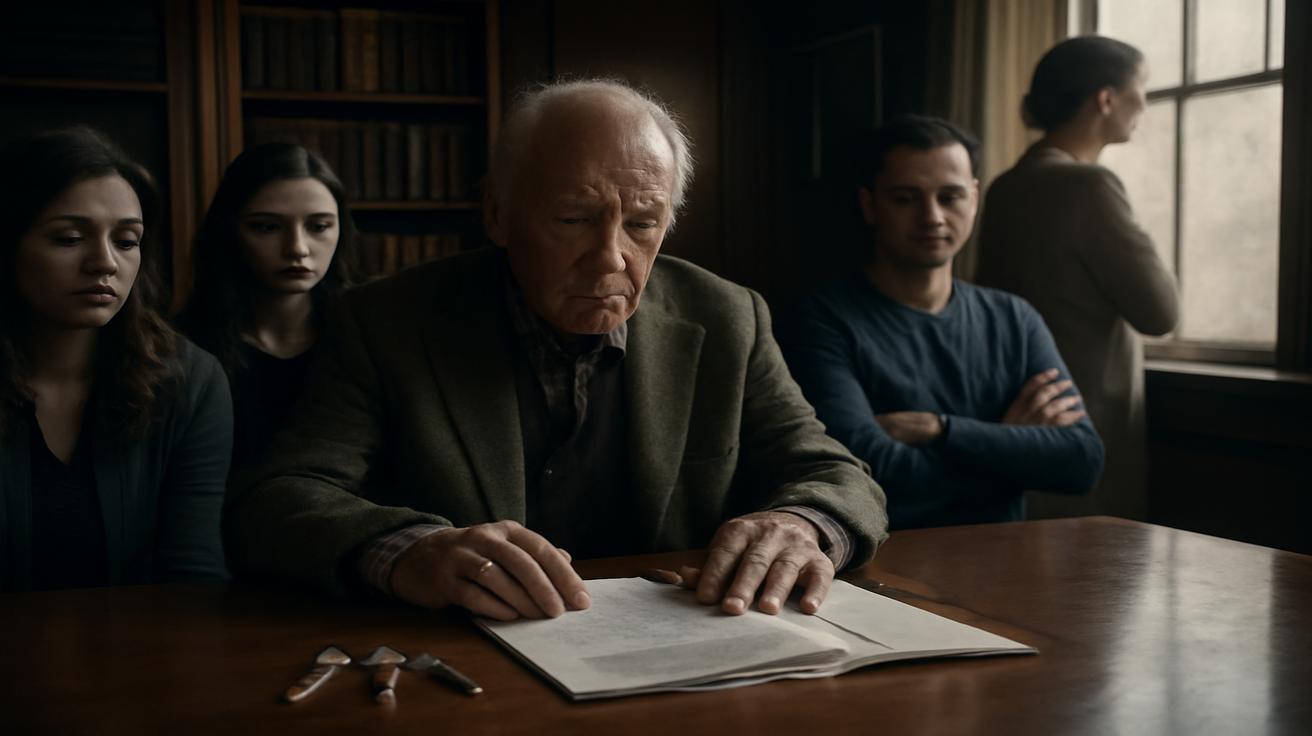
Here is where our modern perspective becomes both tender and radical: what if these coping strategies were never moral failings nor simple strengths, but brilliant, involuntary adjustments to environments that were—by today’s standards—chronically under-attuned to children’s emotional worlds?
7. Reclaiming Resilience Without Erasing the Wounds
To say that many 60s and 70s kids endured trauma is not to erase the joy that also lived in those years—the open doors, the roaming packs of neighborhood kids, the music that stitched cultures together, the sense of possibility. Human experience is rarely one thing. You could feel free on your bike and terrified at the dinner table. You could love your parents deeply and know, even then, that some part of you was alone.
Modern psychology is offering a reframe, not a verdict. It says: yes, you were strong. You survived with brilliance. But you were also small and human in a world that often expected you to be larger than your age, quieter than your pain, and braver than your fear.
Recognizing hyper-independence, numbness, people-pleasing, overwork, dark humor, and dissociative imagination as trauma-shaped doesn’t mean throwing them away. It means:
- Letting independence coexist with the ability to lean on others
- Allowing tears to share space with toughness
- Practicing honest no’s alongside generous yes’s
- Working hard while also resting without guilt
- Using humor without hiding behind it
- Creating and imagining as choice, not escape
Somewhere, that child in the 1970s living room is still listening for footsteps in the hall, still trying to decide whether to speak up or stay small. Our task now—through therapy, conversation, self-reflection, and gentler cultural norms—is to let them know it is finally safe to come out.
If you grew up then and recognize yourself in these patterns, it doesn’t mean you’re “broken.” It means your nervous system did exactly what it was meant to do: protect you. Understanding the difference between resilience and trauma is not about rewriting your past as only painful. It’s about finally seeing the whole picture—and, perhaps for the first time, offering that younger self the care they never had words to ask for.
FAQ
Is everything from my 1960s or 1970s childhood considered trauma now?
No. Not every difficult experience is traumatic, and not every person from that era is traumatized. What has changed is our understanding of how chronic stress, emotional neglect, or instability affect developing brains and bodies. The point is not to label everything as trauma, but to recognize that what was once dismissed as “just how it was” sometimes left deeper marks than anyone realized.
How can I tell if my “strengths” are actually trauma responses?
Notice how flexible they are. If you can be independent but also accept help when needed, that’s healthy. If asking for help feels terrifying or shameful, that might be a trauma pattern. Similarly, if you can be calm in crisis but also access your feelings later, that’s resilience. If you almost never feel much of anything, even in big moments, that may be emotional numbing.
Is it blaming my parents to look at my childhood this way?
Not necessarily. Many parents of that era were doing their best with far less information about child development, mental health, and emotional needs. Understanding how your nervous system adapted isn’t about vilifying them; it’s about accurately seeing your own experience so you can make different choices now. Compassion for yourself and compassion for them can coexist.
Can trauma-shaped patterns really change in adulthood?
Yes. The brain remains plastic throughout life. With therapy, supportive relationships, and intentional practice, people can learn to regulate emotions, ask for help, set boundaries, and feel more fully. The old strategies don’t vanish overnight, but they can become options rather than the only way you know how to live.
Where should I start if I recognize myself in this article?
Start small and gentle. You might begin by journaling about moments when you say “I’m fine” but feel something else. Notice when you overwork, over-give, or disappear into numbness. Consider talking with a therapist experienced in trauma or inner child work. Even one honest conversation—with a friend, a partner, or a professional—can begin to loosen patterns that have been running quietly for decades.




Leave a Comment