
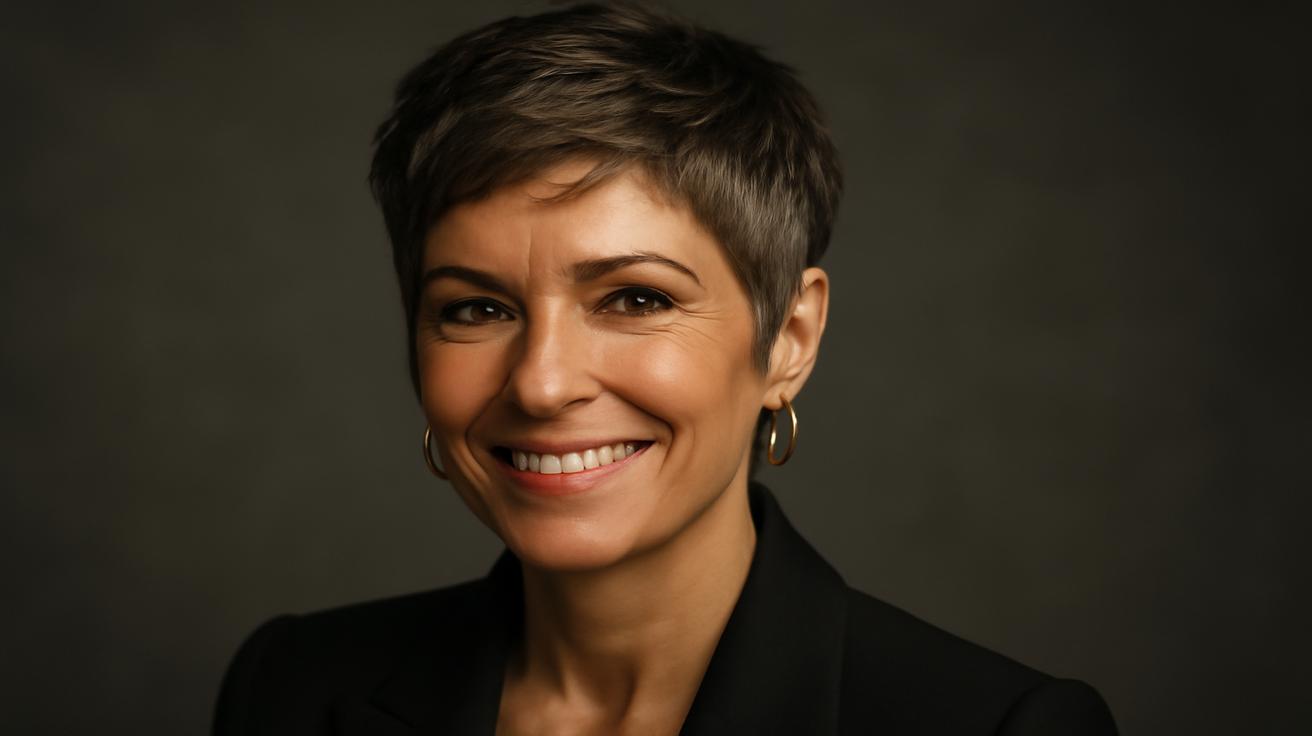
The woman in the café had that kind of haircut that made people look twice. Not because it was shocking or dyed a wild color, but because it seemed to lift her whole face toward the light. Silver strands framed her eyes; the nape of her neck was clean and elegant. She had laugh lines, sure, and the delicate creases of someone who had lived some years and felt them fully. But the overall impression? Bright. Awake. Strikingly alive. Someone at the next table whispered, “Short hair really makes her look younger, doesn’t it?”
That’s the secret power of a pixie cut after 50. It’s not about pretending you’re 25 again. It’s about carving out a look that says: I’m here, I’m visible, and I know exactly who I am. A good pixie doesn’t erase your years; it spotlights the best of them—your eyes, your cheekbones, your confidence—and lets the rest fade gently into the background. If you’ve been toying with the idea of going short, or you already have a pixie but feel like something is just… off, these four tips will help you wear this iconic cut in a way that can make you feel a full decade lighter, brighter, and yes—younger.
1. Choose the Right Pixie Shape for Your Face (and Your Story)
Walk into any salon and say, “I want a pixie,” and your stylist could go in a hundred different directions. Soft and wispy. Edgy and choppy. Sleek and sculpted. The magic isn’t in the word “pixie” itself—it’s in how it’s tailored to your face shape, bone structure, and the story you want to tell with your hair.
One woman might want a soft, piecey pixie that curls around her temples, giving off an air of gentle romance. Another might gravitate toward a bold, cropped style that shows off a sharp jawline and a daring streak. At 50 and beyond, you’ve earned the right to choose a cut that feels like an exclamation mark, not an apology.
Think of your face shape as your starting map:
- Oval faces: Almost any pixie shape works. You can play with undercuts, longer tops, or very short sides.
- Round faces: A bit of height at the crown and side-swept fringe can elongate and slim the face.
- Square faces: Softer edges with textured layers and wispy bangs can blur hard lines and add youthfulness.
- Heart-shaped faces: Volume at the sides or a longer fringe can balance a narrower chin.
But here’s the thing: after 50, there’s another factor to consider beyond face shape—your facial expression when you’re at rest. Do your brows naturally angle downward a little, giving you a thoughtful, serious look? Do laugh lines pull your mouth upward even when you’re not smiling? The right pixie can counterbalance or highlight those traits.
A side-swept fringe, for example, can visually “lift” a face if you feel like age has gently pulled things downward. Shorter sides can reveal beautiful cheekbones you might not have noticed since your twenties. The right shape turns your natural features into focal points rather than trying to hide them.
When you sit in that salon chair, have a real conversation with your stylist. Bring photos—not of celebrities at 20, but of women whose hair you admire at 45, 55, 65. Explain what you like about the feeling of those cuts: soft, bold, romantic, sharp. Your pixie should match not just your face, but your energy.
| Face Shape | Best Pixie Features | Youth-Boosting Effect |
|---|---|---|
| Oval | Flexible length on top, tapered sides | Shows off balanced features |
| Round | Height at crown, side-swept fringe | Creates a longer, leaner look |
| Square | Soft layers, wispy edges | Softens strong jaw and lines |
| Heart | Longer fringe, gentle side volume | Balances forehead and chin |
2. Play with Texture and Movement Instead of “Helmet Hair”
There’s one thing that can make even the most carefully cut pixie look older: stiffness. When short hair sits on your head like a solid object—no movement, no softness—it can drag your features downward, emphasizing every line and shadow.
Texture is where the real age-defying magic happens. A touch of tousle, a bit of lift, strands that catch the light differently… all of this reads as vitality. It gives the illusion of fullness, softness, and life, which naturally feels more youthful.
As hair changes with age—becoming finer, sometimes coarser or more fragile—texture becomes your best ally. Instead of fighting your natural pattern, ask: how can we work with this? Wavy hair loves a shaggy pixie with longer pieces on top. Straight hair can be lightly razored or point-cut for airiness. Curly hair can become an incredibly chic, sculpted pixie that looks like it belongs in a gallery opening.
Styling doesn’t have to be complicated. A pea-sized amount of lightweight styling cream, a dab of mousse, or a texturizing spray can turn “just woke up” into “effortlessly intentional.” The goal isn’t perfection; it’s movement. When you run your fingers through your hair, it should respond, not resist.
One trick many women over 50 love: soften the hairline around the ears and nape, leaving tiny, feathered pieces instead of a sharp, hard edge. This creates a gentle halo effect that’s flattering from every angle, especially in softer, indoor light where shadows can deepen lines. Those little wisps frame the neck and face in a way that feels both romantic and modern.
3. Let Color and Shine Do the Heavy Lifting
You can have a fantastic cut and still not feel “10 years younger” if your color and shine aren’t working with you. Think of your pixie as a sculpture—and color as the lighting that brings out all the depth and detail.
First, let’s talk about gray. Silver, white, salt-and-pepper—these shades can be absolutely breathtaking with a pixie. The short length concentrates your color into a clean frame around your face, which can look intentionally chic rather than “overdue for a touch-up.” A well-cut pixie with natural gray can outshine a box-dye brown any day, particularly when there’s shine involved.
If you choose to color, consider going a touch lighter and softer around the face. Deep, flat, heavy color can cast shadows and harden features. Subtle highlights, soft lowlights, or a slightly warmer tone near the hairline can brighten your complexion and soften any hollows or lines.
What matters most—more than the exact shade—is that your hair looks healthy: reflective, hydrated, and cared-for. Shine is one of the most underestimated “youth tricks” out there. Dull, matte hair can make skin look dull, too. But when light bounces off your pixie’s curves and layers, everything around it looks more luminous.
A few gentle habits help enormously:
- Use a moisturizing shampoo and conditioner that don’t weigh hair down.
- Protect your hair from heat with a good thermal spray if you blow-dry.
- Ask your stylist about a gloss treatment to boost shine without drastic color change.
- Trim regularly; split ends are obvious on a pixie and instantly age the look.
Imagine stepping outside on a clear morning and feeling the sun touch your hair. When your pixie catches that light—soft color, subtle dimension, a reflective sheen—it’s like adding a natural filter to your whole face. Fine lines appear softer. Your eyes seem brighter. That’s the kind of “younger” that doesn’t feel fake; it just feels like you, well-rested, well-loved, and well-lit.
4. Style Around Your Features, Not Against Them
A flattering pixie at 20 is not the same as a flattering pixie at 55. And that’s good news. You have more information now—about your face, your tastes, your life. You know which side you tilt your head toward in photos, which earrings make your eyes glow, which lip color you reach for again and again. Your haircut should be the supportive friend that highlights all of that, not the demanding diva that steals the show.
Think about what you love most about your face. Maybe it’s your eyes, still bright and curious. Maybe it’s your smile, or the strong set of your jaw, or the gentle slope of your neck. Then ask: how can my pixie help people notice that first?
- To emphasize eyes: A side-swept fringe that skims the brows can direct attention straight to them, like a subtle arrow of hair.
- To highlight cheekbones: Shorter volume at the sides with slightly longer pieces that graze the cheeks create beautiful, sculpted angles.
- To soften deeper lines: Gentle, airy layers around the temples and forehead blur transitions and keep the gaze moving, instead of landing on a single crease.
- To show off your neck: A tapered, clean nape draws the eye downward in a graceful line, giving a lifted, elegant impression.
Styling doesn’t have to take long. Two or three minutes in the mirror can change the whole tone of your day. Use your fingertips instead of a brush to place pieces where they flatter you most. Tuck one side behind the ear to show off a favorite earring or widen the appearance of your eyes. Fluff up the crown to give a bit of lift, which visually raises the entire face.
The real “10 years younger” effect doesn’t arrive when every hair is in place. It shows up the minute you catch your reflection and think, “Oh. There I am.” Not the version of you that’s trying to chase youth, but the one that’s fully, comfortably, vibrantly present.
5. Let Your Pixie Evolve With You
There’s a quiet thrill in realizing that your hair no longer has to follow anyone else’s rules. You don’t have to grow it out because “women should have longer hair past a certain age.” You don’t have to keep it short because “it’s easier.” You can choose, and then you can change your mind later. A pixie cut, especially after 50, can be a living thing—something that shifts as your life shifts.
Maybe you start with a soft, feathered pixie that just grazes your ears, easing yourself into shorter territory. Then a year later, you go bolder—cropped sides, a little edge, a pair of statement glasses to match. Or perhaps you begin with a sharp, sleek pixie and slowly grow the top into a tousled, textured look that suits a new chapter: retirement, travel, grandchildren, a late-blooming career, a fresh romance.
Every few months, when you sit in the salon chair, consider asking your stylist a simple question: “How can we adjust this cut to match who I am right now?” Some days you might want more softness. Other times you’ll feel like leaning fully into a strong, sculpted shape. Both can be youthful; both can be powerful. The key is that you feel like you’re moving forward, not clinging to anything you’ve outgrown.
Hair has a way of holding memory. We remember the long waves we wore in our twenties, the mom-cut of our thirties, the half-ignoring, half-nostalgic length of our forties. But the pixie? That can be the moment you step into the present with both feet. The choice that says: “I’m not going back. I’m going deeper into who I am.”
When strangers tell you that your haircut makes you look younger, what they’re really seeing is the confidence that radiates from a woman at ease in her own skin. Yes, the clean lines of a pixie lift the face. The texture, the color, the shine—they all do their part. But the most age-defying thing in the room is the way you occupy your reflection with a kind of grounded, clear-eyed joy.
So if you’re standing on the edge of that decision, fingers curled in your longer hair, wondering if you should do it—consider this your gentle nudge. Hair grows back. Years don’t. You might as well spend them feeling as awake and visible as possible.
Frequently Asked Questions About Pixie Cuts After 50
Will a pixie cut make me look older instead of younger?
It can, if the cut isn’t tailored to you. A stiff, overly severe pixie with no texture or movement may emphasize lines and shadows. But a well-shaped pixie with softness around the face, flattering volume, and a color that suits your skin tone usually has a lifting, brightening effect that many people perceive as more youthful.
Is a pixie cut hard to style every day?
Most pixies are quick to style but still need a little attention. Expect to spend a few minutes using your fingers, a tiny amount of product, and possibly a quick blow-dry at the roots. Once you learn your hair’s “sweet spots,” styling often becomes easier and faster than managing longer hair.
How often do I need trims to keep a pixie looking fresh?
Every 4 to 6 weeks is ideal for most pixies. Short hair shows growth quickly; when the shape softens too much, it can start to look tired. Regular trims keep the lines clean, maintain volume in the right places, and prevent split ends that can make hair look dull.
Can I wear a pixie cut if my hair is thinning?
Yes, and it can actually help. Shorter hair often looks fuller, because it doesn’t sag or separate the way longer hair can. A good stylist can add subtle layers and texture that create the illusion of more density, especially at the crown and sides. Gentle products like volumizing mousse or texturizing spray can enhance that effect.
What if I have curly or wavy hair—will a pixie still work?
Curly and wavy hair can look stunning in a pixie. The key is shaping: curls need enough length in the right places to coil, rather than frizz. A stylist experienced with curls can craft a cut that frames your face with soft, sculpted texture. The result often looks effortlessly stylish and can feel lighter and freer than longer curls.
Does going gray make a pixie look less youthful?
Not at all. Natural gray or silver can be incredibly chic with a pixie cut. The short length turns gray into a deliberate style choice rather than something you’re “growing out.” Keeping your gray hair shiny, moisturized, and well-cut is far more important than whether it’s colored. A bright, glossy silver pixie can look fresher than a dull, dyed one.
How do I talk to my stylist if I’m nervous about going short?
Be honest and specific. Tell them what you’re afraid of—looking too severe, feeling exposed, not knowing how to style it. Bring photos of cuts you like (and don’t like), and ask if you can start with a slightly longer pixie that can be refined over time. A good stylist will guide you gently, explain what works with your hair type and face, and make sure you leave feeling like yourself—just a more visible, distilled version.


Leave a Comment