
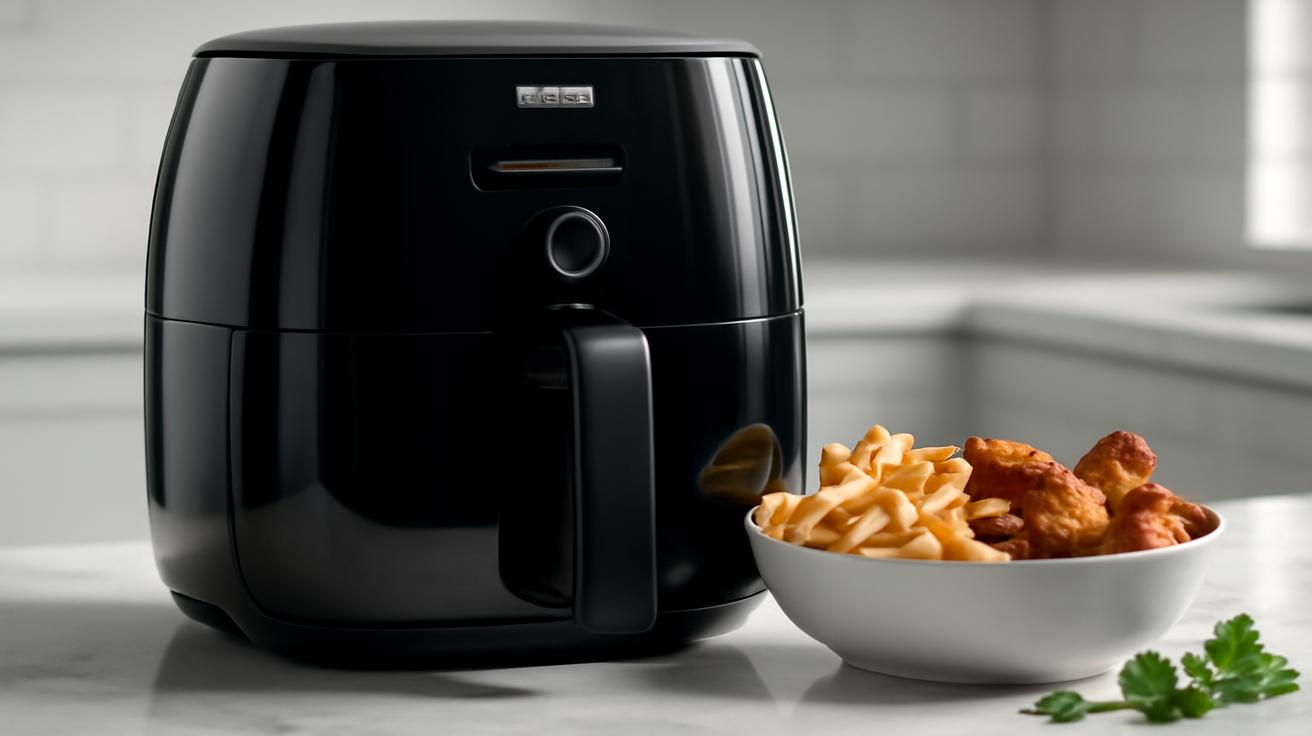
The first thing you notice is the sound—or rather, the lack of it. A low, gentle hum, like distant wind through pine trees, replaces the chaotic hiss and spit of oil. There’s no heavy, greasy fog hanging in the air, no pan to stand guard over, no sizzling splash demanding your attention. On the kitchen counter, a new, sculpted shape in matte black and brushed steel glows softly. A handful of potatoes, a drizzle of oil, a tap on a glass panel, and in minutes the room fills with the warm, familiar scent of roasted comfort food. Only this time, it feels… lighter. Kinder. Thoughtful, even.
The Quiet Revolution on the Countertop
For years, cooking at home has carried a kind of unspoken compromise. We’ve told ourselves that speed means shortcuts, that “healthy” usually means less pleasure, and that sustainable choices require more time, more effort, more sacrifice. Deep down, we’ve grown used to the idea that the kitchen can’t be both indulgent and responsible at the same time.
Philips is trying to rewrite that story with its brand-new Airfryer—more than just a refreshed appliance, it’s a clear statement: the future of cooking doesn’t have to be loud, hot, and wasteful. It can be gentle, precise, and deeply satisfying.
Stand in front of the new Airfryer and it feels oddly calming. The interface is clean and understated. No shouting buttons or flashing panels. Just a smooth, intuitive touch screen that responds with a soft glow. Tap “fries,” and it doesn’t ask you to be a chef or an engineer. It quietly calculates time and temperature using smart presets refined through countless tests, and then it simply gets to work.
This is where the revolution lives—not in wild, gimmicky features, but in the subtle redesign of everyday moments. In the way a family can sit down to “fried” favorites without a vat of oil. In how an evening meal can be both quick and deeply nourishing. In the relief of knowing that your new favorite gadget aligns with a planet that’s already carrying too much.
The Science of Crisp Without the Guilt
Walk closer and open the basket mid-cooking. A wave of heat rolls out, but it’s clean, dry, and somehow lighter than the steamy blast of an oven door. Inside, potato wedges are turning the color of late-afternoon sunlight—golden, textured, promising that unmistakable crunch. Yet there’s barely a sheen of oil.
At the heart of Philips’ new Airfryer is a circulation system that feels almost like a miniature wind tunnel, carefully designed to move air in spirals around your food. This isn’t just “hot air” marketing—it’s engineered physics. Superheated air flows around every side of each ingredient, crisping the outside while keeping the inside tender and moist. The result is that deep-fried sensation without the deep-fry remorse.
Most air fryers make this promise, of course. But Philips leans into precision rather than just power. Temperature control is tighter, which means your food doesn’t swing between too hot and not hot enough. Timing is smarter, guided by cooking profiles tuned specifically for things like vegetables, fish, or homemade dough. Instead of drowning your meal in oil, you can often get away with a single teaspoon—or none at all.
Picture a plate: cauliflower florets, dusted with smoked paprika and a whisper of olive oil, roasted to caramelized perfection in minutes. Or a fillet of salmon, its edges crisp, its center blushing and delicate. You didn’t have to flip it every two minutes. You didn’t hover with a spatula in hand. You simply let the airflow do its silent, invisible work.
The Subtle Art of Satisfying Cravings
There’s a tiny moment, right before the first bite, when you doubt. Can this really taste as good as the “real” thing? Haven’t we been trained to believe that flavor lives in excess—more fat, more oil, more everything?
Then your teeth meet the crunch: a fracture of crispness, yielding to a soft, steaming interior. Fries snap instead of sag. Chicken bites give that delicate resistance of perfectly cooked crust before revealing juicy meat inside. It’s the textural poetry our brains recognize as “comfort food,” with far less of what makes us feel heavy and sluggish afterward.
Over time, that doubt fades. The expectation shifts. Suddenly, the “real thing” doesn’t seem like the deep fryer anymore—it’s this: clean, fast, and balanced, without sacrificing the joy of a truly good bite.
Cooking for a Planet That’s Tired
Beyond flavor and texture, there is a quieter conversation unfolding in our kitchens: the question of impact. Every warmed coil, every preheated oven, every splash of oil is part of a larger story about energy, resources, and waste.
The new Philips Airfryer is designed with this in mind—not as a solemn lecture, but as a practical answer. Compared to a traditional oven, it generally uses less energy because it heats faster and in a smaller, more focused space. That means shorter cooking times, less power consumed, and fewer instances of “I preheated the oven and then forgot to cook.”
Then there’s the oil itself. Deep frying demands liters of it—oil that must be purchased, stored, filtered, and eventually thrown away. That disposal often means pouring it into containers destined for landfill or, worse, down the drain. With the Airfryer, oil shifts from being the main ingredient to a subtle accent. A tablespoon becomes plenty. For many recipes, the natural fats already present in food are enough.
Even cleaning becomes a small act of kindness—to yourself and the environment. The basket and tray are designed for easy washing, with fewer baked-on residues and no slick, sticky film of used oil coating everything. Less hot water, fewer harsh chemicals, more evenings spent doing anything other than scrubbing.
How the Airfryer Fits a Lower-Impact Kitchen
Think of a typical weeknight. In the old rhythm, you might preheat the oven for 15 minutes, roast vegetables for 30, then heat a pan to finish protein. The new rhythm is more condensed—and gentler. Slide in a tray of mixed vegetables, toss in some seasoned chickpeas in a second batch, then finish with a few pieces of fish. Three components, each cooked quickly, in a compact space, without a roaring oven heating the whole kitchen.
In a world where our homes contribute more to our footprint than many of us realize, these shifts matter. They may not be glamorous, but they’re real. The new Philips Airfryer isn’t asking you to become a sustainability expert. It simply encourages small, repeatable choices that add up: less energy, less oil, less waste, one dinner at a time.
A New Rhythm for Busy Lives
Modern life has a way of shrinking the spaces where cooking once lived. Long commutes, late meetings, and constant notifications nibble away at the hours we’d like to spend chopping, stirring, tasting. Into this compressed reality steps an appliance that doesn’t scold you for not having enough time—it gently works with the time you have.
The new Airfryer leans into simplicity. The presets feel like helpful nudges rather than rigid rules: fries, vegetables, fish, chicken, baked goods. Each tap calls up an optimized time and temperature, with the flexibility to adjust if you prefer things extra crisp or barely golden. A quiet beep reminds you when to shake or turn, though often you don’t need to. Multi-layer accessories can help cook different components side by side, turning your counter into a compact, efficient cooking station.
The magic is not that it replaces every tool in your kitchen—but that it reliably does a handful of things extremely well, over and over, without drama. It roasts, crisps, reheats, and bakes in a way that feels tailor-made for the realities of life when you walk in the door tired, hungry, and slightly overwhelmed.
From Frozen to Feast
There’s an honesty in recognizing that sometimes, dinner isn’t a from-scratch, farmers-market masterpiece. Sometimes it’s a bag of frozen vegetables, a box of veggie nuggets, or leftovers that need revival. The Airfryer doesn’t judge those moments; it upgrades them.
Frozen broccoli can emerge with charred edges and tender stems instead of soggy disappointment. Day-old pizza finds new life, its crust turning back into something pleasantly crisp instead of cardboard. Those quick, last-minute fallback meals begin to feel more intentional—something you can enjoy, not endure.
Food That Draws People Back to the Table
In many homes, the kitchen used to be the undisputed gathering place. Pots bubbling, stories shared, snacks stolen straight off the cutting board. Somewhere along the way, that slipped. The speed of life pulled us more toward screens and takeout menus, away from the simple ritual of cooking and eating together.
The Philips Airfryer, in its quiet way, nudges that ritual back into play. Because it’s easy to use, more people feel comfortable taking part. Teens can make their own snacks without splattering oil. Partners who claim they “can’t cook” can manage wings, roasted potatoes, or crispy tofu with almost no supervision. Grandparents can safely enjoy the taste of fried food without the heavy oil that once came with it.
Before long, you may find a new soundtrack in your home: the soft whir of the Airfryer, punctuated by curious footsteps drifting back to the kitchen—“Is it done yet?”—and the rustle of plates being set on the table. Instead of hovering over a stove, you’re free to move around, pour drinks, set out a salad, or simply lean back and breathe while dinner quietly finishes itself.
As more homes lean on devices to handle the tedious parts of life, this little box of swirling heat becomes something more than a gadget. It becomes an invitation to gather again, to share food that feels indulgent but sits lighter in the body, to find joy in nourishment that respects both appetite and environment.
What Changes When Cooking Becomes Easier and Kinder?
Under the clean lines and calm glow of the new Philips Airfryer lies a deeper question: what else in our lives becomes possible when cooking is both easier and kinder—to us, to our bodies, and to the world beyond our windows?
Maybe you start roasting vegetables more often because they no longer feel like a chore. Maybe the kids help prepare their own snacks, learning that food can be both fun and thoughtful. Perhaps you experiment with dishes you never tried before: spiced chickpeas, roasted peaches, granola, or crusty little loaves of bread. The barrier between “I should cook” and “I want to cook” begins to crumble.
Technology, when done well, doesn’t shout about itself. It slips into the rhythm of the day, quietly shifting old habits. In this case, it’s the habit of reaching for the frying pan and half a bottle of oil; the habit of preheating the big oven for a single tray; the habit of treating weeknight meals as an exhausting obligation instead of an opportunity.
This new era of healthier, more sustainable cooking isn’t about perfection. It’s about small, durable improvements—crisper vegetables, lighter fries, less waste, less effort. Philips’ latest Airfryer sits at that intersection: familiar enough to be friendly, advanced enough to make a clear difference.
From Novelty to Necessity
Most kitchen gadgets have a trajectory: a honeymoon phase, a few star appearances, then a slow drift toward the back of a cabinet. The difference with an appliance like this lies in its ability to solve real, daily problems: not “someday when I host a big dinner,” but “tonight, when I walk in the door at 7:30.”
That’s where the new Philips Airfryer quietly stakes its claim. It’s not a flashy toy; it’s a reliable ally. A way to eat what you love with fewer trade-offs. A small, glowing promise that convenience and conscience can live in the same meal.
Airfryer at a Glance: Everyday Benefits
Below is a simple overview of how the new Philips Airfryer can shift everyday cooking habits. The layout is designed to read comfortably on mobile screens.
| Aspect | Traditional Frying/Oven | With Philips New Airfryer |
|---|---|---|
| Oil Usage | Requires large amounts of oil for frying; frequent disposal | Little to no added oil for most recipes |
| Energy & Time | Long preheating; higher overall energy use | Fast heat-up; shorter cooking times; focused energy use |
| Texture & Taste | Crispy but often heavy and greasy | Crispy outside, tender inside, with a lighter feel |
| Cleanup | Messy oil, multiple pans, stubborn residue | Removable basket and tray; easier, faster cleaning |
| Everyday Use | Often reserved for big meals or special occasions | Convenient for daily snacks, sides, and full meals |
FAQ: Philips’ New Airfryer and the Future of Home Cooking
Is the new Philips Airfryer really healthier than deep frying?
For most recipes, yes. Because it uses circulating hot air instead of submerging food in oil, the Airfryer typically requires far less added fat while still delivering crisp textures. That means you can enjoy “fried-style” dishes with fewer calories from oil and less heaviness after eating.
Can the Airfryer replace my oven?
It won’t completely replace a full-size oven for very large roasts or multiple trays, but for everyday cooking—like vegetables, small proteins, snacks, and reheating—it can take over a surprising amount of work. Many people find they use their oven far less once an Airfryer becomes part of their routine.
Does food actually taste as good without all that oil?
The experience is different in a good way. You still get the satisfying crunch and caramelization your senses expect from fried or roasted foods, but with a lighter finish. Many people find they prefer the taste once they get used to enjoying flavor without the greasy after-feel.
How does the Airfryer support more sustainable cooking?
It helps in several small but meaningful ways: reduced oil use and waste, lower energy consumption compared to heating a large oven for small portions, and faster cooking times. Over weeks and months, those efficiencies add up to a gentler footprint.
Is it complicated to use for someone who isn’t confident in the kitchen?
No. The new Philips Airfryer is designed with clear presets and an intuitive interface. You can start with simple, one-touch programs for everyday foods and adjust as your confidence grows. It’s approachable enough for beginners, yet versatile enough for curious home cooks who like to experiment.








Leave a Comment