
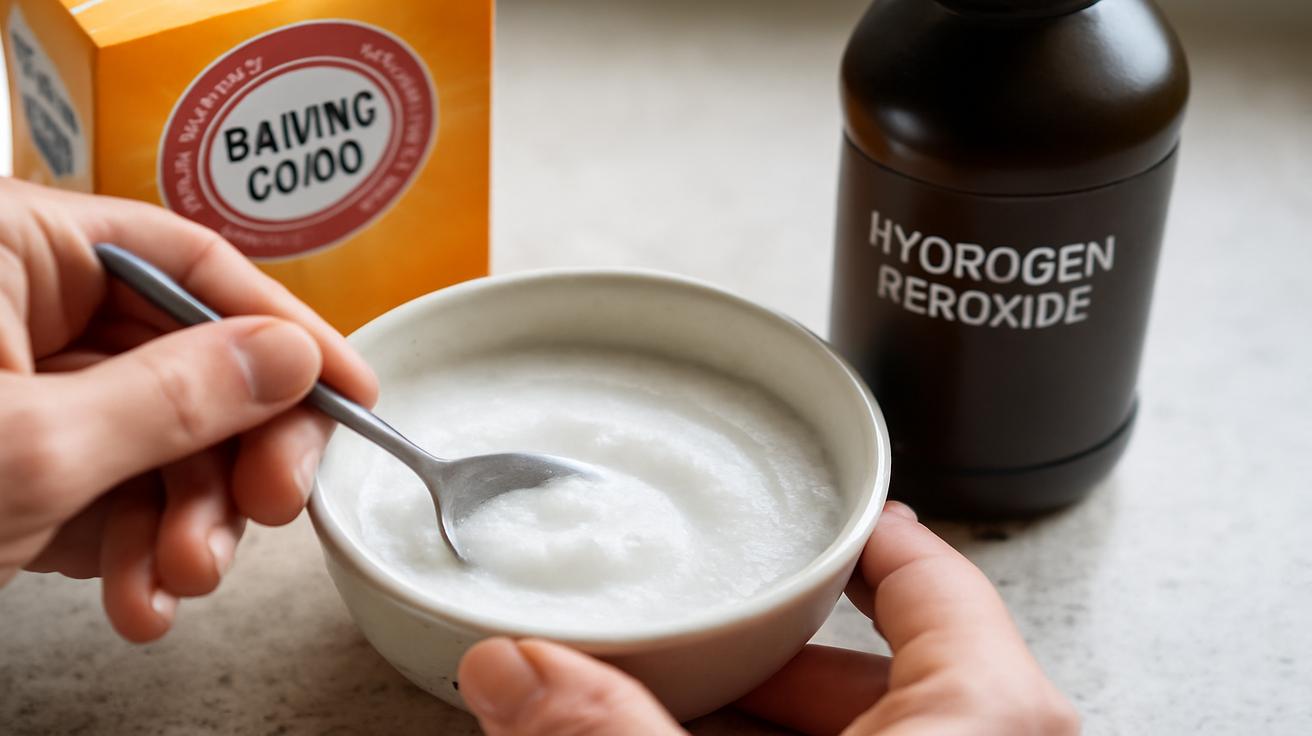
The first time you mix baking soda with hydrogen peroxide, it looks a little like a magic trick gone right. A spoonful of soft, squeaky powder. A pool of clear liquid that might as well be water. You stir them together and—suddenly—there’s foam, a silky paste, a faint hiss you can almost hear if you lean close enough. A faintly sharp scent lifts into the air, like an unopened first-aid kit and a just-scrubbed sink. It’s ordinary, but it feels a bit like alchemy.
The Quiet Science in Your Kitchen Cupboard
Most people meet baking soda and hydrogen peroxide as separate characters long before they’re properly introduced. Baking soda sits in the pantry, guarding the fridge from odors, waiting to puff up biscuits and cookies. Hydrogen peroxide hides in the bathroom or first-aid cabinet, brought out only when there’s a scraped knee or a stubborn stain.
But the real story begins when these two everyday ingredients are invited to the same bowl.
Chemically, baking soda is sodium bicarbonate, a mild alkaline compound that fizzes when it meets acids and helps neutralize odors. Hydrogen peroxide is H₂O₂, a molecule that looks almost like water, except with one extra oxygen atom hitching a ride. That extra oxygen is restless. Over time—or when encouraged—it breaks free and becomes a powerful oxidizer, the same kind of action that helps break down stains, kill microbes, and tackle grime.
When you mix the two, you get a thick, slightly gritty paste that clings to surfaces, teeth, tiles, and even vegetables more readily than either ingredient would alone. It’s not explosive, not particularly dramatic, but it is quietly effective. The baking soda adds gentle abrasion and alkalinity; the peroxide adds bubbling oxygen-based cleaning power. Together, they amplify each other in a way that feels like a tiny chemistry lesson you can hold in your hand.
Why People Keep Reaching for This Combo
There’s a reason this mixture keeps popping up in conversations, recipes, and home remedies. It hits a sweet spot that modern life craves: cheap, simple, and just effective enough to feel slightly miraculous.
Think of it as a kind of homemade “smart paste.” Baking soda is like the soft sponge that can polish without scratching most surfaces. Hydrogen peroxide is the quiet disinfectant and stain-breaker that doesn’t need loud colors or artificial perfumes to prove it’s working. Stirred together, they become a spreadable, clingy mixture that stays where you put it—on grout lines, on a stained baking tray, along the gumline of your teeth, or over a cutting board that’s seen too many onions.
People recommend it for several reasons:
- It feels safer and simpler than using a long list of synthetic cleaners.
- It’s versatile, useful in different rooms and on different surfaces.
- It offers visible results—foam, fizz, brightening, and fresh smells—so you feel something is happening.
- It’s accessible: both ingredients are inexpensive and easy to find.
There’s also a psychological comfort in knowing exactly what you’re mixing. Two plain, almost boring ingredients become a multipurpose tool you made yourself, right before your eyes. That’s satisfying in a way that twisting open a plastic bottle rarely is.
The Everyday Alchemy: What It’s Actually Doing
If you could zoom in on the mixture at a molecular level, you’d see the hydrogen peroxide slowly breaking apart, releasing oxygen. That newly freed oxygen attacks certain stains, especially ones that have organic origins—like coffee, wine, blood, or the invisible film that clings to toothbrush bristles and cutting boards.
The baking soda, with its fine crystalline texture, acts like tiny, rounded scrubbing beads. It doesn’t slice into surfaces the way harsh abrasives do, but it gives you gentle physical friction. It also raises the pH a bit, making the environment less cozy for many types of bacteria.
The result: a paste that can clean, deodorize, brighten, and lightly disinfect all at once. Not as strong as a laboratory-grade cleaner, not as gentle as plain water—more like a middle path that suits everyday life.
In the Bathroom: Teeth, Tiles, and Tiny Rituals
Imagine the bathroom sink on a slow Sunday morning. There’s a smear of toothpaste here, a ring of soap there, maybe a faint yellowing in the grout that didn’t used to be there. You’re brushing your teeth and thinking about how everything, including tile, seems to age.
That’s often where baking soda and hydrogen peroxide step in.
On Your Teeth (And Why Dentists Have Opinions)
Many people swear by a tiny dab of this mixture for whitening teeth. A small splash of hydrogen peroxide with a pinch of baking soda becomes a grainy, pale paste. When brushed gently on the teeth, the peroxide’s oxygen works on surface stains while the baking soda offers light polishing.
You can almost feel the difference under your tongue afterward—teeth a little smoother, breath a bit cleaner, the mouth rinsed with a faint medicinal freshness. There’s a sense of old-fashioned simplicity to it, like borrowing a trick from a previous generation.
Dentists, however, issue a quiet caution: timing, concentration, and frequency matter. Used occasionally in low concentrations, this combo can help brighten and freshen. Used too often or too vigorously, it can wear away enamel and irritate gums. The line between “helpful scrub” and “overzealous sanding” is thinner than it seems. That’s why many dental professionals suggest using commercial products with carefully controlled formulas if you want to do it regularly.
In the Grout and Around the Sink
Step away from the mirror and look down at the lines between your bathroom tiles. Years of damp towels, hot showers, and rushed cleanups leave shadows in the grout—dark, dingy, stubborn. The usual sprays don’t always get in deep.
Here, the mixture really shines. You dab or brush the baking soda–peroxide paste into those narrow lines and corners. It clings quietly, refusing to slide away the way liquid cleaners do. In a few moments, tiny bubbles may appear, the silent fizz of oxygen at work. Later, with a scrub brush and some water, that paste lifts away more than just dirt—it takes with it a small layer of dullness, revealing a lighter, brighter surface underneath.
The sensory part of this is oddly satisfying: the gritty slide of your brush, the light foam at the edges, the way the tiles seem to wake back up to their original color. It feels like you’re not just cleaning; you’re gently reversing time.
In the Kitchen: From Ovens to Oranges
The kitchen is where this duo moves from hygiene to something closer to stewardship—the care of tools, surfaces, and even food itself.
A Rescue Mission for Baked-On Chaos
Open the oven door and there it is: a record of every enthusiastic roast and overflowing casserole. Brown patches, blackened edges, sticky glosses that laugh at regular dish soap. It can feel overwhelming, like a chore you’d rather ignore for another season.
This is one of the most beloved uses for the baking soda and hydrogen peroxide mixture. Spread a thick coat of the paste over the gunk, especially on the glass and metal surfaces. It sits there like a mask, softening stubborn streaks while oxygen and gentle abrasion quietly go to work underneath. Hours later—or the next day—you return with a sponge or scraper, and much of that baked-on residue gives way with a reluctant but satisfying surrender.
There’s something grounding about this process. No harsh chemical cloud, no acrid sting in your nose. Just a homemade paste and a bit of elbow grease, slowly restoring a tool that feeds you and the people you care about.
Cutting Boards, Sinks, and Produce
That wooden or plastic cutting board where onions, garlic, and chicken constantly rotate through your recipes? Over time it holds on to faint smells and ghostly stains. A light scrub with hydrogen peroxide followed by a sprinkle of baking soda feels like a quiet reset. The board smells less like last week’s dinner, more like a blank slate.
Stainless steel sinks, too, respond beautifully to this combination. The baking soda scours without scratching, while the peroxide lifts food residue and helps reduce odor-causing bacteria. When you rinse the sink afterward, there’s a moment when the water sheets off, shining, and you remember what the metal looked like brand new.
Some people even use diluted hydrogen peroxide and small amounts of baking soda to help clean the surface of certain fruits and vegetables, rinsing thoroughly afterward. The goal isn’t to sterilize produce—that’s neither realistic nor desirable—but to lift dirt and some surface residues, especially from harder-skinned items. As always, moderation and thorough rinsing matter.
A Handy Reference: What People Commonly Use It For
All these individual moments—brighter grout, fresher cutting boards, whiter sneakers—add up to a wide portrait of how this humble combo travels through a home. Here’s a simple reference view you can skim on a small screen while standing in your kitchen or bathroom:
| Use | How It Helps | Simple Approach |
|---|---|---|
| Teeth (occasional whitening) | Lifts surface stains, freshens breath | Tiny amount of low-strength peroxide with a pinch of baking soda, used sparingly |
| Bathroom grout and tiles | Brightens, loosens grime, light deodorizing | Spread paste on grout, let sit, scrub, and rinse |
| Oven and baking sheets | Softens baked-on food and stains | Coat dirty areas, rest for hours, then scrub and wipe clean |
| Cutting boards & sinks | Reduces odors, lifts stains, freshens surfaces | Sprinkle baking soda, add peroxide, scrub, rinse thoroughly |
| Laundry stains & fabrics | Helps with some organic stains and dinginess | Spot-treat with a gentle paste, test fabric first, then wash |
When This Mixture Should Stay in the Bowl
With all its quiet power, it’s tempting to treat baking soda and hydrogen peroxide as a cure-all. But like any good tool, it has limits and conditions. The recommendation to mix them comes with unspoken fine print.
For one, hydrogen peroxide is still a chemical that can irritate skin and eyes at higher strengths. Most homes keep a 3% solution, and even that concentration does not belong in your eyes, deep in wounds, or swallowed. Baking soda, though gentle, can also be too abrasive if used daily on delicate surfaces such as enamel or soft plastics.
The mixture shouldn’t be stored in a closed container. Hydrogen peroxide slowly breaks down, especially when exposed to light and heat. When trapped with baking soda in a sealed jar, it can build up pressure. Better to mix small amounts fresh, use what you need, and rinse away the rest.
Certain materials don’t appreciate this combination either. Natural stone like marble can etch or dull with repeated exposure to alkaline and oxidizing agents. Delicate dyed fabrics might lighten or spot. That’s why cautious people always test an inconspicuous corner first and never assume “natural” automatically means “harmless.”
And then there’s the human tendency to push things just a bit too far. If a little works well, it’s easy to assume that more, used more often, must be better. But gums can become tender, finishes can wear thin, and once-smooth surfaces can grow tired under constant scrubbing. The art lies in using this mixture like a specialist, not a hammer for every nail.
The Comfort of Knowing What You’re Using
One of the quiet joys of this mixture is the sense of transparency it brings. In a world of ingredient lists that read like secret codes, you’re working with two familiar names and a visible reaction. You pour, sprinkle, stir, and watch the change happen.
There’s a sensory ritual to it: the faint tick of powder against the bowl, the slow transformation into a paste, the way it feels under your fingertips as you spread it over a stain. The smell isn’t floral or artificial; it’s clean in a neutral, almost clinical way. You’re not being sold a fragrance or a color. You’re inviting a reaction—and then rinsing it away.
That can be strangely reassuring. You know that this paste isn’t meant to live on your surfaces; it’s a temporary guest, here to help and then vanish down the drain. The simplicity of that transaction feels honest.
A Small Ritual of Control in a Messy World
When you stand over a sink or lean into an oven with a bowl of baking soda and hydrogen peroxide, you’re doing something more than cleaning. You’re staking a quiet claim over your environment. Dust will return, tiles will age, stains will happen again—but for a while, in this moment, you have a simple, understandable way to push back.
The mixture is recommended because it sits in that rare intersection of accessible, affordable, and genuinely useful. It offers gentle abrasion without heavy scratching, oxidation without the overwhelming sting of bleach, and versatility without a closet full of bottles.
It’s used for the everyday little things: a dull sink brought back to a soft shine, a cutting board that no longer smells like garlic, grout that looks surprisingly new, a favorite mug freed from tea stains, a white sneaker brightened after a long season. None of these are miracles. But taken together, they add up to spaces that feel lighter, calmer, a little more under your care.
In a house humming with constant change—meals cooked, showers taken, shoes kicked off at the door—mixing baking soda with hydrogen peroxide is a small ritual of restoration. A spoonful of powder, a splash of clear liquid, a gentle fizz. Nothing flashy. Just a reminder that even the most ordinary tools can help you quietly reclaim the places where your life unfolds.
FAQ
Is it safe to mix baking soda with hydrogen peroxide?
For typical household use with 3% hydrogen peroxide and common amounts of baking soda, it is generally safe when used immediately and not stored in sealed containers. You should still avoid contact with eyes, avoid swallowing, and rinse skin and surfaces thoroughly afterward.
Can I use the mixture on my teeth every day?
Using it daily is not recommended. Frequent use can wear down tooth enamel and irritate gums. If you use it at all, keep it occasional and gentle, and consider asking a dental professional before making it part of your routine.
Does it disinfect surfaces?
Hydrogen peroxide has antimicrobial properties, and baking soda contributes to cleaning and deodorizing. Together they help reduce some bacteria on surfaces, but they are not a guaranteed, high-level disinfectant system. For serious disinfection needs, specific approved products are more reliable.
Can I store a pre-mixed paste for later?
It’s better not to. Hydrogen peroxide slowly breaks down, and gas buildup in a closed container can cause leaks or pressure. Mix small amounts as needed and discard leftovers after use.
What should I avoid cleaning with this mixture?
Avoid delicate natural stone surfaces like marble or some granites, certain specialty finishes, and fabrics that might discolor or fade. Always test on a small, hidden area first and avoid using it where the manufacturer recommends only specific cleaners.








Leave a Comment