
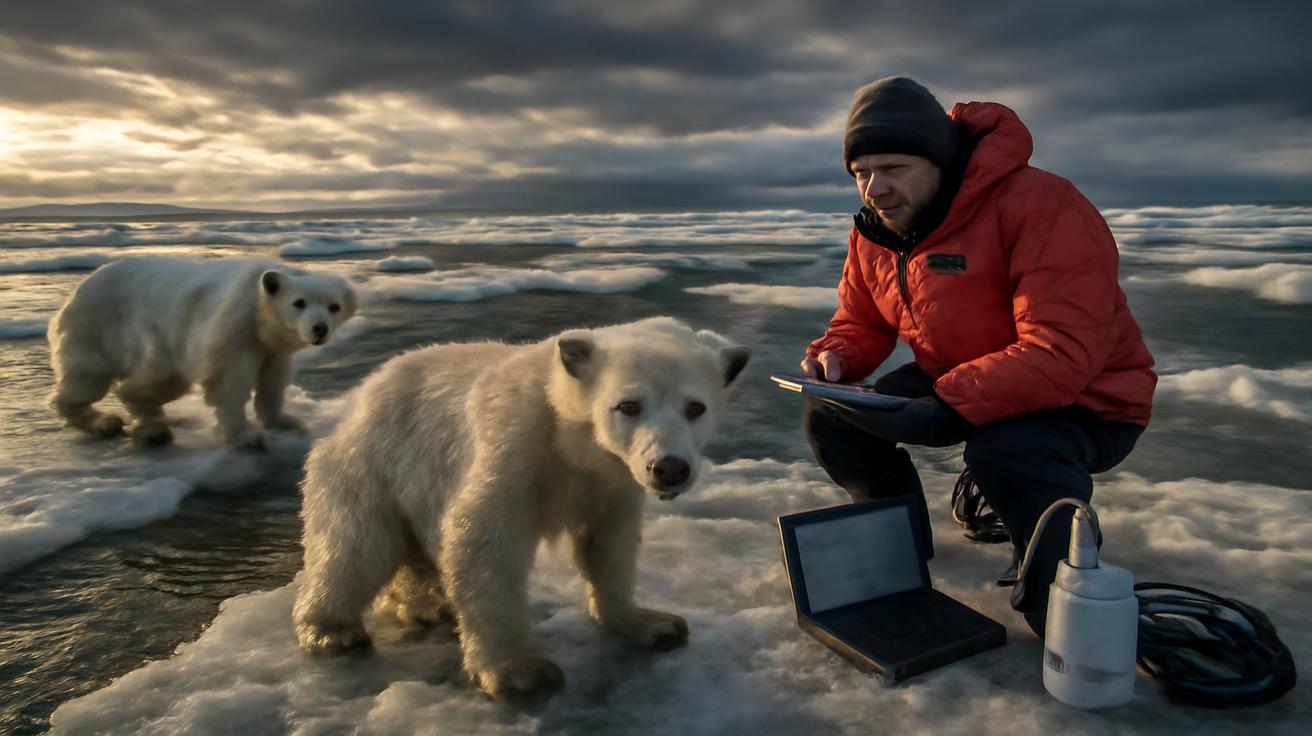
The first cold wind came late this year, as if winter had misplaced its own arrival date. In many places, leaves clung to branches weeks longer than usual, frost arrived shy and uncertain, and people stepped outside in light jackets asking the same quiet question: “Is this really winter?” High above those puzzled streets and fields, over the top of the world where the map turns white and empty, something stranger was happening—an unseasonal shudder in the architecture of the Arctic itself. Meteorologists have been leaning closer to their screens, watching that shudder turn into a crack, and that crack into a warning: an unusually early Arctic breakdown is gathering speed, accelerating toward February, and the weather we think we know is about to feel different.
When the North Starts to Wobble
If you could rise straight up from where you’re sitting now, punching through clouds and jet streams, you’d eventually see the planet’s great swirl of air from above: storms spiraling, trade winds curving, an elegant chaos. Near the top of the world sits something more structured—the polar vortex—like a vast spinning top of frigid air encircling the Arctic. In a “normal” winter, that vortex is tight and disciplined, locking cold air around the pole and keeping the world’s weather somewhat predictable.
This year, however, meteorologists and climate scientists are watching it fray at the edges early. The phrase “Arctic breakdown” sounds dramatic, and in many ways it is. It describes a moment when the Arctic’s usual patterns crack open: sea ice thins or retreats more than expected, air temperatures spike, and the polar vortex weakens or warps. Instead of a firm cold crown anchored at the top of the globe, we get a misshapen halo whose icy fragments wander south.
What’s unusual now isn’t that the Arctic is breaking down—that’s become a grim seasonal ritual—but how early and how fast the signals are appearing. Typically, the sharpest disruptions in the polar vortex unfold later in winter, in late February or even March. This season, meteorologists are already tracking disturbances that look like February arriving weeks ahead of schedule, as if the atmosphere has nudged the fast-forward button.
On satellite images, clouds curl in new patterns. High-altitude balloons drift through layers of air that are a few degrees warmer than expected. On computer screens in forecast centers, colorful models flicker with long, tentacle-like extensions of cold reaching into parts of Europe, North America, and Asia. The Arctic, once a distant abstraction, is preparing to step into the everyday weather of billions of people.
Reading the Sky’s Early Warnings
To understand what’s happening, it helps to picture the atmosphere as a layered, restless ocean. Near the ground, where we live and breathe, the weather is chaotic: storms, gusts, calm, drizzle, snow. High above, in the stratosphere, things usually move in grand, slower motions. The polar vortex is one of those motions—a towering, swirling river of wind, sometimes screaming at over 150 miles per hour, circling the Arctic like a guardian.
When meteorologists talk about an “early breakdown,” they are pointing to an unusual weakening or reshaping of that vortex before its typical time. They measure it by temperature and wind changes tens of thousands of feet above the surface. When sudden warmings punch into the stratosphere over the pole—events known as sudden stratospheric warmings—the vortex can buckle, split, or stagger off-center, sending its cold air sloshing southward in dramatic bursts.
This year, the ingredients are lining up sooner than expected. Sea ice in some regions is thinner and more fractured, exposing the dark ocean below, which absorbs more sunlight and releases more heat into the air above. Snow cover patterns across Eurasia and North America are subtly different—patchy in some places, deeper than normal in others—changing how heat and moisture move upward. Wave-like patterns in the jet stream, driven in part by distant ocean temperatures, are already pressing against the polar vortex like fingers poking a soap bubble.
On weather charts, it shows up as deep dips and bulges. For a forecaster staring at these maps, February’s signature—those sprawling troughs that drag cold southward and fling warmth northward—is arriving while calendars still sit in mid-winter. In conversations among meteorologists, there’s a mix of fascination and unease. They’ve seen the Arctic wobble before; they know it can translate into blockbuster snowstorms, freak warm spells, or even prolonged quiet stretches—but the timing this year hints at something more relentless, a season whose mood has changed.
| Arctic Signal | What’s Different This Year | What It Can Mean for February |
|---|---|---|
| Polar vortex strength | Weakening and wobbling earlier than usual | Increased chance of cold air outbreaks and unusual temperature swings |
| Sea ice extent | Lower and thinner in key regions | More heat release into the atmosphere, fueling pattern disruptions |
| Stratospheric temperatures | Early signs of warming events over the pole | Greater likelihood of a displaced or split polar vortex |
| Jet stream behavior | More pronounced waves and meanders | Stuck weather patterns: prolonged cold, warmth, storms, or drought |
The Jet Stream’s New Wild Curves
Most of us never see the jet stream, but we feel its moods. It’s the high-altitude highway of wind that steers storms and separates cold from warm. On flight maps, pilots trace its curves to save time and fuel. On weather maps, forecasters watch it like a pulse.
The jet stream loves contrast. It feeds on the difference between the frozen Arctic and the milder mid-latitudes. When the Arctic is very cold and the lands below are comparatively warm, the jet stream blows fast and straight, like a taut rope. But when that contrast weakens—as it does in an Arctic warming event, or a seasonal breakdown—the rope relaxes. It begins to loop and bend, dipping south to pull frigid air into places like the American Midwest or central Europe, then arching north to deliver springlike warmth into Canada or Scandinavia.
An unusually early Arctic breakdown is, in essence, an early invitation for the jet stream to draw wilder shapes. February, which many people think of as a stable deep-winter month, may instead behave like an improvisation: cold where it “shouldn’t” be, warmth where it feels eerie, storms blossoming out of quiet skies, or gray, unmoving cloud decks that linger for weeks.
You might experience it as a sudden snowstorm snarling a city that had been enjoying balmy afternoons. Or as a string of unseasonably warm days that awaken buds and insects, only to be crushed by a returning freeze. Farmers may see it in roller-coaster soil temperatures and freeze-thaw cycles that gnaw at winter crops. Birdwatchers may notice migratory species arriving too early, confused by the mixed messages carried on the wind.
Historically, the jet stream has always wriggled and shifted, but scientists suspect that an Arctic that’s warming roughly four times faster than the global average is adding new curves to that story. The solid ceiling of cold that once kept the jet stream sharply defined is becoming patchier and more punctured. With this year’s early breakdown, February’s weather map looks less like a page from a familiar book and more like a new draft being written in real time.
What an Early Breakdown Feels Like on the Ground
All of this might still sound abstract until you walk out your front door into the weather it creates. For families, farmers, city planners, and anyone whose day-to-day life depends on the sky behaving roughly as expected, the consequences are both subtle and startling.
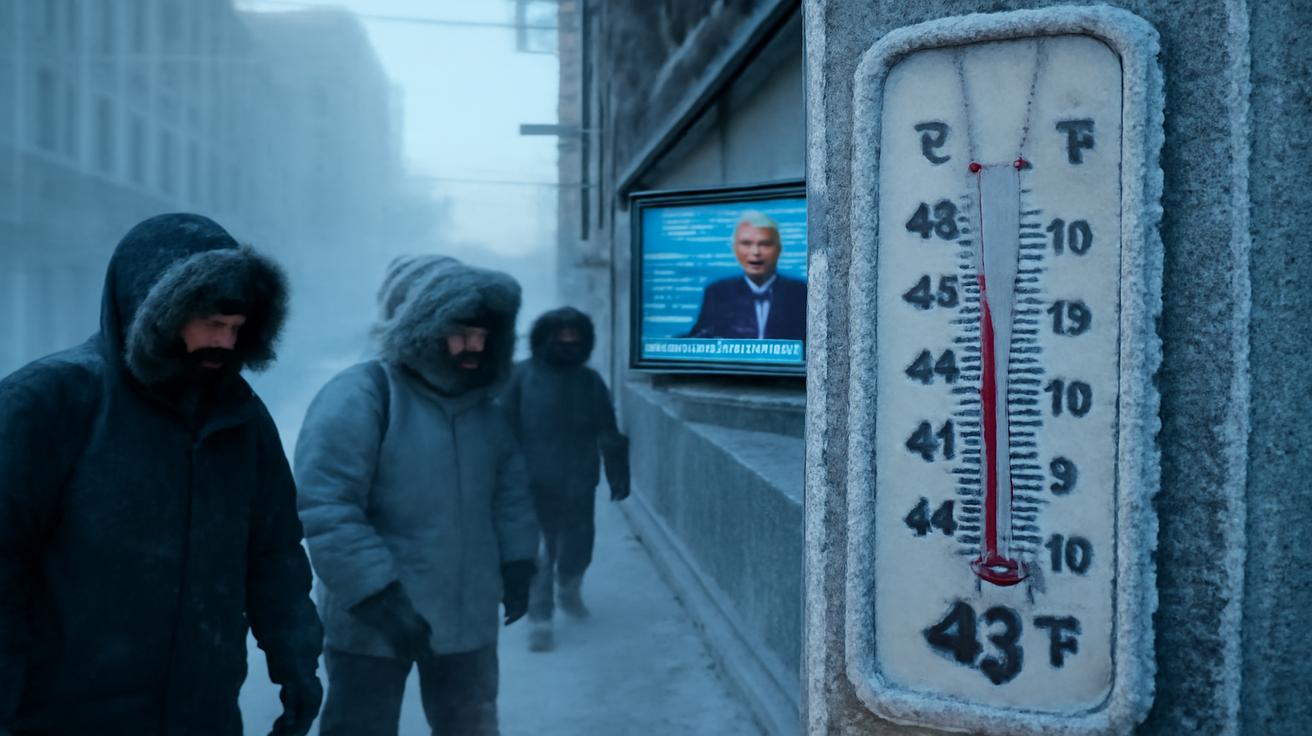
The most dramatic expression of an Arctic breakdown for many regions is the sudden cold wave: that week when temperatures plunge 20 or 30 degrees below what the calendar suggests, pipes burst, energy grids groan, and local news anchors use words like “brutal” and “historic.” During a polar vortex disruption, fingers of Arctic air can slide deep into mid-latitudes, turning highways into icy ribbons and turning routine commutes into survival missions.
But the flip side can be just as consequential, if quieter. Some areas may find themselves basking in warmth usually reserved for early spring. This can be disorienting, even enchanting—the kind of day that fills city parks with people in t-shirts, even as snowbanks linger in the shade. Plants can start to wake, sap rising in trees, bulbs pushing through softened soil. In vineyards and orchards, this is a tense time. An early bloom encouraged by false spring can be wiped out by the inevitable return of cold, erasing a season’s worth of fruit in a single night.
Communities that depend on stable winter conditions feel the breakdown in other ways. Ski towns face rain where snow used to be guaranteed, their mountains streaked with exposed rock and slush. Lakes that once froze thick enough to drive across become a patchwork of unreliable ice, ending traditions of winter fishing or festivals. In northern forests, pests and diseases that would typically be killed off by long stretches of deep cold may instead survive and multiply, nibbling away at trees from the inside out.
And then there are the quiet risks. Early thaws can leave soils waterlogged and vulnerable to erosion. When cold returns, it can form hard crusts of ice over snow, making it harder for animals like deer or caribou to reach the food buried below. In Arctic communities themselves, thinned sea ice shortens the season when hunters can safely travel over frozen ocean, reshaping cultural rhythms honed over generations.
The Climate Story Humming Beneath the Forecast
Whenever an unusual winter pattern appears, one question rises quickly: “Is this climate change?” The honest answer is layered. No single storm or cold snap is “caused” by global warming, but the backdrop against which all weather plays out is changing rapidly. It’s like raising the floor of a stage—the actors are the same, but their lines and moves start to look different.
The Arctic is warming faster than almost anywhere on Earth. Sea ice that once lingered thick and white through late winter now often covers a smaller area, and what remains can be younger, thinner, more brittle. Darker ocean water absorbs more sun. Thawed tundra breathes out greenhouse gases that were locked away in frozen soil. The atmosphere above responds to all this new heat, altering pressure patterns and the pathways of storms.
Most climate models have long predicted more frequent disruptions of the polar vortex as the world warms, though the details—exact timing, locations, and impacts—are still the subject of intense debate. Some studies suggest that a weaker, more erratic vortex could lead to more severe winter cold spells in mid-latitudes, even as average temperatures rise. Others highlight the potential for longer-lasting weather patterns, where a region gets stuck in a particular mood—wet, dry, hot, or cold—for weeks on end.
This year’s early Arctic breakdown fits into that broader story, not as proof of any single theory but as another data point in a pattern of increasing volatility. For meteorologists, it’s both a forecasting challenge and a moral weight. They’re tasked with translating complex atmospheric shifts into everyday language: “This February may be unusual; here’s how to prepare.” They know that behind the probabilities and percentages lie real decisions—whether a city stocks extra road salt, how a grid operator handles peak demand, whether a farmer gambles on an early planting window.
Climate, in the end, is the long memory of weather. Each winter now seems to add a new chapter to that memory—a chapter where the Arctic’s role grows more dramatic, more improvisational, more wary. The early breakdown this year isn’t just a curiosity for specialists; it’s a reminder that the north, once a silent backdrop, is becoming a louder voice in the soundtrack of our daily lives.
Living with a Faster, Stranger February
So what do you do with a February that might arrive early, or arrive twice—the first time as a strange warmth, the second as a returning cold? For individuals, the answer is partly practical, partly emotional.
On the practical side, meteorologists urge flexibility. Pay attention to medium-range forecasts; they’re improving, even if they still carry uncertainty. Cold snaps linked to polar vortex disruptions can sometimes be telegraphed a week or more ahead. That’s enough time for cities to adjust road crews, for schools to plan, for households to insulate pipes or check on vulnerable neighbors.
Energy systems will increasingly need to be designed with this volatility in mind. Power grids built around the assumption of smooth seasonal swings now face sharp spikes: sudden heat that sends air conditioners humming, sudden cold that drives heating demand through the roof. As Arctic breakdowns become more common or arrive earlier, the case for resilient, flexible energy infrastructure grows stronger—not as an abstract climate goal, but as a shield against the kind of cascading failures that turn strange weather into human crisis.
Emotionally, there’s another kind of preparation. Many people find deep comfort in the familiarity of seasons, in the idea that winter behaves like winter. When that rhythm stutters, it can feel unsettling in a way that’s hard to name. A thaw that comes too soon can carry a thread of grief; a blizzard after weeks of mildness can hit harder because it feels out of place, like a guest who shows up after the party is over.
One way to live with this new mood is to pay closer attention rather than looking away. Listen to the way local meteorologists talk about the Arctic; notice how your own landscape responds to an early warm spell or a late freeze. There’s a kind of groundedness that comes from seeing your corner of the world as part of a shifting planetary pattern—not helplessly, but with curiosity and care.
Another way is to remember that while these patterns are global, the responses can be intimate and local. Communities can plant more resilient crops, design cities that handle both heat and ice better, restore wetlands that buffer floods born of rapid thaws. In the face of a faster, stranger February, adaptation isn’t surrender; it’s a form of respect—for the power of the atmosphere and for each other.
FAQ
What do meteorologists mean by an “Arctic breakdown”?
An Arctic breakdown refers to a disruption of the usual winter patterns over the Arctic—especially a weakening or distortion of the polar vortex, changes in sea ice, and unusual warming in the atmosphere over the pole. These shifts can send cold air and storm tracks into regions that don’t typically see them at that time, while bringing unexpected warmth to others.
Why is this year’s Arctic breakdown considered unusually early?
Normally, the most significant disruptions to the polar vortex and Arctic circulation occur in late winter, around late February or March. This year, meteorologists are seeing signs of that disruption weeks ahead of schedule—such as early stratospheric warming and an already wobbly polar vortex—suggesting that February-style volatility may arrive sooner than usual.
Does an Arctic breakdown always mean extreme cold where I live?
No. An Arctic breakdown increases the chances of unusual patterns, but not every region will get extreme cold. Some areas might experience severe cold waves, while others could see unseasonable warmth or persistent storminess. It depends on how the jet stream and displaced cold air masses line up over your part of the world.
How is climate change connected to these Arctic events?
Climate change is rapidly warming the Arctic, reducing sea ice and altering heat and moisture flows between the ocean, land, and atmosphere. This can weaken the contrast between the Arctic and mid-latitudes, affecting the jet stream and polar vortex. While not every breakdown is directly “caused” by climate change, the overall warming trend is making such disruptions more likely and potentially more intense.
What can people and communities do to prepare for an early Arctic breakdown?
Preparation starts with staying informed about medium-range forecasts and being ready for rapid shifts in temperature or storminess. Cities can strengthen infrastructure for both deep cold and heavy precipitation, energy planners can build more flexible and resilient grids, and individuals can winterize homes, check emergency supplies, and look out for vulnerable neighbors. Over the longer term, reducing greenhouse gas emissions and investing in climate-resilient design help address the root causes of these growing instabilities.






Leave a Comment