
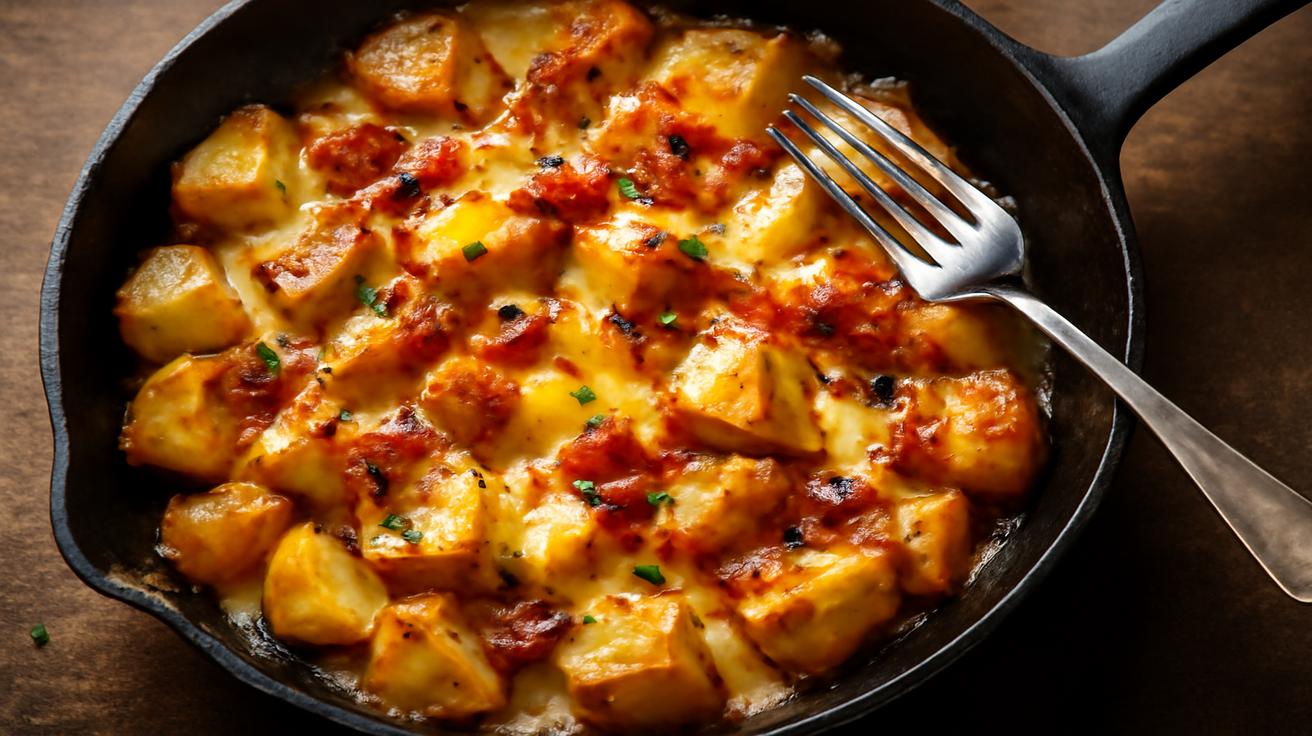
The first time I heard the words “Mississippi Mud Potatoes,” I pictured something half-legend, half-folktale—like a dish that should be cooked over a campfire by the river at dusk. When a friend slid a heavy, sputtering pan out of her oven and set it on the table—steam swirling up like fog off a bayou—I realized this was less myth and more revelation. Crispy-edged potatoes, creamy centers, pockets of bacon, cheese melting into all the corners like lava, and a garlicky, buttery aroma that wrapped itself around everyone in the kitchen. It looked rustic and messy, but the kind of messy you want to dive into with a fork, no hesitation, no manners.
The Soul of a One-Pan Legend
Mississippi Mud Potatoes sound like something that’s been around for a hundred years, probably cooked in cast iron over open flames, feeding big families, farmhands, and anyone who wandered through the door. In reality, they’re more of a modern Southern comfort mashup—part loaded baked potato, part cheesy casserole, and part “whatever you’ve got in the fridge” magic. The heart of it, though, is pure and simple: potatoes, fat, and heat doing what they’ve always done best.
Imagine everything you love about a loaded baked potato. The soft, fluffy inside. The salty bacon. The sharp cheddar melting into all the right places. The way sour cream and green onion cut through the richness and wake everything up. Now, instead of building that on a single potato, you scatter all the pieces in a pan—diced potatoes tossed in a little oil or bacon fat, garlic, salt, pepper, a blanket of cheese, and thick curls of bacon. As it bakes, things begin to happen that a basic baked potato can only dream about. The edges crisp up, the cheese sinks and bubbles, the bacon renders and bathes the potatoes, and every forkful becomes a fully loaded bite.
That’s where the “mud” of the name comes into play—not actual dirt, of course, but the way everything melts and marries together into a thick, rich, sauce-like coating. You don’t get neat scoops. You get sticky, cheesy shovelfuls. Each piece is its own little landscape of crunch, softness, smokiness, and cream.
Why It Rivals (and Sometimes Beats) a Loaded Baked Potato
Loaded baked potatoes have a certain ritual: bake the potato, split the skin, fluff the insides, line up the toppings, and hope the potato didn’t bake into a rock. Mississippi Mud Potatoes skip the ceremony and go straight to the satisfaction. It’s like your favorite steakhouse side decided it was tired of behaving and wanted to show you what it could really do.
First, there’s texture. A baked potato has two extremes—crisp skin, soft center. Mississippi Mud Potatoes play the whole field. Some potato cubes bake into golden, crunchy edges that shatter just enough under your fork. Others stay tender and lush, soaking in butter, cream, or whatever dairy you choose to stir in. Cheese binds everything in a loose, gooey embrace, clinging to spoon and plate alike. When you scoop, you don’t just get potato—you get a little bit of everything, every time.
Then there’s flavor. Baking potatoes whole is gentle; it coaxes out their sweetness and starch, but it doesn’t bring the drama. Roasting small pieces at high heat, tossed with fat, garlic, onion, spices, and bacon, means more surface area, more browning, more caramelization. Every side of every cube gets its moment in the heat. That means more flavor, and more of that deep, savory intensity that makes you go back “just for another bite” five times in a row.
And finally, there’s ease. One pan. That’s really the heart of it. Instead of managing toppings and timing and careful slicing, you toss your potatoes in a baking dish, layer your toppings, and let the oven do the work. Stir once or twice if you like. Pull it out when it smells like heaven. You can make it for two or for twenty, and the method barely changes.
The Building Blocks of Mississippi Mud Potatoes
There are a lot of versions floating around, but they nearly all come back to a few simple ingredients. Once you understand the base, you can improvise like a jazz musician on a front porch at sundown.
At the center of it all are the potatoes. Russets show up often, with their fluffy texture and ability to soak up flavor, but red potatoes or Yukon Golds bring a creamier bite and hold their shape better. Peel them or don’t; the skins bring a bit of rugged appeal and extra texture if you like things less polished.
Next comes the fat. Bacon is the old standby here—fried until just crisp, then either chopped and tossed in or baked right alongside the potatoes so the fat renders into the pan. Some cooks use a mix of bacon grease and butter. Others bring in sour cream, ranch dressing, or even cream cheese to make things richer and more velvety. However you choose to do it, this isn’t a low-fat dish; it’s a once-in-a-while indulgence best enjoyed with full commitment.
Then there’s the seasoning. At its simplest: salt, pepper, garlic. But it’s easy to get playful. Paprika, onion powder, Cajun seasoning, smoked salt, thyme, or rosemary—each will shift the personality of the dish just enough to make it feel new again. The oven’s heat toasts the herbs and spices, letting them bloom into something deeper and darker than they were going in.
And let’s not forget cheese. Cheddar is the classic—sharp enough to cut through the richness, melty enough to drape. But Colby Jack, Monterey Jack, smoked gouda, or even pepper jack can bring their own flair. There’s no wrong answer, as long as it melts.
A One-Pan Ritual, From Chop to Table
Part of the charm of Mississippi Mud Potatoes is how straightforward they are to throw together. It’s the kind of dish you can start making while you’re still kicking off your shoes after work, the kind that doesn’t demand much precision or fuss.
Start with a sturdy baking dish or, better yet, a cast-iron skillet—the kind that feels like it could outlive you. Dice your potatoes into even cubes, somewhere between half an inch to an inch. Big enough to hold their shape, small enough to roast quickly and build that lovely crust. Toss them straight into the pan with a drizzle of oil or a spoonful of bacon fat, sprinkle over salt, pepper, and whatever seasoning feels right, then tumble in a handful of chopped onion or green onion if you’re in the mood.
Then comes the fun part: layering. Some folks like to mix everything together at once—potatoes, cooked bacon pieces, cheese—so every bite is fully integrated. Others build in stages: half the potatoes, a sprinkle of cheese, a scattering of bacon, then repeat. Either way, the result is the same: pockets of molten, salty, smoky goodness that find you with every spoonful.
Once it’s in the oven, your job is mostly just to wait while the house starts to smell like you’ve been cooking all day. At around halfway through, you can pull the pan out and give everything a toss, making sure the potatoes on top get their chance to brown on the bottom. Near the end, a final shower of cheese melts into a glossy, golden lid.
When you pull that pan out, crackling and sizzling, it’s important to let it sit for just a moment. Not so much for technique, but for the ceremony of it: the way the steam escapes in thick waves, how the bacon scent hits you first, followed by roasted garlic and the comforting tang of melted cheddar. This is the part where people start drifting into the kitchen, just to “see what you’re making.”
Customizing the Mud: Variations Worth Trying
If Mississippi Mud Potatoes were only one thing, they’d still be wonderful. But they’re also a canvas—a base that seems to welcome whatever you throw at it. That might be what makes them feel so at home at potlucks and weeknight dinners alike: they bend to fit the story you’re telling that day.
Maybe tonight it’s a bacon-and-cheddar classic, topped with dollops of sour cream and a flurry of green onions, as close to a traditional loaded baked potato as a casserole can be. Next week, you might toss in smoky sausage slices, a handful of bell peppers, and a dusting of Cajun seasoning, turning it into something that belongs at a backyard fish fry. For a heartier meal, you can stir in shredded rotisserie chicken or leftover pulled pork, watch the meat drink up the melted cheese, and suddenly your side dish has become the main event.
You can even lighten and brighten it when the mood calls for it. Swap in Greek yogurt for part of the sour cream. Add roasted corn, black beans, and a sprinkle of chili powder and lime zest for a Southwest twist. Wilt a little spinach or kale into the hot potatoes right before serving and top with crumbled feta. It’s still indulgent, still rich and cozy, but with a few more vegetables sneaking in at the edges.
The table below gives you a quick look at just how flexible this dish can be. Think of it less as a recipe chart and more as a jumping-off point:
| Component | Classic Choice | Fun Variations |
|---|---|---|
| Potato | Russet, diced | Yukon Gold, red potatoes, or even sweet potatoes |
| Fat & Creaminess | Butter, sour cream | Greek yogurt, cream cheese, ranch dressing |
| Protein | Crispy bacon | Sausage, ham, shredded chicken, pulled pork |
| Cheese | Sharp cheddar | Pepper jack, smoked gouda, Colby Jack, mozzarella blend |
| Seasoning | Salt, pepper, garlic | Cajun spice, paprika, chili powder, herbs, smoked salt |
| Toppings | Sour cream, green onion | Chives, jalapeños, hot sauce, crispy onions, fresh herbs |
How to Serve: From Backyard Tables to Holiday Spreads
Mississippi Mud Potatoes feel right at home in a lot of places. They show up at Sunday suppers, where kids scoop big spoonfuls onto plates already crowded with roast chicken or grilled pork chops. They slide onto potluck tables in foil-covered pans, where they disappear at a suspiciously fast rate. They’re just as welcome on a holiday spread, nestled between the turkey and the green beans, their golden surface promising comfort in every bite.
One of the dish’s secret talents is how naturally it pairs with just about anything. Toss together a simple salad with a bright vinaigrette, and you’ve got a weeknight dinner that feels like more effort than it really was. Grill a steak and spoon a pile of mud potatoes alongside, and you’ve achieved steakhouse glory at home. Even something as simple as pan-seared sausages or roasted vegetables feels more complete with a spoonful of these bubbling, cheesy potatoes on the side.
Leftovers, if you’re lucky enough to have them, might be the best part. Reheated in a skillet the next morning, they crisp up again, edges frying in their own richness. Crack an egg on top, let it set until the yolk is still runny, and breakfast turns into an event. Or tuck them into a tortilla with scrambled eggs and hot sauce and call it a breakfast burrito worth waking up early for.
The Comfort of Imperfect, Crowd-Pleasing Food
Nothing about Mississippi Mud Potatoes is fussy or delicate. They’re not plated in careful stacks, or piped, or garnished with edible flowers. They arrive at the table still in the pan they were baked in, often with a little cheese baked onto the rim and a rogue potato cube stuck to the corner. They’re the kind of dish that seems to say: dig in, there’s plenty, nobody is counting how much you take.
Food like this has a way of softening the edges of a day. It doesn’t ask anything of you beyond showing up with an appetite and maybe a spoon. There’s no right or wrong way to eat it—overfilled plates are expected, second helpings encouraged. If the cheese stretches from pan to plate in long, indulgent strings, it just adds to the theater of the meal.
And underneath the bubbling cheese and sizzling bacon, there’s something else going on too: the comfort of repetition and tradition. Make Mississippi Mud Potatoes often enough and they start to anchor certain days and seasons. The first chill of fall? Time for a pan of mud potatoes with sausages. Christmas Eve? They find their way onto the table next to the ham. A friend comes by after a hard week? The oven goes on, and the potatoes go in. Before long, it’s not just a dish—it’s a small, edible ritual that says, “You’re home, you’re welcome, there’s enough.”
Final Thoughts: A New Classic Beside the Old
The loaded baked potato isn’t going anywhere. There will always be a place for that thick-skinned, butter-smeared, foil-wrapped classic—especially when it’s grilled over coals or served next to a perfect steak. But Mississippi Mud Potatoes step into a different role: the sharable, scoopable cousin that doesn’t demand its own plate, just a spot on the table and enough spoons to go around.
In a single pan, they gather everything that feels good about comfort food: heat, fat, starch, salt, and the way they all bend toward each other under steady oven warmth. They’re practical and forgiving, yet somehow still feel special when you set them down between friends and family.
Some dishes you admire from a distance. This one you lean into, serving it hot, scraping the browned bits from the edges, watching as the pan empties faster than you expected. Mississippi Mud Potatoes may not have the tidy elegance of a perfectly split baked potato, lined with neat rows of toppings. But they have something else entirely: a kind of unruly abundance that feels, in its own messy way, exactly like generosity on a plate.
Frequently Asked Questions
Are Mississippi Mud Potatoes the same as loaded baked potatoes?
No. They share similar flavors—cheese, bacon, sour cream, and green onions—but Mississippi Mud Potatoes are made in a single pan with diced potatoes, baked as a casserole-style dish instead of individual whole potatoes.
What kind of potatoes work best?
Russets give you a fluffier interior and soak up flavor well, while Yukon Gold or red potatoes hold their shape and offer a creamier bite. Any of those will work; it’s mostly a matter of personal preference.
Can I make Mississippi Mud Potatoes ahead of time?
Yes. You can par-bake the potatoes until just tender, let the dish cool, then cover and refrigerate. When ready to serve, add a fresh layer of cheese and bake until hot and bubbly.
How do I reheat leftovers?
Reheat in a 350°F (about 175°C) oven until warmed through, or crisp them up in a skillet over medium heat. A microwave works for speed, but you’ll lose some of that crispy edge.
Can I make a lighter version?
You can cut back on cheese and bacon, use Greek yogurt instead of full sour cream, and add vegetables like peppers, corn, or spinach. It will still be rich, but a little more balanced.
Is this dish gluten-free?
Generally, yes—as long as your ingredients (like bacon and seasonings) are gluten-free. Always check labels if you’re cooking for someone with gluten sensitivity or celiac disease.
Can I serve Mississippi Mud Potatoes as a main dish?
Absolutely. Add protein such as shredded chicken, sausage, or ham, and serve with a salad or simple vegetables. It’s hearty enough to stand on its own as a full meal.






Leave a Comment