
The first time I saw the truth, I was standing in a muddy field at the edge of autumn, fingers cold, shoes soaked through, staring at what I thought were three different vegetables. There were leafy frills brushing my knees, pale football-shaped bulbs resting on the soil, and stubby roots tugged from the earth like pale carrots. The farmer—hands tucked into a faded jacket—laughed softly as I tried to name them all. “It’s just one plant,” he said. “Same species, three costumes.”
The Plant with Three Faces
We like to think of vegetables as simple, separate things. A carrot is a carrot. A cabbage is a cabbage. An onion is an onion. The supermarket shelves encourage this belief: neat rows, clear labels, everything in its own box, under its own price tag.
But plants are not bound by our labels. They are shape-shifters, masters of adaptation and slow, patient design. Few stories reveal this better than the quiet, almost secret life of a plant that often passes right under our noses: Brassica oleracea.
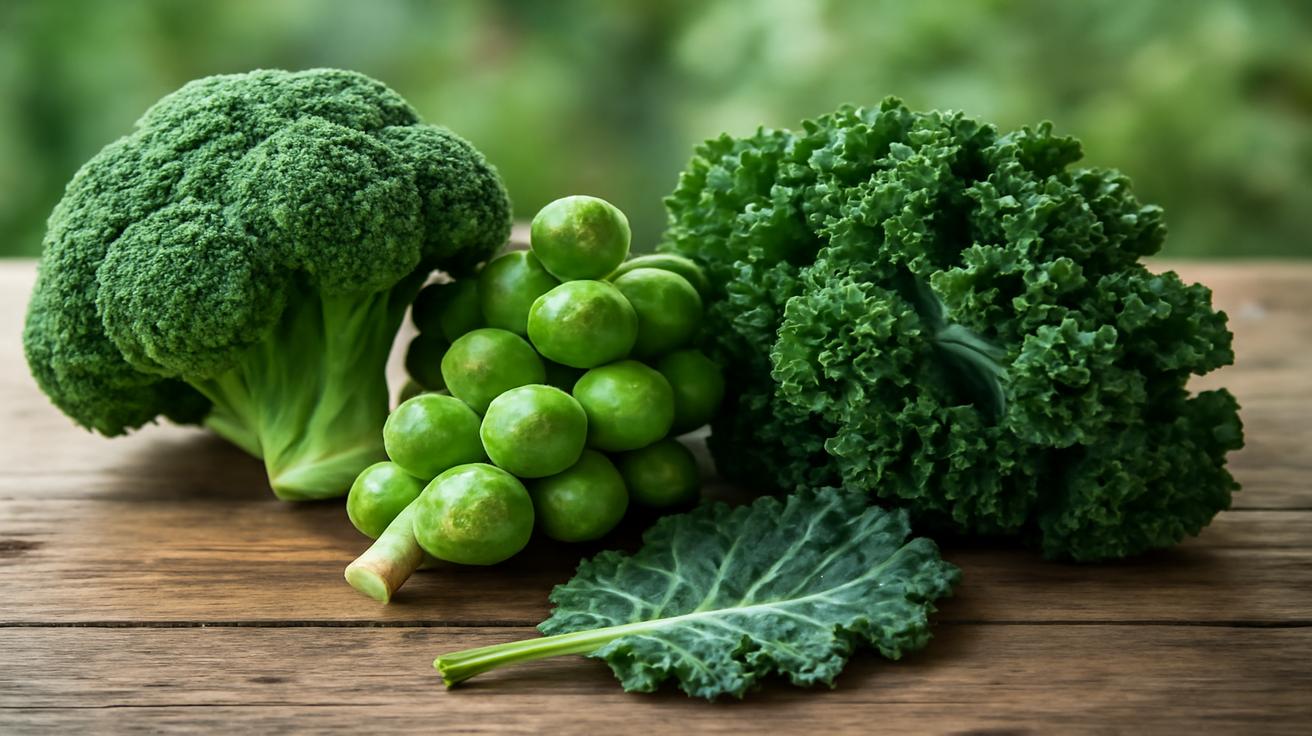
You know this plant. In fact, you know it in many forms. It’s the backbone of countless dinners and side dishes. It appears steamed, roasted, shredded into salads, hidden in slaws. You might know it as cabbage. Or broccoli. Or cauliflower. Or kale. Or Brussels sprouts. Or even kohlrabi.
All of these—yes, all—are the same species: Brassica oleracea. One wild seaside plant, sculpted over centuries by human hands and patient eyes, turned into a whole cast of characters that fill our plates and gardens.
What many people see as several different vegetables is, in reality, one plant in elaborate disguise.
From Wind‑Beaten Cliffs to Kitchen Tables
To understand how one plant became many, you have to start in a place that doesn’t look like a farm at all. Picture a rugged European coastline several centuries ago: salt-laden winds, thin rocky soil, cliffs where the sea crashes so loudly you feel it in your ribs.
Somewhere on that harsh shoreline grew the wild ancestor of our modern brassicas. It wasn’t glamorous—just a tough, leafy plant with a waxy coating to resist salt spray, clinging to cracks where little else dared to grow. It didn’t look like broccoli. Or cabbage. Or anything you’d recognize from a grocery aisle. But this scrappy, sea-loving plant held within it the blueprint for all of them.
Early coastal peoples noticed something important: those leaves were edible. More than that, they were hearty. They came back year after year, defying poor soil and hard winds. In a world where food security was never guaranteed, a plant that could stand up to abuse and still offer a meal was precious.
So people began to favor certain plants over others. A slightly thicker leaf here. A tighter cluster of buds there. A plant that survived colder winters, another that sent up large, tender shoots. These choices were often simple and practical, but over decades and centuries they added up to something remarkable. They didn’t engineer new species in a lab; they guided one flexible, adaptable plant down many different paths.
Slowly, the wild coastal brassica began to drift away from its origins. It was coaxed into gardens, then into fields, then into trade. Each region began to shape it in a different direction, selecting for the trait that best matched local tastes and needs. The plant was the same. What changed was the part of the plant humans chose to love.
One Species, Many “Vegetables”
Here’s where the disguise gets convincing. Stroll through a farmer’s market in late fall and you’ll see evidence of this botanical costume party laid out on wooden tables and stacked crates.
At one stall, a mountain of cabbages: pale, tight, and heavy as cannonballs. At another, the curly, forest-green ruffles of kale bunches. A few steps away, broccoli crowns with their tiny packed buds, and next to them the ghost-pale heads of cauliflower. If you’re lucky, you’ll spot Brussels sprouts still on their towering stalks, like tiny cabbages arranged on a green ladder. Maybe there’s a basket of kohlrabi—those light green or purple orbs with little stems sticking out at odd angles, like alien turnips.
We see differences. Nature is showing us variations on a theme.
| Familiar Vegetable | Still the Same Plant? | Main Part We Eat |
|---|---|---|
| Cabbage | Yes, Brassica oleracea | Tight head of leaves |
| Kale | Yes, same species | Loose, leafy greens |
| Broccoli | Yes, same species | Flower buds and thick stems |
| Cauliflower | Yes, same species | Dense cluster of flower buds |
| Brussels Sprouts | Yes, same species | Miniature cabbage-like buds along the stem |
| Kohlrabi | Yes, same species | Swollen stem “bulb” |
Seen this way, the market becomes a showroom for one plant’s many talents. And within that larger story, there’s a smaller, more intimate trick that often goes unnoticed: what people mistake for three totally unrelated vegetables—leafy greens, a bulb-like globe, and a crunchy root—can all be expressions of that same lineage.
Leaves, Bulbs, and Roots: The Three-Part Illusion
Imagine three bowls on your kitchen counter.
In the first, you have a fluffy pile of chopped kale and cabbage leaves—deep green, veins like pale rivers branching across the surface. In the second, sliced kohlrabi: pale discs with a slight green tinge, stacked like tiny moons. In the third, you’ve got a jumble of stems and thick leaf ribs—those crunchy, almost juicy white parts you sometimes trim away when prepping greens, piled together with peeled broccoli stems cut into matchsticks.
To most eyes, those are three different vegetables: “leafy greens,” “a bulb veggie,” and “some random stem bits.” In many kitchens, they’re treated that way. The leaves maybe end up sautéed with garlic. The kohlrabi gets eaten raw, dunked into hummus. The stems are discarded or, at best, thrown into stock.
But if you trace them back to the field, you’re following three roads that all lead to the same family of plants. You’re simply looking at different parts of similar bodies.
- The leafy greens are the most obvious: cabbage, kale, collards—varieties selected for wide, abundant leaves.
- The “bulb” of kohlrabi isn’t a root or a true bulb at all; it’s a swollen stem, puffed up just above the soil line like a plant holding its breath.
- The trimmed stems and ribs are the structural scaffolding of these plants, often as edible as the frilly parts we celebrate.
Stand in a garden at midday, the soil warm under your boots, and you can watch the illusion dissolve in real time. Your hand moves from the frilled top of a kale plant down its sturdy stalk. Two beds over, it traces the curve of a kohlrabi globe—part of the very same plant anatomy, thickened in a different way. Dig gently at the base of a Brussels sprout stalk and feel how the stem roots itself into the soil, supporting dozens of buttoned heads up its length.
Different shapes, same story.
How Humans Coached a Plant into Costume Changes
This trick didn’t happen by accident. It’s the result of a slow partnership between people and plants—a kind of quiet coaching across generations.
Picture a small coastal garden hundreds of years ago. A farmer is walking the rows, noticing. Some plants have especially large, tender leaves. Those are harvested and saved. Seeds from those plants are tucked away for next year. Over time, the leaves on that line of plants get bigger, thicker, more layered—until one day they’ve become what we now call cabbage.
Somewhere else, another grower is charmed not by the leaves, but by the tight little clusters of unopened flower buds at the top of the stem. Those buds are mild, tender, and delicious. So the plants with the fattest clusters are allowed to go to seed. Years pass. Those clusters become more exaggerated, more compact, until they’re the broccoli heads we know so well.
In yet another place, someone is drawn to the thick stems. They notice that some plants have more substantial, juicy stems than others. Maybe they start nibbling the peeled stalks. They choose those for seed, again and again, and eventually—over generations—the stem swells into a globe: kohlrabi.
It’s like watching an artist sculpt the same block of clay into totally different statues, each one emphasizing another angle or curve. All from that original, wind-lashed wild brassica clinging to cliffs above the sea.
This is selective breeding at its most poetic: not high-tech, not instantaneous, just close observation and patient faith that small differences, stacked over time, can shape a whole new form.
Seeing the Supermarket with New Eyes
Once you know this story, it’s hard to unsee it. The produce section changes. What used to feel like a crowd of unrelated strangers suddenly becomes a family reunion.
You reach for a head of cabbage and you’re holding the great-grandchild of cliffside brassica, encouraged for centuries to pour its energy into leaves. Right beside it, broccoli: a cousin that’s put its effort into an extravagant bouquet of flower buds. A few steps away, kale: a relative that never learned to keep its leaves neat or tucked in, all wild ruffles and open arms.
If you’re lucky enough to find kohlrabi, you’re looking at the same story again, this time wearing a spherical, slightly comical costume. Jagged leaves sprout from the top like a crown. Under your knife, the flesh is crisp, almost pear-like in texture, but with the fresh bite of cabbage.
When you learn that what looks like three different vegetables—leafy greens, pale “bulb,” knobby stems—is really the same plant reshaped, the whole idea of a grocery list feels slightly different. Suddenly you’re not just buying “ingredients.” You’re assembling different expressions of a single lineage, different answers one plant offered to the same questions: How do I survive? How do I grow? How do I protect myself, or attract the creatures that will carry my seeds forward?
And, of course, how do I taste to the humans who have been, unwittingly or not, co-authoring this story?
In the Kitchen: One Species, Many Flavors
At home, you can taste this shared identity and these differences on a single cutting board. Lay out slices of raw kohlrabi, ribbons of cabbage, and strips of broccoli stem. Close your eyes, chew slowly, and listen to what your mouth tells you.
There’s a common thread running through all of them—a faint sweetness, a faint bitterness, the sulfurous whisper that becomes more pronounced when you overcook them. But each has its own dialect of flavor.
- Cabbage is sturdy and grounding, built for long stews and slow ferments.
- Kale can be tough and grassy raw, then suddenly tender and savory after a quick massage with oil and salt.
- Kohlrabi is crisp and refreshing, somewhere between a radish and an apple in texture, depending on how young it is.
- Broccoli stems, peeled, are almost juicy, sweeter than you’d expect from something often thrown away.
There’s something quietly radical about realizing that those three bowls on your counter—the leaves, the “bulb,” and the stems—are not strangers, but kin. It’s an invitation to cook more holistically, to waste less, to play more.
You start asking questions like: If cabbage leaves and kohlrabi are cousins, what happens if I roast them together with the same spices? If kale is just the unfurled, unapologetic leaf version of the same species, how might it behave in a dish where I usually use cabbage? What if I save my broccoli stems, slice them thin, and toss them with kohlrabi and cabbage ribs for a crunchy salad that’s basically a family portrait in a bowl?
The answers live in your skillet, on your baking sheet, in the quiet sizzle of oil and the steam that fogs your kitchen windows on a cool night.
Why This Shape‑Shifting Matters
Beyond curiosity and kitchen experiments, there’s a deeper reason this story matters.
First, it’s a reminder of how powerful slow, patient care can be. No one person turned a wild seaside brassica into a catalog of cabbages and kales and kohlrabis. It was done by many hands over many generations, guided by attention and intention. In a world obsessed with speed, this plant stands as proof that dedication over time can reshape reality in profound ways.
Second, it shows how much potential hides in what we think we already know. A plant we might dismiss as “just another green thing” contains a whole universe of possibilities. The same is often true of people, places, even habits we’ve grown used to seeing in only one way.
Third, this one-species-many-faces story is part of our food resilience. By stretching one plant into many forms, humans created a web of options. If a disease strikes one crop, another relative might weather it better. If a climate shifts slightly, certain members of the family might still thrive. Diversity within sameness is a quiet insurance policy, written across fields and seed catalogs.
And finally, there’s a kind of humility in recognizing that our tidy categories—leaf, bulb, root; this vegetable versus that one—are just that: our categories. The plant itself doesn’t bow to them. It just grows, responding to sun and soil and water and the guiding hand of those who tend it.
Next Time You Shop, Look Twice
The next time you find yourself under the humming lights of a grocery store, basket on your arm, pause for a moment in front of the brassicas. Feel the cool air on your skin from the refrigerated case, smell the faint, vegetal sweetness in the space between you and the produce.
Let your eyes move slowly: from cabbage to kale, to broccoli, to cauliflower, to Brussels sprouts, to kohlrabi if it’s there. Picture the wild ancestor, clinging to a cliff somewhere in your imagination. Picture centuries of hands: planting, weeding, tasting, saving seeds. Picture a farmer laughing in a muddy field, telling you that what you thought were three different vegetables are just one plant in disguise.
Then reach out and choose a few. Maybe grab the leaves you know well, but also that odd round kohlrabi you’ve passed a dozen times without a second glance. Bring them home. Slice, cook, taste. Listen to how the flavors echo each other and diverge, like siblings telling different versions of the same childhood story.
In that moment—between the knife and the pan, between the first bite and the satisfied exhale—you’re not just making dinner. You’re stepping into a long-running conversation between humans and plants, one in which a single resilient species has learned to wear many faces, and we’ve learned to see each disguise as a separate gift.
Frequently Asked Questions
Is it really true that cabbage, kale, broccoli, cauliflower, Brussels sprouts, and kohlrabi are the same species?
Yes. All of these are cultivated varieties of one species: Brassica oleracea. They look different because humans have selectively bred them over many generations for different traits—leaves, stems, flower buds, and so on—but genetically, they belong to the same species.
How can one plant turn into so many different vegetables?
Through selective breeding. Farmers and gardeners repeatedly saved seeds from plants that showed desirable traits—bigger leaves, thicker stems, tighter flower clusters. Over centuries, those small preferences accumulated into big changes, giving us the distinct vegetable types we see today.
Is kohlrabi a root vegetable?
It might look like a root, but kohlrabi’s edible globe is actually a swollen stem that grows just above the soil surface. The true roots are smaller, growing from the underside of that stem.
Why do these vegetables taste similar in some ways?
Because they share the same species, they share many of the same chemical compounds, including sulfur-containing molecules that contribute to their characteristic flavors and aromas. That’s why cabbage, broccoli, and kale all have a related “brassica” taste, even though the textures and exact flavors differ.
Can these different vegetables cross-pollinate in the garden?
Many forms of Brassica oleracea can cross-pollinate with one another if they flower at the same time and are grown close together. This mostly matters if you’re saving seeds; the resulting plants may not be true to type. For regular home harvests where you’re not keeping seed, it’s usually not a concern.
Are there nutritional differences between these “versions” of the same plant?
Yes. While they share some nutritional qualities—like being rich in vitamins and antioxidants—each form offers a different balance. Kale, for instance, is especially high in vitamin K and certain minerals; broccoli is well known for its vitamin C and specific phytochemicals; cabbage is a fermentation-friendly source of fiber and vitamin C. Eating a variety of them lets you tap into a broader nutritional spectrum.
What’s the easiest way to start cooking with kohlrabi or broccoli stems if I’ve never used them before?
For kohlrabi, peel the outer layer and slice it thin for salads or sticks for dipping; its mild crunch makes it very forgiving. For broccoli stems, trim the tough outer skin with a knife or peeler, then slice the inner core into thin coins or matchsticks and sauté or stir-fry them. Treat both as crisp, sweet, cabbage-like vegetables, and you’ll quickly find dishes where they fit right in.







Leave a Comment