
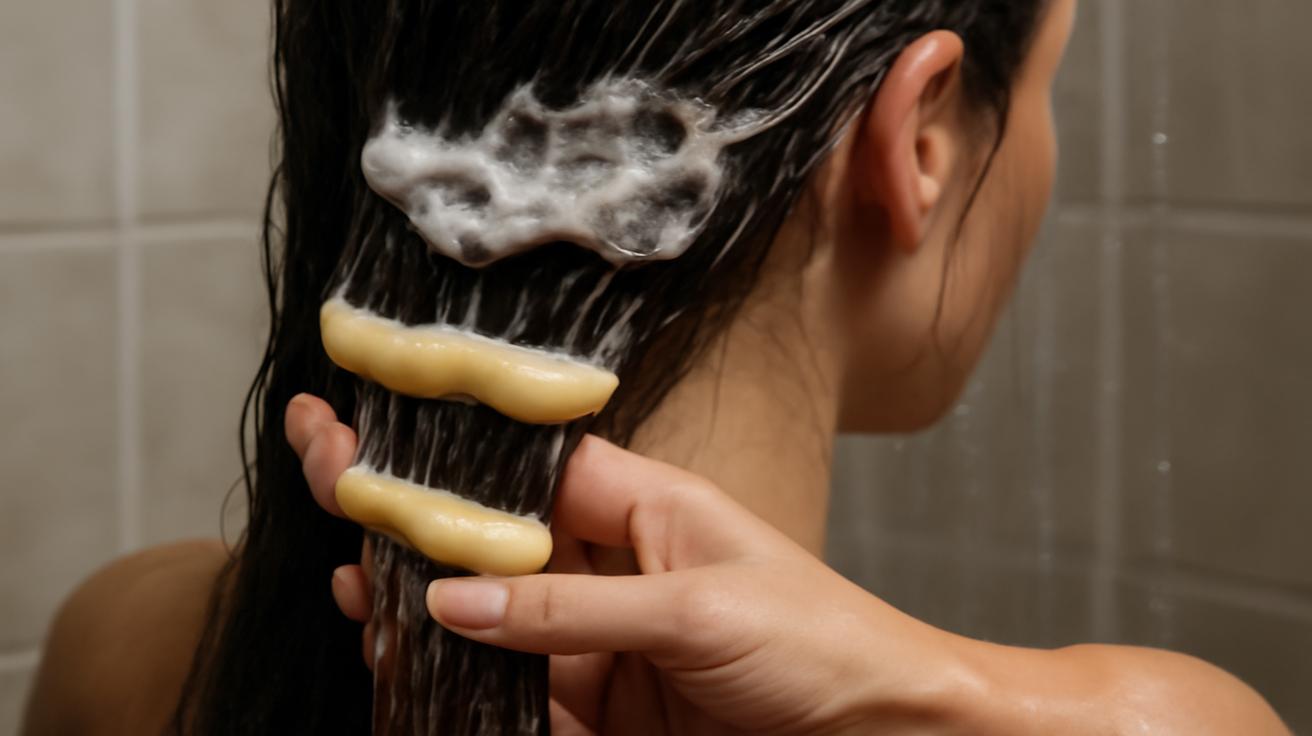
The first thing you notice is the sound: a warm hiss as water meets tile, then the low thunder of it hitting your shoulders. Steam blooms, curls around your face, and the bathroom becomes its own little weather system. You reach for the shampoo bottle the way you always do, flip the cap with one thumb, and squeeze out a glossy dollop. The familiar move, the same quick scrub-and-rinse you’ve done since you were old enough to bathe alone. But lately, something’s off. Your hair feels heavy before it should. Your roots get oily faster, your ends look tired, and that “just washed” feeling fades by day two—if it even lasts that long.
Somewhere between the drizzle and the drain, you start wondering if the problem isn’t your shampoo, your conditioner, your genetics, or the water in your town. Maybe it’s the way you wash. That’s where a small but quietly revolutionary idea slips in, shared in hushed tones in salon chairs and backstage at fashion shows: the “shampoo sandwich.”
The Day a Hairdresser Politely Changed My Life
It started, as these things often do, with mild embarrassment in a brightly lit salon. I was in the chair, hair damp, cape snug around my neck, watching my stylist squint thoughtfully at my scalp.
“When did you last wash your hair?” she asked, fingers carefully parting through my roots.
“Yesterday morning,” I said, a little too fast, like a schoolkid insisting they did their homework.
She nodded slowly. “Okay. You’ve got a lot of build-up, but your ends are dry. You’re probably doing one shampoo and a big dollop of conditioner, yeah?”
I blinked. Of course I was. That’s the shampoo script we’ve all memorized: lather, rinse, condition, rinse, done. It’s printed on every bottle. It’s what parents tell kids in bath time sing-song. It’s practically law.
She smiled, the way a person does when they’re about to tell you something so simple it might rewire your brain. “You need a shampoo sandwich.”
“A what?” I laughed.
“Shampoo, a little conditioner in the middle, then shampoo again. Like a sandwich. Your hair will be cleaner, lighter, and less greasy between washes. Promise.”
The blow-dryer roared to life, but I could barely hear it. I was still thinking about this new ritual, this salon-secret phrase that sounded like something invented at a slumber party and perfected behind the scenes at photoshoots.
What On Earth Is a Shampoo Sandwich?
If the phrase makes you picture slathering Head & Shoulders between two slices of sourdough, you’re not alone. But in the language of hairdressers, a “shampoo sandwich” is something more precise, more sensory, and strangely satisfying.
Think of it as washing in layers rather than all at once. Most people attack their hair like a single dirty plate: one wash to remove everything, one rinse, and done. The trouble is, your hair isn’t a plate. It’s a landscape: oily in some areas, dry in others, full of tiny valleys where product, sweat, and pollutants hide.
The shampoo sandwich breaks the job into stages:
- First shampoo: A light cleanse that loosens surface dirt, oil, and product build-up, especially at the roots and around the hairline.
- Mid-condition: A small amount of conditioner applied mainly to mid-lengths and ends to protect and hydrate the most fragile parts while you continue cleansing.
- Second shampoo: A more effective clean now that the first layer of grime is gone, focusing again on the scalp without stripping the lengths.
It’s like soaking a dirty pan before actually scrubbing it: the first pass softens everything, the second makes it really clean. And just like that, your shower begins to feel a little less like a chore and a little more like a ritual.
Why Hairdressers Swear It Works
The logic is simple but quietly brilliant. Most of the grime lives on your scalp—oil, sweat, styling products, environmental dust. By the time that one big blob of shampoo you’ve always used runs down to your ends, the surfactants (the cleansing agents) are already busy, diluted, and halfway exhausted. Your roots may end up “okay clean,” but your mid-lengths and ends often get a half-hearted wash and a whole lot of unnecessary stripping.
Hairdressers see this pattern all day long: greasy roots, parched ends, confused clients. The shampoo sandwich technique shifts the emphasis. The first shampoo is like an opening act, softening and dislodging. The mid-condition shields the part of your hair that needs protection most. The second shampoo gets to work on a scalp that’s already prepped, which means a better clean with less product and less rough scrubbing.
The result? Fresher roots that stay cleaner longer, ends that don’t feel like straw, and a scalp that can breathe without overreacting by pumping out even more oil in self-defense.
The Sensory Ritual: How to Make a Shampoo Sandwich
Imagine your next shower as a small ceremony. No rushing, no frantic scrubbing like you’re late to a meeting (even if you are). Just an experiment.
Step 1: The Reset Rinse
Before you even touch shampoo, let the warm water run through your hair for a full minute or two. Really soak it. Feel the strands loosening, the weight shifting as they drink in the water. This alone removes some surface dust and sweat—and it preps your hair to accept shampoo more evenly, like wetting a sponge before washing dishes.
Step 2: First Shampoo – The Gentle Scout
Squeeze out less shampoo than you usually would—about the size of a hazelnut for short hair, a nickel for medium, a quarter for long. Emulsify it in your palms first: rub your hands together until the product feels lighter, silkier, almost whipped. Then press your fingers into your scalp, not your nails, and start at the oiliest zones: front hairline, temples, crown, and nape.
Don’t worry if it doesn’t foam like a commercial. That’s normal. Oil and product can dampen lather. Think of this first round as a soft scout, mapping the terrain and loosening the top layer of grime. Massage, don’t claw. A slow, circular motion is enough. You’re waking up the scalp, not scrubbing a cast-iron skillet.
Rinse thoroughly. Feel the first lightness already, the way your hair squeaks just a little as you run your fingers through it.
Step 3: The Conditioner Middle – Protector of Ends
Now comes the heart of the sandwich: a small ribbon of conditioner, but only from the mid-lengths to the very ends. Think cheekbone down if your hair is long; ear-level for shorter styles. This isn’t your big conditioning moment—that comes later if you want it. This is a soft shield, a silky buffer.
Smooth it on gently. Feel the texture shift under your hands as the hair drinks it in. The purpose here is to protect your driest, most vulnerable sections from the second shampoo pass. While your scalp gets its deep clean, your lengths rest under a light layer of moisture, safe from over-cleansing.
Step 4: Second Shampoo – The Real Workhorse
Now, without rinsing out that mid-conditioning completely, take another small dose of shampoo. Again, emulsify it in your hands first. Focus only on your scalp and roots, just as you did in the first round.
This time, notice the difference. The lather is softer, fuller. The shampoo spreads more easily. The scalp feels reachable, not buried under a film of oil and product. That’s the first round doing its job—this second wash doesn’t have to fight through the mess; it can actually clean.
Take your time. Massage slowly, as if you’ve got nowhere else to be. This is where your scalp truly resets. The conditioner on your lengths forms a kind of cushion, so the suds don’t strip them bare as they rinse through.
Rinse again, thoroughly. The water should run clear. Your hair will feel different already: lighter at the roots, yet not squeaky-tangled through the length.
Step 5: Optional Final Condition – The Finishing Touch
Depending on your hair type, you may want a final, proper conditioning. If your hair is coily, curly, or very dry, this step is your friend. If it’s fine and gets weighed down easily, you might skip it or apply only a whisper of conditioner to the ends.
Either way, the magic of the shampoo sandwich has already happened. The final condition is just the bow on the package.
Who Benefits Most from a Shampoo Sandwich?
In salon mirrors across the world, hairdressers see the same stories repeating in different textures, colors, and lengths. The shampoo sandwich isn’t a one-type-only trick; it’s more like a principle that bends to suit almost anyone—with small adjustments.
| Hair Type / Scalp | How to Adapt the Shampoo Sandwich |
|---|---|
| Oily scalp, normal lengths | Keep both shampoos; use a light, minimal mid-condition and a very small final condition, or skip final conditioner. |
| Oily scalp, dry ends | Be generous with mid-condition on mid-lengths and ends; keep second shampoo focused on roots only. |
| Fine hair that gets flat | Use very small amounts of product; focus both shampoos strictly on scalp, ultra-light mid-condition, minimal final conditioner. |
| Thick, wavy, or curly hair | Gently detangle with fingers during the mid-condition; final condition is usually helpful for definition and softness. |
| Sensitive or flaky scalp | Choose a gentle, scalp-friendly shampoo; avoid harsh scrubbing; the two-step cleanse can reduce build-up that worsens flaking. |
Where the technique shines most is with people who feel stuck in a loop: hair greasy within 24 hours, yet somehow parched at the ends, or needing three, four pumps of shampoo just to feel “clean.” The shampoo sandwich cuts the drama. With two smaller washes instead of one big, aggressive blast, your scalp starts to recalibrate. Over time, some people even find they can go longer between washes.
Common Mistakes (And How to Avoid Them)
Even the best sandwich can go wrong if you layer it badly. A few easy pitfalls sneak up on people trying this technique for the first time.
Using Too Much Product
Double shampoo does not mean double the amount of product. If anything, it means less per round. Each pass should be modest. If your hair isn’t lathering much on the first go, that’s fine—it’s still doing work. Let the second shampoo be the one that foams more freely.
Scrubbing Too Hard
There’s a temptation, especially when we’re frustrated with oily roots, to treat our scalp like a stain we’re trying to remove from fabric. That over-scrubbing can irritate the scalp, trigger more oil production, and even disrupt hair follicles. Gentle pressure, circular motions, and the pads of your fingers are all you need.
Dragging Shampoo Through the Ends
Your ends are the elders of your hair—they’ve lived through sun, brushing, ponytails, heat tools, and time. They don’t need the same intense cleansing as your scalp. Let the suds that run through during rinsing do the work. The mid-condition in the sandwich is there to keep them from being stripped to the bone.
Skipping the Rinse Between Steps
It’s important to rinse fully after each shampoo stage. Think of it as clearing the stage for the next act. Residual product can weigh the hair down and defeat the whole purpose of the technique. You want each step to have a clean canvas to work on.
The Quiet Psychology of a Different Ritual
Beneath the foam and fragrance, there’s something quietly radical about changing the way you wash your hair. It pushes back against autopilot—against the way we glide through routines half-asleep, barely noticing our own bodies.
In the shower, steam rising, the water drawing lazy paths down your shoulders, a shampoo sandwich asks you to pause and pay attention. To your scalp, not just your ends. To the feel of your fingers against skin. To the way your hair shifts from heavy to buoyant, from coated to free.
Hairdressers talk about this almost tenderly. They see people sit down in their chairs carrying all sorts of invisible weight—exhaustion, self-criticism, a sense that their hair is “difficult” or “bad.” But often, the hair isn’t bad at all. It’s just been handled roughly, rushed through, misunderstood.
Changing your wash routine from a single frantic scrub to a layered, thoughtful ritual can reframe how you see your own head. Not as a problem to fix, but as a small landscape you maintain with patience and rhythm.
There’s something deeply human about that—a reminder that even the simplest acts, repeated week after week, are chances to be a little gentler with ourselves.
Trying It For Yourself
The next time you stand under the water and reach for that familiar bottle, imagine you’re being guided by the calm voice of every hairdresser who has ever gently said, “Trust me on this.”
Use a little less shampoo. Add that whisper of conditioner in the middle. Let the second wash feel like a reset, not an attack. Notice how your roots feel when you blow-dry or air-dry. Notice how your hair looks on day two, day three. This isn’t instant magic, but over a few washes, patterns emerge: less oil, more lift, a softer fall around your face.
In a world that loves complicated solutions—serums, masks, scrubs, peels, tonics—the shampoo sandwich is disarmingly simple. Two light washes, a cushion of conditioner, and a little more attention than usual. No gadgets, no elaborate cocktails, no ten-step program.
Just water, lather, breath, and the slow realization that sometimes, the best advice comes from the person standing behind you with their hands in your hair, seeing what you can’t.
They’ve watched hundreds of heads tilt forward under the salon sink, listened to the same complaints, sifted through the same textures. When they say, “Make a sandwich of it,” it’s not a gimmick. It’s a quiet refinement of something you’ve been doing all your life.
You step out of the shower, towel wrapped snug at your temples, and as your fingers comb through cleaner, lighter roots, you feel it: a small, ordinary miracle. Not new hair, not overnight transformation. Just your own hair, understood a little better. And that’s often where the best changes begin.
Frequently Asked Questions
Isn’t shampooing twice too harsh for my hair?
Not if you use smaller amounts and focus on the scalp. Two gentle shampoos are often less stripping than one aggressive, over-sudsed scrub. The mid-condition step also protects your lengths.
Do I still need conditioner at the end?
It depends on your hair type. Fine or easily weighed-down hair might skip it or apply only a tiny amount to the ends. Thick, curly, or very dry hair usually benefits from a final conditioning step.
How often should I use the shampoo sandwich method?
Use it whenever you wash your hair. Many people find that with this technique, they can go slightly longer between washes because their scalp is more thoroughly and gently cleansed.
Can I do this with any shampoo and conditioner?
Yes, as long as they suit your hair type. A gentle, sulfate-free formula can be especially nice if your scalp is sensitive, but the method itself works with most standard products.
Will this help with dandruff or a flaky scalp?
It can help reduce build-up, which sometimes worsens flaking, but if you have persistent dandruff or a medical scalp condition, you may still need a specialized shampoo or professional advice.
What if my hair still feels greasy after trying this?
Check that you’re rinsing thoroughly and not using too much mid-condition or final conditioner. You may also need a clarifying shampoo occasionally if you use heavy styling products.
Can people with curly or coily hair use this method?
Absolutely. Just be gentle when working through curls, focus shampoo on the scalp only, and keep that mid-condition and final conditioning step rich enough to maintain moisture and definition.








Leave a Comment