
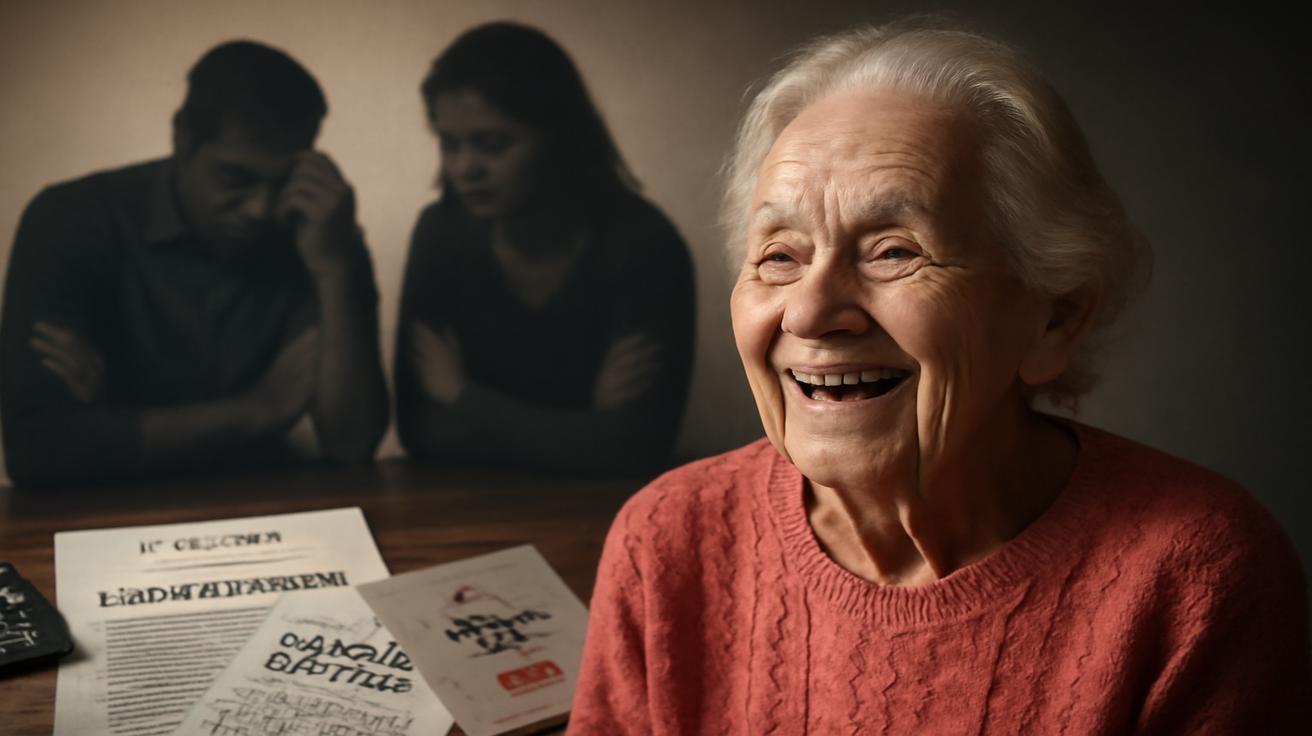
The man on the park bench is ninety-two. His hands, folded around the curved handle of his walking stick, are as thin and mottled as late-autumn leaves, but his blue eyes are startlingly clear. He watches the kids hurtle off the slide, their laughter cracking the chilly morning air, and smiles like someone who has seen this scene played out for nearly a century—and still hasn’t grown bored of it. He tells you, casually, that his mother died at sixty-two, his father at fifty-eight, and that when he was born, nobody imagined he would live long enough to see four different currencies, twelve prime ministers, and his own great-grandchildren learning to ride bikes.
Then, in a softer voice, he mentions his daughter—sixty-eight, recently retired, exhausted from caring for him. “She jokes she’ll be old before I’m gone,” he says, with a wry half‑smile. It’s not really a joke. Somewhere between his pride in still being alive and his quiet guilt about what that means for his family, the story of our time is hiding in plain sight: living longer is a miracle, but it is also a bill that comes due.
The Longevity Lottery We Never Planned For
For most of human history, life was a cliff edge. You either fell off early—accidents, childbirth, infections, wars—or, if you were very lucky, you clung on into your sixties or seventies and were remembered for your “long life.” The idea of everyday people living into their nineties and beyond, not as rare village legends but as a common demographic, simply didn’t exist.
Today, in much of the world, turning ninety is no longer a miraculous outlier. It’s a statistical possibility; in some countries, an expectation. Medical progress, vaccines, safer workplaces, cleaner water, and a better understanding of nutrition have quietly rewritten the contract between humans and time. The cliff edge has eroded into a gently sloping hill.
But when we stretched the human lifespan, we didn’t redesign the rest of our systems with the same urgency. Pensions were built for a world in which retirement lasted maybe ten, fifteen years, not thirty. Social insurance programs assumed the elderly would be relatively few and the workforce plentiful. Families imagined their parents would need help for a few years, not a couple of decades of increasing frailty. We celebrated the extra years of life—and put off the awkward conversation about who would pay for them.
This is the longevity lottery: you might win two extra decades of life, but someone, somewhere, is paying the ticket price. Sometimes it’s the state. Sometimes it’s your children. Often, it’s both.
The Quiet, Expensive Years at the End of Life
We like to picture old age as a long, gentle glide of walks in the park, gardening, and slow breakfasts in soft morning light. And sometimes it is. Yet from a financial and social perspective, those final years are often less like a glide and more like a climb—steeper, slower, and surprisingly expensive.
Healthcare costs tend to spike in the last decade of life: chronic disease management, medications, surgeries, hospital stays, long‑term care. But the real strain very often sits outside the hospital walls. Reduced mobility, cognitive decline, and loneliness mean that “care” stops being a few check‑in calls a week and becomes a relentless, daily commitment. Someone has to cook, clean, bathe, monitor, drive, remember, soothe, and advocate. The work is intimate, demanding, and—frequently—unpaid.
Those someones are still, in most countries, adult daughters. A recent global overview of unpaid care work suggests that middle‑aged women are bearing the bulk of eldercare while also working jobs, raising grandchildren, and juggling their own health problems. That invisible labor has an economic shadow: missed promotions, part‑time instead of full‑time employment, early retirement. The cost isn’t just measured in euros or dollars; it appears in stress‑related illnesses, broken marriages, and siblings falling out over who “does more.”
Now imagine stretching that phase from three or five years to ten, fifteen, even twenty. A ninety‑year‑old can be relatively independent, or they can be a frail, confused human who cannot safely be left alone for more than an hour. When survival outpaces resilience, the body keeps going but the scaffolding around that person—family, savings, social services—begins quietly to buckle.
When Your Parent Outlives Your Retirement Plan
There’s a twist in this story that few people talk about. In the twentieth century, the sequence went like this: you worked, retired, and then your parents died. Your own old age, with whatever frailties it brought, was mostly supported by your savings and public programs. Today, in many families, that sequence is scrambled.
You may be approaching retirement just as your parents need the most help. Your working years, instead of stockpiling for your own old age, are bled dry by the costs of theirs: top‑up payments for care homes, home health aides that public insurance doesn’t fully cover, rent because they outlived their savings, medical devices, special diets, travel costs to and from appointments. You think of it as an act of love—because it is—but the numbers don’t care.
Consider a very simplified snapshot of what the “longevity years” can look like for a single person in relative good health who lives past ninety:
| Age Range | Typical Needs | Main Cost Bearer |
|---|---|---|
| 65–75 | Independent, occasional medical visits, active lifestyle | Individual + public health system |
| 75–85 | More frequent medical care, minor support at home | Individual, family, public health and welfare programs |
| 85–95 | High risk of frailty, memory issues, formal care services | Family assets, long‑term care systems, state support |
| 95+ | Intensive care, assisted living or nursing home likely | Children’s savings, taxation, social insurance funds |
When you stretch that last row—95+—from an unlikely rarity to a normal life stage, all the numbers in the background begin to wobble. The quiet, sacred assumption that parents will not be a financial threat to their children starts to crack. Not because anyone did anything wrong, but because our social math hasn’t caught up with our biology.
Can the Welfare State Survive a Century of Citizens?
The welfare state, in its classic twentieth‑century design, rests on a simple scaffolding: a broad base of young and middle‑aged taxpayers support a narrower band of retirees. The math works as long as there are enough workers, wages keep pace with needs, and retirement doesn’t last too long. But longevity pushes on every beam of that architecture at once.
As birth rates fall in many countries, we have fewer working‑age people. As lifespans extend, we have more retirees and, crucially, more very old retirees who cost much more per year. Health budgets swell. Pension funds strain. Long‑term care, which used to be a marginal budget line, swells into something that resembles a second health system.
Politicians respond with a familiar set of levers: raise the retirement age, increase contribution rates, shave benefits, means‑test programs. Individually, these moves seem reasonable. Together, they reveal a quiet, uncomfortable truth: the welfare state as we knew it was built for a world where living to ninety‑five was rare enough not to matter much to the averages.
The conversation almost always becomes a generational tug‑of‑war, a subtle resentment humming under debates about budgets. Younger people see taxes rise and pensions that look less generous and more uncertain, and then look up the chain at their grandparents, living longer, drawing benefits longer, sometimes voting fiercely to protect those benefits. Older voters, many of whom grew up in harsher times, hear any suggestion of reform as a threat, a betrayal of a promise made to them decades ago.
Underneath all the noise is a single, unsettling question that modern societies are only beginning to formulate out loud: in an age of extreme longevity, can the welfare state promise everyone a comfortable, fully financed old age—or will that promise quietly break?
Who “Deserves” to Grow Old?
When resources feel stretched, we reach instinctively for the language of “deserving.” It creeps into conversations at kitchen tables, in newsrooms, in parliament halls. Did this person work long enough, hard enough, to “earn” their pension? Did that person take care of their health, or “cause” their illness through bad habits? Why should a wealthy ninety‑two‑year‑old receive the same public subsidies as a lifelong low‑wage worker?
This idea—that growing old, and especially growing very old, should be in some way morally filtered—is seductive and dangerous. Human longevity has never been a merit badge. Your genes, your early childhood environment, your exposure to pollution, the jobs available in your town, the luck of not meeting the wrong microbe at the wrong time—these shape your lifespan as much as your discipline at the gym or your thrift with money.
Yet as the costs mount, the pressure to rank and sort elders intensifies. We see this in proposals to tie retirement ages strictly to years of contributions, as if everyone had the same opportunities to work safely and formally throughout life. In whispers that those who “didn’t save enough” should lean on their families, while those who played the stock market well should keep more of their wealth. In subtle ageist narratives that paint very old people as obstacles to progress, hoarders of housing, blockers of reform.
The deeper moral tension is stark: if the price of universal longevity is economic strain, do we begin to reward only certain kinds of old age? Do we implicitly signal that some people are more entitled to a long life than others—because they are productive longer, richer, healthier, less “burdensome”? Or do we accept that a just society may need to rewire its economy so that human life itself, however long, is not reduced to a line item that must justify its return on investment?
Rethinking Work, Care, and Time Itself
One way out of the trap is to stop thinking of life as a straight line of “education, work, retire, decline” and start imagining a more braided pattern. If we are likely to live into our nineties, perhaps even beyond, is it wise—or even humane—to expect people to sprint through forty‑plus years of intense work and then abruptly stop?
Some economists and social thinkers suggest a different rhythm: multiple careers instead of one; midlife sabbaticals to care for children or parents, with the understanding that people will return to paid work later; smaller but longer working weeks across more years. In this vision, a seventy‑two‑year‑old could still be working part‑time by choice, not out of financial desperation. A fifty‑year‑old might pause for three years to care for an ailing parent and then re‑enter the workforce without penalty.
This requires more than personal flexibility. It demands public policies that treat care work as work—counted, credited, and supported. It asks employers to shed the assumption that only the constantly available, overtime‑friendly worker is valuable. It leans on technologies that help people stay healthier longer: fall‑detecting sensors, friendly robotics that assist with daily tasks, digital tools that allow remote work far into what we used to call retirement.
Most importantly, it reframes time. If life is longer, we can afford to spend it differently. A twenty‑five‑year‑old might feel less pressure to lock into a career that promises the biggest pension and more freedom to choose work that suits their temperament, knowing they have decades and multiple chances to recalibrate. An eighty‑year‑old might see themselves not as “after everything” but as one of several older generations with active roles to play, from mentoring to part‑time consulting to community leadership.
Preparing Families for the Emotional Economics of Longevity
Even as we rethink systems, much of the strain of longevity will still run along the intimate channels of family relationships: who helps, who pays, who decides, who feels guilty. Pretending it’s purely a policy issue misses where the hardest conversations actually happen—around a dining table, late, when everyone is tired and one parent has just fallen again.
If you are likely to live to ninety or beyond, preparing for that stage should not be a grim financial spreadsheet hidden in a drawer. It should be a series of open, sometimes awkward dialogues with your children long before anyone is frail. What kind of care would you accept—or refuse? What assets can be earmarked for your own later years, even if that means leaving a smaller inheritance? Are your children able, in reality, to provide hands‑on care, or will they need to outsource more of it?
These conversations can feel like tempting fate. In many cultures, speaking too frankly about decline and death still carries a superstitious chill. But ignoring the topic doesn’t make the probabilities go away; it just makes the crisis sharper when it arrives. The “longevity lottery” becomes less of a gamble when families map out, together, how to share its costs and its gifts.
There is also an emotional economics at play: the way love and obligation, resentment and gratitude, balance out over years. A son who rearranges his life to care for a parent may feel he is sacrificing more than his sibling; a daughter who writes large checks may feel invisible, because money, unlike physical presence, seems easier to dismiss. Naming these dynamics early, without blame, can prevent old age from becoming a kind of unspoken battlefield.
From Burden to Legacy: Choosing the Longevity Story
In the end, longevity is not going away. Biomedical advances are unlikely to reverse, and in some areas—like treatments that slow cellular aging or prevent age‑related diseases—they may accelerate. The question is not whether more of us will live into our nineties. We will. The question is what story we will tell about those extra years, and how we will distribute the weight and the wonder they bring.
We can cling to a narrative in which the very old are primarily seen as costs to be managed, obstacles to be cleared from housing markets and budget lines, sentimental relics in a world racing ahead. In that story, the “longevity lottery” becomes a cruel joke: you live long enough to see your descendants struggle under the financial load of your survival.
Or we can craft a different narrative, one that pairs rights with responsibilities across generations. In that story, societies invest early in health, education, and fair work so that more people reach old age healthy enough to keep contributing in ways that suit them. Families talk openly about aging, pooling their resources and expectations. Welfare states are redesigned with clear eyes and soft hearts, acknowledging both the hard limits of public budgets and the deeper moral truth that a long life, once unthinkable, should not become a source of shame.
Back on the park bench, the ninety‑two‑year‑old adjusts his scarf against the wind. He tells you about his first job, sweeping factory floors at fourteen, and the way his knees ached even then. He talks about his daughter’s kindness, the grocery bags she carries up the stairs, the way she gently ignores his apologies when he forgets things. “I never expected to be here this long,” he says. “Sometimes I think I’ve overstayed my welcome.”
Maybe the work of our century is to prove him wrong—to build a world where nobody who survives into great old age feels like an uninvited guest. A world where the longevity lottery is less of a gamble and more of a shared, deliberate choice: to let our elders live not only long, but well, without bankrupting their children or breaking the systems meant to hold us all.
FAQ
Is living past 90 always a financial burden on families?
No. For some families, strong pensions, savings, or generous public systems cover most needs. The strain appears when long lifespans collide with low savings, limited state support, and intensive care needs. The risk is rising, but it is not inevitable.
How can individuals prepare financially for a longer life?
Starting early with retirement saving, avoiding high‑interest debt, and planning specifically for long‑term care expenses can help. It’s also wise to discuss options like downsizing housing, purchasing long‑term care insurance where available, and setting clear priorities for how you want money used in very old age.
What can governments do to keep welfare states sustainable?
Key steps include adjusting retirement ages gradually, supporting healthy aging to delay frailty, investing in home‑based and community care, recognizing unpaid caregivers, and designing pension and tax systems that protect the most vulnerable while reflecting longer average lifespans.
Does longer life expectancy mean people will have to work forever?
Not forever, but likely for more years than previous generations. The challenge is to make those extra working years flexible and humane—more part‑time options, phased retirements, and career breaks that don’t permanently penalize workers.
How should families talk about aging and care without causing conflict?
Start early, before a crisis. Focus on shared goals: safety, dignity, and fairness. Encourage every family member to express what they can realistically offer—time, money, coordination, or emotional support—and revisit the conversation as circumstances change.








Leave a Comment