
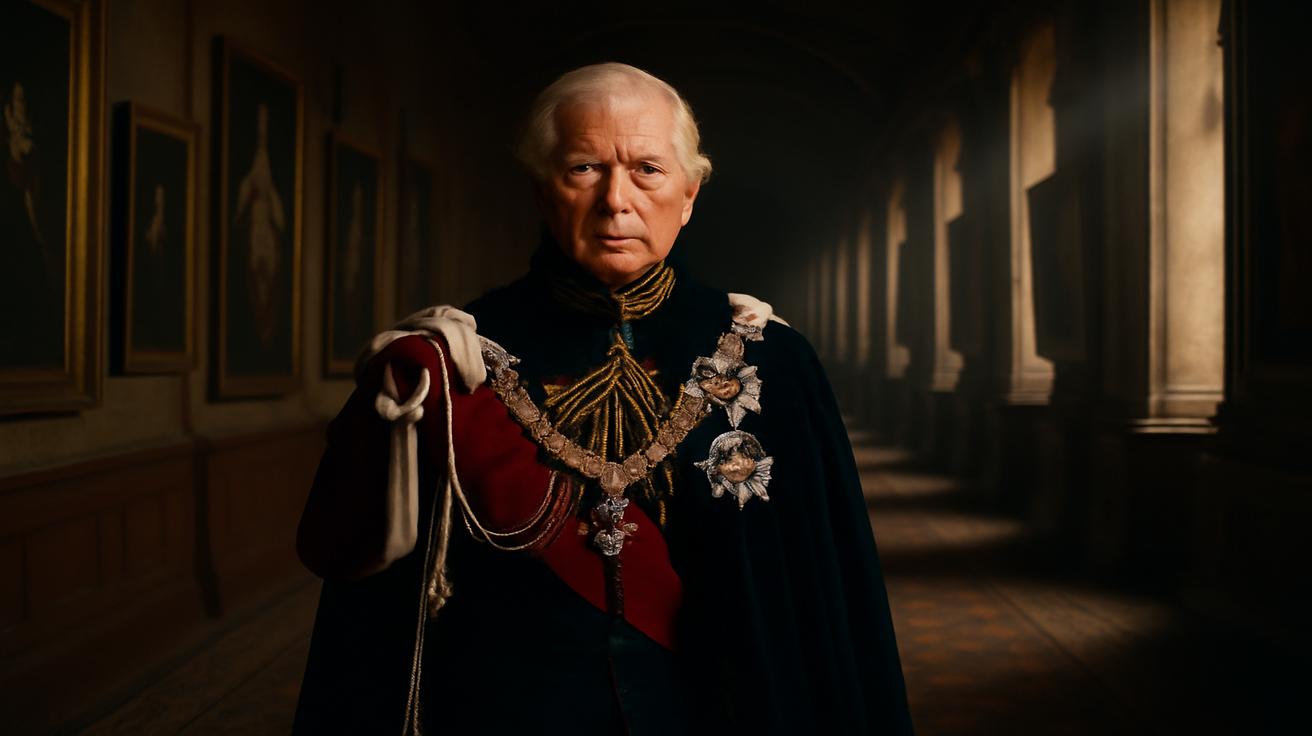
The first time you see a crown up close, it’s astonishing how small it is. Smaller than the myths, smaller than the weight we pile onto it, smaller than the storms it survives. And yet, in that small circle of metal and light, whole nations seem to balance. In Buckingham Palace this winter, the man who wears that crown woke to the knowledge that something inside his own body had turned uncertain. The public phrase was gentle—“health concerns,” “treatment,” “monitoring”—but the undercurrent was not. It posed a question as sharp as any diamond in the imperial regalia: Should a king who is unwell step aside? Or is the very act of staying on the truest expression of the oath he took?
The King Who Waited a Lifetime
For most of his life, Charles was defined by waiting. Waiting to be taken seriously, waiting to be understood, and most of all, waiting to be king. Decades of being the perennial heir hardened into a sort of public joke—“the world’s longest internship”—but the man inside that caricature kept moving, kept working. He walked through Welsh rain and Caribbean heat and Scottish mist, shook thousands of hands that blurred into one tired gesture, listened to polite speeches in drafty halls, planted trees, opened schools, gave carefully measured remarks about architecture, climate, and the things that quietly consumed him.
Then, late in his seventies, he finally ascended. His mother, Queen Elizabeth II, had carried the Crown for seventy years, long enough for people to imagine that the monarchy was less a family than a geological feature: constant, immovable, inevitable. When she died, something trembled—not just in Britain, but in the cultural weather of the world. Into that tremor stepped Charles, hair silver, face lined, shoulders a touch stooped, as if he were picking up a very old story halfway through the final chapter.
Now he finds himself facing the most personal plot twist of all: illness. The Palace, famously allergic to sharing intimate details, confirmed that the King is undergoing medical treatment, enough to alter his schedule, enough to make cameras linger a little longer on his profile, his gait, his hands. Yet the message from inside the gilded cage has been firm: he will not step back. He will adjust. He will be “cautious.” But he will not relinquish the role he waited a lifetime to inhabit.
A Body Under Glass
It is never just a body when it belongs to a monarch. It is a symbol, a projection screen, a national barometer. People study the King’s complexion as if it were a weather forecast. Is he paler today? Thinner? More tired around the eyes? What does it mean when he cancels a visit to a factory in the Midlands? When he appears only briefly at a charity event, smiling tightly before retreating behind polished doors?
We talk about “the Crown” as a disembodied idea, but it is always anchored in flesh and pulse. The weight of the jewels rests on a scalp, the oath is formed by cords of vocal muscle, the signatures on state papers are guided by bones and tendons that age and ache like everyone else’s. In private, perhaps Charles feels the same flickers of fear and frustration that accompany any serious diagnosis: the sudden awareness of time, the recalculation of energy, the quiet negotiations with mortality.
Yet in public, he stands stubbornly at the fulcrum between fragility and duty. There are aides now who bring him folders instead of him walking to the red box. Engagements are shortened, moved indoors, rescheduled to avoid fatigue. A throne—already a theatrical object—takes on the air of a chair placed carefully for a man who must not overexert himself. The pageantry softens just enough to reveal the human underneath, and this, more than any medical bulletin, ignites the debate.
The New Argument over an Old Institution
In living rooms, on radio call-ins, in the quick, restless world of social media, a question hums: Is it right for King Charles III to cling to the throne while his health is in question? Or is his determination to press on a noble refusal to abandon the promises he made at his coronation?
Some see in his stance a touching fidelity to his mother’s example. Elizabeth refused to step down, even in her frail nineties, insisting that one does not retire from a vow made before God and millions of witnesses. The job ends when life does. It is brutal, simple, almost monastic. In staying, Charles mirrors this creed. Abdication, in this view, is a kind of broken oath, a rupture in the long, unspooling line of continuity that the monarchy sells to the nation.
Others are less impressed. They point out that this is not the Middle Ages. Constitutional monarchs may be symbolic, but symbolism matters; it shapes how a country sees itself. If the reigning symbol appears drawn and unwell, holding on mainly because of pride or fear of being overshadowed by a younger heir, what does that say about the institution? Britain has already watched one royal implosion play out in the form of Prince Harry’s departure. Does it now need to watch a king cling on too long?
| Perspective | Core Belief | What They Want Charles To Do |
|---|---|---|
| Duty First Traditionalists | The Crown is a life-long vocation; stepping down undermines continuity. | Remain on the throne, delegate more, endure as a symbol of stability. |
| Modern Constitutionalists | A head of state should be visibly capable; symbolism must adapt to reality. | Consider abdication if health significantly limits public service. |
| Pragmatic Royal Supporters | Preserve the monarchy by avoiding another public crisis or vacuum. | Use regency-like arrangements; gradually shift duties to the Prince of Wales. |
| Republicans | An unelected, hereditary head of state is outdated regardless of health. | Use this moment to question the institution itself, not just one man’s role. |
Somewhere between these camps walks the King himself, a man whose private doubts are masked by a public smile, whose doctors’ appointments are transformed into constitutional puzzles, whose simple act of getting out of bed each morning now carries political, emotional, and even spiritual implications for millions who will never meet him.
Duty, Pride, and the Ghosts in the Room
Duty, in the royal lexicon, is practically a sacrament. It is invoked in speeches, embossed on memorial plaques, stitched into the very fabric of coronation robes. But duty is rarely pure. Pride threads itself into the weave—sometimes subtly, sometimes glaringly. For King Charles, the two are nearly impossible to untangle.
He is the man who was mocked for talking to plants, who spent years caricatured as awkward and earnest, whose first marriage shattered in one of the most public implosions of the twentieth century. He is also the king who, at last, stands where he was always told he would stand. To step back now, so soon after finally being crowned, would feel—to him, perhaps—like an admission that his time as sovereign was a footnote, a brief bridge to the next generation rather than a chapter in its own right.
There are ghosts in this conversation: the ghost of Edward VIII, who abandoned the throne for love and left a scar of abdication on the monarchy’s psyche; the ghost of Elizabeth II, who endured and endured and endured; the ghost of Diana, whose story taught Charles the brutal cost of appearing weak or indecisive in the glare of public judgment. They linger in the palace corridors, silent participants in every discussion about whether a seventy-something king should consider passing the Crown to a son who has grown up under the long shadow of “next.”
And then there is the quieter, more ordinary pride: the human wish not to be defined by an illness. When people suggest that he step down “for his health,” they may think they are being compassionate. But underneath that suggestion, he may hear something else: you are no longer strong enough, no longer what the role requires, no longer who we need. That kind of message can stiffen a spine faster than any royal decree.
The Weight of the Crown in an Unsteady World
This debate is not unfolding in a vacuum. Britain, like much of the world, is navigating a time of unsettled currents: political polarization, economic anxiety, an ongoing reckoning with empire and inequality, a relentless stream of global crises that arrive on phone screens before breakfast. In such a landscape, the monarchy’s great selling point is not innovation; it is continuity. The idea that, while governments rise and fall and policies lurch one way and then another, there is a figure who remains, calmly presiding over the ritual of national life.
When that figure is unwell, the illusion of permanence thins. People become suddenly attuned to the fact that kings and queens are mortal like everyone else. The Crown may endure, but its wearer does not. The cameras that linger on Charles’s hands or expression are not just prying; they are looking for reassurance that the symbol is still intact, that the story still holds.
The King’s refusal to step back is, in this context, an attempt to push back against the erosion of certainty. He continues the audiences with the Prime Minister, the handwritten notes on briefing papers, the carefully choreographed appearances at ceremonies where the national story is retold in miniature. It is as if he is saying: in a world already full of change, I will not be another thing that suddenly shifts.
Yet this very steadfastness raises a more uncomfortable question: at what point does continuity become stagnation? Is there a line beyond which clinging to the role, despite genuine health limitations, begins to weaken rather than strengthen the institution? The constitution offers mechanisms—regency, counsellors of state—but it does not offer a script for pride, fear, or the private ache of a man who may not want his reign to be remembered chiefly as “the ill one between Elizabeth and William.”
Public Story, Private Body
There is something almost unbearably intimate about watching a head of state grow ill. The Palace can restrict medical details, but it cannot quite prevent the public from reading the subtle language of fatigue and strain. Every new photograph becomes a kind of Rorschach test: supporters see resilience, critics see fragility, and most people see a complicated mixture of both.
In another life, in another family, a man of Charles’s age and means, facing health challenges, might be encouraged to slow down, to step away from the grind of work, to savour mornings in the garden, evenings with grandchildren, the savoring of quiet days that no longer need to be scheduled by courtiers. But this is not another life. It is a role where his very act of resting can become a headline, where a missed appearance is treated like a political event.
And so the King moves through a carefully edited version of his old routine. He appears at the balcony when necessary, attends key services, records messages filmed with gentle lighting and softened close-ups. The Palace emphasizes that he is “keen to return to full public duties,” a phrase that feels half medical note, half manifesto. The public is left to fill the gaps with speculation: Is he listening to his doctors? Is he ignoring them? Does he wake in the night worrying not about his prognosis, but about the line of succession, the health of the monarchy, the narratives already forming about him?
Watching this play out, one is struck by how little we allow powerful figures to be ill without turning their bodies into battlegrounds for our own anxieties. The King’s refusal to step back becomes, for some, an emblem of stoicism and for others, a symbol of stubbornness. Yet for him, it may simply be a refusal to let his final chapter be written in a font of retreat.
A Future Written in Pencil
The question most people are too polite to voice openly is also the simplest: what happens next?
Perhaps Charles’s health stabilizes. Treatments succeed, energy returns, and his reign settles into a pattern of measured visibility: fewer grueling tours, more carefully planned engagements, a kind of late-life stewardship in which he shapes the monarchy just enough for his son to inherit something both recognizable and slightly renewed. In this version, his refusal to step back is vindicated; history might frame him as the king who held his nerve and kept going.
Or perhaps things worsen. Perhaps the public notices more cancelled events, more statements “read by a palace official,” more photographs where the King looks shrunken by the scale of the spaces around him. At some point, private conversations would surely intensify. Advisors and family members would have to weigh two kinds of duty: duty to the man, and duty to the institution that, in theory, transcends him.
Between these two imagined futures lies the present: a stretch of time where nothing is certain, but everything feels consequential. It is a season when every decision—continue, pause, delegate, persist—will later be read as evidence of character. Was he courageous or reckless? Noble or vain? A guardian of tradition or an obstacle to necessary change?
For now, the King seems determined to let his actions write that verdict. He will not step back. He will not relinquish the crown he waited seventy years to place upon his own head. The rest of us are left to watch, to argue, and to ask ourselves what, if anything, we truly expect from a sovereign in an age that no longer quite believes in sovereignty.
Frequently Asked Questions
Why does King Charles III refuse to step back despite health concerns?
He appears to see the Crown as a lifelong commitment, echoing his mother’s example that a monarch does not retire from an oath. Personal pride also plays a role: after waiting decades to become king, stepping aside so soon could feel like reducing his reign to a brief interlude rather than a meaningful chapter.
Could King Charles legally abdicate if he chose to?
Yes. Abdication is possible but rare and constitutionally complex. It would require legislation, as it did for Edward VIII in 1936. Because abdication is seen as disruptive to continuity, it is treated as an absolute last resort rather than a normal option for managing health or age.
What alternatives exist short of abdication?
There are mechanisms such as Counsellors of State, who can perform some duties on the monarch’s behalf, and the possibility of a formal regency if he were deemed unable to carry out his constitutional functions. In practice, the Palace is more likely to quietly reduce and reshape his schedule than to trigger formal constitutional changes.
How does his health affect the stability of the monarchy?
His health raises questions about visibility and capability, which are central to the monarchy’s symbolic power. If he is seen as present, engaged, and reasonably active, it reinforces continuity. If his illness significantly limits him, public pressure may grow for a clearer sharing or transfer of responsibilities to the Prince of Wales.
Does public opinion matter in whether he stays on the throne?
Formally, no: the position is not subject to elections. Informally, yes: the monarchy’s long-term survival depends on a basic level of public support. Advisors will be closely watching how the public reacts to any visible decline in his health, because a perception that the monarch is clinging on too long could harm the institution’s standing.





Leave a Comment