
The late afternoon light slants across the garden, turning the last winter buds into tiny lanterns. A woman sits on a wooden bench, back straight, hands folded, the pale stone of Windsor Castle a soft blur behind her. She looks familiar in the way only someone who’s lived in the public eye for more than a decade can: the long brown hair swept neatly over one shoulder, the pale sweater and jeans, the careful calm in her eyes. When the video begins, there is no royal pomp, no grand backdrop of gilded frames or velvet curtains. Just Kate Middleton—Catherine, Princess of Wales—framed by wind-brushed hedges and muted birdsong, speaking directly to a world that thought it already knew her story.
A Quiet Garden, A Global Stage
The soundscape of the video is understated—no music, no montage, no dramatic voiceover. You can almost hear the faint whisper of a breeze rustling through the leaves, the distant murmur of life happening just out of frame. In that quiet, Kate’s voice feels surprisingly intimate. She explains, carefully and slowly, that after major abdominal surgery earlier in the year, further tests revealed something else: cancer. She speaks of shock. Of the time it took her and Prince William to process it. Of telling their children—George, Charlotte, and Louis—in language their young hearts could hold.
On the surface, it looks like a simple home video. But nothing involving the British royal family is ever truly simple. The framing, the wardrobe, the lighting, the timing of its release—everything about this announcement feels meticulously arranged. A soft sweater to suggest comfort and vulnerability. No heavy jewelry to distract from her face. The garden setting, somewhere between public and private; accessible, yet clearly not just any backyard. It echoes an old royal instinct: when the country feels anxious, show them something calm, something familiar, something that feels like care.
Yet as the clip reverberated—shared in news segments, across social feeds, dissected in comment threads—two parallel reactions bloomed. There was a vast, genuine wave of sympathy, people from all corners of the globe sending messages of love, strength, and thanks for her honesty. And there was something else, quieter at first but quickly growing louder: skepticism.
The Craft Behind “Candid” Royal Moments
We live in a time when even the most personal announcements arrive in the language of media strategy. The video wasn’t shot on a phone leaning precariously against a mug on the kitchen table; it was the BBC behind the camera, a polished production carefully edited and approved. You can sense the invisible hands—communications advisors, medical privacy lawyers, palace staff—moving through every frame.
Kate’s announcement didn’t come out of nowhere. In the weeks before, the absence of public photos and appearances had fueled a feverish global guessing game. Social media turned into an open-air conspiracy lab. Hashtags spun theories about her health, her marriage, her children, even her very existence. A clumsily edited Mother’s Day photo only intensified the scrutiny, like a match dropped onto dry tinder.
In that context, the garden video feels both deeply personal and sharply calculated. Here is a woman, eyes steady, admitting something profoundly vulnerable. And here is an institution—the monarchy—using that vulnerable moment to reassert control over the narrative.
The tension between those realities is where much of the public unease lives. People want to believe in her: in her as a mother, as a patient, as a human being who did not ask for this illness or this level of scrutiny. But they also know this is a palace-approved script. Not in the sense of being fake, but in the sense of being shaped, smoothed, rehearsed, and then delivered with the kind of poise that ordinary people rarely muster while talking about chemotherapy.
The Emotional Choreography of a Royal Confession
Watch closely and you can almost see the emotional roadmap. There is the moment of gentle gratitude for the medical team. The acknowledgment of shock and fear. The reassurance that she is “well” and that treatment is already underway. The protective instinct for her children, described in tender, warm terms. The closing call for others facing cancer to know they are “not alone.” Each beat lands where it should, stirring alarm then comfort, worry then solidarity.
It is hard not to feel something. That is the power of a well-shaped confession in the age of the camera. But it’s also hard, for many, not to ask: To what extent is the rawness real, and to what extent is it being used?
A World That Trusts Less, Scrolls More
In another era, a royal cancer announcement might have inspired near-universal deference. Today, however, we occupy a more complicated landscape—an online environment thick with doctored images, AI-generated faces, deepfake audio, and distrust of institutions. Even deeply human stories arrive in a climate of suspicion.
For many, Kate’s video triggered instant empathy. Cancer is a universal language of dread, grief, and uncertain hope. Most people know someone who has sat in a doctor’s office and heard those words. The global response was full of memories: of parents lost too soon, of friends in chemo wards, of scars that will never fully heal. In her, people saw a sister, a daughter, a neighbor.
But others moved quickly to analysis and doubt. Why now, when the speculation had reached such a frenzy? Why this precise tone—half confession, half press release? Why the garden, the sweater, the lone bench? The whole thing began to feel, for some viewers, like an expertly staged moment, less about Kate as an individual and more about the monarchy’s damaged image—patched together with the tender specter of illness.
Behind their screens, people paused on the video, zoomed into frames, replayed segments. They hunted for signs of editing, for visual clues, for inconsistencies. It’s not that they were determined not to believe her; it’s that many people, raised on a diet of influencer sincerity and corporate apology videos, have learned that emotion and performance often wear the same clothes.
The Digital Tightrope: Humanity vs. Strategy
Part of the discomfort stems from how closely Kate walks the line between person and symbol. On one hand, she is a 42-year-old woman facing a terrifying diagnosis. On the other, she is an integral pillar of the royal brand: the seemingly steady, modern, photogenic future queen who reassures a nation that the centuries-old institution still has a heart. When she speaks into a camera, those roles cannot be separated. Every word is both hers and not entirely hers.
We feel this tension partly because we recognize it elsewhere. Politicians announcing personal tragedies, celebrities sharing health battles, influencers crying softly into their ring-lit phones. There is a global fluency now in the language of “vulnerable content.” It’s moving, yes—but it’s also clickable, shareable, and strategically powerful.
Kate’s announcement lands inside that ecosystem. It is both a plea for privacy and an expertly delivered public document. She asks, gently, for time, space, understanding, particularly for her children. At the same time, the polished nature of the video ensures that it will be replayed on loops for years, an immutable entry in the royal storybook.
Between Compassion and Cynicism: The Public’s Split Screen
Scrolling through reactions in the days after the video, you can feel the world holding two lenses at once. Compassion zooms in on the woman on the bench; cynicism zooms out to see the palace walls behind her. Both lenses reveal something true.
Consider how people framed their responses: some sent heartfelt wishes, others posted their own chemo stories in solidarity. A strand of commentary centered on how thin she looked, how tired around the eyes; another on the bravery of making such an announcement amid relentless online rumor. For every message of love, there was a question lingering just behind it: How much of this is her voice, and how much is the institution speaking through her?
To make sense of these overlapping reactions, it helps to lay out what people are really responding to. Not just the video itself, but the context swirling around it:
| Layer | What People See | Emotional Response |
|---|---|---|
| Kate as a person | A young mother, visibly shaken yet composed, talking about cancer | Empathy, concern, protectiveness |
| Kate as a royal | A key figure in a centuries‑old institution making a controlled statement | Skepticism, curiosity about PR motives |
| The recent secrecy | Weeks of absence, poorly handled photos, swirling rumors | Frustration, suspicion, hunger for answers |
| The media environment | 24/7 headlines, social algorithms, conspiracy videos | Information overload, distrust, fatigue |
It’s no surprise, then, that people find themselves torn. Sympathy and skepticism are not opposites; in this moment, they sit side by side. Many can feel genuine sorrow for Kate’s diagnosis while also questioning whether the palace only shared the truth when the speculation became unmanageable.
The Trouble with “Curated Authenticity”
Perhaps the most unsettling part is that the video works. It softens people. It slows the churn of rumor, if only briefly. It re-centers Kate not as a hidden mystery but as a visible, fragile human. And yet its effectiveness underscores a broader cultural discomfort: we’ve become so used to curated authenticity that we can no longer fully trust the feeling of being moved.
We know that lighting can be softened, scripts gently revised, edits smoothed until vulnerability fits perfectly within the frame. We know that a confession can be honest in content but still timed and polished in a way that serves larger goals. This knowledge doesn’t cancel out Kate’s illness or the fear she must live with. It only complicates how we receive her words.
The Royal Body as Public Territory
Underneath the media analysis lies an older, thornier issue: the way royal bodies have always been treated as public property. From the moment Kate married into the House of Windsor, her body ceased to be merely her own. It became a symbol, a vessel for future heirs, a canvas for fashion, a weather vane for national mood. Every pregnancy bump, every postpartum appearance, every whisper about her health has played out in front of millions.
Illness, in that context, is almost unthinkable. Monarchies trade in the illusion of stability, continuity, unbroken lines of succession. Mortality is a problem the institution prefers to keep offstage, acknowledged only occasionally in the form of state funerals and carefully worded bulletins.
Now, in a relatively short span of time, the British monarchy has weathered King Charles’ cancer diagnosis and Kate’s own disclosure. The sheen of invincibility has lifted; the royal body, once a kind of polished armor, appears porous, vulnerable, painfully human. For some, this makes the family more relatable. For others, it weakens the institution’s mystique, revealing how much of its power is symbolic performance.
Kate’s video sits exactly at that intersection. She is asking, quite reasonably, for privacy around her medical details. Yet she is also, by necessity, making her illness part of the royal narrative. The very act of asking for privacy becomes a public moment, a spectacle of boundaries being negotiated before millions.
When the Camera Becomes a Confessional
There’s an intimacy to her words that calls to mind something much smaller than global media: the quiet conversations that unfold in hospital corridors and kitchen corners. She speaks of telling the children slowly, of choosing wording that would reassure rather than scare. Anyone who has sat on the edge of a child’s bed, searching desperately for the right vocabulary to explain a frightening medical reality, will recognize the strain behind her measured tone.
But the camera changes everything. It turns what might have been a private testimony of struggle into a shared document of modern royalty. The bench in the garden becomes a kind of confessional seat for a nation, for the world, for an online audience that ranges from deeply compassionate to casually cruel.
In that duel between intimacy and spectacle, something quietly profound is revealed: even at her most seemingly open, Kate still carries the burden of performance. She must be vulnerable but not messy, honest but not too specific, concerned but never panicked. It is a narrow emotional corridor to walk. The grace with which she does it may be real; the corridor itself is a construction not of her making, but of the institution she married into.
How We Watch, How We Respond
As the video continues to circulate, its meaning shifts. In the first 24 hours, the dominant feeling was shock and concern. In the following days, analysis settled in. Commentators parsed palace communications; body language experts popped up on talk shows; ordinary social media users urged others to “remember she’s human.” Some critics argued that the palace’s earlier secrecy contributed to the conspiracy frenzy; others insisted that no one is owed real-time access to a woman’s medical charts.
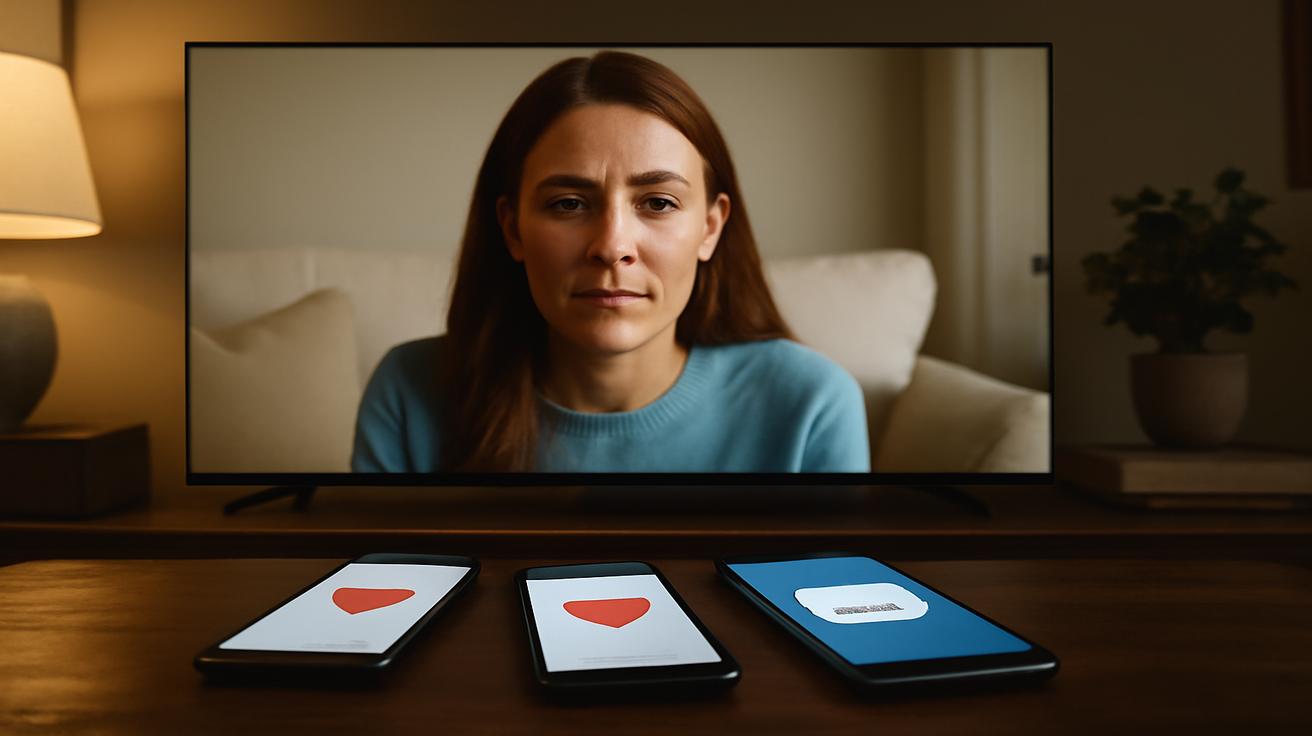
In living rooms and on buses, people watched the clip on phones, tablets, televisions. The experience of viewing it varied: some in silence, some with tears, some with an eyebrow raised. What unites these reactions is that they all take place in an increasingly crowded mental space—where news, gossip, entertainment, and private grief jostle side by side.
To watch Kate on that bench is to be confronted not only with her reality but with our own relationship to public suffering. How quickly do we turn people’s illness into content? How fast do we move from “how awful, I hope she’s okay” to “what does this mean for the monarchy’s future” or “I wonder if they’re hiding something else”? The speed with which sympathy and suspicion circulate says as much about us as it does about her.
Room for Both: Believing and Questioning
Maybe the only honest response is to allow both truths to coexist. To see Kate as a woman in an unimaginably difficult position and also as a central figure in a highly managed institution. To believe that her fear is real and that the video is carefully scripted. To acknowledge the manipulative potential of such a polished announcement without denying the human pain at its core.
It is possible to send her quiet goodwill—across oceans, across timelines—without fully trusting the palace machinery surrounding her. It is possible, too, to critique the timing and packaging of the video while still hoping fervently that her treatment goes well, that her children feel safe, that the bench in the Windsor garden remains a place where she can sit and breathe away from all of us.
Somewhere beyond the camera’s frame, beyond the castle wall, beyond the roaring echo chamber of global media, there are ordinary hours that belong only to her: hospital visits, follow-up calls, good days and bad days. We won’t see those. They won’t be curated into something shareable and neat. In that invisible space, far from the lens, the truth of her illness will play out in all its unscripted difficulty.
And maybe that is the most sobering realization of all. For every carefully constructed public moment—every statement, every video—there is another life running parallel, unpolished, unfilmed, stubbornly real. Kate Middleton’s announcement may be a model of curated vulnerability, designed to soothe both a restless public and a rattled institution. But the cancer it describes does not care about framing, or messaging, or royal protocol. It simply is.
We, the viewers, are left in the strange light of that garden, watching a woman we do not truly know speak a truth that is both fully hers and carefully shared with us. Our sympathy and our skepticism walk side by side as the video ends and the screen goes black, the faint echo of birdsong still hanging in the quiet afterward.
Frequently Asked Questions
Why did Kate Middleton choose a video to announce her cancer diagnosis?
A video allowed her to control tone, setting, and wording while showing her face and voice directly. It serves both as a personal message and an official statement, reducing misinterpretation while addressing intense public speculation.
Was the video really “carefully curated”?
Yes. The involvement of professional filming, the garden setting, thoughtful wardrobe, and structured messaging all point to a highly planned presentation. That doesn’t make it dishonest, but it does mean it was shaped for maximum clarity and emotional impact.
Why are some people skeptical about the announcement?
The skepticism stems from weeks of secrecy, an edited family photo controversy, and a broader climate of distrust toward institutions and media. Many viewers are wary of polished public narratives, even when they convey genuine personal news.
Can we both support Kate and question the palace’s handling of information?
Yes. It’s entirely possible to feel deep compassion for her as a patient and mother while critically examining how the royal institution manages communication, timing, and public relations around her situation.
Does Kate owe the public full details about her health?
No. She has the same right to medical privacy as anyone else. As a senior royal, there is a public interest in her well-being, but that doesn’t erase her right to keep specific diagnoses, prognoses, and treatment details private.
How has online culture shaped the reaction to her video?
Social media and 24/7 news cycles amplify both empathy and conspiracy. People can share support instantly, but they can also spread unfounded theories just as fast, creating a polarized environment around even deeply personal disclosures.
What does this mean for the future of the monarchy’s public image?
Moments like this make the royal family appear more human and vulnerable, but they also reveal the tensions between privacy, public expectation, and strategic image management. How the palace navigates that tension will shape public trust in the years to come.



Leave a Comment