
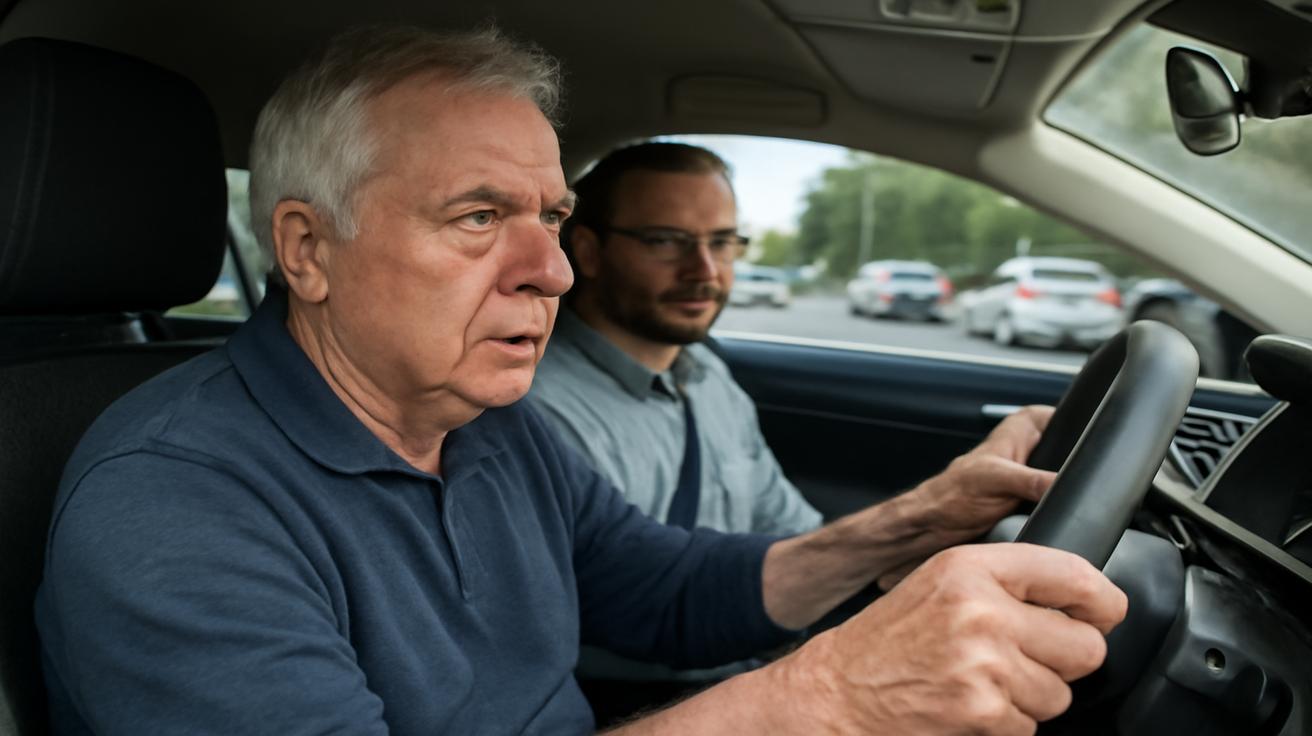
The first time I noticed it, the light turned green and I didn’t move.
Not because I was distracted. Not because I was on my phone (I don’t even keep it where I can reach it when I drive). I saw the light shift from red to green, registered it, and yet my foot lingered on the brake a heartbeat longer than it used to. Behind me, a car gave a quick, impatient tap of the horn. I eased forward, a hot flush of embarrassment rising in my cheeks. I used to be the one honking at people when they were slow to react. Now I was the person other drivers nudged back to attention.
I’m 65. I’ve been driving for nearly half a century. Highways, winter storms, city streets—I’ve handled them all. But over the past year or so, I’ve started to notice something I never expected to feel so keenly: a tiny lag, a subtle hesitation between seeing something and reacting to it. Not always. Not every trip. But often enough that, on quiet afternoons, I find myself replaying moments in my mind—Was that turn a little tight? Did I see that cyclist late? Why did that yellow light feel like it came out of nowhere?
If you’re around my age, maybe you’ve felt it too. You grip the steering wheel a little more firmly. Night driving feels less comfortable than it once did. Dense traffic, which used to be just an annoyance, now sometimes feels like a test. You haven’t “become old,” whatever that means, but something beneath the surface has shifted—quietly, gradually, like the tide slipping out.
The Subtle Shift: What Changes in Reaction Time After 65
Most of us think about aging in big, obvious milestones: needing reading glasses, the first gray hair, the day climbing stairs starts to feel like exercise. Reaction time, though, is sneakier. It doesn’t announce itself with a sudden breakdown. It melts into your days like fog—thin at first, barely there, but enough to blur the edges.
Scientists talk about “processing speed” when they really mean the time it takes your brain to notice something, make sense of it, decide what to do, and send the signal out to your body. Reaction time is just this chain in motion. At 25, it’s lightning fast. At 45, it’s still sharp. Around 65, tiny slowdowns begin to appear—not necessarily in your ability to think, but in how quickly the whole system works when the world throws something unexpected at you.
Driving is where these micro-delays show themselves most clearly. You’re scanning mirrors, watching lights, reading signs, listening for sirens. Your eyes flick from the car in front of you to the crosswalk. Your foot hovers over the gas or brake, ready. That dance between sense and action has always been electric. Then, gradually, it takes just a touch longer.
It’s not just about being “slow.” It’s about the fraction of a second that passes between the moment a child’s ball bounces into the road and the instant your foot slams the brake. Between noticing a car swerve in your lane and nudging your wheel to safety. At highway speeds, that fraction of a second is the difference between a scary moment and a tragic one—and your body knows it, even before your mind fully admits it.
| Age Range | Average Simple Reaction Time* | What It Feels Like on the Road |
|---|---|---|
| 25–35 | ~200–220 ms | Quick lane changes, confident in heavy traffic, easy merging. |
| 45–55 | ~230–250 ms | Still sharp; may notice brief hesitations in sudden situations. |
| 65–75 | ~260–280 ms | More cautious turns, extra space between cars, discomfort with chaos. |
| 75+ | Often > 280 ms | Avoidance of highways, night driving, or unfamiliar routes. |
| *Approximate population averages from cognitive aging research; individuals vary widely. | ||
So when you notice your reactions getting a bit slower at 65, it’s not a failure. It’s biology. The wiring still works; the signals just take a slightly longer route.
Inside the Aging Driver’s Body: Vision, Hearing, and Joints
Reaction time isn’t just a “brain thing.” When you’re behind the wheel, your entire body is part of the timing mechanism. Eyes, ears, neck, shoulders, wrists, hips, knees—every joint and sense becomes part of how quickly you notice and respond.
Your Eyes: Night, Glare, and Tiny Print
One evening, not long after that green light episode, I was driving home at dusk. The world had that in-between quality—neither fully day nor fully night. Headlights began blinking on, smearing faint halos across my windshield. Suddenly, the oncoming line of cars felt like a river of glare. The white lines on the pavement blurred, subtle in the fading light. My hands tightened on the steering wheel, and I slowed down a little more than the car behind me liked.
Age brings predictable changes to our eyes:
- The pupils react more slowly when light shifts—from bright sun into a tunnel, or from a dark street into oncoming headlights.
- We need more light to see clearly, but bright lights also bother us more—an unfair trade-off.
- Depth perception may soften a bit, making it harder to judge the speed of the car that’s about to pass or how far away that cyclist really is.
- Peripheral vision can shrink slightly, narrowing the world just when we need the full picture.
None of these mean you can’t drive. But they do mean the visual part of reacting—the simple act of knowing what’s happening around you—takes more deliberate effort. Where your younger self might have glanced once and understood everything, now you sometimes need a second or longer look.
Your Ears: The Quiet Threat
Hearing sneaks away more quietly than sight. You don’t always notice the loss, because the world is still full of sound. But some of the sharpest, most crucial noises—the soft whir of a bicycle gear beside you, the distant siren winding toward your intersection, the quick honk from a car hiding in your blind spot—may no longer slice through the noise of the road the way they used to.
On the road, you’re not just watching; you’re listening for clues. A younger brain might pick up the faint whoosh of a car in the next lane even when your eyes are elsewhere. With aging ears, those cues can fade to background—or disappear entirely.
Your Joints and Muscles: Turning, Twisting, and Stopping
There’s also the body itself—the physical act of reacting. Turning your head to check your blind spot. Lifting your foot from the gas and pressing it firmly onto the brake. Twisting your torso as you back out of a tight parking space. These movements used to be almost invisible to your awareness, woven into the rhythm of driving.
But at 65, this choreography can feel different:
- A mild stiffness in your neck makes you turn less far to the side.
- Arthritis in your knee or ankle adds a dull ache when you press the pedal.
- Your hands might not respond as quickly or as forcefully when you jerk the wheel to avoid a pothole.
So reaction time isn’t just the instant your brain says “Brake!”—it’s also how quickly your body can obey.
The Brain’s Quiet Adjustments: Attention, Multitasking, and Stress
One of the oddest parts of getting older is realizing your mind still feels like “you,” but its rhythms have changed. You’re probably just as wise—wiser, in fact. You may be better at seeing the big picture, reading people, spotting risks before they happen. But the quick-switch attention needed in chaotic traffic? That’s where the strain creeps in.
From Multitasking to Single-Tasking
Driving is one of the most relentless examples of multitasking in daily life. At once, you’re:
- Watching the road ahead
- Scanning mirrors
- Monitoring your speed
- Reading signs
- Tracking pedestrians, cyclists, and other cars
- Following directions or a GPS voice
In younger years, your brain may juggle all this with a kind of unconscious ease. But as we age, the brain starts preferring “single-tasking.” It can still do complex things—it just wants to do them one at a time. Sudden demands to switch attention—Stop here! Turn now! Watch that car!—take more effort and feel more draining.
This doesn’t mean you’re “losing it.” It means your brain is less interested in constant chaos. Think of it as wisdom with a reduced appetite for noise—and driving is, unfortunately, a noisy task.
Stress Response: When the Heart Jumps
Have you noticed how a sudden close call—a car cutting you off, a pedestrian stepping into the crosswalk late—hits you harder now? Your heart thumps louder. Your hands sweat. The aftershock lingers for minutes, not seconds. That’s your stress response working in a slightly more sensitive way.
As we age, our nervous systems can become less flexible. Instead of ramping up and then quickly returning to calm, they may stay in “alert” mode longer. On the road, this can turn a simple surprise into a rattling experience. You might drive more slowly afterward, feel rattled the whole trip, or decide to avoid that route in the future. Fear starts to factor into your reaction time; hesitation becomes part of self-protection.
Real-World Impact: How Slower Reactions Actually Change Your Driving
So what does all this add up to when you’re sitting in the driver’s seat, looking over a dashboard at the moving world? Not everyone over 65 drives the same way, of course. Some are still nimble and confident, others far more cautious. But certain patterns show up again and again.
You might notice that you:
- Leave more distance between your car and the one in front of you, especially at higher speeds.
- Take extra time before pulling into traffic, waiting for a bigger gap than you used to demand.
- Feel uneasy when other cars change lanes suddenly or weave through traffic.
- Start avoiding left turns across busy roads if there’s no protected arrow.
- Prefer quieter routes, even if they take a few minutes longer.
These are not signs of failure. In many ways, they are smart adaptations—ways your brain and body adjust to new limits. What becomes risky is when pride or denial blocks those adjustments, when someone insists on driving exactly as they did at 40 despite knowing, deep down, that their timing has changed.
There’s another twist: experience. A lifetime of driving means you’ve developed instincts a new driver doesn’t have. You anticipate dangers before they appear. You notice that the car ahead of the car ahead is braking. You spot a distracted driver from the subtle wobble in their lane long before a teenager would. That wisdom can offset slower raw reaction speed. In fact, many older drivers have fewer crashes per mile than younger ones—up to a point—because caution and foresight become powerful compensations.
What You Can Actually Do About Slower Reactions
Slower reactions at 65 are not a sentence to hand over your keys tomorrow. They are an invitation to drive differently—and to take care of your body and brain with more intention.
Shape Your Environment
- Choose your times: Drive in daylight whenever possible. Avoid rush hour if it leaves you tense and exhausted.
- Pick your routes: Favor roads with clear markings, slower speed limits, fewer complex intersections, and protected left-turn arrows.
- Control your cabin: Turn down the radio. Ask chatty passengers to pause during complicated maneuvers. Reduce visual clutter on the dashboard.
Support Your Senses
- Get regular eye exams: Glasses prescriptions change. Cataracts creep in gradually. Don’t wait until signs blur and headlights starburst into painful halos before seeing someone.
- Check your hearing: A hearing aid isn’t just about conversation; it’s about picking up those small, crucial road sounds.
- Maximize visibility: Keep windows clean inside and out. Replace wiper blades regularly. Use anti-glare coatings if recommended.
Keep Your Body Ready
- Stay limber: Gentle stretching for your neck, shoulders, and hips can make shoulder checks and quick movements easier.
- Strengthen your legs and core: Strong muscles help you move your feet quickly and maintain control during sudden stops.
- Manage pain: If arthritis or chronic pain steals your attention from the road, talk with a doctor about treatments that leave you alert, not drowsy.
Sharpen Your Mind
- Practice focus: Simple brain games, puzzles, and reaction-time apps can help keep your processing speed tuned up, or at least more awake.
- Drive like it’s your only job: No food, no texts, no adjusting complicated screens while moving. Your attention is now your most precious safety tool.
Know When to Ask for Backup
There may come a time when certain drives are better shared. Asking a family member to take the wheel for nighttime trips, long highway drives, or confusing new routes isn’t defeat; it’s an adaptation. In many families, older adults trade driving young children for getting rides at night—a quiet exchange of care across generations.
And if you ever truly wonder, “Am I still safe to drive?”, that question itself is worth listening to. Occupational therapists and driving rehabilitation specialists can evaluate your skills in a more objective way. Sometimes, the result is reassuring. Other times, it offers specific changes you can make—different seating positions, mirrors, even vehicle technology that helps compensate.
A New Kind of Confidence at 65 and Beyond
Here’s the part no one really tells you: there’s a different kind of confidence available at 65, one that doesn’t rely on being the quickest person on the road.
It lives in knowing yourself honestly. In adjusting gracefully to what your body and brain can still do beautifully, instead of clinging to what they used to do thoughtlessly. It shows up when you say, “I don’t drive at night anymore,” and feel relief, not shame. When you leave an extra car length in front of you and let the impatient driver behind you dart around, instead of matching their tension.
Your reaction time may be slower now, yes. But your ability to anticipate, to choose your environment, to shape your habits—that has never been stronger. Behind the wheel, that combination can still carry you where you need to go, if you let wisdom steer as much as reflexes.
So the next time the light turns green and you’re a heartbeat late to respond, notice it. Not with harshness, but with curiosity. This is your body telling the story of time. Adjust your seat, breathe, give yourself a bigger buffer of space on the road. You haven’t become less of a driver; you’ve simply become a different kind. One who knows that staying safe isn’t about proving you can still react in an instant—it’s about giving yourself enough margin that you rarely have to.
FAQ
Does everyone’s reaction time slow after 65?
Almost everyone experiences some slowing, but the degree varies a lot. Health, fitness, sleep, medications, and lifelong habits all influence how quickly you react. Some 75-year-olds are faster than some 50-year-olds.
Is slower reaction time alone a reason to stop driving?
Not usually. Slower reactions become dangerous mainly when they’re combined with other issues—poor vision, confusion, heavy medications, or risky driving habits. Many people continue to drive safely well into their 70s and 80s by adapting how, when, and where they drive.
Can I actually improve my reaction time at my age?
You may not return to your 25-year-old speed, but you can often sharpen what you have. Regular physical activity, good sleep, brain-challenging activities, and minimizing distractions all help keep your reaction time as quick and reliable as possible.
What are warning signs that I might no longer be safe to drive?
Frequent close calls, getting lost on familiar routes, new dents or scrapes on your car, trouble staying in your lane, confusion at intersections, or family members expressing concern are all signals to take seriously and discuss with a professional.
How can family members talk about this without causing conflict?
Focus on safety and independence rather than criticism. Ask open questions: “How do you feel about driving at night lately?” Offer support and alternatives, like sharing driving duties, arranging rides, or exploring community transport, instead of simply saying, “You should stop driving.”






Leave a Comment