
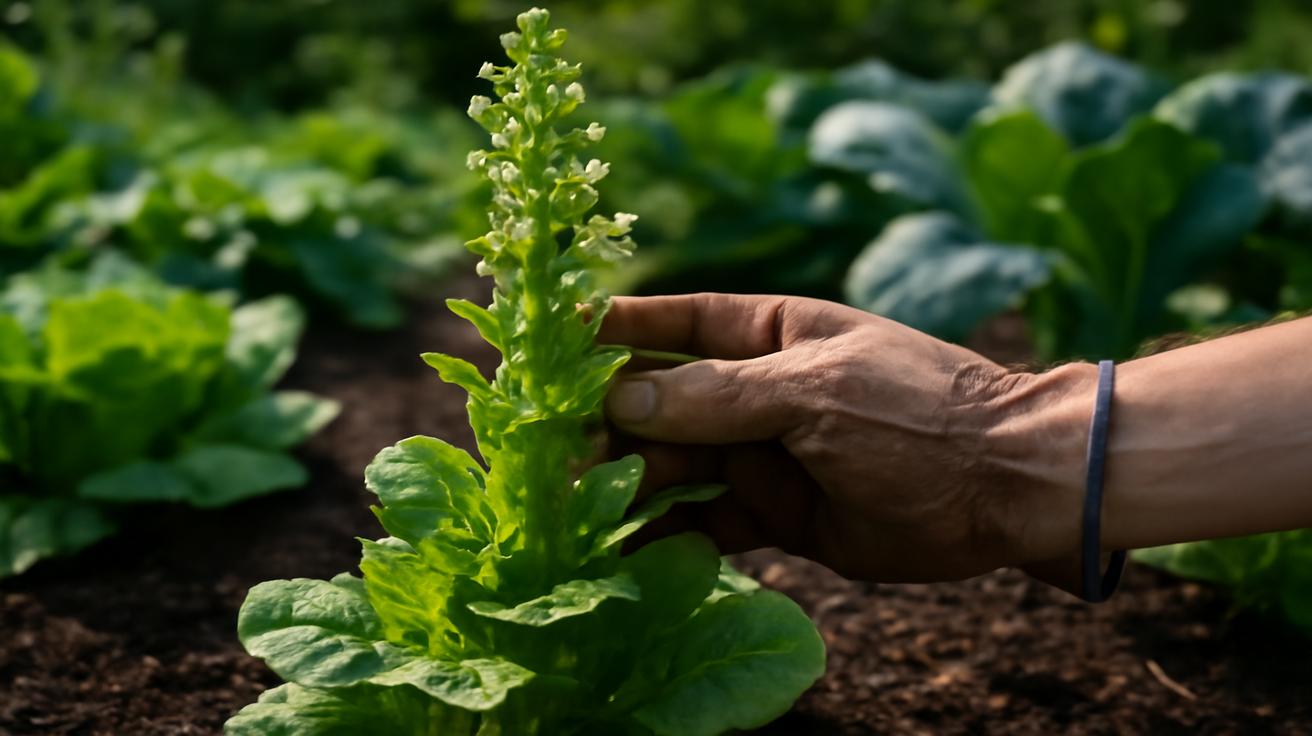
The first time I watched a row of lettuces bolt, I thought I’d done everything right. The soil was rich and crumbly, the seedlings had gone in on a cool, soft April afternoon, and I’d even whispered a little encouragement as I tucked them in. Weeks later, just when the heads should have been plumping up into tight, crisp rosettes, they shot skyward in a frenzy of stems and flower buds. Overnight, it seemed, my future salads had turned into lanky bouquets. The common wisdom said: “Too hot. They bolted from the heat.” But the air that morning was still cool, wrapped in gentle mist. My thermometer, stuck smugly in the soil, read 63°F. Something didn’t add up.
When Your Garden Starts Running Before It Can Walk
Bolting is such a dramatic word, and in the garden it really does look like a sprint. One day the plants are compact, leafy, seemingly content. The next day, a central stem pushes up, elongating rapidly, as if the plant has remembered some urgent appointment elsewhere. Leaves thin out and toughen. Bitterness creeps into flavors that used to be sweet and mild. It feels like betrayal, especially when you’ve counted on those carrots, radishes, or cilantro for weeks.
Most of us are taught a simple cause-and-effect story: temperature rises, plant panics, flowers form. But if you spend enough seasons with soil under your fingernails, you start to notice how incomplete that story is. Sometimes plants bolt in mild weather. Sometimes they hold steady through a surprising heatwave. Sometimes one variety rockets to bloom while another, just inches away, calmly continues to leaf out. Temperature matters, yes. Yet beneath that convenient explanation lies a quieter set of triggers that have nothing to do with a hot afternoon.
This is where gardening shifts from a list of rules to an ongoing conversation with your plants. Instead of asking, “Why is it so hot?” you start asking, “What story is this plant telling about its past few weeks?” The answer is rarely just about degrees on a thermometer.
Plants Have Memories You Can’t See
Walk through a garden in early spring and it feels like a place of beginnings. Seeds cracking open, cotyledons unfolding, the whole year ahead full of possibilities. But to many plants, spring is not a beginning at all; it’s a milestone. By the time you see those tidy rows of greens, a quiet calculation has already taken place inside their cells. A decision, really: keep building leaves, or shift gears toward flowers and seed.
That internal decision has a lot to do with memory. Certain vegetables—especially biennials like carrots, beets, onions, and many brassicas—carry a biological notebook of the temperatures they’ve experienced. It’s called vernalization: exposure to a stretch of cold that signals winter has passed and it’s time, in the plant’s view, to reproduce. When we sow or transplant at just the wrong moment, we unknowingly help these plants check off that “winter” box far earlier than we intended.
Picture a tray of young onion seedlings hardened off on a chilly porch in late March. Days hover just above freezing; nights nip below. To us, this is “early spring.” To the onions, especially certain long-day types, that chill whispers, “You survived the cold; next step is flowering.” Weeks later, on a warm May afternoon, the gardener stares in confusion at the thickening necks and emerging scapes. The trigger wasn’t today’s warmth, but last month’s cold.
The same thing happens when young beet or carrot seedlings get caught in a spell of unseasonably frosty nights. They don’t bolt immediately, which is why we rarely connect the dots. The plant just files the experience away. Then, when day length stretches and temperatures become pleasant, the mental checklist concludes: “Season complete, reproduction time.” Up shoot the flower stalks, seemingly without warning.
Stress: The Quiet Spark Behind Sudden Flower Stalks
Temperature gets so much blame because it’s easy to feel and easy to measure. Stress, on the other hand, is murkier. To a plant, stress is not a bad day at the office; it’s a question of survival. And survival questions don’t wait politely for the perfect season. They demand a response right now—often, that response is bolting.
Imagine a row of spinach on a windy ridge. One week, you forget to water. The soil dries into pale dust between the roots. The sun is not brutal, just steady, but the wind pulls moisture from every surface. The spinach doesn’t keel over dramatically. It tightens its leaves, deepens its color, and quietly revises its plans. From the plant’s perspective, drought might be the first hint of a hard summer. Better to rush into seed than risk dying leaf-rich and childless.
Stress wears many disguises. There’s root stress, when containers are too small or the soil is compacted and shallow. There’s nutrient stress, when nitrogen runs low or an imbalance locks up key minerals. There’s transplant shock, when a pampered seedling leaves the cozy microclimate of a greenhouse for the unpredictable outdoors. Even sudden changes in humidity or light can create a jolt.
We often see the symptoms—yellowing leaves, slower growth, slight wilting—yet the more subtle outcome is developmental. Stress shortens timelines. It tells the plant: “Conditions might never be better than this. Go make seed.” That response can happen even when temperatures are downright comfortable.
Take cilantro. You can sow it in pleasant, cool weather and still watch it bolt in weeks if the soil dries between waterings or the roots become crowded. Or lettuce planted too densely, forced to compete for every sip of water and flake of nutrients, decides there’s no point in staying tender and leafy in such cramped conditions. Up, up, and away it goes into a tower of bitterness.
Day Length, Genetics, and the Secret Timers in Your Beds
Step outside at dusk in late spring and notice how long it takes the garden to dim into blue. The birds linger in their songs, the air holds light well into the evening. While we enjoy the slow fade of daylight, many of our vegetables are counting minutes with ruthless precision.
Plants use day length—photoperiod—as a remarkably reliable calendar. For some species, especially leafy greens, herbs, and certain root crops, increasing daylight is a primary bolt trigger. It doesn’t matter if those long days are mild and cool; the mere stretch of sunlight hours can flip the flowering switch.
Spinach is famous for this. Sowed in late spring under a bright, lengthening sky, it often bolts even if the temperature never climbs to what we’d call “too hot.” In contrast, the same variety sewn early, when days are shorter, can hold for weeks longer, unfurling leaf after leaf. The plant’s internal clock is less interested in the midday breeze and more in the accumulated glow of sunrise to sunset.
Then there’s genetics—a word that sounds clinical but in the garden feels deeply personal. Every variety you plant carries its own sense of urgency, shaped by the climate and culture where it was bred. Some lettuces are bred for cool northern summers and shy away from long daylight. Others, selected generation after generation in warmer regions, tolerate heat and light with serene patience.
Plant an early-bolting variety of arugula in late May and you may never taste more than a handful of leaves before the peppery rockets turn to towers of flowers. Sow a slower, bolt-resistant strain at the same time, and you might still be harvesting tender greens well into early summer. The difference isn’t your care or the week’s forecast—it’s the invisible script written into their seeds.
| Vegetable | Less-Obvious Bolt Triggers | What To Watch For |
|---|---|---|
| Onions | Cold exposure to young plants (vernalization), wrong day-length type for your latitude | Thick necks, hollow stems, early flower stalks instead of bulbing |
| Carrots & Beets | Chilling as seedlings, root disturbance, severe drought or compaction | Center stem elongates, roots stop swelling, flavor turns woody |
| Lettuce | Crowding, inconsistent moisture, sudden nutrient shifts, long days | Core lengthens, leaves stand more upright, taste becomes bitter |
| Spinach | Increasing day length more than temperature; transplant shock | Tight rosette suddenly sends up narrow, pointed flower stalks |
| Cilantro | Dry soil, root crowding, long days even in cool weather | Central stems elongate, leaves become finer, flavor gets soapy or harsh |
Reading the Subtle Warnings Before the Sprint
Once you’ve watched enough plants bolt, you start noticing the prelude. It’s a bit like hearing the orchestra tune up before the curtain rises: a series of small cues that something is about to change. Learning to read those cues shifts you from helpless spectator to active collaborator.
In lettuce, the heart thickens and rises, turning the once-flat rosette into a loose, upright arrangement. The leaves stiffen, their ribs more pronounced. If you slice a plant vertically, you see a pale spine in the center—this is the flowering stalk assembling itself, vertebra by vertebra. At this stage, you still have time to harvest most of the patch for decent eating.
Spinach often alters its shape more than its color. The leaves narrow, taking on a more arrow-like point. The center cluster of leaves grows more vertical, less spread out, like a fist unclenching upwards. Cilantro becomes feathery, its leaves finer and more lacy as it prepares to bloom. Arugula’s peppery punch intensifies to a sharpness that borders on medicinal.
These are not simply aesthetic changes. They’re the plant’s way of reallocating resources, trading tenderness for architecture, sugars for scaffolding. When you spot these shifts, it’s time to make quick decisions: harvest heavily, cut entire plants, or let a few go on to flower for the pollinators and seeds.
And here’s the subtle mercy: while bolting is technically the end of the prime eating window, it can be the beginning of something else. Flowering cilantro draws hoverflies and lacewings. Blooming arugula hums with small native bees. Even bolted lettuce, left alone, becomes a banner for goldfinches that tug at the fluffy seeds weeks later. The garden is never as linear as seed catalogs make it look.
Working With, Not Against, a Plant’s Quiet Decisions
The more you understand that temperature is only one actor in a crowded cast, the more flexible your gardening becomes. Instead of fighting bolting as an enemy, you begin to design around it.
That might mean sowing cool-loving crops in succession, accepting that spring plantings will always have a shorter life in your climate while later shady sowings might carry you through summer. It might mean choosing varieties labeled “slow to bolt” or “heat tolerant,” not as marketing fluff but as clues to their genetic pacing.
It can mean paying unusual attention to a plant’s childhood. Rather than raising brassicas or onions in a drafty corner of the unheated shed, you keep them just warm enough that they never experience a false winter. You harden them off gently, avoiding sudden plunges in temperature. You transplant not the moment the ground can technically be worked, but after the worst see-saw nights have passed.
It might mean changing how you water. Instead of deep droughts followed by gushing floods, you focus on steady moisture, especially during the weeks when crops are shifting from seedling to established plants. Mulch ceases to be a decorative afterthought and becomes a tool: straw around lettuces, shredded leaves around beets, a living mulch of low herbs to keep roots cooler and more consistently damp.
Above all, it means letting go of the idea that any single weather event ruined your crop. More often, bolting arrives as the final line of a story that started earlier—the cold-snap that grazed your seedlings, the crowded tray that delayed transplanting, the neglected watering can during a breezy week. When you see the whole arc, you can rewrite next season’s story, one gentle adjustment at a time.
Turning Frustration Into Curiosity
On a soft June evening, I walk past a bed of lettuce that I’d written off a week ago. The centers are fully stretched now, each plant crowned with a spray of tiny buds. Their leaves are no longer salad material by any stretch—the bitterness hits the tongue like a metal spoon. But the bees are ecstatic, nosing around the small, starry blooms. A goldfinch clings upside down to a neighboring stem, testing seeds that aren’t quite ready yet, but soon will be.
I kneel and tug at one plant, feeling the fibrous stem resist with a strength it didn’t have a month ago. I remember the cold rain that battered it as a seedling, the crowded tray it lingered in while I procrastinated planting, the week I forgot to thin, the missed watering on a hot, windy day. Temperature played its part in this story, but it was never the lone villain.
In that realization, the garden becomes less a battleground and more a place of negotiation. When something bolts “too early,” I don’t just curse the heat anymore. I walk back through the season in my mind: when did these plants feel threatened, rushed, or tricked by a false signal of winter passing? What quiet message did they receive that said, “Time is shorter than you think”?
There’s a kind of peace in accepting that plants are always keeping their own counsel. They respond not only to the weather we notice, but to patterns we easily overlook—day length creeping longer, subtle cold spells, the tightness of their roots encircled by plastic or clay. They are historians of their own experience, and bolting is simply the climax of a story we weren’t fully reading.
So the next time your vegetables rush into flowers before you’re ready, resist the urge to blame a single scorching afternoon. Instead, run your fingers over the soil, recall the spring’s oddities, compare one variety’s behavior to another’s. Trade frustration for curiosity. Ask, not “Why did it get so hot?” but “What did this plant live through before today?”
Somewhere between the cold snaps and the long blue evenings, between the watering you missed and the variety you chose, you’ll find your answer. And next season, with that quiet knowledge in hand, your garden may linger just a little longer in the leafy, delicious in-between—before the irresistible pull of flowers and seeds sends it bolting, inevitably, toward the sky.
Frequently Asked Questions
Why did my lettuce bolt even though the weather stayed cool?
Cool air alone doesn’t prevent bolting. Lettuce can respond to increasing day length, inconsistent watering, crowding, or stress from poor soil and transplant shock. If your spring was bright and long-day, or if plants were crowded or stressed, they can bolt in surprisingly mild temperatures.
Can I still eat vegetables after they start to bolt?
Yes, but quality drops quickly. Leaves usually turn bitter and tough, and roots may become woody. Harvest as soon as you see stems elongating—focus on outer leaves or younger plants. For some crops, like onions and garlic, you can use the green flower stalks (scapes) in the kitchen even if bulbs don’t store well.
How can I reduce the chances of early bolting?
Choose bolt-resistant varieties, sow at the right time for your climate, and protect seedlings from chilling. Keep soil moisture steady with mulch, avoid overcrowding, and harden off transplants gently. Also pay attention to day length—grow cool-loving, bolt-prone crops earlier or in partial shade as days get longer.
Is bolting always a bad thing?
Not necessarily. While it ends peak eating quality, bolting provides flowers for pollinators and seeds for saving. Some bolted crops, like cilantro, give you coriander seed; arugula and mustards offer edible flowers. Letting a few plants bolt can enrich your garden’s ecology and your seed stash.
What’s the difference between heat stress and vernalization?
Heat stress is short-term exposure to high temperatures that can push annuals to flower quickly. Vernalization is longer exposure to cold that convinces biennials and some annuals that winter has passed, triggering flowering later. Both can lead to bolting, but they operate on different timelines and affect different crops.








Leave a Comment