
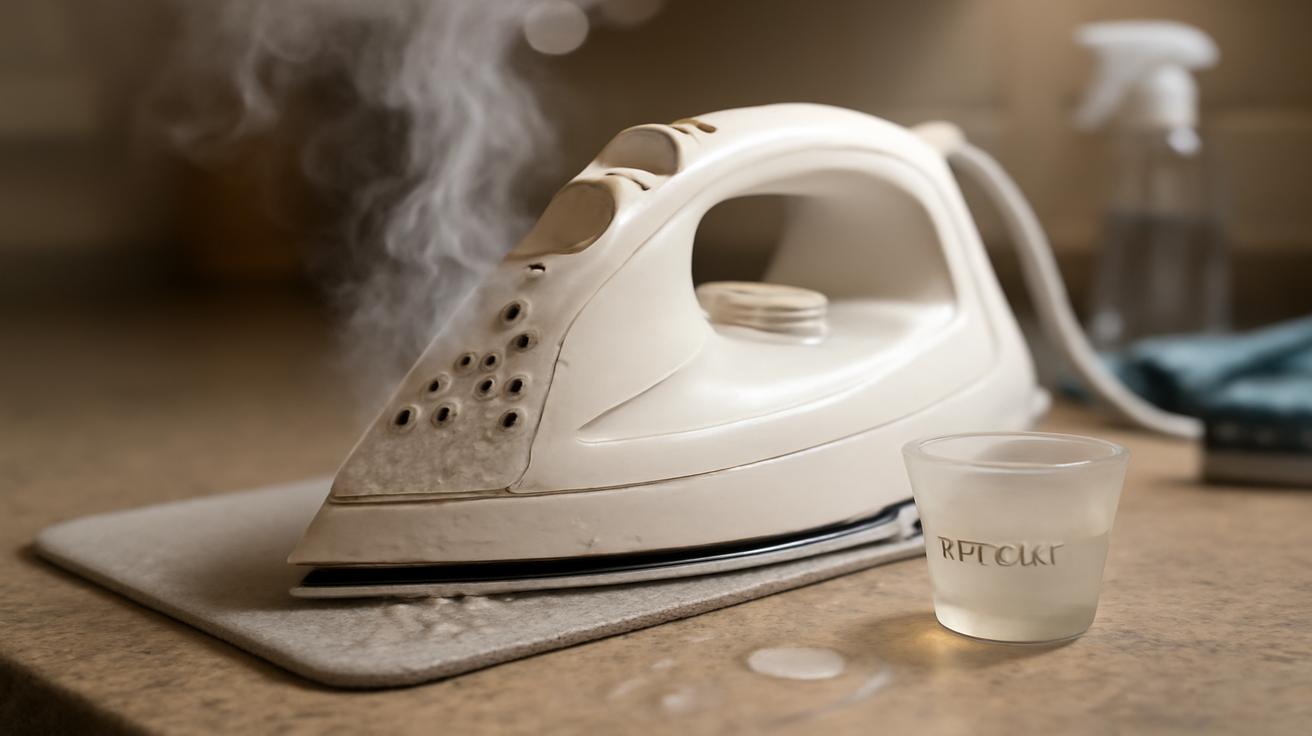
The first thing I noticed was the smell—the sharp, sour tang of white vinegar rising up in a quiet curl of steam, mingling with the ghost of old laundry detergent and scorched fabric. My iron sat on the kitchen counter like a little, sullen animal, its once-sleek soleplate now a mottled landscape of brown stains and chalky white deposits. It had been dragging across my shirts for weeks, snagging on collars, leaving faint rust-colored kisses on pale cotton. That evening, I decided we were either going to fix our relationship—or end it.
The Day My Iron Turned Against Me
It started, as these things often do, with a favorite shirt and a bad idea.
The shirt was a pale blue linen button-up, the kind that somehow makes you feel like you’ve got your life a little more together than you actually do. I’d washed it, hung it carefully, and laid it out on the ironing board with almost ceremonial respect. The iron, still warm from the previous week’s efforts, glided down the first sleeve without complaint. On the second pass, it snagged slightly at the cuff. I pressed harder.
A faint scent of burning rose up. Then, a whisper of brown streaked across the fabric, and I froze. Right on the cuff, a thin, sepia smear—subtle but unmistakable—traced the line where the iron had passed. I lifted the iron and stared at its underside. The once-mirrored steel was clouded and blotchy, like tarnished silver. There were tiny crusted flakes at the steam holes, the kind that come from hard water and forgetfulness.
I unplugged it and set it upright, irritation turning into resignation. I knew exactly what I’d done: months of filling the water tank straight from the tap, ignoring the little note in the manual that suggested distilled water. It felt like the iron was getting its quiet revenge.
Googling, Guessing, and the Vinegar Gamble
The internet, of course, had opinions. Some whispered stern warnings about never using vinegar in an iron. Others insisted vinegar was the miracle cure for every crusty, calcified, misbehaving appliance in the house. I sat in front of my laptop, the iron cool but accusing in front of me, and scrolled through post after post, the digital equivalent of people shouting over each other at a village market.
There were horror stories—soleplates eaten away, coatings destroyed, warranties voided with a hiss and a sigh. But there were also success stories: miraculous resurrections of irons that had spat and sputtered their way back to life after a good soak in diluted vinegar. I weighed my options. The iron was already staining clothes. It wasn’t steaming properly. I’d cleaned the exterior, wiped the plate, poked at the steam holes with cotton swabs. Nothing.
In the end, it came down to a practical—and slightly reckless—decision: if the iron was unusable anyway, what did I really have to lose?
I fetched the plain white vinegar from under the sink. As I unscrewed the cap, that unmistakable acid scent rose up, clean and harsh, cutting through the faint smell of last night’s cooking. I poured a bit into a glass measuring cup, then added water. The ratio, in my making-it-up-as-I-go wisdom, became half vinegar, half water. I watched the clear liquid swirl, thinking: This is either going to save my iron or finish it off in dramatic style.
Mixing the Potion: A Kitchen Counter Experiment
There was something almost ritualistic about it. The kitchen was quiet, late-day light slanting through the window, turning the vinegar mixture into a pale, shimmering pool. I picked up the iron, tipped it slightly, and opened the water tank cover. It made that hollow, plasticky pop that always feels vaguely like opening the hood of a car you barely understand.
I poured the vinegar-and-water in slowly. The iron gave no sign of protest, no warning rattle, just that small glug-glug-glug as the tank filled. I closed the cover and set the iron upright again, suddenly very aware that I was about to plug a liquid-filled, heat-producing metal object into a wall socket and hope for the best.
My finger hovered over the outlet for a moment. I told myself to be rational. People did this all the time, I reassured myself, though the chorus of conflicting online advice suggested otherwise. Still, curiosity and mild stubbornness won the day.
I plugged it in.
When the Iron Hissed Back
At first, nothing. The iron sat there, warming up in the same patient, familiar way it always did. The little indicator light flicked on. The soleplate began to radiate heat. I stood back slightly, more nervous than I wanted to admit, and set the temperature to the middle setting—hot enough to persuade, I figured, but not so hot as to be reckless.
Then came the hiss.
It wasn’t the gentle puff of normal steam, but something more insistent, a damp, raspy exhale like an annoyed cat. A thin ribbon of vapor slipped from the sides, and the air filled fast with the sharp tang of heated vinegar. The smell seemed to grow muscle when warmed—suddenly the whole kitchen smelled like a salad gone rogue.
I pressed the steam button.
That’s when it smoked.
A cloud of white mist burst from the steam holes, not quite smoke, not quite steam, but an aggressive plume that curled upward in a ghostly swirl. For a split second, my brain screamed, You’ve killed it. You’ve actually murdered your iron. But underneath the drama, something else was happening: little flecks, almost invisible, were spitting out with the vapor, landing harmlessly on the old towel I’d laid across the counter just in case.
The iron kept hissing, exhaling that sour, steamy breath. I held it a few inches above the towel and triggered more bursts of steam. The inside, I realized, was purging itself—dissolving the mineral buildup, the hidden scale lining the tiny passages, and flinging it out like a furiously sneezing dragon.
The Ugly, Satisfying Part
There’s a strange satisfaction in watching something gross but necessary happen. Like cleaning a drain or shaking out a vacuum filter, you don’t really want to see what comes out—but you’re also deeply, primitively pleased that it is coming out.
The steam kept surging through, sometimes clear, sometimes trailing vague wisps of grayish vapor. The smell of hot vinegar stuck to the back of my throat. My eyes watered slightly. A little voice in the back of my head wondered if my neighbors could smell this and were now reconsidering their opinion of me.
Still, I couldn’t look away. I pressed the steam button again and again, like I was squeezing out years of neglect. After a few minutes, the dramatic hissing softened. The bursts of vinegar-steam became smoother, more regular, less menacing. No more weird flecks. No more sputtering. Just steady, even puffs.
The iron, it seemed, had gotten whatever it needed to say off its chest.
The Moment of Truth on the Ironing Board
Once the water tank was almost empty, I unplugged the iron and let it cool. The kitchen felt strangely quiet after all that noise and vapor, like the silence after a summer thunderstorm. There was a faint, echoing scent of vinegar in the air, but it had softened around the edges, fading into the background along with my anxiety.
When the iron was cool enough to touch, I wiped the soleplate with a damp cloth. Brownish smudges came off easily, along with a few chalky streaks. The metal underneath shone a little brighter, like it had finally taken a deep breath after a long, constrained silence.
This was only half the job, though. I refilled the tank with plain, clean water—no vinegar this time—and plugged the iron back in. This round, I was calmer. No improvised potions, no risky experiments—just a rinse to wash away any lingering acidity inside.
The iron heated up again, the indicator light snapping to attention. When I hit the steam button, a clean, delicate mist emerged, almost elegant compared to the earlier fury. No sputter. No flecks. The smell? Just warm metal and a hint of nothing.
I spread the blue linen shirt out again, with a bit more hope than before, and set the hot soleplate on the fabric.
It glided.
Not the reluctant drag of before, but a smooth, easy slide—like the difference between trudging through mud and skating on ice. The steam billowed softly, doing that little trick where wrinkles visibly melt away in an instant, transforming rumpled chaos into crisp lines. I moved the iron back and forth, almost in disbelief, listening to the soft shh-shh sound it made across the cloth.
No stains. No snags. No burned edges. Just clean, pressed linen and the feeling of having salvaged something I’d half written off as doomed.
How Vinegar Quietly Saves the Day
It felt almost too simple: a splash of vinegar, a bit of heat, some theatrical hissing—and suddenly a misbehaving iron was performing like it had just come out of the box. Once my shirt was neatly folded and the adventure had settled, my curiosity kicked in fully. Why had it worked so well?
Vinegar, that unassuming bottle tucked behind olive oil and soy sauce, carries a neat bit of chemistry in its clear depths. The acetic acid in white vinegar is mild enough to be safe on many surfaces but strong enough to dissolve mineral deposits like limescale—the chalky residue left by hard water inside appliances. Over time, those minerals settle inside an iron’s hidden channels and valves, quietly constricting the flow of steam until it clogs and spits, or stops altogether.
When the vinegar solution heated, it flowed through those same tiny pathways, softening and dissolving the buildup, like a river wearing away a dam. The violent hissing and eerie “smoke” were both the sound and the sight of that eviction—the iron coughing out everything it had been holding onto.
It wasn’t magic. It was just chemistry doing what chemistry does best—slowly, invisibly, until suddenly the result is obvious and dramatic.
A Few Quiet Rules I Learned Along the Way
Of course, there’s a line between clever household ingenuity and reckless appliance sabotage. That night with the vinegar and the smoking iron taught me a nervous respect for that line. I realized there were a few quiet, sensible rules hiding beneath my impulsive experiment.
| Step | What I Did | Why It Helped |
|---|---|---|
| 1 | Mixed equal parts white vinegar and water | Diluted the acid so it was strong enough to dissolve scale but not overly harsh |
| 2 | Poured into a cool iron’s water tank | Let the solution sit in the areas where deposits had built up |
| 3 | Heated the iron and triggered repeated bursts of steam over an old towel | Forced the dissolved mineral gunk out through the steam holes |
| 4 | Emptied, then refilled with plain water and steamed again | Rinsed away any remaining vinegar and residue from inside the iron |
| 5 | Wiped the cooled soleplate with a damp cloth | Removed loosened stains, leaving a smoother surface for gliding |
There were some unspoken lessons too:
- Always check whether your iron has a special coating on the soleplate that might not love acid.
- Never use vinegar straight and undiluted in the tank—it doesn’t need to be that strong to work.
- Make sure the room is ventilated; breathing in a cloud of hot vinegar isn’t anyone’s idea of fun.
- Use an old towel or cloth you don’t care about to catch whatever comes out.
In other words: a bit of care, a touch of common sense, and a willingness to forgive a few dramatic sound effects go a long way.
After the Smoke Clears
For days afterward, I kept looking for an excuse to iron something. A crumpled pillowcase? I’ll take it. A tablecloth with one stubborn crease? Step aside. There was a quiet joy in feeling that smooth glide, hearing the steady breath of steam. It felt like I’d rescued a tool from the brink—and, in a small way, rescued my clothes from future ruin.
There was also something strangely grounding about it. So much in life now is sealed and inscrutable: apps that glitch with no visible fix, devices that die without warning, software that updates itself in the background while you’re just trying to send an email. But this? This was tangible. Water, vinegar, heat, mineral deposits. Cause and effect you could see, smell, hear.
Standing in my kitchen, holding a now-compliant iron, I felt an unexpected kind of competence—like I’d learned a minor secret of the domestic universe. Not exactly heroic, but quietly satisfying.
What That Hissing Iron Taught Me
That small drama with the vinegar and the smoking iron left a mark that went beyond just having neater shirts. It nudged me into noticing all the other things in my home that were silently soldiering on, a little clogged, a little dulled by time and neglect. The kettle with its ring of scale at the bottom. The showerhead that no longer produced a generous cascade but a tired sprinkle. The dishwasher filter I preferred not to think about.
They all had the same message, in their own low-key way: care is cumulative. The little things we don’t do add up just as surely as the ones we do.
That day, my iron hissed and smoked its way back into usefulness, and I realized how oddly grateful I was to a cheap bottle of vinegar. Not just for the rescue, but for the moment of attention it demanded—for making me stop in the middle of an ordinary afternoon and think about what it means to maintain, to restore, instead of immediately replace.
I still use vinegar for all sorts of quiet household alchemy now, but the iron will always be the story I come back to: the humble lesson hiding in a plume of sour-smelling steam. Sometimes things just need a good flush-out, a reset, a bit of patience while they hiss and complain their way back to working order.
And every time I press the steam button now and hear that soft, even exhale, I remember the day I decided to risk a little vinegar—and how, after all the hissing and smoking, my iron simply settled down and did its job again, perfectly.
Frequently Asked Questions
Is it really safe to put vinegar in an iron?
It can be safe for many basic steam irons, especially older models without delicate coatings or complex anti-scale systems. However, always check your iron’s manual first. Some manufacturers explicitly warn against using vinegar, particularly in irons with special linings, coatings, or built-in descaling features.
What type of vinegar should I use?
Use plain white distilled vinegar. It’s clear, inexpensive, and doesn’t add extra color or scent beyond its natural tang. Avoid flavored, colored, or specialty vinegars, which may leave sticky residues or stains.
How often should I clean my iron with vinegar?
If your water is hard and you use your iron frequently, a gentle vinegar clean every few months may help, provided your iron’s instructions don’t forbid it. If you rarely iron or use distilled water in the tank, you may only need to do this once in a long while—if at all.
Why did my iron hiss and smoke when I used vinegar?
The hissing and smoke-like clouds are usually a combination of hot steam, evaporating vinegar, and loosened mineral deposits being expelled. It can look dramatic but is often just the sign that the solution is doing its job. If there’s a burning plastic smell or any sign of melting or sparking, unplug immediately and stop.
Will vinegar damage the soleplate of my iron?
Wiping the cooled soleplate with a cloth lightly dampened with diluted vinegar is usually safe for many metal plates, but some non-stick or specialty coatings may be sensitive to acids. Never scrub aggressively with anything abrasive. When in doubt, test very gently on a small area or skip direct contact with the plate and focus on internal cleaning only—if your manual allows it.
Can I use vinegar instead of water when ironing clothes?
No. Vinegar should be used only as a temporary cleaning solution inside the iron and then thoroughly rinsed out with plain water afterward. Regular ironing should be done with clean water only, preferably distilled or filtered if you have hard water.
What if my iron still doesn’t steam properly after cleaning with vinegar?
If a vinegar treatment and plain-water rinse don’t improve the steam flow, the iron may have more severe internal blockages, mechanical issues, or electrical faults. At that point, it may be safer and more practical to replace it or consult a professional appliance repair service rather than continuing to experiment at home.







Leave a Comment