
The first time I watched two seedlings fight, I felt like a referee who had misplaced the rule book. In a corner of my small backyard, two tomato plants had sprouted from the same accidental cluster of seeds. Their stems leaned into each other, leaves overlapping like elbows jostling for space on a crowded subway pole. My instinct was immediate: thin them, separate them, restore order. That’s what every gardening book had taught me—one plant per spot, clear rows, no crowding, no chaos. But something in me hesitated. What if I did nothing? What if I stepped back and let a little struggle happen?
The Moment I Stopped Playing Garden Police
It began as an experiment born of equal parts laziness and curiosity. I wanted to see what would happen if I stopped “fixing” every little thing in my garden. Up until then, I treated each bed like a perfectionist’s sketchbook—crisp lines, neat spacing, no overlaps, no surprises. Every seed had a label, every plant a boundary. I walked through with scissors and trowel like a tiny city planner, deleting anything that didn’t fit the grid.
That spring, I decided to do less. Not nothing—just less.
I let the volunteer calendula stay between the kale instead of yanking it. I stopped tearing out every self-sown lettuce seedling that dared to emerge in the carrot row. I even allowed clover to creep in and settle between the stepping stones, its small tri-fold leaves soft under bare feet.
At first, it looked a little reckless. The garden no longer resembled a catalog photo. It looked like it was thinking for itself.
Morning walks through it became something different. Instead of checking boxes—weed, water, harvest—I was eavesdropping. I noticed how the young bean vines curled naturally toward the support posts, even when I forgot to tie them. I watched shadows move slowly as the sun rose, tracing the lines of who was shaded, who wasn’t, and how each plant responded. Leaves lifted, turned, or shrank, making micro-adjustments over days. It was as if the whole place was quietly negotiating.
Letting the Garden Argue a Little
What I let happen that year was simple: I allowed slight competition. Not full-on plant warfare, not jungle-level crowding—just enough closeness that roots might bump into each other, that leaves might cast dappled shadows on their neighbors. I resisted the urge to “save” every plant from struggle.
This went against almost everything I had learned, especially that mantra etched into seed packets: “Thin to recommended spacing.” For years, I followed that command religiously, snipping out perfectly healthy seedlings until they lay in small green piles beside the rows. The sound of tiny stems snapping used to feel strangely grim.
This time, I looked at those clusters of seedlings and quietly walked away.
In one bed, two cucumber plants sprang up where I’d intended just one. Their tendrils reached out like curious fingers, finding the same trellis. By midsummer, they’d woven into a single braided mass, their fruits dangling on opposite ends yet clearly sharing the same vertical real estate. I noticed something: the fruits weren’t smaller. If anything, they seemed more consistent, steadier—fewer wild surges, fewer weird misshapen outliers.
Elsewhere, a self-seeded amaranth appeared in the middle of my peppers, its burgundy stem and plume rising taller each week. My hand hovered over it more than once, ready to rip it out in the name of “not competing with the crop.” But I decided to watch instead. As the summer progressed, the amaranth cast a narrow strip of afternoon shade over the soil, cooling the roots of the peppers during the hottest part of the day. Far from suffering, the peppers remained lush and glossy, while a neighboring bed—where I had kept everything strictly spaced and tidy—needed constant watering and showed more signs of stress.
What “Slight” Competition Really Means
I discovered there’s an art in the word “slight.” It doesn’t mean neglect. It doesn’t mean stuffing every square inch with plants until they’re all thin and desperate. It means allowing touch, overlap, and negotiation without driving anyone over the edge.
Over time, I started reading my garden like a room full of people. Were some plants leaning so hard on others that leaves yellowed, stems paled, growth stalled? That was too much. But were there places where plants brushed against each other, where roots likely crossed and shared the same pocket of moist soil, while both still looked vigorous? That, I discovered, was the sweet spot.
The plants spoke with body language: a slight tilt here, a deeper green there, a flush of new flowers after a cool spell. I noticed that when plants were given just enough pressure to stretch—not break—they often responded by rooting deeper, thickening stems, concentrating energy into stronger growth rather than explosive, floppy excess.
Instead of me deciding who should live where and how intensely, I was starting to let them decide. I would set the stage—amend the soil, choose a mix of species, respect the seasons—and then step back enough to let them improvise.
The Quiet Rules of Natural Balance
As the seasons turned, a pattern emerged that I hadn’t fully trusted until I saw it for myself: given a bit of leeway, plants tend to work out their own boundaries. They don’t do it with kindness, exactly, but with a kind of steady, mutual pressure. Some thrive in shade, some insist on sun. Some push fast and then yield; others pace themselves and hold ground.
I watched the volunteers—the plants I never seeded on purpose—especially closely. Those renegades revealed the hidden logic of the garden. Late-summer dill appeared in the gaps between sprawling squash vines, rising just tall enough to find light without smothering its neighbors. Cilantro volunteered in the cool shadows at the north side of bush beans, where the soil stayed damp longer. Self-sown arugula threaded itself like a green ribbon along the edges of the paths, thriving where I’d never have thought to plant it.
When I stopped ripping every out-of-place sprout, the garden began to arrange itself into a mosaic. The same patch of land, planted with the same general types of crops, now carried different textures of life layered into each other.
It wasn’t random. It was responsive.
The soil, once left bare between rows, now always seemed covered by something—low clover, volunteer lettuce, stray calendula. Rain hit leaves first, then slipped down to the soil slowly instead of slamming directly into it. The surface stayed softer, more crumbly. Digging my fingers into it one morning, I felt it was spongier, holding water more evenly.
I could almost feel the garden breathing differently.
A Small Table of How Competition Shifted Things
As I paid attention, certain patterns repeated themselves. Here’s how allowing slight competition compared to my old, strictly spaced style in a few key areas:
| Aspect | Strict Spacing, No Competition | Slight Competition Allowed |
|---|---|---|
| Soil Moisture | Bare patches dried quickly; frequent watering needed. | Living “plant cover” shaded soil, reduced evaporation. |
| Plant Health | Fast, lush growth; occasional floppiness and stress. | Sturdier stems, deeper rooting, more gradual resilience. |
| Biodiversity | Mostly single-species rows; few volunteers tolerated. | Layered mix of volunteers and crops; more insects and birds. |
| Pest Pressure | Outbreaks spread quickly along uniform rows. | Mixed planting slowed pests; more ladybugs and spiders. |
| Workload | More time spent thinning and weeding. | More observation, less intervention; occasional selective trimming. |
Reading that table, it might sound clinical, but the experience wasn’t. It felt like I had gone from conducting a solo performance to sharing the stage with a cast that had their own ideas.
Plants As Teachers, Not Just Projects
There’s a certain humility in realizing that the garden doesn’t need you to choreograph every move. That humility arrived one hot afternoon when I discovered an entire patch of purslane had sprung up between my carrot rows.
Purslane, which many people call a weed, lay flat against the soil like a tiny succulent forest, fat leaves storing water, stems forming a dense net. In previous years, I would have cleared it out instantly, worried it would “steal nutrients.” This time, I knelt and just looked.
The carrots were still fine. Their feathery leaves reached higher, catching full light. The purslane crouched close, shading the ground and keeping the topsoil tender and moist. When I slid a finger into the earth, it was cool under the purslane and dry in the exposed strip where I had previously hoed.
It dawned on me that what I had always called “competition” could sometimes be collaboration dressed in rough clothing. The carrots weren’t losing; they were sharing.
A similar revelation came from the beans. I’d planted pole beans next to a patch of sunflowers. I worried the sunflowers would overshadow them, but as the season progressed, the opposite unfolded: the beans used the sunflowers as extra trellises, climbing their rough stalks and weaving green around gold blossoms. The sunflowers stood prouder, it seemed, with the beans wrapped around them, while the beans lifted themselves higher than my wooden poles alone would ever have allowed.
Standing there at dusk, with the last light catching the sunflower petals and the bean leaves both, I realized my role had shifted. I wasn’t sculpting an idealized scene from a magazine. I was being invited into a conversation already in progress between species that had been doing this dance long before I ever showed up.
Finding the Line Between Help and Control
Letting plants compete slightly doesn’t mean turning your back on them. If anything, it demands more attention. But the attention changes from corrective to curious.
On some days, I still intervened. When a single pumpkin vine began to bully an entire corner, throwing its thick arms across younger, fragile greens, I cut a few runners back. When tree seedlings popped up in a narrow herb bed, I pulled them; a oak sapling and a rosemary plant are not headed for a healthy compromise in a raised box.
The difference was that I no longer assumed all crowding was bad. I asked: Who seems stressed? Who’s thriving? Who’s holding this patch of ground together?
Sometimes I stepped in like a careful moderator, trimming here, redirecting there, but always trying to interfere less than my old habits would have pushed me toward. It felt less like managing a factory and more like tending a small, complex village.
I noticed that when I gave up a bit of control, other forces slipped in to take their rightful place. Earthworms multiplied under the constant shade of low-growing plants. Spiders stretched webs between taller stems, and I saw fewer aphid explosions. Birds hopped closer, searching among the more varied cover. The garden stopped being a collection of individual projects and became one living, breathing place.
What Emerged When I Stepped Back
By the end of that season, my harvest baskets told a quiet story. I didn’t suddenly triple my yields. It wasn’t that dramatic. But what came in from the garden was steadier, more resilient against the season’s swings.
During a brief drought, beds where I had allowed a living carpet of low plants to remain—purslane, clover, volunteer greens—held on better. The soil under them stayed moist longer. My peppers in the bed with that stowaway amaranth gave fruit later into the hot spell, while their cousins in the “perfectly spaced,” exposed bed flagged and dropped flowers.
Even more surprising was how the workload shifted. I spent less time on my knees yanking out every plant that had not been given human permission to exist, and more time simply walking, watching, and making a few small, targeted adjustments. The garden no longer demanded constant correction; it wanted my presence, not my domination.
On some evenings, I would stand still among the beds, hearing the dry whisper of grasses touching, the faint thud of a distant apple falling, bees stitching between blossoms. The air smelled layered—tomato leaves, basil, soil, marigold—and every scent felt like a line in a longer sentence.
In that quiet, a strange understanding settled in: the balance I had always tried to impose from above was actually capable of growing from below, if I would only loosen my grip.
Allowing slight competition had taught the plants to negotiate more actively with each other, but it had taught me something too—that life rarely thrives in either extreme: not in strict control, or in total neglect, but in a middle space where a little tension, a little give-and-take, keeps everyone more awake, more alive.
Bringing This Spirit to Any Growing Space
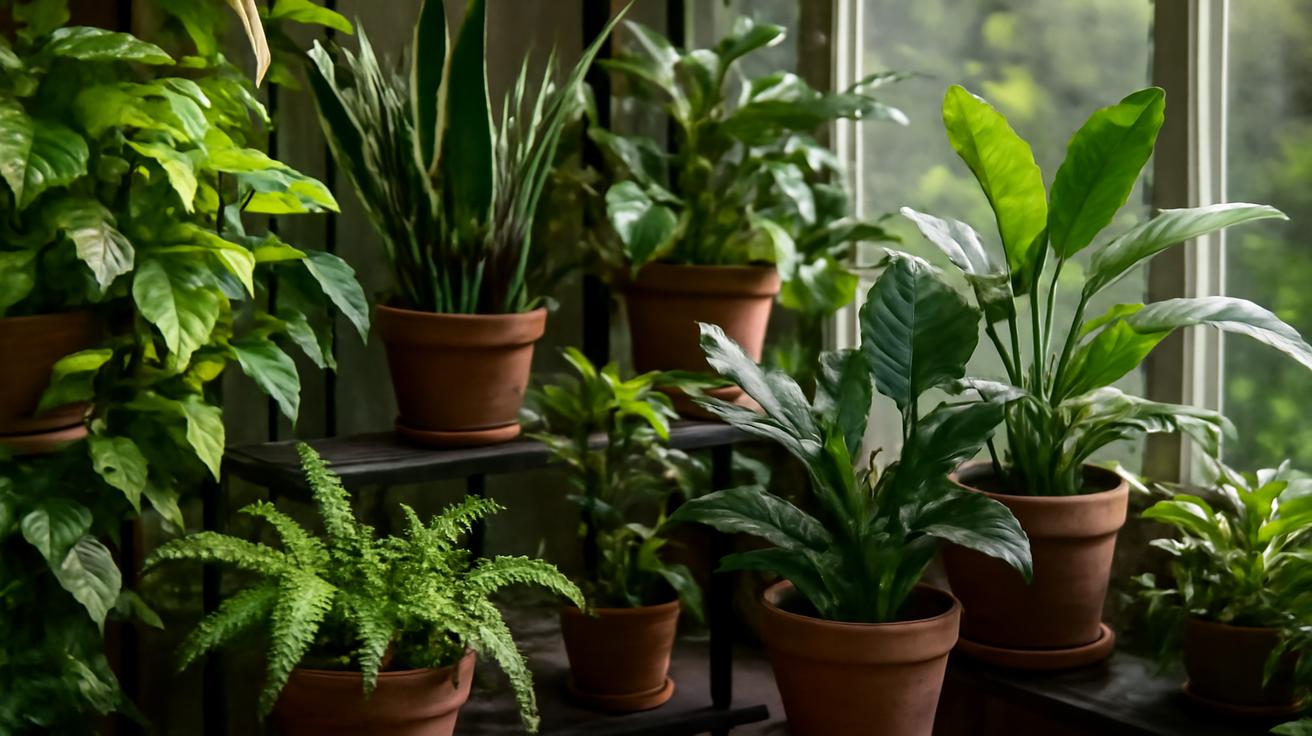
You don’t need a big garden to feel this shift. A couple of pots on a balcony can reveal the same soft lessons.
Try sowing basil and lettuce together in the same container instead of in separate ones. Plant two or three marigolds at the feet of your tomatoes, close enough that the roots must share the same small world. Let a self-sown seedling live once, just to see who it becomes.
Observe what happens when plants share tight quarters—not when they’re clearly starving each other, but when they’re just brushing, crossing paths, lightly competing. Notice which ones shoot up, which thicken, which gracefully recede and take another niche in the pot.
The real shift is not just horticultural; it’s internal. It’s the move from “I must control this” to “I’m part of this.” From “I know exactly what should happen here” to “I’m willing to learn from what actually does.”
When I first watched those two tomato seedlings wrestle in their shared corner of soil, I thought I was being irresponsible by not thinning them. Months later, they stood shoulder to shoulder, both fruiting heavily, their roots entwined in a tangle I never saw but knew was there. They had negotiated something between themselves that I, in my urge to be efficient, would have prevented.
I used to think gardening was about getting plants to behave. Now, when I walk among them, listening to the slight rustle where their lives touch, I understand: it’s about trusting that life, given a bit of room to challenge itself, will often find its own kind of balance—one I could not have designed, but am lucky enough to witness.
FAQ
Does letting plants compete mean I should stop thinning seedlings entirely?
No. Thinning is still useful, especially when seedlings are so crowded that none can grow well. The key is to thin selectively rather than automatically. Leave the strongest few, and in some spots experiment with leaving slightly closer spacing to see how plants respond.
Will my yields decrease if I allow more competition?
Not necessarily. In many cases, yields stay similar but become more stable and resilient, especially during heat, drought, or heavy rain. Some individual plants may produce slightly less, but overall productivity and plant health can improve.
How do I know when competition has gone too far?
Watch for clear stress signals: yellowing leaves, stunted growth, plants that never seem to catch light, or obviously weak, spindly stems. If one plant is clearly being smothered, it’s time to trim, transplant, or remove something.
Which plants handle close spacing and gentle competition best?
Leafy greens (like lettuce, arugula, spinach), herbs (basil, cilantro, parsley), and many flowers (calendula, marigold, nasturtium) usually tolerate close neighbors well. Deep-rooted plants like carrots prefer some space, but even they can benefit from low, shallow-rooted companions that shade the soil.
Can this approach work in containers and small balconies?
Yes. In pots, combine plants with different heights and root depths—such as a tall tomato with basil at its base, or flowers under a pepper plant. Just be mindful of watering and soil quality, since containers dry out faster and hold fewer nutrients.







Leave a Comment