
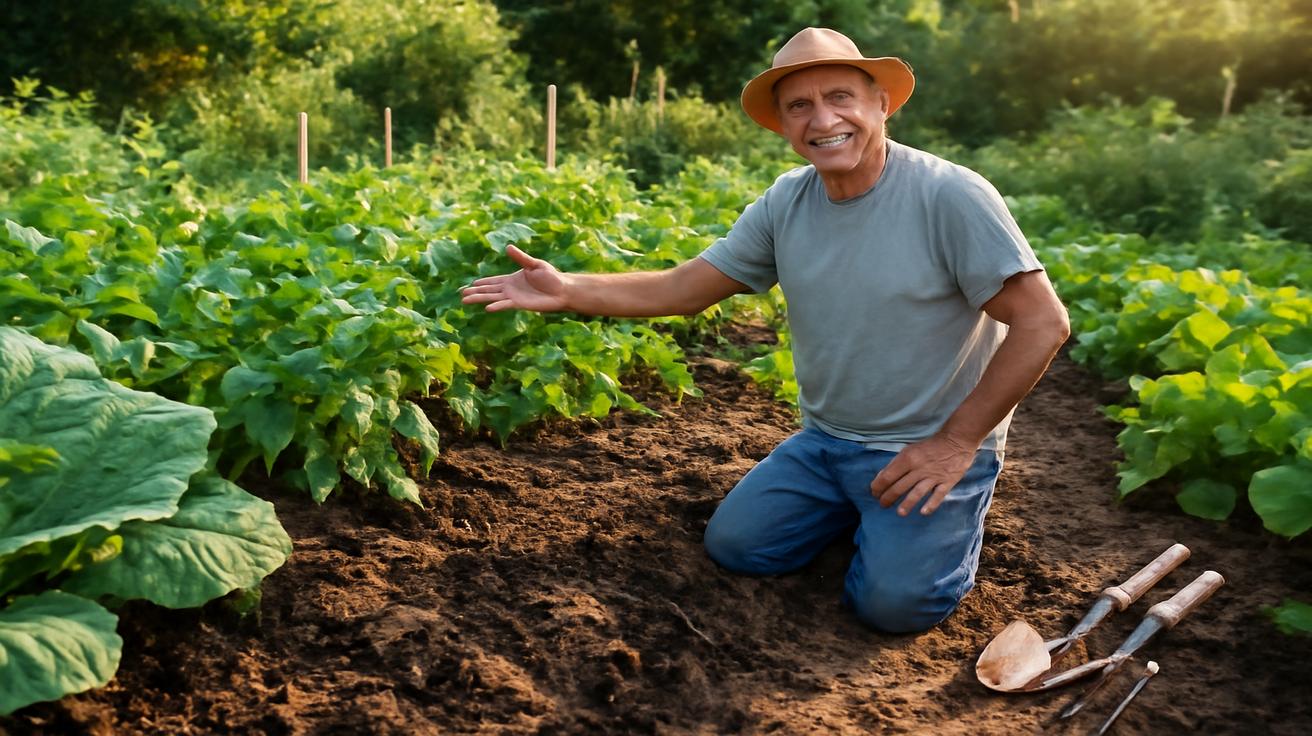
The first time I tipped a wheelbarrow of kitchen scraps straight onto the soil, I felt like I was breaking a rule. No neat compost bin. No tidy pile tucked behind the shed. Just melon rinds, carrot tops, coffee grounds, and a wilted bouquet fanned across the garden bed like some strange offering. The air smelled faintly of orange peel and wet earth. A robin landed on the fence, head cocked, as if to ask, “Are you sure you know what you’re doing?”
I wasn’t sure. I’d spent years believing that “real” gardeners owned compost bins—big, respectable ones, preferably with multiple chambers and a system of turning and watering and waiting. But that morning, with my overstuffed compost tumbler reeking and my patience gone, I’d stumbled across a different way. A way that didn’t involve hauling buckets, wrestling with clumps of half-rotted matter, or waiting an entire season for the pay-off. And strangely enough, this rule-breaking method has turned my soil into something close to magic. I haven’t used a compost bin since, and my garden has never looked better.
The Day I Gave Up On My Compost Bin
My old compost bin sat in the far corner of the yard, where good intentions went to rot—literally. It was always either too wet or too dry. In summer, it roasted into a smelly stew; in winter, it froze into a lifeless clump. I knew the rules: greens, browns, air, moisture. Turn it often. Cover it. Don’t add this, don’t add that. Still, the system never quite worked as advertised.
Every few weeks I’d drag a heavy bucket of kitchen scraps across the lawn, lift the lid, and be blasted by a sour, swampy smell. A slick avalanche of half-decomposed lettuce would slither down the side as I tried to mix it in. Flies. Slugs. That vaguely guilty feeling of “This is supposed to be helping the planet, right?”
Then one afternoon, while doom-scrolling garden forums and trying to figure out why my bin smelled more like a landfill than a forest floor, I stumbled on a phrase that stopped me:
“Let the soil do the composting.”
The idea was simple: instead of composting in a container and then moving that compost to the garden, you let decomposition happen right where you want the nutrients to end up. No transport. No waiting. No bin.
It sounded almost too easy. And it felt a little subversive, like skipping a step in a sacred ritual. But I was tired of babysitting a plastic container. So I tried it.
Discovering the Magic of In-Place Composting
The technique has many names—trench composting, in-situ composting, sheet composting—but the heart of it is this: your soil is already a living compost factory. It’s full of fungi, bacteria, earthworms, beetles, and an entire microscopic militia built for one job: breaking down organic matter.
When you bury or layer your kitchen scraps directly in or on the soil, you invite that entire underground workforce to show up for duty. They don’t need a bin. They don’t need you to turn the pile. They just need food, moisture, and contact with the earth.
The first time I tried it, I dug a shallow trench right down the middle of a fallow bed. The soil was compacted and dull, the color of stale bread. I tipped in my scraps—coffee grounds, eggshells, the heel of a loaf gone fuzzy, a scattering of kale stems. I covered it all with a few inches of soil, tamped it gently, and watered. It looked as though nothing had happened. No exposed mess. No smell.
Within a week, when I brushed away a little earth with my hand, I saw what looked like an underground festival: fat earthworms threading through the softening banana peels, fine white mycelium lacing through the coffee grounds, pill bugs scuttling away from the light. It was like lifting the lid on a hidden city. And the thing about hidden cities is—they work around the clock.
How I Actually Do It (Without Attracting a Raccoon Convention)
People imagine ditching the compost bin means tossing apple cores freely across the yard and inviting every rodent in the neighborhood for dinner. It doesn’t have to. Over time, I’ve settled into a handful of simple, low-fuss methods that keep things tidy, quiet, and wildly effective.
1. The Trench Method
I use this method when I’m preparing beds for future planting or rotating crops between seasons.
- I dig a trench about as deep as my hand (15–20 cm), running it down the length of the bed.
- I fill it with a layer of kitchen scraps—nothing huge or woody, just chopped or broken pieces.
- I cover the scraps completely with soil and gently pat it down.
- I water the area so it’s moist but not soggy.
By the time I’m ready to plant there a month or two later, the trench has mostly blended back into the soil. In heavy clay, it leaves behind loose, crumbly channels where roots can easily explore. In sandy soil, it helps hold water and nutrients where plants need them.
2. The “Spot” Method
This one is almost too simple: I dig small holes between existing plants, add a few handfuls of scraps, and cover. It’s like localized feeding.
- Perfect for feeding hungry crops like tomatoes, squash, or roses.
- Scraps go where the roots can eventually find them.
- Everything stays below ground, so pests aren’t interested for long.
The first season I tried this, I had tomato plants that seemed to double in size after I started “spot feeding” around them. Leaves deepened to a more intense green. Flowers set more fruit. It felt less like fertilizing and more like quietly slipping them extra snacks.
3. The Sheet Method
When a bed is resting or I’m preparing an area for future planting, I use a surface version of in-place composting often called sheet composting.
- I lay down thin layers of kitchen scraps directly on bare soil.
- I cover them at once with carbon-rich materials: dried leaves, shredded paper, straw, or old mulch.
- The top layer keeps smells down and hides the scraps from view.
This creates a rough, layered “lasagna” that decomposes over weeks to months, depending on the season. By the time I’m ready to plant, what was once a mess of peelings and paper has melted into dark, rich soil that smells like a forest after rain.
What I Learned From Watching the Soil Change
It’s one thing to talk about nutrient cycling in theory. It’s another to watch the ground itself transform because you fed it directly. Over the seasons, a handful of things became obvious.
First, the soil color changed. It deepened from dusty tan to a rich, shadowy brown. When I scooped up a handful, it clung together in soft clumps instead of crumbling into lifeless dust or hard clods. It held moisture longer after rain, yet drained better after storms.
Second, the life in the soil multiplied. I started seeing more earthworms with every shovel-full. Their tunnels aerated the ground so effectively that I stopped needing to “fluff” my beds with a fork as often. Beetles, centipedes, and microscopic decomposers quietly took up residence too, building a living web that made the soil feel less like a substance and more like an organism.
Third, the plants responded. My lettuce stayed tender longer into the heat of summer. Squash vines sprawled farther and produced fruit that felt heavier in the hand. Flowers—especially dahlias and zinnias—grew on sturdier stems, as if more sure of their place in the world.
Curious about the practical side, I started roughly tracking what went into the soil and how my garden responded. I’m not a lab, just a gardener with a notebook, but the pattern was hard to ignore.
| Season | Approx. Scraps Buried / Month | Visible Soil Change | Plant Response |
|---|---|---|---|
| First Spring | 1 small bucket | Slightly looser top layer | Healthier leaf color on greens |
| Late Summer | 2–3 buckets | More worms, darker soil bands in trenches | Bigger fruit set on tomatoes and squash |
| Second Spring | 2 buckets steady | Crumbly structure, better water retention | Earlier growth, fewer signs of nutrient stress |
| Second Autumn | 3+ buckets | Even texture, rich smell, less compaction | More resilient plants in weather swings |
Was it solely the in-place composting? Probably not. Gardens are complex, and many things evolve together. But I stopped buying bagged compost almost entirely. I stopped fighting with the bin. I stopped feeling like I had to import fertility from somewhere else when my kitchen, trees, and weeds were quietly offering it every day.
The Surprisingly Simple Rules That Keep It Working
For all its simplicity, there are a few guidelines that keep in-place composting running smoothly and prevent it from becoming a smelly science experiment.
- Chop big pieces smaller. The more surface area, the faster they break down. I don’t dice things meticulously, but I’ll tear up big cabbage leaves or smash a pumpkin chunk in half.
- Bury fresh materials. Anything likely to smell—like fruit peels or leftover veggies—goes under soil, at least 10–15 cm deep. This keeps flies and critters uninterested.
- Balance with “browns.” If I’m layering scraps on the surface, I always cover them with dried leaves, shredded cardboard, straw, or old plant stalks.
- Avoid meat, dairy, and oily foods. These decompose slowly, can smell bad, and tempt animals. They don’t belong in this system.
- Keep it moist, not soggy. Microbes need water to work, but swampy conditions turn anaerobic. I water the area like I would the rest of the bed—no more, no less.
That’s really it. Nature does the rest.
Why I Don’t Miss the Bin At All
I didn’t expect ditching my compost bin to change how I felt in the garden, but it did. The bin always felt like an obligation—another project on the edge of the yard that required maintenance and guilt. The in-place method feels like relationship instead of responsibility. I’m feeding the soil that feeds the plants that feed me. The loop is short, visible, and satisfying.
There’s no waiting a year for a “finished product.” The soil is constantly in motion, constantly transforming. It’s the opposite of perfectionism: no pristine black crumb to show off, just a living system quietly improving itself because you keep giving it small, consistent gifts.
The garden, in turn, feels less like a stage set and more like a conversation. The soil responds to how I treat it. Dry, starved ground grows brittle plants and brittle moods. Fed and covered soil grows abundance—and a strange, grounding calm.
On cool evenings now, I walk the garden with a small bucket. Carrot peels, coffee grounds, the ends of a leek. I kneel between the rows, dig a small hollow, and tuck them in. The robin sometimes follows, snagging any exposed insect that panics at the sudden light. I smooth the earth back over, stand up, and know that under the surface an entire world has just been given a reason to thrive.
The compost bin in the corner? I finally rolled it out to the curb for someone else to adopt. I thought I might miss it—that symbol of “serious gardening.” I don’t. The proof is in the beds themselves: richer soil, sturdier plants, a calmer gardener. I haven’t used a compost bin since learning this technique, and I can’t imagine going back.
Frequently Asked Questions
Does in-place composting attract pests or rodents?
When you bury fresh scraps at least 10–15 cm deep and cover surface layers with dry materials, pests rarely become an issue. Most smells are contained below the soil, where only soil life can access them. Avoid meat, dairy, and very oily foods, as these are the most likely to attract unwanted animals.
How long does it take for buried scraps to break down?
In warm, moist soil, soft materials like fruit and vegetable scraps often break down in a few weeks. In cooler weather or heavier soils, it may take a couple of months. You don’t need to wait until everything disappears before planting; roots grow around and through partially decomposed material as it softens.
Can I use this method in containers or raised beds?
Yes, but in moderation. In small containers, bury only small amounts at a time so you don’t overload the limited soil with fresh organic matter. In larger raised beds, trenches and spot-feeding between plants work very well.
Will this method give my plants enough nutrients, or do I still need fertilizer?
For many home gardens, consistent in-place composting combined with mulch can supply a large portion of the nutrients plants need, especially over time. Heavy feeders or poor soils may still benefit from occasional supplemental organic fertilizers, but you’ll likely need far less than before.
What exactly can I bury or layer using this technique?
You can safely use most plant-based kitchen scraps (vegetable and fruit peels, coffee grounds, tea leaves, crushed eggshells, plain cooked grains), garden trimmings, and shredded paper or cardboard without glossy ink. Avoid meat, bones, dairy, oils, and large amounts of citrus or onion in a single spot. If in doubt, use smaller amounts and spread them out.







Leave a Comment