
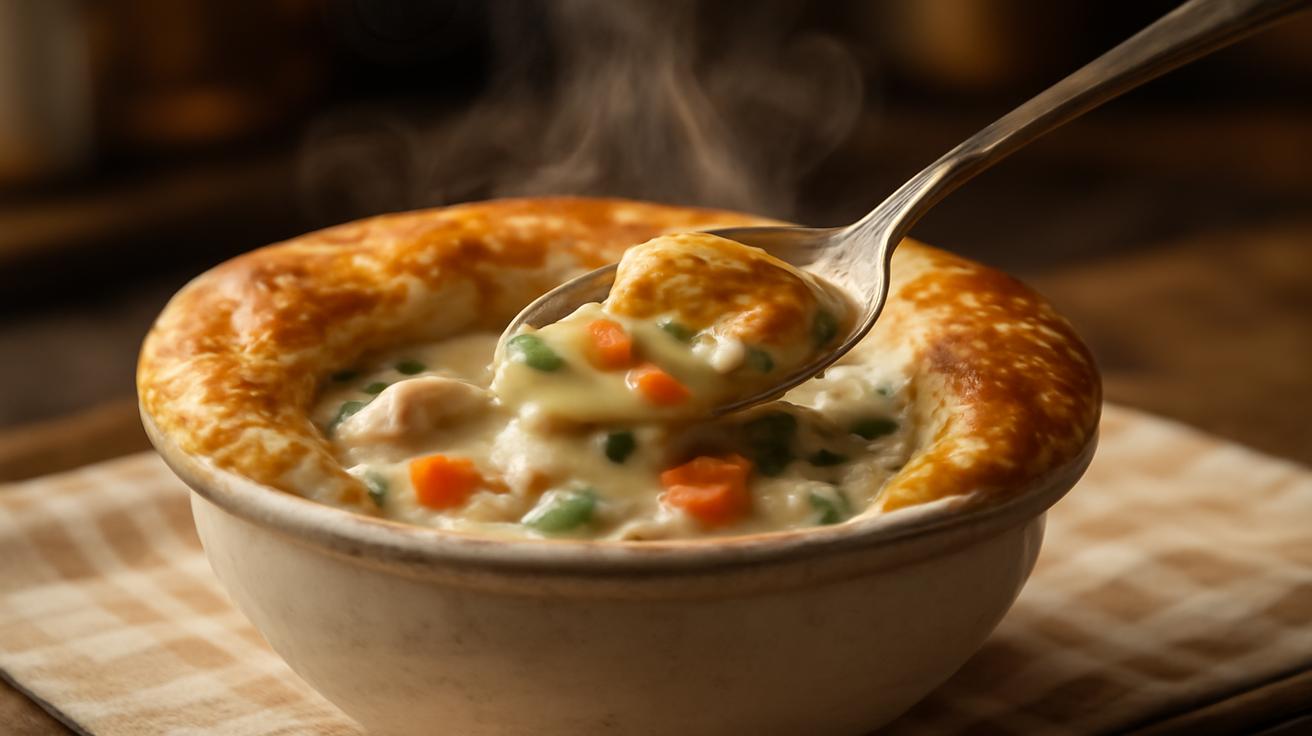
The onions were the first to change the mood of the room. I hadn’t planned anything special that evening—just a vague craving for something warm, soft, and honest. It had been one of those weeks that feels like walking through a fog: too many tabs open on my laptop, too many half-finished conversations, too much scrolling and not enough living. My brain felt fried, my shoulders tense. I didn’t need excitement; I needed a reset. So I went where I always go when the world feels a little too loud: the kitchen.
It started with a heavy pot, a splash of olive oil, and a chopped onion surrendered to the heat. The pan answered with that gentle sigh, the soft hiss that sounds like the start of a story. I stirred slowly and watched the sharp edges of the onion begin to blur, turning translucent, then gold. Something inside me started to unclench. This wasn’t just dinner, I realized. This was repair in progress.
The Day That Needed Saving
Earlier that afternoon, I’d sat at my desk staring at a blinking cursor, the digital equivalent of a raised eyebrow: So? Anything to say? I did, technically. There were deadlines to meet, messages to answer, a to-do list that looked like it had gone through mitosis and kept multiplying. But my brain refused to cooperate. Everything I tried to write came out flat, brittle, like it had been overbaked.
I shut the laptop with a soft click, the screen going black in a way that felt almost theatrical. The silence that followed was heavy, humming with all the things I wasn’t doing. I wandered through the apartment, picking up a stray mug, rearranging a stack of books, pretending to tidy while actually avoiding myself. What I really wanted, beneath the noise, was simpler: to feel grounded. To feel present. To feel… okay.
Without fully deciding to, I found myself in front of the pantry. The door creaked a little when I opened it, like it was stretching its limbs. Cans, jars, half-used bags of lentils, pasta, spices with their labels half rubbed away—it was a quiet kind of abundance. My eyes fell on a familiar trio: dried lentils, a can of tomatoes, and a package of short, plump pasta. I didn’t know what I was making yet, only that it would be one pot, humble, and deeply forgiving.
There’s a particular kind of relief in cooking something simple, something that doesn’t demand precision or performance. No plating tricks, no special equipment. Just time, heat, and the patience to let things transform. In a world that runs on speed, this felt deliciously slow.
The Dish That Found Me
The dish came together the way some good ideas do: not all at once, but in a series of gentle, almost obvious choices. I rinsed a cup of green lentils in a mesh sieve, watching the cloudy water swirl away down the drain, leaving behind clean, mottled seeds. They felt like tiny promises in my hands—sturdy, unpretentious, ready to swell and soften with time.
Back at the stove, the onions were surrendering into sweetness. I added a few cloves of garlic, sliced thin; they hit the hot oil and bloomed with that unmistakable fragrance that says, “Something good is about to happen.” I reached for dried thyme and a bay leaf, crushing the thyme between my fingers first to wake it up. The scent was like a walk through a sun-warmed hillside—a memory more than a flavor, but it made its way into the pot anyway.
In went the lentils, rolling into the onion-garlic mixture like shy guests at a party. I stirred them until they glistened, then poured in crushed tomatoes and enough vegetable broth to give everything room to move. A pinch of salt, a crack of black pepper. The pot was beginning to look like something you’d want to eat on a rainy day, even though the sky outside was clear.
As the mixture came to a gentle simmer, the kitchen began to change. The room warmed slightly, the windows fogged just at the corners, and the air filled with the low, steady promise of something comforting. I could feel my pulse slowing down, my thoughts stepping off their spinning carousel. I leaned against the counter and watched tiny bubbles rise and break, the way you might watch waves at low tide.
There’s a rhythm to cooking that doesn’t ask you to be brilliant or fast—only present. Stir. Taste. Adjust. Wait. In a life so often judged on outcome, the process itself felt like a soft rebellion.
Stirring Myself Back to Center
After about twenty minutes, the lentils had slumped into tenderness. I tasted one from a wooden spoon, blowing on it first out of habit. It was almost there: earthy, a little nutty, with just enough bite left to remind me it had been something small and hard only half an hour before. I added a handful of short pasta—little shells that could nestle into the lentils and catch bits of tomato in their curves—and more broth to help them along.
As the pasta cooked, the dish thickened into something halfway between a soup and a stew, the kind of meal that doesn’t need a precise name. It just needed a bowl. And a spoon. Maybe a grated snowfall of cheese on top, if you’re the sort of person who keeps a wedge of Parmesan in the fridge. (I am.)
While I waited for the pasta to plump and soften, I set the table—not because I had guests, but because I was tired of eating hastily over the sink or at my desk. I laid out a simple place setting: one bowl, one spoon, a folded napkin. A glass of water with a slice of lemon that I cut with unnecessary care. It felt ceremonial, in a quiet way. A small gesture of respect toward the meal, and toward the person who’d be eating it: me.
When I lifted the lid again, steam curled up like a sign of relief escaping. The lentils had broken down just enough to turn the broth velvety, clinging to the pasta. The color was a deep, warm rust—like autumn in a bowl. I tasted again, then added a splash of red wine vinegar to brighten it, plus a drizzle of good olive oil to finish. I grated Parmesan over the top until it smelled like warmth and sharpness and safety all at once.
It wasn’t fancy. But the moment I sat down and took the first bite, it felt like my body exhaled before I did. Soft, tender pasta; lentils that gave just the right amount of resistance; the sweetness of onions; the grounding, herb-scented tomato base wrapping around everything. My shoulders dropped. My jaw unclenched. The static in my head turned down a few notches.
A Bowl That Felt Like Permission
I ate slowly, which is not my natural instinct. Usually, meals are rushed: food as fuel between tasks, something to get through rather than experience. But this dish seemed to ask politely for my attention. Each spoonful was familiar and surprising at the same time—simple ingredients layered into something quietly complex.
As I ate, I realized this wasn’t just comfort food. It was permission. Permission to be tired. Permission to be soft. Permission to reset without fixing everything at once. The world outside my window was still its usual, buzzing, complicated self, but in that circle of light at my table, things felt smaller and more manageable.
I thought about how many times in my life a pot of something humble has steadied me. The chicken soup after a bad cold. The roasted potatoes after heartbreak. The scrambled eggs on mornings when the future felt too foggy to face. This lentil-and-pasta bowl was joining that quiet lineage of rescues—a dish that didn’t change my circumstances, but changed the way I carried them.
The best part was how much of myself I could taste in it. Not in some grand, metaphorical way, but in the little choices: more thyme than the recipe would have suggested, less salt, the last of a slightly wilted parsley bunch stirred in at the end for color and freshness. I had built this thing, step by step, and then it rebuilt me in return.
There’s a kind of alchemy in that exchange. You offer your attention and your time; the dish offers back a version of you that feels less fractured, more whole.
The Quiet Ritual of Repetition
In the days that followed, that dish became my unofficial restart button. The next time my mind felt like a browser window with too many tabs open, I didn’t even think—I just reached for the lentils, the tomatoes, the pasta. The ingredients were patient, waiting. The process was already a map I could walk in my sleep.
The second time I made it, I adjusted a few things. A little more garlic. A pinch of red pepper flakes for warmth—not enough to make it spicy, just enough to remind me I was still capable of feeling a spark. I added a carrot, diced small, letting it melt into the base and sweeten the whole pot. The dish adapted without complaint, like a friend who says, “Sure, we can do it your way.”
Repeating the recipe turned it into more than food; it became a ritual. Rinse lentils, chop onions, heat oil, stir. Each step nudged me back into my body. The motions were physical enough to ground me, but gentle enough not to overwhelm. Unlike my work, this was a task with a clear beginning and end, and a reward you could actually hold in your hands.
I began to recognize the stages of my own unwinding in the stages of the dish. The first sharp sizzle of onions: the lingering tension of the day. The slow, steady simmer: the letting go. The final ladle into the bowl, steam rising: the small, defiant act of caring for myself, even when everything else felt chaotic.
To remind myself how easy and kind this dish was, I jotted down a pared-back version—not a rigid recipe, but a soft guide. Something like this:
| Step | What I Did | How It Felt |
|---|---|---|
| 1 | Sauté onion and garlic in olive oil with thyme and bay leaf | Like opening a window after a long, stuffy day |
| 2 | Add lentils, tomatoes, broth, salt, and pepper | Gathering everything frayed into one gentle place |
| 3 | Simmer until lentils are tender | Letting time do some of the healing for me |
| 4 | Stir in short pasta and more broth as needed | Making space for softness to join the mix |
| 5 | Finish with olive oil, vinegar or lemon, herbs, and cheese | Adding brightness to something deeply, quietly steady |
Even reading back over those steps later, I could feel my heartbeat settle. It was like keeping a small, portable manual for becoming myself again.
Why This Kind of Food Heals Us
I’ve thought a lot about why this specific kind of dish—soft, warm, one-bowl, eaten with a spoon—feels so restorative. Part of it is pure physiology: warm food relaxes the body, carbohydrates and protein give you steady energy, and familiar flavors calm an overtaxed nervous system. But there’s more to it than that.
There’s something about food you have to cradle in two hands that signals safety. You can’t rush a bowl without risking a burned tongue; it insists you slow down. Spoon-to-bowl meals are inherently intimate, closing the distance between you and what you’re about to receive. In an age where so much of what we consume is mediated by screens, ads, and algorithms, a simple pot of lentils and pasta is disarmingly direct. No performance. No judgment. Just nourishment.
And then there’s the emotional residue of all the bowls that came before—the soups someone made you when you were sick, the stews shared on cold nights, the porridges and broths that carried our ancestors through lean seasons. Whether we realize it or not, comfort dishes tap into that long memory of being cared for, of scarcity turned into enoughness through patience and heat.
Cooking it for myself made a quiet statement: I’m worth the time it takes to let something simmer. I’m worth dirtying a pot for. I’m worth the small luxury of sitting down with a bowl that’s hot and fragrant and entirely, unashamedly meant to soothe.
Cooking as a Gentle Reset Button
What surprised me most was how the reset wasn’t just about eating; it was about doing. My mood began to shift long before the first spoonful. The simple, repetitive actions—chopping, stirring, tasting—pulled me out of my thoughts and into my senses. The world shrank to what was right in front of me: the shimmer of oil, the sound of simmering, the scent of thyme rising with the steam.
In that narrowed focus, the sprawl of my anxieties had less room to stretch. I didn’t need to solve everything. I only needed to turn the heat down a little, to stir, to check the tenderness of a lentil between my fingers. It was a relief to work on a problem with such reliable cause and effect: if you let the onions cook low and slow, they will turn sweet. If you give the lentils time, they will soften. If you add salt, flavors will wake up. So much of life doesn’t offer that kind of clarity.
By the time I sat down to eat, the reset was already underway. The dish was both the reward and the embodiment of all the small, stabilizing choices that led up to it.
I’ve started to think of comfort cooking as a kind of everyday ritual of re-entry: back into my body, back into my home, back into myself. It’s not about escaping reality or pretending things are fine when they’re not. It’s about creating one small, reliable corner of warmth and order inside the mess. A bowl that says, “You’re still here. You’re still you. And right now, that’s enough.”
That night, after the last spoonful, I didn’t rush to wash the pot. I left it on the stove, still warm, with a film of sauce clinging to its sides, like a memory that hadn’t faded yet. I moved through the rest of the evening slower, softer. When I finally opened my laptop again, the cursor was still blinking, but now it felt less like a challenge and more like an invitation.
I started typing. And while the words didn’t pour out perfectly, they came more easily. Maybe it was the lentils. Maybe it was the ritual. Maybe it was just the simple, profound act of feeding myself well when I most wanted to ignore my own needs.
All I know is this: I cooked that dish, and it felt like pressing a reset button I’d forgotten I had. Not the kind that erases everything and starts from scratch, but the gentler kind that clears the static, softens the edges, and makes it possible to try again.
Frequently Asked Questions
What exactly was the comforting dish you cooked?
It was a simple one-pot lentil and short pasta stew, simmered with onions, garlic, tomatoes, herbs, and finished with olive oil, a splash of acidity (like red wine vinegar or lemon), and a bit of grated cheese.
Can I customize this type of dish with what I have at home?
Absolutely. You can swap lentils for beans, use any short pasta shape, change the herbs, add vegetables like carrots, celery, or spinach, and finish with whatever you have—olive oil, herbs, cheese, or even a dollop of yogurt.
Why do simple, warm dishes feel so comforting?
They’re easy to digest, gentle on the senses, and often tied to memories of being cared for. The warmth relaxes the body, the carbs and protein steady your energy, and the familiar flavors calm your mind.
Do I need to follow a strict recipe to make a dish like this?
No. Think of it more as a framework: sauté aromatics, add lentils or beans, tomatoes and broth, simmer, then add pasta or grains, and finish with something bright and something rich. You can adjust based on what your pantry and mood allow.
How does cooking help with stress or feeling overwhelmed?
Cooking gives you a tangible, sensory task with clear steps and a satisfying outcome. It pulls you into the present moment, offers a sense of control and completion, and ends with something nourishing you can actually feel helping you reset.






Leave a Comment