
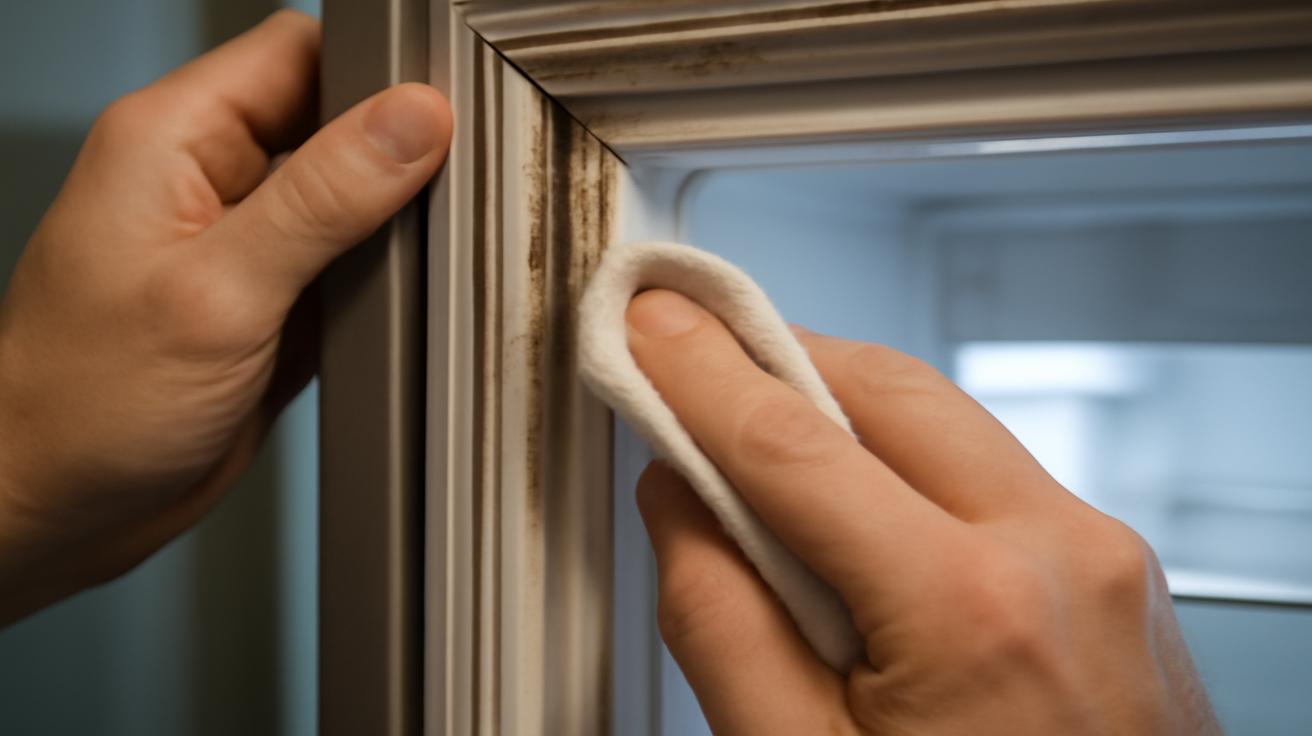
The first time you notice it, it’s just a faint shadow. A smudge in the white groove of the fridge door where the rubber meets the frame. You tell yourself it’s nothing—maybe a little dust, a splash of last night’s soup. But the next time you open the door, it’s darker. The line has thickened, turned from pale gray to a stubborn, velvety black. You lean closer and catch that unmistakable scent: a damp, musty breath rising from the very edge of the seal. Suddenly, every crisp apple and leftover casserole in your fridge feels a little less innocent.
The quiet, hidden world inside your fridge door
The fridge seal is one of those places we don’t think about until something goes wrong. It does its job silently, day after day, holding in the cold, hugging the door shut. But tucked into those folds and grooves is a tiny world of condensation, crumbs, sticky spills, and microscopic visitors who are all too happy to move in when conditions are right.
Mold loves the seals because they offer the perfect trifecta: moisture, darkness, and food. A droplet of juice here, a trace of yogurt there, a little warmth sneaking in from the kitchen air whenever the door opens—it’s a feast. Once the mold takes hold, it spreads into the tiny creases and hidden corners, where a quick surface wipe does almost nothing. You clean it, it looks better for a week or two, and then it creeps back, like it never really left.
To stop mold from returning, the key is not just wiping what you can see, but understanding how that seal behaves and what mold actually needs to survive. Think of it less like scrubbing a stain and more like resetting the tiny ecosystem that lives along your fridge door.
The anatomy of a stubborn seal (and why mold loves it)
Run your fingers along the edge of the fridge door. Feel the rubbery gasket—the official name for the seal. It’s not just a single flap; it’s often a layered structure with folds and a hollow inside, pressed tightly against the fridge body. Those folds, especially the corners and bottom edge, are sneaky little pockets where moisture and debris gather.
When you open the fridge on a warm day, the cold, dense air spills out and warm, humid air slips in to replace it. That moist air then cools, releasing tiny droplets of water that cling to the seal and the doorway. Most of the time, they evaporate. But some linger. Over time, those leftover droplets begin to nurture microscopic spores that are already floating in the air. They don’t need an invitation. They just need conditions.
So the enemy isn’t just “mold” as a vague villain. It’s a pattern: repeated moisture, trapped in a dark groove, with enough time and neglected crumbs to feed it. To truly clean the seal so mold doesn’t come back, you need to break that pattern in three ways:
- Physically remove the mold, including what’s hiding in the folds.
- Make the surface less inviting in the short term (with the right cleaner).
- Change the daily conditions so moisture doesn’t linger and food particles don’t collect.
Setting up your cleaning ritual
Cleaning the fridge seal properly isn’t glamorous, but there’s something almost meditative about it if you let yourself sink into the rhythm. The rubber has a kind of memory—it bends, flexes, springs back—and as you work, you learn the shape of it. You start to see all the places mold once hid from your hurried wipes.
Before you begin, gather your tools so you don’t have to stop halfway, hands wet, door hanging open, cold air spilling onto your feet. You don’t need anything fancy, and you probably already have most of it at home.
| Item | Why You Need It |
|---|---|
| Warm water in a small bowl or bucket | Helps loosen dirt and soften old grime without stressing the rubber. |
| Mild dish soap | Gently cuts grease and food residue without damaging the seal. |
| White vinegar or 3% hydrogen peroxide | Helps inhibit mold and disinfect surfaces after the initial cleaning. |
| Soft cloths or microfiber towels | For washing and thoroughly drying the seal. |
| Soft toothbrush or small detailing brush | Reaches into grooves and folds where mold hides. |
| Cotton buds or rolled corner of a cloth | For tight corners and creases you can’t reach with fingers. |
| Optional: gloves | Useful if you’re sensitive to cleaners or the sight of mold. |
For heavy, long-standing mold, a tiny amount of diluted bleach can be used sparingly, but it’s best treated as a last resort and never as a regular companion. Bleach can dry out rubber over time, making the seal brittle and less effective—and a cracked seal is a mold magnet.
Step 1: A slow, careful first pass
Open the fridge door wide and, for a moment, just look. Follow the seal from top to bottom, left to right. Notice the corners, especially the bottom ones, where moisture tends to settle and cling. This is where mold is often thickest—those in-between spaces where the gasket curves and tightly overlaps itself.
Mix a few drops of mild dish soap into the warm water. Dip your cloth, wring it out so it doesn’t drip, and start at the top of the seal. Gently pull the rubber away from the frame with one hand, just enough to open the groove, and wipe along the inside with the other. You might be surprised by what comes away—gray streaks of old dust, dots of dark mold, sticky lines of dried spills you never saw.
Move slowly. The goal is not to scrub like you’re polishing a floor, but to coax out whatever’s hiding. Use the toothbrush to work along the folds, brushing back and forth with light pressure so you don’t tear the rubber. In the corners, press the bristles in gently and pull them out, like combing knots from hair.
This first pass is about removing the bulk of the grime so that whatever you apply afterward can actually reach the surface, instead of sitting on top of old dirt.
The secret is in the drying
When the seal looks clean, this is the moment when most people stop. The mold looks gone. The grooves are clear. Yet this is exactly where the comeback begins—because a wet or even slightly damp seal is an open invitation for mold spores drifting through the kitchen air.
After you’ve washed the seal with soapy water, go over every centimeter with a dry cloth. Not a quick swipe, but a deliberate drying session. Pinch the cloth along the gasket and slide. Press into the corners. If your cloth comes away even slightly damp, keep going. Use a second dry towel if needed.
There’s a simple sensory test here: listen. As the rubber dries, the cloth will drag across it differently. At first, the movement is slick, gliding easily on the thin film of water. As it dries, there’s a faint, squeaky resistance, a soft friction that tells you you’re getting close to truly dry. That’s the sound of fewer places for mold to land and thrive.
Step 2: A targeted anti-mold rinse
Once the seal is clean and dry to the touch, it’s time to give it a second, more deliberate treatment. This isn’t about blasting the mold with the harshest chemical you can find. It’s about changing the surface conditions in tiny ways that make it less comfortable for mold to grow.
Two gentle kitchen allies do this well: white vinegar and hydrogen peroxide (3%). Both help to inhibit mold growth on hard, non-porous surfaces.
- White vinegar: Pour a small amount into a bowl. Dip a clean cloth or cotton pad and wipe it along the entire seal, including inside grooves and corners. You don’t need to soak it—just a thin, even coat.
- Hydrogen peroxide (3%): You can pour a little onto a cloth and wipe, or lightly dab it on with cotton buds in areas where mold was thickest.
Let this layer air-dry with the door slightly open for about 10–15 minutes. You may smell the vinegar or the faint tang of peroxide, but both fade with time. While it dries, feel the air from the fridge on your skin—the gentle stream of cold reminding you why the seal matters. It’s the boundary, the guardian of that cool, safe space inside.
The key here is patience. Don’t immediately wipe the vinegar or peroxide away. It needs a little time to sit and work. Once it has dried, if there’s any visible excess, you can do a final quick dry pass with a clean cloth.
Keeping mold from coming back: daily habits that matter
Even a perfectly cleaned seal will not stay perfect if the conditions that invited mold in the first place never change. The good news is that prevention isn’t about perfection. It’s about a handful of tiny, repeatable habits that quietly shift the balance.
Step 3: Turn prevention into a rhythm, not a chore
Picture this: once a week, maybe on a quiet evening when dinner’s done and the kitchen has settled, you take a damp cloth and run it along the fridge seal. It takes less than a minute. You follow with a dry corner of the cloth. That’s it. No big production, no scrubbing, no elaborate setup. Just a touch, a check-in, a reset.
These small gestures can make a long-term difference:
- Wipe spills when they happen. If juice drips down the side of a bottle or sauce trails along a jar, give it a quick wipe before closing the door. The fewer sticky traces, the less food for mold.
- Don’t pack the fridge so tight it strains the door. If the door doesn’t close snugly, you’ll get more condensation around the seal. Listen for that soft “thunk” and faint suction when it closes—that’s a happy gasket.
- Check the bottom edge weekly. That lower strip is where gravity pulls moisture and crumbs. A 30-second check there can catch small mold spots before they spread.
- Let hot food cool before refrigerating. Putting steaming dishes inside boosts humidity, which increases condensation on the seal.
- Leave the door firmly shut, not ajar. A door that doesn’t fully close—blocked by a pan handle or misaligned shelf—creates a perfect warm-cool boundary where mold thrives.
Over time, these tiny habits become almost invisible, like muscle memory. A swipe here, a check there. Between those moments, the seal simply does its job, and mold finds it much harder to move back in.
When the mold seems “baked in”
Sometimes, you’ll come to the seal too late. Maybe it’s been neglected for a year or more. The mold has settled into the pores of the rubber, leaving permanent stains even after you’ve scrubbed, dried, treated, and repeated. You run your finger along it and the surface feels clean, but the shadow remains, like a faint bruise in the material itself.
In those cases, the question is no longer just about appearance; it’s about the integrity of the seal. Is it still flexible? Does it still cling firmly to the frame all the way around? Or has the rubber started to crack, warp, or harden with age and harsh products?
If the gasket is rigid, split, or pulling away in places, mold will keep returning because the underlying problem is structural: gaps that invite warm air and condensation. The long-term answer then is replacement. Many fridge models allow you to order a new gasket, which snaps or screws into place along the door. It’s a bit like giving your fridge a new set of lips: soft, springy, ready to close with a clean, confident seal.
Even if you decide the stains are only cosmetic and the seal is still healthy, you can keep playing the long game: regular gentle cleaning, anti-mold wipes, thorough drying. Over time, old discoloration may fade a little, but more importantly, new mold colonies won’t find a foothold.
A quieter kind of cleanliness
There’s something oddly intimate about cleaning the fridge seal. You’re right up close to the threshold between your home’s warm, bustling air and the chilled quiet where your food waits. Every time you open the door, you cross that boundary without thinking. But when you stop to tend it—really tend it—you start to notice the small things.
The rubber gives a little under your fingers. The light from the fridge spills across the tiles. Somewhere in the back, a jar clinks gently as you lean in. It’s not about a spotless, magazine-perfect kitchen. It’s about a small, practical act of care that keeps your food safer and your space a little calmer.
Mold doesn’t disappear from the world just because you’ve scrubbed it from a seal. Spores will always be in the air, floating invisibly, waiting. But you’re no longer giving them a soft, damp landing strip. You’ve turned that forgotten margin of the fridge into a place they pass by instead of settle in.
And next time you open the door, there’s no dark line watching you from the corner. Just clean, quiet rubber, doing its humble, necessary work—holding in the cold, and keeping what’s inside just a little bit safer.
FAQ: Cleaning fridge seals and preventing mold
How often should I clean my fridge door seal?
A deep clean every 1–2 months is usually enough for most homes, but a quick weekly wipe with a damp cloth followed by a dry one helps stop mold before it starts. If your kitchen is very humid or you open the fridge frequently, more regular light cleaning can help.
Is bleach safe to use on fridge seals?
Very diluted bleach can remove tough mold stains, but it should only be used sparingly and not as a routine cleaner. Over time, bleach can dry and weaken the rubber, causing cracks and making mold problems worse. Mild soap, vinegar, or hydrogen peroxide are safer long-term options.
What if mold keeps coming back even after a thorough cleaning?
If mold returns quickly, check for underlying issues: a damaged or warped seal, a door that doesn’t fully close, very high humidity in the kitchen, or frequent spills not being wiped up. In some cases, the gasket may need to be replaced if it’s old, cracked, or no longer sealing properly.
Can I use baking soda to clean the seal?
Yes. A soft paste of baking soda and water can help lift stains and neutralize odors. Apply it gently with a cloth or toothbrush, rinse with clean water, and make sure to dry the seal thoroughly afterward. Avoid grinding baking soda into the rubber with heavy pressure—it’s mildly abrasive.
Is vinegar safe for all fridge seals?
For most modern rubber and vinyl gaskets, diluted white vinegar is safe and effective as an occasional mold deterrent. If you’re worried, test a small, hidden section first. Always wipe away any large excess and allow the seal to dry fully.
How do I know if my fridge seal needs replacing?
Look for cracks, splits, areas that feel hard or brittle, or sections pulling away from the door. You can also do a simple paper test: close a slip of paper in the door. If it pulls out with little resistance in several spots, the seal may not be holding tightly and could need replacement.
Does leaving the fridge door open too long cause mold?
Prolonged or frequent door-opening lets in warm, humid air, which can condense on the cool seal and create more moisture—one of mold’s favorite ingredients. Being mindful of how long you leave the door open can reduce condensation and help keep the seal drier and less inviting to mold.








Leave a Comment