
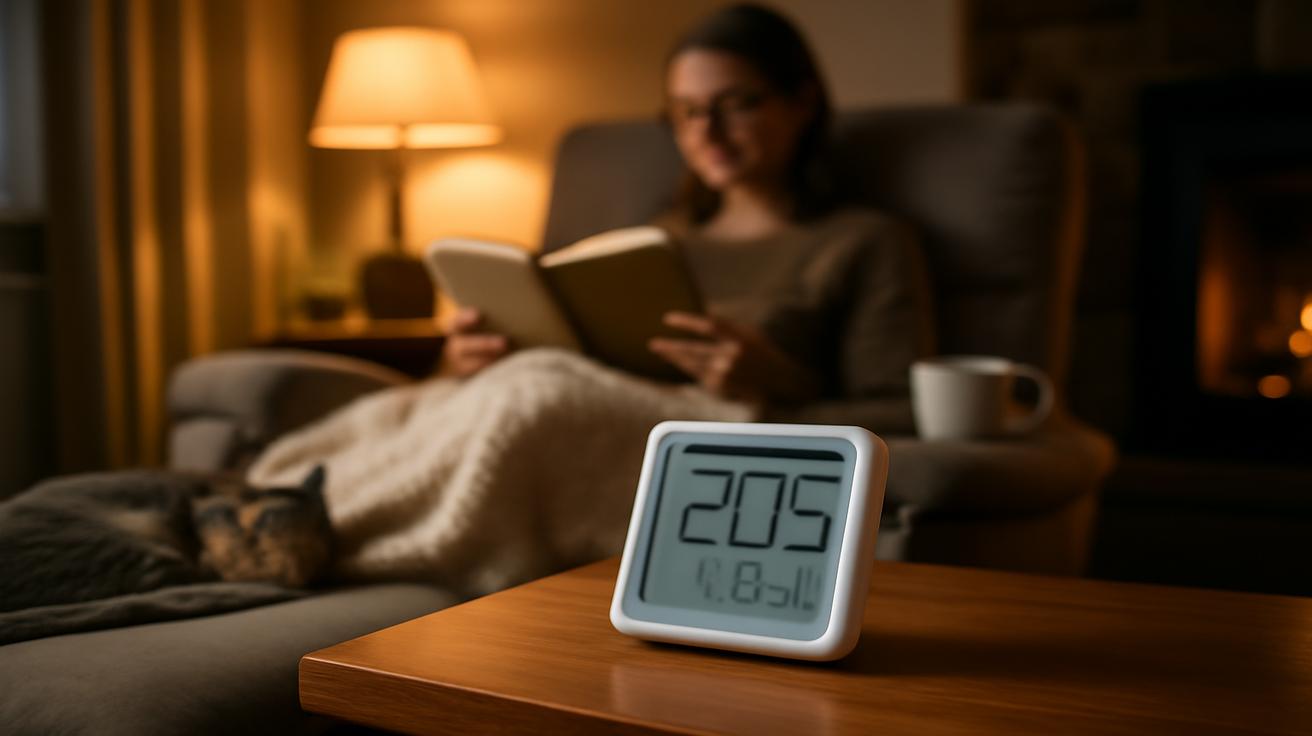
The first cold evening always sneaks up on you. One day you’re cracking open a window to let in late autumn light, and the next you’re standing in the hallway, staring at the thermostat like it’s a moral test. Your fingers hover. 18 °C feels a bit spartan. 19 °C—that old, sensible standard—has long been the line between “I’m doing my bit” and “I’m caving in.” But the air feels sharper this year. The floorboards have a chill. Somewhere between your socks and your shoulders, your body whispers: just a little warmer, please.
The Old 19 °C Rule, and Why It’s Melting Away
For decades, 19 °C was more than a number. It became a kind of badge of honor. Governments recommended it during oil crises and climate campaigns, energy experts echoed it, and it slipped into our shared memory as the responsible, grown-up choice. Set it to 19 °C, put on a sweater, save the planet.
But our homes—and the world beyond our windows—have changed. Buildings are better insulated in some places, but many others are aging, leaky, and damp. We spend far more time indoors than our grandparents did. And across cities and countrysides, people are living longer, with bodies that are more sensitive to the cold. Health researchers have been quietly gathering evidence that what worked in the 1970s may not be good enough in 2026.
So the question isn’t just, “How low can we go?” anymore. It’s shifting toward something more intimate: “What temperature actually keeps us healthy, day after day, winter after winter?”
The New Goldilocks Zone: What Experts Now Recommend
Instead of one universal magic number, specialists now talk about a narrow “comfort and health” band, with slightly different targets depending on who you are and what you’re doing. The shorthand most often suggested by public health experts is this:
- General healthy adults: Around 20–21 °C in living spaces
- Older adults, babies, or people with health conditions: 21–22 °C
- Bedrooms at night: Around 18–19 °C (if warm bedding and clothing are used)
Think of 19 °C as the lower edge of a spectrum rather than the ideal center. For many people, living constantly at 19 °C turns out to be just on the wrong side of comfortable—and for some, on the wrong side of safe.
Our bodies are not machines; they’re small, quiet laboratories of blood vessels, nerves, and instinct. When the temperature dips much below about 20–21 °C for hours at a time, your body starts to react, even if you insist you “don’t feel the cold.” Blood vessels tighten. Your heart works a little harder. Hands and feet become staging grounds for heat loss. For young, healthy people, it may just mean chilly fingers and an extra mug of tea. For someone with heart or lung problems, it can tip the body into dangerous territory.
The Science of Feeling Warm: It’s Not Just About the Number
Imagine stepping into a room at 20 °C. On paper, you’re right in the recommended range. But your feet are on bare, cold tiles. The walls are poorly insulated. A draft sneaks under the door. Is this really the same 20 °C as a well-insulated home with soft rugs, thick curtains, and double glazing? Not to your body.
Experts talk about something called “operative temperature”—a blend of air temperature and the temperature of surfaces around you. A room can technically read 20 °C, but if the walls, windows, and floor are icy, your body reads it as colder. That’s why sitting by a well-sealed window in winter feels completely different from sitting by an old, rattling one.
Humidity and air movement matter too. Dry air makes your skin feel tighter and colder. Moving air—those invisible drafts under doors, the subtle leak around a keyhole—steals heat from your skin much faster. Two homes, both set at 21 °C, can feel worlds apart depending on these subtle forces.
And then there’s you. Your body size, age, health, hormone levels, and even what you’ve eaten that day change your comfort zone. Someone who walks briskly to work, climbs stairs, and moves around the kitchen in the evening might be comfortable at 20 °C. Someone who sits at a desk, or an older person who moves more slowly, may need 21–22 °C to feel the same sense of ease.
Why 21 °C Is Becoming the New Reference Point
When researchers look at hospital admissions, heart attacks, strokes, and respiratory illnesses in winter, a pattern appears. Below about 18 °C, health risks start to climb for vulnerable people. Between 18–20 °C, many are technically safe, but not truly comfortable. Somewhere around 21 °C is where the balance between health, comfort, and energy use often settles for daytime living spaces.
It’s not a perfect number for every house or every body. It’s more like the center of a target, with personal adjustments radiating outwards. But you can feel the shift: we are slowly moving away from “19 °C for everyone” toward a more humane range that respects both the climate and the quiet needs of our bodies.
Living With the New Temperatures: Finding Your Own Sweet Spot
All of this science is helpful, but daily life is lived in sensations, not statistics. You don’t stand in your hallway thinking about operative temperatures and cardiovascular load. You think: My nose is cold. My partner is complaining. The heating bill feels heavy.
So how do you translate this new guidance into something that works in your own home, with your own people, and your own budget?
Listening to Your Body (and Everyone Else’s)
Start by watching the small, bodily clues:
- Are your hands and feet consistently cold, even with socks or slippers?
- Do you hunch your shoulders or pull your sleeves over your hands indoors?
- Is someone in the house always wrapped in blankets while another insists they’re fine?
- Do you feel sluggish, tense, or reluctant to get out of bed on cold mornings?
These are not trivial complaints; they’re data points. If you or someone in your home is older, has heart or lung issues, or is recovering from illness, erring toward 21–22 °C in main living areas is not indulgence. It’s prevention.
Bedrooms are a bit different. Our bodies naturally cool down at night to help us sleep. As long as bedding is thick and dry and you have warm sleepwear, 18–19 °C is usually fine—even comforting. But if you find yourself waking with a cold nose, stiff joints, or a cough aggravated by cold air, nudging the bedroom up a degree or two can make a real difference.
A Simple Guideline Table for Everyday Life
Use this table as a starting point rather than a rulebook. Every home breathes differently; every body negotiates with the cold in its own way.
| Room / Situation | Recommended Range | Notes |
|---|---|---|
| Living room (healthy adults) | 20–21 °C | Aim for 21 °C if you sit still for long periods. |
| Living room (older / vulnerable) | 21–22 °C | Helps reduce cardiovascular and respiratory stress. |
| Bedroom at night | 18–19 °C | Warmer bedding and sleepwear are essential. |
| Home office | 20–21 °C | Cold fingers reduce productivity; consider 21 °C if typing. |
| Hallways / unused rooms | 16–18 °C | Lower is fine as long as main rooms stay within range. |
Balancing Comfort, Cost, and the Climate
Raising your thermostat from 19 °C to 21 °C can feel, on bad days, like sacrilege. We’re all living in the long shadow of climate anxiety and rising energy costs. How can we justify warmer homes when the planet is already heating?
The answer is subtle but important: warmer doesn’t have to mean wasteful. The point is not to crank your home to tropical levels, but to aim for a range where your body thrives and your energy use is thoughtful rather than automatic.
Smart Ways to Heat a Little More, Waste a Lot Less
You can often afford that crucial extra degree or two if you pair it with small, strategic changes:
- Zone your warmth: Keep main living spaces at 20–21 °C, but allow less-used rooms to be cooler. Shut doors to keep heat where you are.
- Lower the ceiling of your expectations, not the thermostat: Accept 20–21 °C as “comfortable enough,” instead of chasing 24 °C in a T-shirt.
- Dress with intention indoors: Wool socks, layered clothing, and a warm, loose jumper transform 20 °C from “a bit chilly” to “cozy.”
- Insulate the invisible: Draft stoppers at doors, lined curtains, rugs on bare floors, and sealed window gaps can make 20 °C feel like 22 °C without touching the thermostat.
- Use timers wisely: Set your heating to come on before you wake and before you return home, then dip slightly while you’re out or asleep.
In this new landscape, the target temperature is not a badge of moral purity. It’s part of a wider conversation about how your home holds heat, how you move through your rooms, and how each degree feels in your bones.
The Emotional Weather Inside Our Homes
There’s another layer to this story that doesn’t show up in technical reports, but you can feel it in every shared living room: the quiet negotiations around warmth. One person wraps themselves in a blanket and complains, the other secretly turns the thermostat down when no one is looking. For some, a cooler home is proof of resilience. For others, it feels like a quiet reminder of scarcity.
The new guidance invites a shift in the emotional climate as well as the physical one. Instead of asking, “How low can we go without feeling miserable?” we might ask, “What temperature lets everyone in this home relax?” If one person is always cold, that’s not a personal flaw. It’s a sign their body is working harder to stay warm—especially if they are older, underweight, or managing a health condition.
There is dignity in warmth. A room that sits at 21 °C on a winter evening, where no one is shivering or tucking their hands into their sleeves, offers a kind of quiet hospitality: You are safe here. Your body can rest.
Of course, money matters. Many households face impossible choices as energy prices rise. In those circumstances, the recommended ranges become goals rather than guarantees. But even then, understanding them helps you make informed compromises: prioritizing the bedroom of an older parent, keeping one living room truly warm while accepting cooler corridors, investing in thicker curtains instead of another electric gadget.
A New Winter Ritual
So the next time the first real cold front of winter rolls over your street, try a different kind of ritual. Instead of gritting your teeth and forcing the thermostat down to 19 °C because “that’s what you’re supposed to do,” pause for a moment.
Walk barefoot across the floor. Sit near the window. Notice where the drafts sneak in. Watch the person in your life who always gets cold first. Picture your heart, your lungs, your circulation working under your skin. Consider that extra degree or two not as indulgence, but as alignment with what we now know about bodies and cold and the long haul of health.
The 19 °C rule had its time. It taught us that our choices matter, that heat is not an infinite resource, that comfort can be examined rather than assumed. But the story is moving on. We’re writing a new chapter that is less about a single number and more about balance—a narrow band of warmth where our bodies function well, our minds unwind, and we still live within our ecological means.
Somewhere between the hush of your radiators and the wind at your window, there is a temperature at which your home feels like a refuge, not a test. According to today’s experts, that place is a little warmer than we once thought. Around 20–21 °C for most of us. A touch more for those who need it. Just cool enough to respect the planet, just warm enough to protect the people living quietly, pulse by pulse, inside.
Frequently Asked Questions
Is 19 °C still safe for healthy adults?
For short periods, yes. But spending all day at 19 °C can feel uncomfortably cool for many people, especially if you’re sitting still or your home is draughty. Most experts now suggest around 20–21 °C for main living spaces as a better balance between comfort and health.
What temperature is best for elderly people?
Older adults are more vulnerable to cold-related health issues. A living room temperature of 21–22 °C is generally recommended for them, with bedrooms kept around 18–20 °C and good bedding. If they feel cold at those levels, it’s better to increase the temperature than to ignore their discomfort.
Will raising my thermostat from 19 °C to 21 °C hugely increase my bills?
Heating costs do rise with each degree, but the impact depends on your home’s insulation and your heating system. You can often offset the extra cost by improving draft-proofing, closing doors, using timers, and focusing warmth on the rooms you use most, rather than heating the whole house evenly.
What about sleeping—should my bedroom be as warm as the living room?
No, usually not. Most people sleep best in slightly cooler rooms, around 18–19 °C, as long as bedding is warm and dry. However, if you wake feeling cold, achy, or with worsened breathing symptoms, it may help to nudge the bedroom temperature up a degree.
How do I know if my home is too cold even if I “feel fine”?
Watch for constant cold hands and feet, condensation or damp on walls, and a tendency to hunch or wear multiple layers indoors just to feel okay. For vulnerable people—older adults, young children, or those with heart or lung disease—rooms below 18 °C for long periods are a warning sign and should be avoided whenever possible.








Leave a Comment