
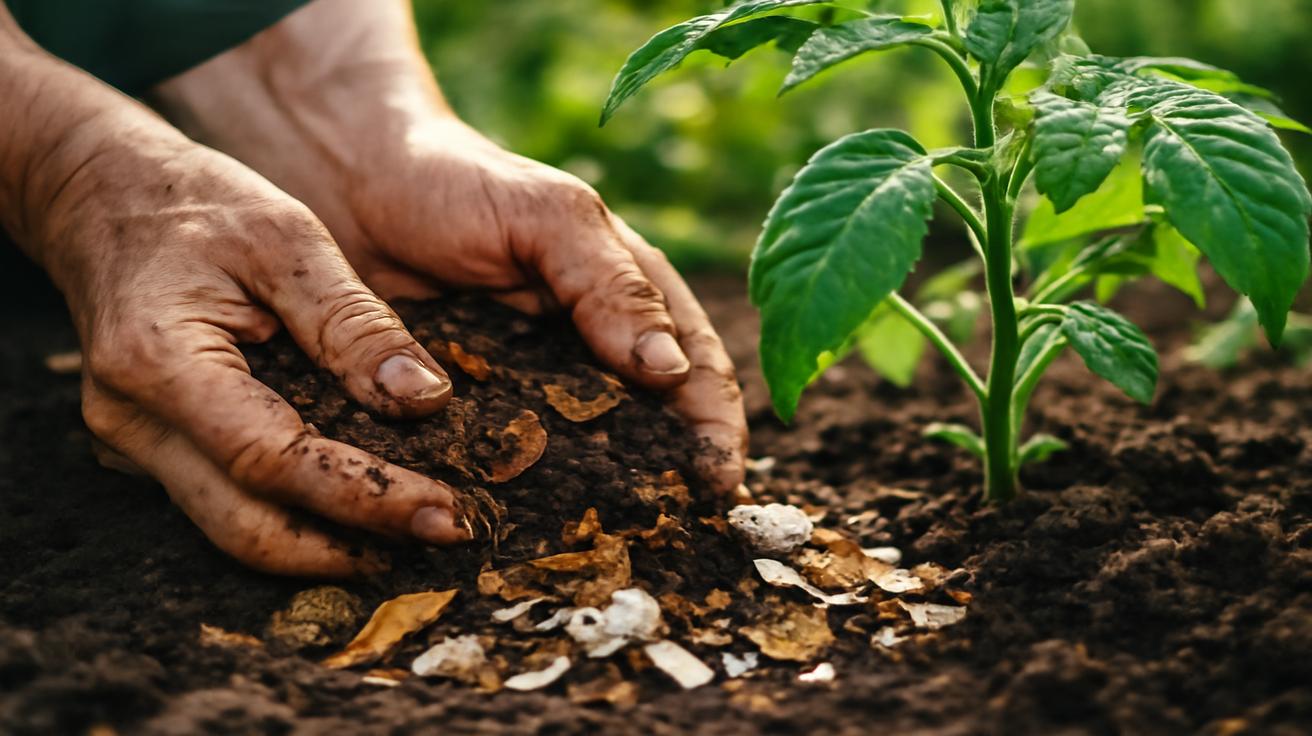
The first frost hadn’t yet whitened the grass, but the garden already looked like the aftermath of a small, joyful riot. Corn stalks rattled in the breeze like broken wind chimes, tomato vines slumped over their cages in a tangle of browned leaves, and squash plants sprawled across the beds like tired giants after a long season’s work. To most people, this would look like a mess waiting for the trash bin. But to the gardeners walking slowly up and down the beds—hands in pockets, eyes scanning every broken stem—it looked like treasure.
“This,” said Mara, a soil-stained gardener in her sixties, nudging a wilted sunflower stalk with the toe of her boot, “is better than anything you can buy in a bag.” Her friend Sam laughed, but he didn’t disagree. They knew what many new gardeners are just beginning to suspect: the so-called “waste” left behind after harvest can quietly, stubbornly outperform the fancy fertilizers touted on glossy packaging. The secret is not in what you add from outside, but in how you return what you already have back to the soil that raised it.
The Quiet Power Hiding in Garden “Trash”
If you’ve ever wheeled a cart full of dead plants to the curb and then driven to a garden center to buy fertilizer, you’ve experienced one of gardening’s strangest contradictions. Seasoned growers will tell you that most of what your soil needs is already right there, lying in plain sight: corn stalks, bean vines, carrot tops, kale stems, outer cabbage leaves, even the weeds you pulled and tossed aside.
To them, these aren’t scraps. They are slow-release nutrition, armor, and architecture for the soil. When harvest leftovers are chopped, layered, mulched, or composted, they start a quiet, underground transformation that chemical fertilizers can only imitate on their best day—and often without the side effects.
Walk through a garden guided by someone who’s been doing this for decades, and you’ll hear a different language. They’ll talk about “feeding the soil” instead of “feeding the plants.” They’ll point out worm castings shining like black pearls and explain how a rotting pumpkin becomes next year’s best tomato patch. Their beds might not look perfectly tidy, but the soil beneath is springy, dark, and rich, smelling faintly of the forest floor.
Fertilizer companies love the language of instant results: “fast-acting,” “quick green-up,” “triple strength.” Experienced gardeners lean toward words like “steady,” “resilient,” “balanced.” They’ve watched what happens over years, not just one season. And time and again, harvest leftovers have outperformed the expensive stuff, not by a dramatic overnight miracle, but by building a system that doesn’t need rescuing every few weeks.
How Leftovers Feed Soil Better Than the Bag
There’s a reason a pile of old bean vines can beat a bright blue liquid fertilizer. They work on completely different operating systems. One is a one-time injection of nutrients; the other is a living, ongoing conversation between plant remains and the microscopic life in the soil.
Slow, Steady, and Smart
When you chop and drop your harvest leftovers—cutting spent plants into small pieces and leaving them on the soil surface—they break down gradually. Microbes, worms, and fungi nibble away, unlocking nutrients in tune with moisture and temperature. Plants don’t get “force-fed”; they sip what they need as it’s released.
Chemical fertilizers, on the other hand, dump a concentrated load of nutrients all at once. If the timing is off, the weather wild, or the soil life already stressed, plants may take a fraction of what’s offered. The rest can wash away, burn tender roots, or accumulate as salts that slowly suffocate the living network underground.
Microlife Gets a Banquet, Not Just a Snack
To a soil microbe, a chopped-up corn stalk isn’t just nitrogen, phosphorus, and potassium. It’s carbon. It’s texture. It’s a feast with many courses. As bacteria and fungi digest these leftovers, they form sticky substances that help bind soil into stable crumbs. Those crumbly aggregates create pockets for air and water, making it easier for roots to explore.
In contrast, many synthetic fertilizers are like multivitamins made of numbers: N-P-K with a few trace elements thrown in. They can spike nutrient levels but don’t supply the rich organic matter microbes need to build a true soil ecosystem. Over time, that ecosystem is what matters most: it buffers drought, softens hardpan, and helps your beds recover from heavy use without constant inputs.
Structure, Sponge, and Shield
Harvest leftovers do triple duty in the garden:
- Structure: Stems and stalks, when buried or composted, create channels that roots and water can follow.
- Sponge: Decayed plant matter acts like a sponge, holding rainfall and irrigation water where roots can find it.
- Shield: A layer of chopped leaves and stems covers bare soil, reducing erosion, moderating temperature swings, and keeping soil microbes from baking in the sun.
Expensive fertilizers might deliver nutrients, but they don’t build that physical habitat. They’re a meal; leftovers are also the house, the furniture, and the insulation.
From Scraps to Super-Soil: Practical Ways Gardeners Use Leftovers
What seasoned gardeners know is that you don’t have to compost in a perfect, Pinterest-worthy system to let leftovers outperform the bagged stuff. They embrace rough edges and simple rituals that fit around real life. The key is keeping plant material cycling on-site instead of sending it away.
Chop and Drop: The Easiest First Step
This is the practice Mara shows every new gardener first. When a crop is spent, instead of yanking it out and throwing it away, she cuts the plant at soil level and chops the top into pieces about the length of her hand. Those pieces get dropped right back onto the bed as mulch.
Roots stay in the ground, quietly decaying, holding soil in place and feeding the belowground food web. The surface leftovers shade the soil, soften raindrops, and slowly decompose. Months later, when you pull back the mulch, you find a layer of crumbly, darker earth, laced with fine roots and the delicate threads of fungi.
Rough-and-Ready Compost Corners
Not everyone has time to build and turn perfect compost piles. Many veteran gardeners don’t bother. They pick a corner—behind a shed, under a tree, or at the end of a bed—and start a simple heap of harvest leftovers, weed pullings (avoiding anything gone to seed), and kitchen scraps.
They might toss on some shredded cardboard or old straw now and then, water it during dry spells, and leave the rest to worms and weather. By next year, the bottom of that apparently lazy heap has turned into a rich, dark layer of compost. They scrape off the finished material to top their beds and start another pile right on top of the old spot, letting the process continue in cycles.
Trench Composting: Burying Tomorrow’s Fertility
Trench composting is as simple and ancient as it sounds. In a bed that’s resting or in an empty row, you dig a narrow trench about as deep as your forearm. Into it go chopped corn stalks, pea vines, cabbage cores, and kitchen peelings. Cover it with soil, mark the row, and walk away.
Over winter or a fallow season, that buried line slowly collapses and blends with the surrounding soil. When you plant in or near it the next year, you’ll notice the difference: looser earth, easier digging, and a quiet vigor in the plants that doesn’t quite match any fertilizer schedule on a bag.
Cost, Results, and Reality: Leftovers vs. Fertilizer
Seasoned gardeners aren’t just sentimental about harvest leftovers. They’re practical. They’ve run their own experiments, sometimes over decades. When you listen to them talk, a pattern emerges that looks something like this:
| Aspect | Harvest Leftovers | Expensive Fertilizers |
|---|---|---|
| Cost | Essentially free; made from what you already grow | Recurring purchase; price fluctuates with brand and season |
| Nutrient Release | Slow, steady, tied to microbial activity and weather | Fast, sometimes overwhelming; easy to overapply |
| Soil Health | Builds organic matter, structure, and biodiversity | May boost nutrients but often ignores or harms soil life when overused |
| Environmental Impact | Low; recycles on-site, reduces waste | Runoff can pollute streams; production and transport add footprint |
| Long-Term Results | Increasing fertility and resilience with each season | Can create dependency on regular applications |
The word that comes up repeatedly is “resilience.” Gardeners who lean hard on chemical fertilizers often describe a kind of boom-and-bust cycle: strong early growth followed by mysterious stalls, increased pest pressure, or plants that seem oddly fragile. Those who steadily return leftovers to their soil talk about a different experience—gardens that bounce back after extremes of rain or heat, crops that “just seem happier,” and fewer emergencies that need fixing.
This doesn’t mean that any fertilizer is evil or that a thoughtful, targeted application is never useful. Some soils start out severely depleted or contaminated by past misuse. But even in those gardens, harvest leftovers become the foundation that makes any purchased amendment go further and, eventually, become less necessary.
Stories from Seasoned Gardeners’ Beds
Talk long enough with people who have gardened in the same patch of ground for ten, twenty, or thirty years, and you’ll notice something beyond the technical details: affection. They talk about their soil like an old friend whose moods they’ve learned to read. And again and again, their turning point came when they stopped throwing their harvest away.
Sam likes to tell the story of his first “big” investment—several bags of a premium, slow-release, name-brand fertilizer. One season, he tried something he’d heard from an older neighbor: in half his beds, he’d use the fancy fertilizer; in the other half, he’d rely only on compost and chopped harvest leftovers from the previous year. He kept everything else as similar as he could.
The first month, the fertilized side shot ahead. Leaves were bigger, growth faster. He almost called the experiment off. But by midsummer, something subtle shifted. The plants on the leftover-fed side, which had been quietly building root systems in their spongey, dark soil, took off with a deep, sustained vigor. Their leaves stayed green longer into the hot spell that followed. When a late blight swept through, those plants weathered it better.
At the end of the season, when he dug into both sides, the difference hit him. The fertilized beds were improved compared with his original soil, but they were still somewhat cloddy and compacted when dry. The leftover-fed beds? The shovel slid in like a spoon into cake. There were more worms, more crumbly structure, and less need to “fix” anything for next year.
Mara’s story is subtler. She gardens on a sloping patch where hard summer rains used to strip soil off the beds and pool it at the bottom. Bags of granular fertilizer did nothing to stop that. Only when she began leaving her crop residues as a thick mulch—corn stalks, bean vines, shredded sunflower stems—did the runoff lines begin to fade. The soil stayed in place, wrapped in a protective mat of last season’s growth. Within a few years, she noticed something else: she needed fewer wheelbarrows of compost, fewer amendments, fewer panic purchases at the garden store. Her garden had begun to feed itself.
Getting Started: Letting Your Garden Feed Itself
Shifting from “buy and apply” to “grow and return” can feel like a small rebellion, especially if you’ve been taught that good gardening means neat, bare soil and shelves of products. But the transition doesn’t require perfection, and it doesn’t have to happen all at once.
Start with One Bed
Pick a single bed or even just a corner. When a crop finishes, resist the urge to clear it to bare earth. Instead:
- Cut the plants at soil level, leaving the roots in place.
- Chop the tops into small pieces.
- Spread them back over the soil as a mulch layer.
Watch that spot over the next season. Notice how it holds moisture, how weeds behave, how easily a trowel slips in.
Feed the Pile, Even If It’s Ugly
Set aside perfection. Pile your tomato vines (without diseased parts), pea shells, lettuce stems, and corn husks in one designated area. If you can, layer with a bit of dry material—fallen leaves, straw, or shredded paper. Water occasionally. Forget about it for a while.
When curiosity gets the better of you months later, sink your hand or a fork into the base. That dark, sweet-smelling stuff isn’t magic; it’s simply your garden, returned to itself, ready to go back onto the beds that raised it.
Use Fertilizers Wisely, Not Blindly
None of this means you must swear off every bag on the shelf. Think of purchased fertilizers as tools, not crutches. A soil test, especially in a new or troubled garden, can show if you’re truly short on something specific like phosphorus or certain trace minerals. If you do buy amendments, choose slower-release, balanced sources and apply them sparingly, layered into a system rich with harvest leftovers and compost.
The long game is to move from dependence to partnership—between you, your plants, and the soil life that never gets listed on a product label.
FAQs
Can I use all harvest leftovers, or are some plants better left out?
Most healthy plant leftovers can be returned to the garden. Avoid keeping or composting any plant material that is clearly diseased or heavily infested with pests; dispose of those separately. Thick, woody stems (like old sunflower stalks) may break down slowly, so chop them well or use them in a separate compost pile.
Will harvest leftovers attract pests or rodents?
They can, especially if large, fresh pieces are left in thick piles or if you add a lot of food scraps on the surface. To reduce problems, chop material finely, spread it in a thin layer, and lightly cover with soil or a dry mulch like leaves or straw. Trench composting—burying leftovers—is another good way to minimize pest interest.
How long does it take for leftovers to improve my soil?
You may notice small improvements in texture and moisture-holding within a single season, especially if your soil was poor to begin with. The most dramatic changes usually appear over two to three years of consistently returning plant material. Soil building is cumulative; each season adds another layer of resilience.
Do I still need to add compost if I’m using harvest leftovers?
Compost and harvest leftovers work beautifully together. Finished compost is more stable and concentrated, while fresh leftovers are still in the process of breaking down. Many seasoned gardeners top beds with compost once or twice a year and then use chopped crop residues as an ongoing mulch. Over time, you may find you need to bring in less compost as your soil improves.
Can harvest leftovers replace all store-bought fertilizers?
In many home gardens with reasonable soil to start, yes—especially over the long term. However, extremely depleted or newly established beds may benefit from some targeted amendments early on. The goal is to let leftovers and compost do more of the work each year so that purchased fertilizers become an occasional backup, not a constant requirement.
Is this approach suitable for small urban gardens or container plants?
Absolutely, though you’ll need to adjust scale. In small beds, you can still chop and drop smaller amounts of plant material and maintain a compact compost bin or worm bin. For containers, it’s usually better to compost harvest leftovers first, then add the finished compost to potting mixes, rather than leaving large plant pieces in the pots where they can tie up space and nutrients as they decompose.
What if my garden already relies on synthetic fertilizers?
You don’t need to switch overnight. Begin by returning harvest leftovers and adding compost while gradually reducing the amount of synthetic fertilizer you use. Watch your plants and soil closely. Over time, as structure and organic matter improve, you can usually cut back further. The aim is a smooth transition, not a sudden shock to your plants or your confidence.








Leave a Comment