
The first thing you notice is the shimmer. Not the flat, inky sheen of box dye, but something softer—like moonlight threaded through hair. Silver, pewter, storm-cloud gray, and the palest whisper of white, all glinting as a woman in a linen shirt bends over a café table to laugh. Nobody here stares because her hair is gray. They stare because it is impossible not to.
Ten years ago, she might have been huddled in a drugstore aisle, comparing shades of “ash brown” and “chestnut auburn,” calculating how many weeks until her roots would betray her age. Now, she runs a hand through a cropped, silver bob and talks about the thing that’s quietly shaking the beauty world: the controversial new trend that promises to cover grays, make women look younger—and sometimes doesn’t involve dye at all.
When “Covering Gray” Stops Meaning What You Think
The phrase “cover your gray” used to mean one thing only: color it until no one could see it. A ritual of bowls, gloves, towel-stained sinks, and the faint smell of ammonia curling in the air every four to six weeks. For many women over 50, it was a contract they signed in their 30s without reading the fine print: once you start, it’s hard to stop.
But in hushed salon chairs and viral social media posts, that contract is being quietly renegotiated. A surprising new idea is gaining ground: what if “covering your gray” could mean blending it, framing it, or even celebrating it so well that the overall effect is fresher, brighter…younger?
It sounds like a paradox. The old rulebook goes: gray equals old, and old equals something we’re meant to hide. Yet with every silver-haired influencer and every woman who lets her hair go natural and then styles it with intention, that rulebook looks more dated. Instead of thick, opaque dye jobs, stylists talk about “gray whispering,” “smoky dimension,” and “reverse highlights.” They’re not erasing the gray; they’re designing around it.
And that’s where the controversy begins: between the women who feel liberated, the stylists who fear lost income or botched transitions, and the influencers who sometimes reduce a deeply personal decision to a 30-second transformation reel.
The Salon War: Stylists on Both Sides of the Chair
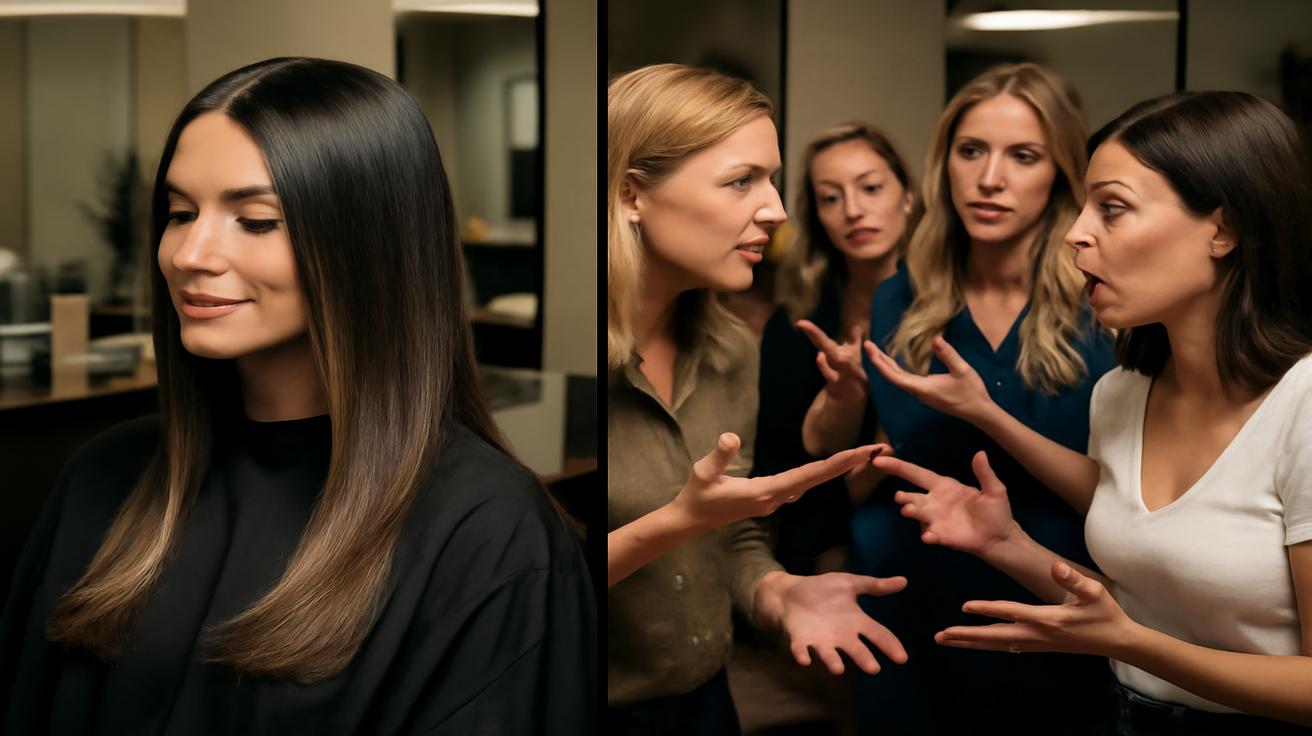
Walk into any busy salon and the tension is there, humming under the blow-dryers. On one station, a stylist brushes thick brown dye from root to tip, reflexively covering every silver strand. At the next, another stylist is painstakingly teasing out gray sections and painting soft, cool-toned lowlights beside them, not over them.
For some stylists, the move toward visible gray feels like a threat to an industry standard that has paid the bills for decades. Root touch-ups have long been a bread-and-butter service—steady, predictable, and frequent. Letting clients “go gray” can mean longer gaps between appointments, fewer color services, and a skill set they were never taught.
Yet other stylists see the shift not as loss but as evolution. They talk about the new techniques like artists discovering a fresh medium. Instead of masking reality, they’re sculpting it into something luminous.
They use terms that sound strangely poetic:
- Gray blending: Strategically weaving highlights and lowlights into natural gray to soften regrowth lines.
- Smoke toning: Using cool or steel-toned glosses to make grays look intentional and polished rather than patchy.
- Shadow rooting: Keeping the roots natural while the rest of the hair has dimension, easing the eye into the gray.
Still, conflict brews. Some colorists insist that embracing gray prematurely will “age” their clients, arguing that bright brunettes and warm blondes are what keep faces looking youthful. Others counter that nothing ages a woman faster than obvious, solid, shoe-polish hair against a softly lined face.
In the end, the war isn’t just about technique—it’s about who gets to define what looks “young.”
The Influencer Effect: Filters, Feeds, and Silver Hair Dreams
Scroll through your social feed and you’ll find them: women over 50 and 60, hair silver as frost, eyes bright, claiming they’ve never felt more themselves. They tilt their heads to catch the light, their hair moving like silk or velvet or ocean foam, depending on the filter.
Influencers have seized on the gray trend with infectious enthusiasm. They post time-lapse videos of their “grow-out journeys,” reels of the first haircut after the last box dye, side-by-side before-and-after shots. In comments sections, strangers cheer them on as though they’ve run a marathon.
There’s power in that. For women raised on magazine covers that featured only shimmering brown manes and golden blonde waves, seeing silver-haired women idolized is quietly radical. It sends a new signal: you are allowed to look your age and still be magnetic.
But the online story can be deceptively tidy. What you don’t always see is the awkward midpoint: months of skunk-stripe roots, the brittle, uneven texture from years of overlapping dye, the impatient days when you almost reach for the bottle again. You don’t see the fluorescent bathroom light that makes your new color look more “dishwater gray” than “ethereal silver.”
Some influencers, craving the viral payoff, skip that part entirely. They go to high-end salons, pay for multi-hour color corrections and toners, then present the final look as if it were simply a matter of “deciding to go gray.” Women at home, on tight budgets and with fragile hair, are left wondering why their own transition doesn’t look like the videos.
Beneath the aspirational images lies a question: when trends collide with deeply personal aging journeys, who’s steering the ship—you, or the algorithm?
The New Ways to “Cover” Gray Without Losing Yourself
“Covering gray” is beginning to mean something more nuanced: not obliterating every silver strand, but shaping an overall look that feels vibrant. Sometimes that does involve color—just used with more strategy and less panic.
Here are some of the emerging approaches women over 50 are choosing, often in conversation with forward-thinking stylists:
1. Gray Blending Instead of Full Coverage
Gray blending works like a visual soft-focus filter. Rather than chasing every root, the stylist places a mix of cool highlights and slightly deeper lowlights around the existing gray. From a distance, the hair reads as one harmonious shade. Up close, it’s a tapestry.
This method can make regrowth almost invisible, cutting salon visits in half or more. For many women, that feels like stepping off a hamster wheel they didn’t realize they were on.
2. Strategic “Youth Zones”
Some stylists look at the face like a painting and the hair like its frame. The goal isn’t to hide all grays, but to brighten where the eye naturally lands: the hairline, temples, crown, and the pieces that fall toward the face.
In these “youth zones,” they might lightly color or tone the grays to a soft champagne, silver-blonde, or cool mocha, leaving grayer areas at the nape or interior of the hair alone. The overall effect feels fresh and lifting—without total color commitment.
3. Softening the Contrast
One of the reasons gray can feel aging is harsh contrast: pitch-black hair against pale skin, or warm, brassy dye against cool-toned grays. By lowering the contrast—cooling down warm browns, lightening very dark shades, or toning certain areas to match the silver—the entire face can appear softer, less severe.
Women describe it as like turning down the “shout” of their hair so their features—not their roots—take center stage.
4. Going “Gray on Purpose”
Then there are the bold ones who choose to go fully gray, but with intention. They might cut their hair into a modern, sharp bob or a textured pixie, or grow it long and wavy but keep the ends blunt and healthy. They use purple shampoos to keep yellow tones away, shine serums to emphasize the natural reflectiveness of gray, and rich conditioners to combat dryness.
They aren’t simply “letting themselves go.” They’re curating a look the way someone might choose a minimalist white wardrobe: clean, striking, and unapologetic.
5. Micro Decisions, Not Makeovers
Not everyone needs a dramatic salon overhaul. Many women experiment quietly: spacing out color appointments, asking for demi-permanent gloss instead of permanent dye, cutting in bangs that reveal or conceal silver, changing their part to play up or down the gray streaks.
One of the most underrated tools is time—allowing a few extra weeks between touch-ups and noticing how much gray feels comfortable. It’s not all-or-nothing; it can be inch-by-inch.
The Emotional Undercurrent: What Gray Hair Is Really About
Underneath all the techniques and trends lies a more intimate terrain. This isn’t only about hair—it’s about visibility, identity, and the way women over 50 are allowed to exist in public.
For decades, the implicit message was: age quietly. Smooth the lines, cover the grays, pretend time hasn’t touched you. The problem with that script is that it makes any sign of aging feel like a failure, instead of a fact.
When women talk about their gray hair journeys, they rarely talk only about color:
- They talk about mothers who never let a single root show, and the first time they saw those same mothers without dye in a hospital bed.
- They talk about careers in youth-obsessed industries, the fear of being overlooked once they “look their age.”
- They talk about grandchildren tracing silvery strands with tiny fingers, calling them “sparkles” instead of “old lady hair.”
Going gray—or choosing to keep dyeing—is not a moral decision, but it can feel like a referendum on how well you’re “handling” aging. If you keep coloring, are you clinging to youth? If you stop, are you “giving up” or “finally being authentic”?
The truth, of course, is messier. Some women feel wildly empowered by ditching dye; others feel more themselves with their long-loved brunette or red. Some oscillate between phases. One woman in her 50s might feel fierce and current with a cool silver crop; another might feel invisible unless her hair is a rich, glossy brown. Both are right—because both are telling the truth of their own bodies and lives.
Divided Opinions: What Women Over 50 Are Actually Saying
When you sit down with women over 50 and ask them about their hair, the conversation quickly splinters into a dozen directions. Their reactions to the new gray trend highlight just how personal—and how politicized—this territory has become.
Here’s a snapshot of the spectrum of perspectives:
| Perspective | What She Says |
|---|---|
| The Liberation Seeker | “I was tired of scheduling my life around my roots. Gray blending made me feel lighter—literally and emotionally.” |
| The Loyal Color Devotee | “I love my dark hair. It makes me feel like myself. Why should I stop doing something that brings me joy just because there’s a trend?” |
| The Cautious Observer | “I watch those gray-transition videos, but I’m scared. I don’t want an awkward year of hating the mirror.” |
| The Quiet Experimenter | “I’ve just started spacing out my color appointments and using demi-permanent. I’m not sure where I’ll land, and that’s okay.” |
| The Trend Skeptic | “First they told us to hide the gray, now they say we’re cowards if we don’t flaunt it. I refuse to let trends shame me either way.” |
What unites these women isn’t a single choice but a single desire: to feel in control of how they appear in the world. Not pushed by fear. Not pushed by fashion. Simply choosing.
So, Does Embracing or Blending Gray Actually Make You Look Younger?
Here’s the uncomfortable answer: sometimes yes, sometimes no—and it depends far less on the presence of gray than on harmony.
Gray hair that’s softly blended, well-cut, and cared for can lift the face, emphasize eye color, and make skin look luminous. Harsh, one-note dye that clashes with your complexion, or obvious root lines that shout “maintenance overdue,” can weigh the face down, no matter how “young” the color is supposed to look.
What reads as youthful is often a combination of:
- Texture: Healthy shine, movement, and softness instead of parched, over-processed strands.
- Shape: A cut that has intention—architecture, even—rather than one that simply hangs.
- Tone: Color that complements your skin’s undertones, whether it’s silver, salt-and-pepper, blonde, or brunette.
- Confidence: The way you inhabit your hair—chin lifted, shoulders relaxed, or constantly tugging at it, apologizing for it.
A well-executed gray blend can absolutely make a woman look fresher than a too-dark, too-solid dye job. But so can a thoughtfully maintained color that she loves. The promise that there’s one “right” path to looking younger is just another marketing story.
Perhaps the more radical move is to ask a different question: not “Does this make me look younger?” but “Does this make me feel more alive?” Youth fades either way; aliveness is renewable.
Finding Your Own Way Through the Gray
So where does that leave the woman standing in front of her bathroom mirror tonight, tugging at a silver streak that seems brighter than last month? Somewhere between the salon wars, the influencer feeds, and the clamor of divided opinions, she has to hear the quietest voice in the room: her own.
If you’re that woman, consider this your permission slip—not to go gray, not to dye forever, but to choose based on curiosity instead of fear. Ask yourself:
- When I imagine myself five years from now, what hair do I see—and how do I feel wearing it?
- Am I coloring my hair because I genuinely love the look, or because I’m afraid of being treated differently?
- If I took one small step toward (or away from) gray, what would it be? A new cut? A longer stretch between appointments? A conversation with a stylist I trust?
The trend that’s truly controversial isn’t gray hair itself. It’s women over 50 refusing to be told, yet again, what they “should” do with their bodies in order to be acceptable. Whether they walk into the salon for another root touch-up or for a carefully planned gray blend, the act of decision—conscious, unapologetic—is the real disruption.
Someday, perhaps, a woman in a café will throw back her head and laugh, silver hair catching the light, and nobody will think “brave” or “bold” or “aging gracefully.” They’ll think only: there she is. Entirely herself. And that, in the end, looks younger than anything in a bottle.
FAQ
Does going gray automatically make you look older?
No. What often “ages” a look is harsh contrast, damaged texture, or color that clashes with your skin tone. Well-cut, healthy, intentionally styled gray or blended hair can look fresher than a flat, too-dark dye job.
How long does a gray blending transition usually take?
Most transitions take between 6 and 18 months, depending on hair length, how often you cut, and how dramatic your previous color was. Shorter cuts and gradual blending can make the process feel much quicker.
Is gray blending less damaging than full-coverage dye?
Often, yes. Because gray blending usually involves fewer overall applications and can use gentler, demi-permanent products, it may be less stressful on the hair than frequent full-coverage root touch-ups.
Can I try gray blending at home with box dye?
True gray blending is difficult to achieve with box dye because it relies on placement, multiple tones, and careful formulation. A professional colorist is usually the best option, at least for the initial transition.
What if I go gray and decide I hate it?
You can always change your mind. Hair can be re-colored, toned, or highlighted again. Many women experiment, reassess, and shift course. Your choice today doesn’t lock you into a lifetime commitment.
How can I keep my gray hair from looking dull or yellow?
Use a gentle purple or blue shampoo once a week to neutralize yellow tones, protect your hair from heat and sun, and keep it hydrated with rich conditioners or masks. Regular trims also help maintain shine and movement.
What should I ask my stylist if I’m curious about this trend?
Try questions like: “What would a low-maintenance gray blend look like on me?” or “How could we soften my root line without committing to a full grow-out?” A good stylist will consider your lifestyle, budget, and comfort level, not just the trend.







Leave a Comment