
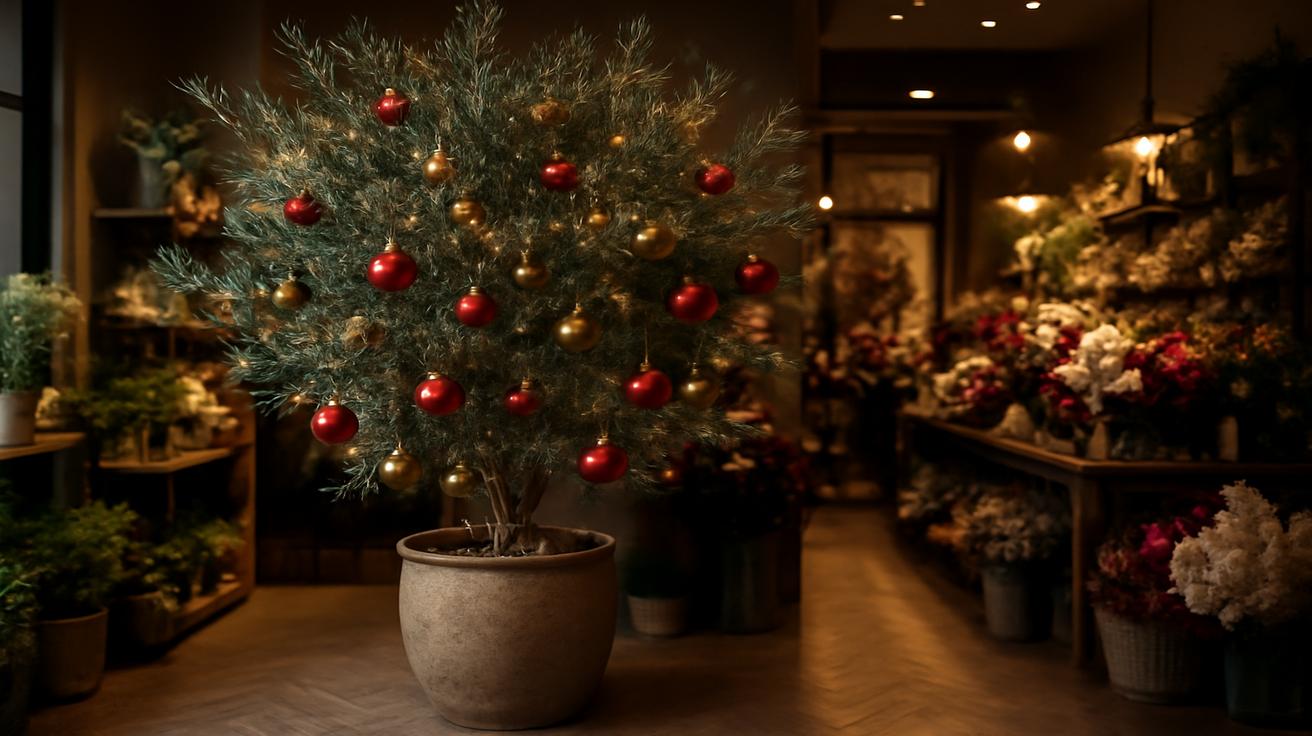
The first time I saw it, I almost walked right past. A florist’s window in late November is usually a blur of predictable green: clipped fir, glossy holly, eucalyptus bundled like silver clouds. But there, between a row of miniature pines and a forest of poinsettias, something else leaned casually in a tall glass vase—slender, architectural, not trying too hard. The branches curved upward like calligraphy strokes, studded with soft, feathery plumes of green. No baubles. No tinsel. Just an effortless, slow kind of drama. I pushed the door open and walked in.
Goodbye, Christmas Tree: Why We’re Ready for Something New
Every December, like clockwork, the ritual returns. Somewhere between the first frosty morning and the last office party, we drag a tree—real or fake—into the middle of our living rooms and crown it as the unquestioned monarch of the holidays. It’s a comforting script: the pine sap on our fingers, the box of tangled lights, that faintly dusty smell of a plastic tree resurrected from the attic.
But quietly, almost shyly, a new character has walked onto the seasonal stage. Florists across cities are slipping it into their windows, styling it in photo shoots, pairing it with candles and linen tablecloths. It’s not demanding center stage, yet it keeps stealing every scene it steps into.
Meet the plant that’s about to change how our homes look—and feel—when December rolls around: the humble, graceful, surprisingly charismatic Asparagus fern (and its close cousins in the airy, foliage-first trend). It’s the anti-Christmas tree in all the best ways: lighter, more playful, more sustainable, and deliciously adaptable.
The Moment I Met the “New Tree”
Inside the florist’s shop, the air smelled of damp earth and cold glass. Buckets of tulips leaned under soft spotlights. The usual suspects were there—firs, spruce branches, eucalyptus—but my eyes kept drifting back to those light green fronds, hovering like a cloud in a narrow ceramic vase.
“What is that?” I asked, nodding toward it.
The florist smiled, the way people do when they know a secret is about to land. “Asparagus fern,” she said. “We can’t keep it in stock this time of year. People are using it instead of Christmas trees, or to make their trees feel more… alive.”
I stepped closer. The fronds looked like something between lace and mist, each stem branching into a constellation of tiny needles that somehow weren’t sharp at all. It was woodland and wild meadow and winter daydream, all at once.
“It’s trending,” she added. “You can hang tiny ornaments from it. Or just let it be what it is. It kind of makes the tree feel old-fashioned, in a nice way—but also a bit… heavy.”
The word stuck with me—heavy. The season of twinkle lights and warm drinks suddenly felt weighed down by its own traditions. Maybe that’s why the airy silhouette of this plant felt like a breath of fresh air. No thick trunk. No heavy branches. Just a living sketch of green in the corner of the room.
The Plant Stealing the Show
Asparagus fern—often sold in florists’ shops as cut foliage or as potted plants—isn’t a fern at all. It’s a member of the lily family, and it’s been quietly thriving in the background of bouquets and window boxes for years. But this winter, it’s moving into the spotlight, not as a supporting character, but as the main event.
Part of its magic is texture. In a season ruled by solid, conical shapes and glossy, hard leaves, asparagus fern brings softness. Its foliage floats and spills, catching light and casting shadows on walls. When you place a single, generous stem in a tall vase, it behaves like a living sculpture—leaning, arching, and swaying with a gust of air when someone walks by.
Florists are treating it as a kind of living line drawing. Instead of stacking decorations, they’re letting space and air be part of the design. Strands of warm fairy lights tucked around a pot of asparagus fern transform it into a minimalist, whisper-soft version of the Christmas tree. A few clay ornaments or paper stars, dangling delicately from its stems, are enough to say “festive” without shouting.
And it isn’t just asparagus fern. Related trends are rising with it—soft-needled conifers in pots, wispy branches of cypress and pine, airy grasses that glow when backlit by candles. But the asparagus fern’s unapologetic lightness seems perfectly tuned to a moment when people are craving homes that feel more like sanctuaries and less like storage spaces for one season’s worth of stuff.
The Rise of the Gentle Festive Corner
Instead of that big, commanding tree in the middle of the living room, more people are creating what florists call a “festive corner.” It’s smaller, more intimate, and more personal—maybe a narrow vintage stool with a potted asparagus fern on top, a beeswax candle beside it, and a small bowl of tangerines. Or a simple cluster of two or three vases filled with fern fronds, eucalyptus, and a single stem of amaryllis.
The effect is less “department store display” and more “winter cabin in the woods.” It invites you in, instead of towering over you. It feels like something you could keep all year, not just fling to the curb on the 26th.
How This Breezy Green Is Changing the Holiday Mood
We rarely talk about it, but the Christmas tree comes with its own emotional weather system. For some, it carries pure nostalgia; for others, it’s a reminder of stress: the hauling, the dropping needles, the “Did we really need another box of ornaments?” question that floats in the air once the credit card bill arrives.
The asparagus fern, by contrast, arrives almost without baggage. It doesn’t demand a big reveal moment. No one gathers the whole family around to admire it while someone plugs in the lights for a dramatic ta-da. It slides gently into your home—on a sideboard, a shelf, the corner of your kitchen counter—and subtly shifts the atmosphere.
Because it’s small and light, it fits naturally into everyday life. You can read by it. Eat breakfast next to it. Move it closer to the window on a bright morning. It becomes part of your space, not a seasonal monument that everything else must orbit around.
And there’s something quietly radical about that. As more people look for ways to downshift December—to spend less, waste less, and feel more present—the asparagus fern offers an answer wrapped in chlorophyll. It’s living. It can stay when the holidays leave. It doesn’t need to be boxed or binned or dragged out to the curb. The line between “holiday decoration” and “houseplant companion” begins to blur.
Sensory Minimalism: A Different Kind of Festive
Close your eyes and imagine your usual Christmas tree: the sharp resinous smell, the slightly scratchy needles, the visual riot of ornaments from every era of your life. Now imagine a different scene: a dim room, one string of warm fairy lights coiled in a glass bowl, and beside it, a pot of asparagus fern. Its foliage catches the light so each frond seems outlined in gold. You run your fingers gently through it—soft, almost feathery, a brush of green that leaves no stickiness, no sap. The room is quieter, but not empty. Celebratory, but calm.
This is the sensory shift the plant brings: from maximalist nostalgia to minimal, grounded presence. It’s still seasonal. It’s still special. But it feels more like a long exhale than a bright, glittering shout.
From Florists’ Secret to Social Media Darling
If you scroll through the feeds of modern florists and stylists, you’ll spot the trend before you know its name: images of simple, white-walled rooms with a single vase of wild-feeling greenery. A table set for dinner with linen napkins, mismatched plates, and a low arrangement of asparagus fern and winter berries. A bed headboard crowned, not by a wreath, but by a slender shelf holding a cluster of pots—fern, ivy, and a trailing plant that spills like a river of green.
The plant photographs beautifully. Its fine texture blurs in the background of portraits, catching just enough light to look magical. It behaves well in small urban apartments where a six-foot tree would feel like an uninvited guest. It’s also inexpensive compared to an elaborate wreath or a full-sized tree, especially when bought as a potted plant that keeps on giving.
Florists love it for practical reasons too: it’s lightweight, easy to tuck into arrangements, and generous. A single potted plant can be harvested lightly throughout the season for stems to place into bud vases or to decorate a tabletop. It plays well with others, too—team it with pine, eucalyptus, winter roses, or dried seed heads, and it instantly modernizes the look.
How Florists Are Styling the New “Tree”
Walk into a trend-aware florist this year and you might see asparagus fern used in ways that feel both familiar and quietly subversive. A few styling ideas that are popping up on benches and in studio corners:
- As a tree stand-in: A tall, structural pot filled with asparagus fern and a subtle string of fairy lights, placed where the tree usually goes.
- In oversized vases: Long-cut stems spilling out in every direction, forming an airy, almost cloud-like silhouette on a dining table or hallway console.
- Mixed with dried elements: Combined with dried grasses, hydrangea heads, or seed pods for a wintery, wild-meadow feel.
- As a mantle “forest”: A row of small pots, each with a tuft of fern, creating a miniature forest across a fireplace or windowsill.
- Wrapped as a gift: Tiny potted ferns tied with linen ribbon, given as living presents that outlast the wrapping paper chaos.
What makes all of these options feel fresh is their light touch. The plant never overwhelms; it lingers. It invites you closer, rather than hitting you over the head with festivity.
A Quieter Kind of Sustainability
The conversation about the environmental impact of Christmas trees has grown louder in recent years. Real trees are farmed and often chipped into mulch afterward, which can be reasonably sustainable—but transport, pesticides, and disposal still leave a mark. Artificial trees can be used year after year, but they come with their own plastic footprint and eventual landfill destiny.
Choosing a plant like asparagus fern doesn’t solve all of that, but it does offer a different path. It nudges us away from the idea that something must be grand and disposable to feel meaningful. Instead of purchasing a large object specifically for one month of the year, we invite in a plant that can live with us for many seasons.
In a bright, indirect-light corner, asparagus fern can thrive as a houseplant. It likes humidity, appreciates regular misting, and will reward you with fountaining new growth all year. The “Christmas decoration” becomes a quiet roommate: still there when you’re making iced coffee in July, still soft and green when autumn winds return.
Even when used as cut foliage, it can last longer than many traditional greens if treated well—fresh water, a clean vase, a cool spot away from radiators. It asks us to slow down and care for it, rather than rush through a moment and move on to the next purchase.
Simple Care, Ongoing Beauty
You don’t need to be a plant expert to keep this new festive favorite happy. A few basics are enough:
- Light: Bright, indirect light is ideal. A north- or east-facing window works well.
- Water: Keep the soil slightly moist, not soggy. Don’t let it bone-dry between waterings.
- Humidity: Bathrooms and kitchens are happy places. Otherwise, a light misting or nearby tray of water helps.
- Temperature: It prefers the same range you do—no drafts, no scorching radiator spots.
Treat it as a living guest you’d like to see again next year. With just a little care, it will oblige.
Choosing Between Tree and Trend: You Don’t Have To
This isn’t a story about canceling the Christmas tree. For many, that evergreen presence holds too many childhood memories to replace outright. But what if, instead of clinging to a single symbol, we expanded the cast of characters in our winter rituals?
You might still have your tree in the corner, but tone it down—fewer ornaments, softer lights—and let an asparagus fern take center stage on the coffee table, where you actually spend your evenings. Or perhaps the tree moves to a hallway or dining room, while the living room becomes an oasis of lighter, airier greens.
Or maybe this is the year you experiment. No tree at all. Just a quiet gathering of plants, candles, and meaningful objects: a bowl of walnuts from a friend’s garden, a stack of well-thumbed books, a handmade star on the wall. The asparagus fern becomes not a replacement, but a symbol of a new kind of December—one that values presence over performance.
| Feature | Classic Christmas Tree | Asparagus Fern Trend |
|---|---|---|
| Size & Space | Large, needs dedicated floor area | Compact, fits shelves, tables, small corners |
| Visual Style | Bold, dense, heavily decorated | Light, airy, minimalist or softly adorned |
| Longevity | Seasonal, discarded after holidays | Can live year-round as a houseplant |
| Sustainability | Varies (real vs. artificial, transport, disposal) | Lower impact when kept long-term |
| Mood | Festive, nostalgic, sometimes overwhelming | Calming, contemporary, gently festive |
In the end, these choices are less about decor and more about how we want to feel. Do we want December to be dazzling and crowded, or spacious and soft? Do we want a house that screams “holiday” from the street, or a home that whispers warmth the moment we step through the door?
As I left the florist that morning, I carried a potted asparagus fern wrapped in brown paper, its fronds peeking out like a secret. At home, I placed it on a low table by the window and wound a single strand of tiny lights at its base. That night, with the overhead lamps off, it glowed quietly in the corner—no fanfare, no drama. Just a small, living reminder that traditions can evolve; that new symbols can arrive with the gentlest of footsteps.
Maybe, in a few years, we’ll look back and laugh at how unconventional it once felt to crown a fern as our December centerpiece. Maybe the Christmas tree will retire from main-character energy, content to become a sidekick. For now, though, the shift is only beginning—one florist’s window, one kitchen corner, one humble pot of feathers-green at a time.
FAQs
Is asparagus fern really a good alternative to a Christmas tree?
Yes, if you’re looking for something smaller, lighter, and easier to live with. It won’t replace the traditional tree experience for everyone, but it offers a modern, minimalist, and sustainable way to bring festive greenery into smaller spaces or quieter homes.
Can I hang ornaments on an asparagus fern?
Lightweight ornaments, paper stars, or tiny baubles can work, especially if you place them carefully and don’t overload the stems. Many people prefer to decorate around the plant—with lights nearby, candles, or objects on the same surface—rather than directly on it.
How long will an asparagus fern last indoors?
With decent care—indirect light, regular watering, and some humidity—it can live for years as a houseplant. It’s not just a one-season decoration; it can become part of your everyday home.
Is asparagus fern safe for pets?
Many varieties of asparagus fern are considered mildly toxic to cats and dogs if ingested, and their berries can be irritating. If you have curious pets, keep the plant out of easy reach or opt for pet-safe festive greens instead.
Do I have to give up my Christmas tree to try this trend?
Not at all. You can absolutely have both. Many people keep a smaller or simpler tree and use asparagus fern to bring a lighter, more contemporary mood to other areas of the home. It’s about expanding your options, not choosing sides.






Leave a Comment