
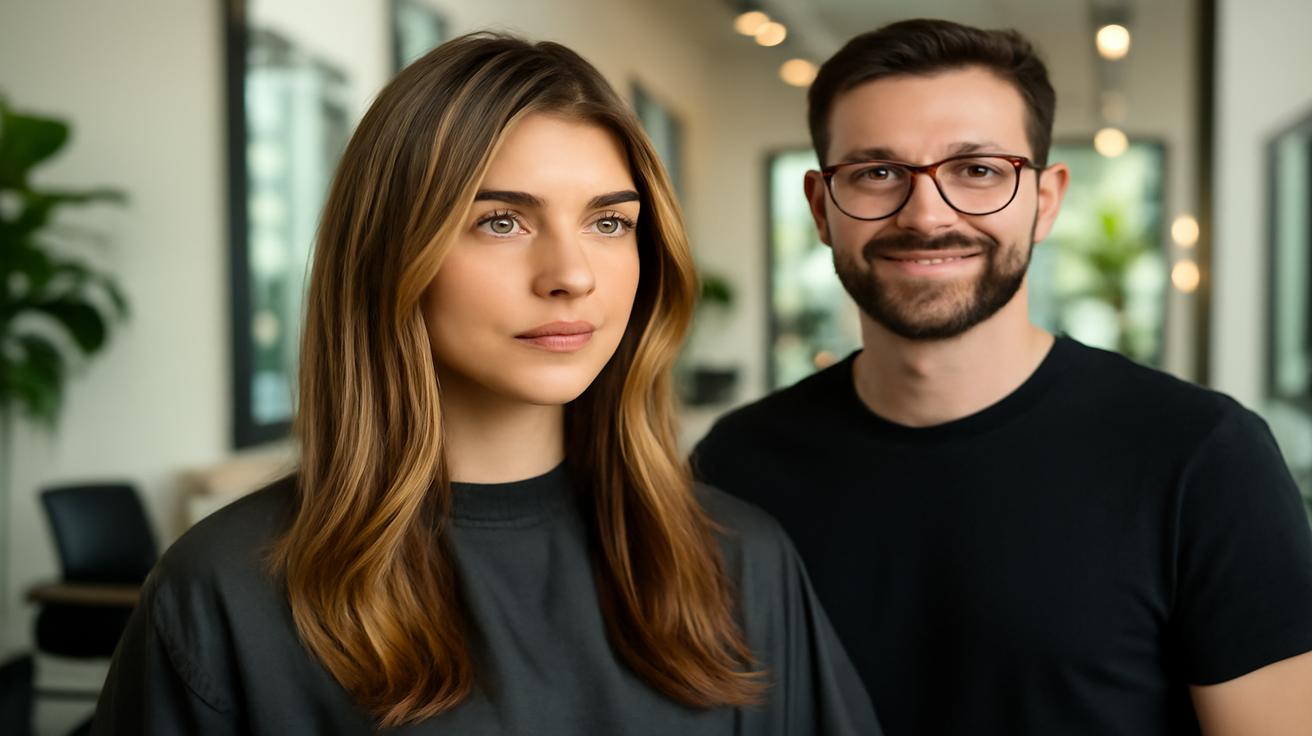
The first thing you notice is the light. Not the kind that floods a room at noon, blunt and unapologetic—but the kind that slips through sheer curtains at golden hour, tracing soft lines along cheekbones and collarbones. Now imagine that same soft, deliberate light painted into your hair. That’s Light Line coloring: a whisper of brightness exactly where the sun would touch, a new way of thinking about highlights that feels less like a salon service and more like wearable daylight.
Goodbye Balayage, Hello Light Line
For nearly a decade, balayage ruled the salon world. Those sweeping strokes, the oh-so-effortless gradients, the promise of “I woke up like this” hair—balayage was the unofficial uniform of the Instagram era. But fashion is cyclical, and even the most beloved techniques eventually give way to something new. Spring–summer 2026 is that turning point.
Light Line coloring is stepping in where balayage is stepping back. Its rise wasn’t explosive; it was more of a quiet murmur in niche salons, a subtle shimmer on runway models, a stylist’s “let me try something different” that started turning heads. Instead of diffuse, blended ribbons of color, Light Line is about intentional, ultra-fine lines of brightness—placed with the accuracy of a makeup artist applying highlighter to the bridge of the nose.
Think of balayage as watercolor: dreamy, blurred, romantic. Light Line is more like a pencil sketch touched with sunlight, precise and graphic but still soft when the hair moves. It’s the difference between a sunset sky wash and a shaft of light piercing through clouds—both beautiful, but they tell very different stories.
The Look: Sunbeams, Not Stripes
To understand Light Line coloring, you have to forget what you think you know about “highlights.” The word still carries the trauma of streaky early‑2000s foils: chunky, obvious, a little too loud. Light Line is the modern antidote to that memory. It trades heavy contrast for delicacy, thickness for finesse.
Picture this: you tuck your hair behind your ear, and there, just along the hairline, is a sliver of brightness that lifts your whole face. When the wind catches your ends, the light travels in slender pathways, like reflections across the surface of water. From the front, you see subtle contouring around the face. From the back, you see faint, luminous threads that don’t announce themselves until they catch the sun.
It’s not about saturating the hair with light; it’s about sketching it in selectively. The result is hair that looks “lit” from within, not dyed from the outside. On brunettes, it reads as liquid bronze. On blondes, it’s a halo. On redheads, it becomes warm, coppery sparks that seem almost animated.
And crucially: no harsh demarcation lines. Instead of the soft blur of balayage, Light Line uses micro-lines and cleverly staggered placement so your eye reads movement, not pattern. If balayage is a gradient, Light Line is a constellation.
How Light Line Coloring Actually Works
Under the salon cape, it feels like any other appointment—foil rattling, brush strokes, the occasional whiff of developer. But the technique is different enough that you’ll probably sense your colorist is in “surgery mode.” The sections are tiny, the placement is strategic, and there’s an almost obsessive focus on where the hair falls rather than simply where it grows.
Stylists start by mapping your haircut and parting: middle, deep side, flexible part, or fringe-heavy. Light Line thrives on intention, so it’s built around how you actually wear your hair, not how it lies on a mannequin head. Then come the “light lines” themselves—ultra-fine slices of hair, often finer than a traditional highlight, painted with lightener or color and wrapped or freehanded, depending on density and texture.
What makes this trend so 2026 is its hybrid nature: it borrows the subtlety of balayage, the precision of classic foiling, and the face-framing philosophy of hair contouring. Around the face, lines are usually placed closer together for a brighter, lifting effect. Deeper into the interior, they’re spaced out, softer, almost like hidden secret beams that only show up when the hair moves.
Toners and glosses then soften everything into harmony. You’re left with defined brightness, yes, but melted into your base color so it feels like an evolution of your natural hair rather than a layer sitting on top.
Why Light Line Is the Moment for Spring–Summer 2026
Trends never appear in isolation; they show up in response to what came before. After years of soft, whispery balayage, the fashion world started craving a bit more definition—cleaner silhouettes, sharper tailoring, bolder lines. You see it in clothing: structured shoulders, graphic prints, minimalist jewelry with architectural shapes. Light Line is hair’s answer to that shift.
Instead of the diffuse “beach hair” story, Light Line tells a more urban, curated one: sleek bobs etched with light along the jaw, long layers with hidden brightness that flashes when you move, mid-length cuts with precise face-framing lines that almost act like an Instagram filter in real life. It’s refined, but not fussy. Detailed, but not high-maintenance drama.
Another reason it fits 2026 so well: personalisation. We’ve moved past one-size-fits-all beauty. Light Line is inherently custom. No two placements are quite the same, because they’re designed around your face, your part, your lifestyle. Significant brightness around the fringe for someone who always wears bangs. Gentle, almost invisible interior lines for someone who always ties their hair back but wants a pop of light when the ponytail swings.
There’s also something deeply seasonal about it. In spring and summer, light is everything—sharper, longer, more playful. Light Line coloring doesn’t just imitate sunlight; it collaborates with it. Your hair becomes a moving canvas for the season itself. Open a window, step onto a balcony, walk past a shop front, and your color shifts in response.
Light Line vs. Balayage: What’s Really Different?
Balayage lovers might be skeptical. Isn’t this just… really refined highlights? Not quite. The differences are subtle but significant, especially in how the color grows out and how it behaves in different lighting. Here’s a quick side-by-side look:
| Feature | Balayage | Light Line Coloring |
|---|---|---|
| Overall Look | Soft, diffused gradient from dark to light | Fine, deliberate lines of brightness with subtle contrast |
| Placement Focus | Mid-lengths and ends, randomised for a “lived-in” effect | Face-framing, part line, and movement points in the haircut |
| Texture Effect | Adds softness and a beachy, undone vibe | Defines shape, enhances shine, and creates “light paths” |
| Maintenance | Low maintenance, long grow-out, blurred roots | Still low maintenance but may need tonal refreshes for max impact |
| Best For | Soft, bohemian, beach-inspired looks | Modern, polished, contour-driven styles |
Where balayage can sometimes get “lost” on very dark hair or super straight textures, Light Line thrives there. Those sharper lines show up clearly on smooth surfaces: straight black hair with espresso roots and narrow caramel light lines is one of the most striking combinations of the season. On the flip side, curly and coily textures gain dimension without losing their integrity because the lines follow curl groupings instead of fighting against them.
Who Light Line Coloring Loves Most
Light Line might sound like a niche editorial technique, the kind you spot on models but never quite attempt yourself. In reality, it’s surprisingly democratic. It doesn’t care about length or age; it cares about how you want to feel when you look in the mirror.
On short bobs and lobs, Light Line becomes architecture. A single bright line near the front can make a jaw-length bob look intentional and sharp, like a frame around your face. A few lines scattered through the interior turn a simple cut into something that catches the light as you move your head—small, glinting accents that say “this is not just a basic bob.”
On long hair, Light Line adds rhythm. Instead of a wall of one color, your hair becomes a series of visual beats: brightness near the collarbone, a lighter strand that always seems to twist to the surface when you braid, the illusion of thicker, fuller ends because the lightest tones gather where the hair tapers.
For curls, it’s all about respecting the pattern. Colorists take narrow curl families—those little spiraled communities of hair that clump together—and paint lines to emphasize their bounce. The result isn’t stripy; it’s haloed. Each curl seems to wear its own private beam of light.
Skin tone matters too, not as a rule but as a guide. Cool undertones tend to glow with champagne and ash-beige lines, while warmer complexions look sun-kissed with honey, amber, and copper. But the true magic is how Light Line interacts with your facial features: a strategically placed line near the cheekbone can slim the face, while brightness around the fringe can open up the eyes.
Living with Light Line: Maintenance and Care
Despite its precise look, Light Line coloring doesn’t demand your life in return. It was born into a world that’s busy, hybrid-working, suitcase-ready. The grow-out is surprisingly kind. Because the lines are micro-fine and often start a little away from the scalp, regrowth doesn’t scream “appointment overdue.” It whispers, at worst.
Most people can stretch appointments to 10–14 weeks, depending on how bright and contrasting they go. What you’ll likely need more often than retouching is toning—quick gloss services that keep brassiness in check and shine levels high, especially in the sun-heavy months of spring and summer.
Caring for Light Line color is about protecting the investment in your shine. Sulfate-free shampoos help, especially formulas for color-treated or highlighted hair. UV-protectant sprays aren’t just for the beach anymore; sunlight is both your best friend and your biggest threat, amplifying dimension while quietly fading pigment. A light leave-in with heat and UV protection becomes your best everyday ally.
Water temperature matters too: warm, not hot. And if your city’s water runs hard or mineral-heavy, a gentle chelating or clarifying treatment once in a while keeps your light lines sparkling instead of dulled by buildup. Think of it like cleaning your windows so the light can really get in.
How to Ask Your Stylist for Light Line Coloring
Walking into a salon and saying, “I want Light Line coloring” may still earn you a curious tilt of the head in some places, though the term is rapidly catching on. The key is to communicate the idea, even if the label hasn’t fully gone mainstream where you are yet.
Here’s the language that helps:
- “I want very fine, precise lines of light, especially around my face, not chunky highlights.”
- “I’d love my color to act like contouring—brighter where the sun would naturally hit.”
- “Less blended gradient, more intentional micro-lines that still look soft when my hair moves.”
- “I want my hair to look lit from within, not obviously dyed.”
Bring photos, but bring the right kind: close-ups that show individual strands catching the light, not just overall hair color. Model shots from runway backstage, editorial images where you can see brightness along parts and hairlines, or even your own photos in sunlight where your natural hair looks its best.
Then, talk about lifestyle. How often do you really come in for touch-ups? How comfortable are you with visible contrast? Do you heat-style regularly or air-dry most days? Light Line is flexible enough to adapt, but your colorist needs your real answers, not aspirational ones.
Most importantly, be open to your natural color playing a starring role. Light Line thrives when your base is respected, not obliterated. It’s enhancement, not disguise.
Spring–Summer 2026: The Mood of Light
There’s a reason this technique is having its moment right now. The current mood in beauty is transparency—sheer skin, glassy nails, hair that doesn’t look over-processed or over-filtered. Consumers are tired of filters doing all the work; they want the real-life version of that soft-focus glow.
Light Line coloring slots neatly into that desire. It doesn’t scream transformation; it murmurs refinement. You won’t walk out of the salon feeling like someone else. You’ll walk out feeling mysteriously more like yourself, as though a dimmer switch somewhere got turned up a notch.
In the heat of summer, as the days lengthen and the air gets heavy with possibility, having hair that participates in the season feels oddly important. When the sun hits, you want your strands to respond—to glow, to shimmer, to reveal hidden depths instead of collapsing into a flat sheet of color.
So yes: goodbye, balayage—at least for now. Its era of laid-back beach dreams is giving way to something more tailored, more architectural, but still deeply wearable. Light Line coloring is not just a trend; it’s a vocabulary shift. A new way of talking about brightness, about how we frame our faces, about how we invite light into our everyday lives.
This spring and summer, as you roll up your sleeves, open your windows, and step back into the sun, your hair can join the conversation. Not as a loud statement piece, but as a quiet, confident line of light following you wherever you go.
FAQ
Is Light Line coloring damaging to the hair?
Any lightening process affects the hair, but Light Line uses very fine sections and targeted placement, which often means less overall processing than heavy traditional highlights. With a skilled colorist, bond-building additives, and proper aftercare, the hair can remain healthy, shiny, and strong.
Can Light Line work on very dark or black hair?
Yes, and it can look especially striking. On dark bases, Light Line creates subtle ribbons of caramel, mocha, or soft bronze that add dimension without turning the overall color “blonde.” Your colorist may lighten gradually over multiple sessions for the healthiest result.
Will Light Line look good on curly or coily hair?
Absolutely. When done correctly, the lines follow curl groupings rather than cutting across them, which enhances the natural pattern. The result is multidimensional curls that look illuminated instead of streaky.
How often do I need to maintain Light Line coloring?
Most people can go 10–14 weeks between major services. You might opt for a toner or gloss every 4–8 weeks to refresh shine and tone, especially if you spend a lot of time in the sun or use heat styling tools.
Can I transition from balayage to Light Line?
Yes. Many stylists are using existing balayage as a soft base, then layering Light Line placement on top. Over a couple of appointments, your color can shift from diffused and beachy to more defined and contour-driven without a drastic overhaul.







Leave a Comment